

Crematogaster monteverdensis
- Scientific Name
- Crematogaster monteverdensis
- Subgenus
- Orthocrema
- Tribe
- Crematogastrini
- Subfamily
- Myrmicinae
- Author
- Longino, 2003
- Distribution
- Found in 1 countries
Crematogaster monteverdensis Overview
Crematogaster monteverdensis is an ant species of the genus Crematogaster. It is primarily documented in 1 countries , including Costa Rica. Detailed taxonomic data and occurrence records can be further explored via authoritative databases such as AntWeb or the Global Biodiversity Information Facility (GBIF).
Crematogaster monteverdensis
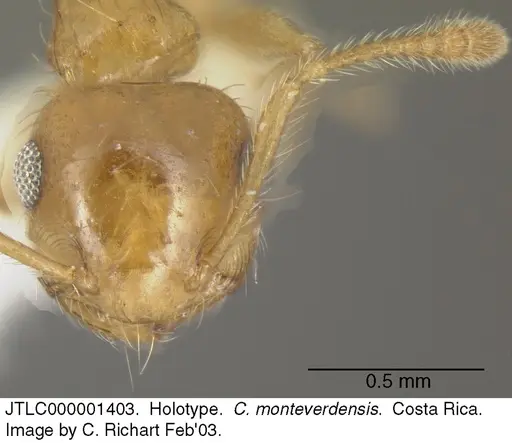
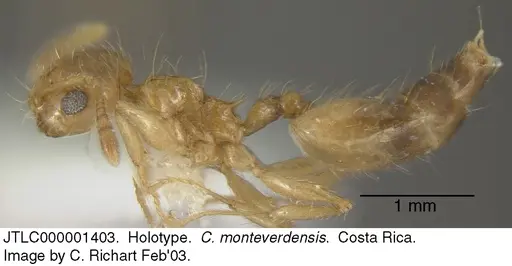
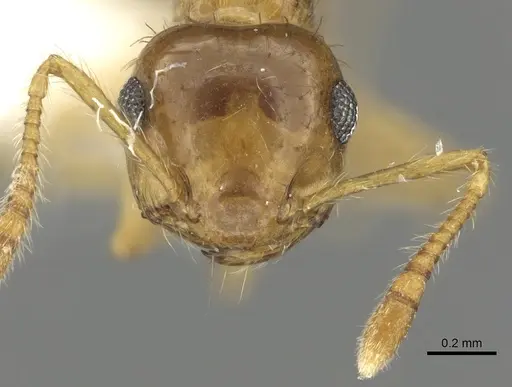
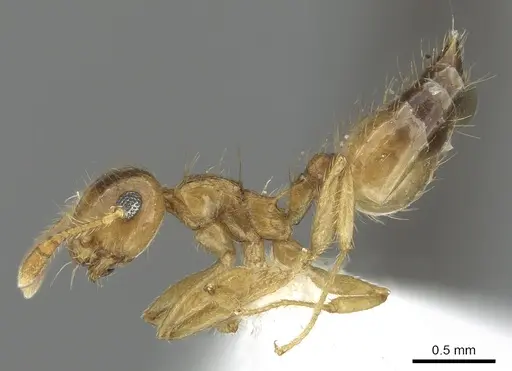
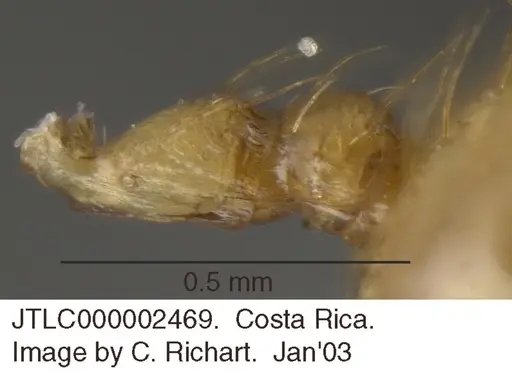
Crematogaster monteverdensis is a small, yellow ant species native to the cloud forests of Costa Rica. Workers measure 2.5-3mm and feature distinctive long, upturned propodeal spines and long flexible setae on their mesonotum. The species was described by Longino in 2003 and is named after its type locality in the Monteverde community area. These ants are polygynous, meaning colonies contain multiple egg-laying queens, and they nest in dead branches at forest edges [1].
What makes this species unusual is that dealate (wingless) queens actively forage alongside workers on house walls, rather than remaining hidden in the nest. Workers are attracted to mixed honey and vegetable oil baits, showing strong recruitment behavior. The species is closely related to Crematogaster sumichrasti but can be distinguished by its shorter, more uniform tibial setae [1].
Quick Summary
- Difficulty: Medium
- Origin & Habitat: Cloud forests of Costa Rica at 1500m elevation in the Cordillera de Tilarán (Monteverde area) and Cordillera de Guanacaste (Cerro Cacao). Found in moist forest areas and at pasture/forest edges [1].
- Colony Type: Polygynous, colonies contain multiple dealate (wingless) queens that actively forage with workers. This is unusual as most Crematogaster species have single queens or alate queens that remain in the nest [1].
- Colony: Polygyne
- Size & Growth:
- Queen: Workers are 2.5-3mm, queens are slightly larger but described as 'small' [1]. Signal: estimated from genus patterns.
- Worker: 2.5-3mm based on genus typical size [1].
- Colony: Unknown maximum, but polygynous colonies typically reach moderate sizes. Signal: estimated.
- Growth: Moderate, based on typical Crematogaster development patterns. Signal: estimated.
- Development: 6-10 weeks based on typical Crematogaster genus patterns at tropical temperatures. Signal: inferred from genus. (Development time is inferred from related species, no specific study for this species.)
- Antkeeping:
- Temperature: Keep at 22-26°C, mimicking their cloud forest home at 1500m elevation. Avoid temperatures above 30°C. Signal: inferred from habitat elevation and climate.
- Humidity: Moderate to high humidity (60-80%). These ants come from moist cloud forests, so keep the nest substrate damp but not waterlogged. Provide some drier areas for workers to choose. Signal: inferred from moist forest habitat.
- Diapause: Unlikely, being a tropical species from consistent climate, they probably do not require a winter rest period. Signal: inferred from tropical habitat.
- Nesting: In nature they nest in dead branches, either in recent treefalls or on the ground at forest edges. In captivity, a Y-tong (AAC) nest or plaster nest works well. Provide small twigs or chambers to accommodate their small size and polygynous colony structure. Signal: inferred from natural nesting.
- Behavior: These ants are relatively docile and not aggressive. Workers forage actively and can be recruited to food sources using tandem-running (leading each other to food). They show strong recruitment to sweet baits like honey and vegetable oil. Their small size (2.5-3mm) means escape prevention is important, use fine mesh barriers. Queens actively forage outside the nest, which is unusual for ant species [1].
- Common Issues: small size means escapes are likely without fine mesh barriers, polygynous colonies may have queen competition or aggression during colony integration, tropical species may struggle in cool, dry environments, limited information on captive care means some trial and error expected, wild-caught colonies may have parasites that affect survival in captivity
Housing and Nest Setup
Crematogaster monteverdensis is a small ant that needs appropriately scaled housing. A Y-tong (AAC) nest or plaster formicarium works well, the chambers should be small and tight-fitting. In the wild, they nest in dead branches at forest edges, so adding small twigs or hollow stems to the setup mimics their natural environment. Because they are polygynous (multiple queens), ensure the nest has enough space for several egg-laying queens and their broods. Use a test tube setup for founding colonies, then transition to a proper nest once the colony reaches 20-30 workers. Escape prevention is critical due to their tiny 2.5-3mm size, use fine mesh and tight-fitting barriers. [1]
Feeding and Diet
In the wild, workers are strongly attracted to mixed honey and solid vegetable oil baits, showing active recruitment behavior [1]. In captivity, offer a varied diet including sugar water or honey as a constant energy source, and protein sources like small insects (fruit flies, pinhead crickets, mealworms). The vegetable oil attraction suggests they may benefit from fat-containing foods, you could try tiny amounts of peanut butter or other oil-based foods. Feed protein 2-3 times per week, and keep sugar water available at all times. Remove uneaten prey after 24-48 hours to prevent mold.
Temperature and Humidity
These ants come from Costa Rican cloud forests at around 1500m elevation, where temperatures are mild and humidity is consistently high. Keep the nest at 22-26°C, avoid temperatures above 30°C as they are not adapted to extreme heat. Maintain humidity at 60-80% by keeping the nest substrate damp but not waterlogged. Provide a moisture gradient so ants can choose their preferred conditions. A small water tube or reservoir in the outworld helps maintain humidity. Because they are from a stable tropical climate, they likely do not require any diapause or winter rest period. [1]
Colony Structure and Queens
This species is unusual among Crematogaster ants because colonies are polygynous, containing multiple dealate (wingless) queens that actively forage with workers [1]. This is rare, as most ant species have alate (winged) queens that remain in the nest after mating. The fact that dealate queens forage outside suggests they may have a different social structure than typical ants. When keeping this species, you may encounter multiple queens in established colonies. Do not assume queens will fight, polygynous species have evolved mechanisms for queen tolerance. However, introducing unrelated foundresses is not recommended as aggressive interactions may occur.
Behavior and Temperament
Crematogaster monteverdensis is a relatively docile species without potent defensive abilities. Workers are active foragers and show strong recruitment behavior, when food is found, they lead nestmates to it through tandem running. Their small size and docile nature make them suitable for observation, though their escape ability is excellent due to their tiny 2.5-3mm size. The species gets its scientific name from the Monteverde area of Costa Rica, where they were first observed foraging on house walls alongside workers. They are not known to sting and pose no danger to keepers. [1]
Growth and Development
Specific development times have not been documented for this species. Based on typical Crematogaster genus patterns at tropical temperatures (24-26°C), expect eggs to develop into workers in approximately 6-10 weeks. The timeline includes egg, larval, and pupal stages. As a polygynous colony, growth may be faster than single-queen colonies due to multiple egg-laying queens. First workers (nanitics) will be smaller than mature workers. Be patient, this is not a fast-growing species, and colonies may take several months to establish firm populations.
Frequently Asked Questions
How long does it take for Crematogaster monteverdensis to produce first workers?
Specific development times are not documented for this species. Based on typical Crematogaster patterns, expect 6-10 weeks from egg to first worker at 24-26°C. Be patient as this is a moderately growing species.
Can I keep multiple Crematogaster monteverdensis queens together?
Yes, this species is naturally polygynous, colonies contain multiple dealate queens in the wild. However, introducing unrelated foundresses is not recommended as aggressive interactions may occur. Established polygynous colonies typically tolerate multiple queens.
What do Crematogaster monteverdensis eat?
They are attracted to sweet foods, honey and vegetable oil in particular. Offer sugar water or honey constantly, and protein sources like small insects (fruit flies, mealworms) 2-3 times weekly. Their attraction to vegetable oil suggests they may accept tiny amounts of fatty foods.
Do Crematogaster monteverdensis ants sting?
No, this species is not known to sting and poses no danger to keepers. They are relatively docile and focused on foraging rather than defense.
What temperature should I keep Crematogaster monteverdensis at?
Keep them at 22-26°C, mimicking their cloud forest home at 1500m elevation in Costa Rica. Avoid temperatures above 30°C as they are not adapted to extreme heat.
Do Crematogaster monteverdensis need hibernation?
Unlikely, being a tropical species from consistent Costa Rican cloud forest climate, they probably do not require a winter rest period. Maintain normal temperatures year-round.
Are Crematogaster monteverdensis good for beginners?
This species is rated as Medium difficulty. They are docile and interesting to observe, but their small size requires good escape prevention. Limited captive care information means some trial and error may be expected.
When should I move Crematogaster monteverdensis to a formicarium?
Start with a test tube setup for founding colonies. Once the colony reaches 20-30 workers and you see significant brood development, you can transition to a Y-tong or plaster nest with appropriately sized chambers.
Why are the queens of Crematogaster monteverdensis foraging outside the nest?
This is an unusual and notable trait of the species. Unlike most ants where queens remain hidden after mating, dealate (wingless) queens of this species actively forage alongside workers. This behavior has been observed in the wild on house walls in Monteverde, Costa Rica [1].
How big do Crematogaster monteverdensis colonies get?
Maximum colony size is not documented. As a polygynous species with multiple egg-laying queens, colonies can likely reach several hundred workers. Growth is moderate, expect several months to reach stable populations.
What makes Crematogaster monteverdensis different from other Crematogaster?
This species is unique for being polygynous with foraging dealate queens, having yellow coloration, and possessing long upturned propodeal spines with long flexible mesonotal setae. It is closely related to Crematogaster sumichrasti but has shorter, more uniform tibial setae [1].
References

This caresheet is licensed under CC BY-SA 4.0 .
CASENT0647000
View on AntWeb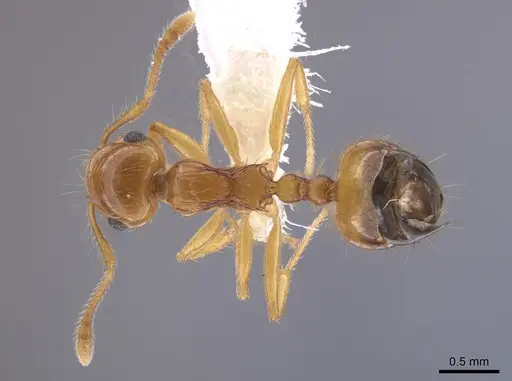
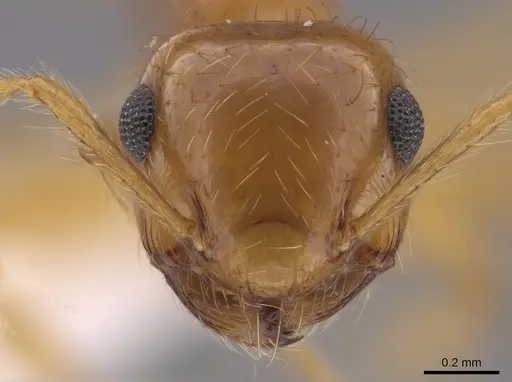
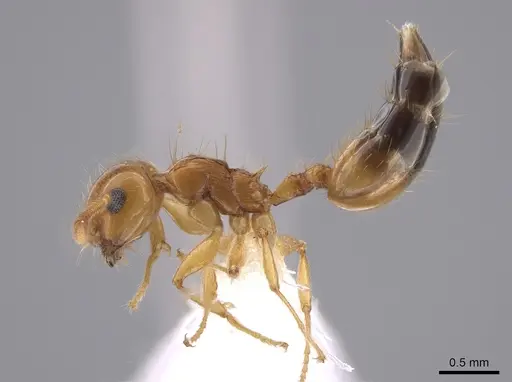
JTLC000001403
View on AntWeb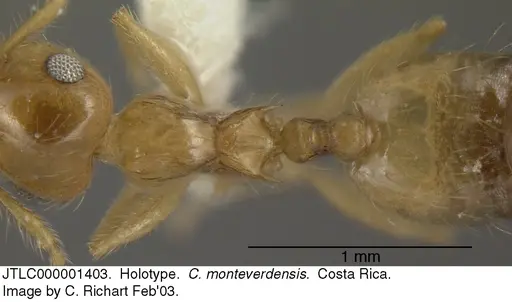
JTLC000001405
View on AntWeb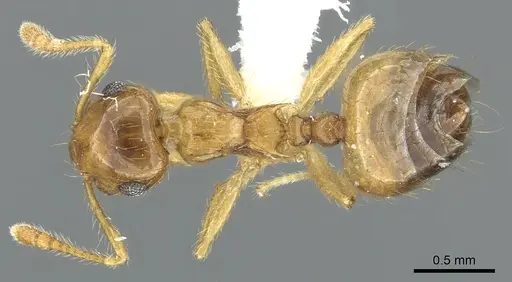
JTLC000002469
View on AntWeb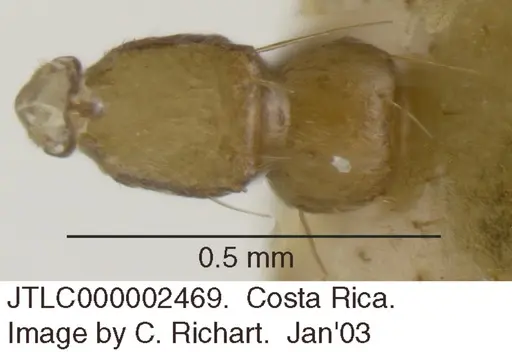
Literature
Loading...Loading products...