

Crematogaster mimosae
- Scientific Name
- Crematogaster mimosae
- Tribe
- Crematogastrini
- Subfamily
- Myrmicinae
- Author
- Santschi, 1914
- Distribution
- Found in 1 countries
Crematogaster mimosae Overview
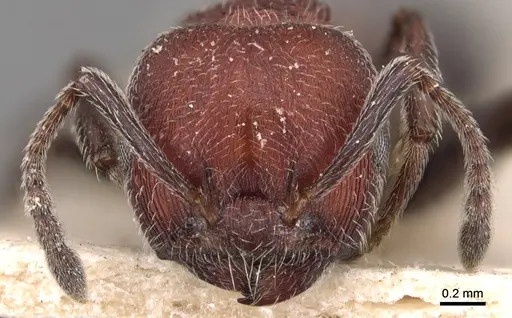
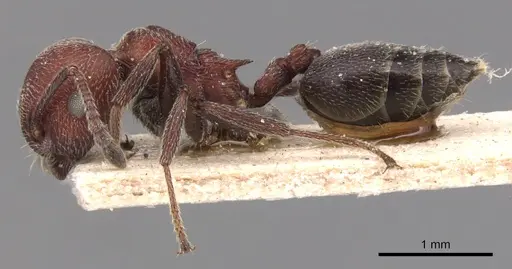
Crematogaster mimosae is an ant species of the genus Crematogaster. It is primarily documented in 1 countries , including Kenya. Detailed taxonomic data and occurrence records can be further explored via authoritative databases such as AntWeb or the Global Biodiversity Information Facility (GBIF).
Crematogaster mimosae
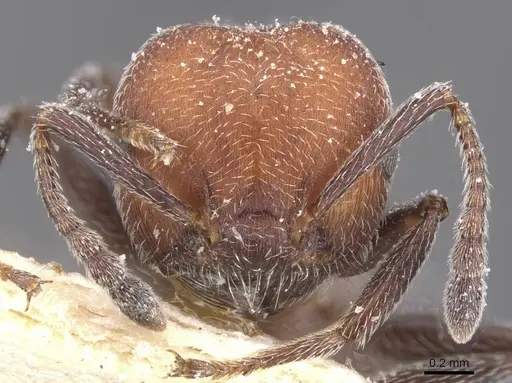
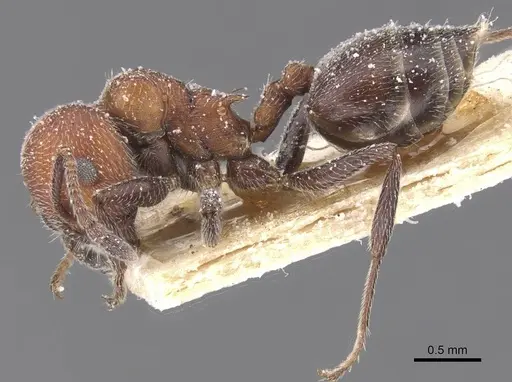
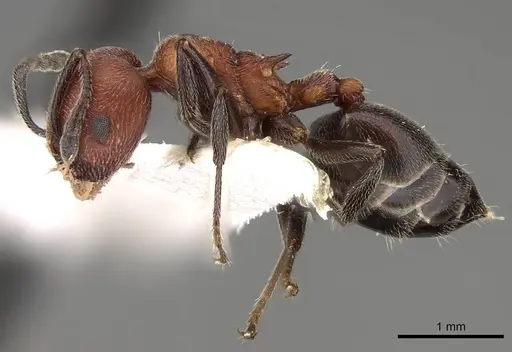
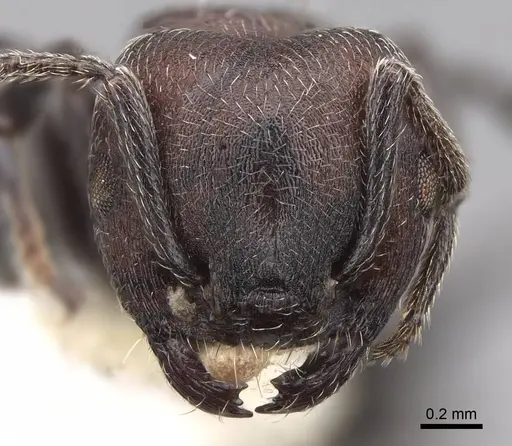
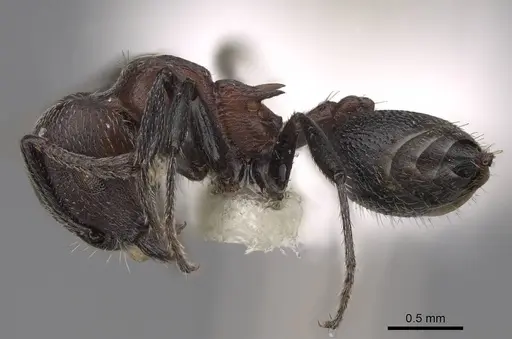
Crematogaster mimosae is a small, aggressive ant species native to East Africa, famous for its exclusive partnership with the whistling thorn acacia (Vachellia drepanolobium). Workers measure 3.5-4.5mm and have a distinctive red-and-black appearance [1]. This ant is completely dependent on its host plant, it nests, forages, and raises brood exclusively inside the swollen thorn domatia that the acacia produces [2]. Colonies are highly polydomous, with a single colony typically occupying 4-5 trees and containing multiple egg-laying queens [3]. They are the second most dominant species in the acacia-ant hierarchy, beaten only by Crematogaster sjostedti, and they aggressively defend their trees from herbivores including elephants [4].
What makes C. mimosae remarkable is their extreme specialization, they are obligate acacia symbionts that cannot survive without their host plant's domatia. They build elaborate carton structures inside the thorns to expand nesting space and produce potent alarm pheromones when threatened [5]. Research shows they provide excellent protection against elephant browsing (zero elephant damage on trees they occupy), but they frequently abandon trees over time, which can reduce the tree's long-term fitness despite the strong short-term protection [6].
Quick Summary
- Difficulty: Expert
- Origin & Habitat: East African savannas (Kenya, Uganda, Tanzania, Somalia, Sudan) and Arabian Peninsula (Saudi Arabia, Oman, UAE, Yemen). Lives exclusively in swollen thorn domatia of Vachellia drepanolobium and related acacia species [7][1].
- Colony Type: Polygynous (multiple egg-laying queens per colony), highly polydomous (colonies span multiple trees). Small colonies may have single queens, large colonies become polygynous [3].
- Colony: Optionally polygyne
- Founding: Claustral, Pleometrosis
- Size & Growth:
- Queen: Approximately 6-7mm (estimated from genus patterns)
- Worker: 3.5-4.5mm [1]
- Colony: Up to 25,000 workers on a single 2-meter tree [5]. Average colony occupies 4.4 trees [6].
- Growth: Moderate
- Development: Approximately 6-8 weeks at optimal temperature. First nanitics emerge around 55 days after queen seals in a thorn [8]. Queens begin laying eggs about 9 days after sealing themselves inside [8]. (Development timing documented from laboratory studies, queens seal themselves inside thorn domatia to found colonies [8].)
- Antkeeping:
- Temperature: East African savanna species, keep at 24-28°C. No direct temperature studies exist, but related acacia ants thrive in warm conditions. Provide a gentle heat gradient.
- Humidity: Adapted to semi-arid savanna conditions. Keep nest area moderately humid (50-60%) but ensure good ventilation. They tolerate drier conditions than most tropical ants.
- Diapause: No true diapause documented. In their native range, they remain active year-round with reduced activity during dry seasons.
- Nesting: CRITICAL: This is an OBLIGATE acacia ant, they MUST have access to domatia-like structures. In captivity, this is extremely difficult to replicate. Provide artificial domatia (hollow twigs, cork bark with holes, or custom 3D-printed structures). They build carton partitions to expand nesting space [5].
- Behavior: Highly aggressive and territorial. They produce potent alarm pheromones and swarm aggressively in response to disturbance, one of the most aggressive acacia ants [2]. Workers patrol all parts of the tree above ground, defending against herbivores and competing ants. They tend scale insects inside domatia and feed on extrafloral nectar. Polydomous colonies readily expand to nearby trees. Ground-forage locally (within 1m of trees), largely scavenging insect parts [9]. Escape risk is moderate, they are small but not particularly prone to escaping if given proper containment.
- Common Issues: Obligate symbiont, cannot survive without domatia-like structures, making captive care extremely difficult, Requires live scale insects (Coccidae) and extrafloral nectar, difficult to replicate in captivity, Highly aggressive, will attack anything that disturbs their nest, including keepers, Polydomous nature means they need multi-tree setups to thrive, single-tree colonies often abandon hosts, Wild-caught colonies may have parasites (wasp parasitoids documented at 15-17% rates) [10]
The Acacia Ant Relationship
Crematogaster mimosae represents one of the most specialized ant-plant partnerships on Earth. These ants are 'obligate myrmecophytes', they cannot survive anywhere except inside the swollen thorns (domatia) produced by Vachellia drepanolobium and a few related acacia species [2]. The tree provides hollow chambers for nesting, and in return, the ants provide fierce protection against herbivores including elephants, giraffes, and insects [4].
The relationship is not without tension. Research shows that while C. mimosae provides excellent protection against elephant browsing (zero damage on trees they occupy), they frequently abandon their host trees over time. Trees occupied only by C. mimosae actually showed lower lifetime fitness in simulations compared to trees with other ant partners, because the ants often leave before the tree matures [6]. This explains why C. mimosae occupies only about 50% of trees at any given time, they're the most common but also the most transient partners.
For keepers, this relationship is both fascinating and problematic. You cannot keep these ants without providing domatia-like structures, and even then, they may abandon artificial nests if conditions aren't ideal. This species is really only suitable for advanced keepers willing to invest in complex setups.
Colony Structure and Multi-Tree Living
C. mimosae colonies are highly polydomous, meaning a single colony occupies multiple trees simultaneously. Research shows the average colony spans 4.4 trees, with some colonies spreading across even more [6]. This is possible because the ants build 'carton' structures, partitions made from plant material and waste that allow them to expand nesting space within the hollow thorns [5].
The colony structure changes with size. Small colonies appear to have only a single laying queen, while large colonies become polygynous with multiple egg-laying queens [3]. An excavation of a four-tree colony revealed four separate egg-laying queens, each presumably in a different thorn structure. This multi-queen system helps the colony maintain workers across multiple trees.
Colonies expand by sending workers to colonize nearby empty acacia trees. When trees grow and produce new swollen thorns, the colony simply expands into them. Conversely, when trees die or become unsuitable, the colony may abandon them and consolidate on remaining trees. This dynamic means your setup needs to accommodate potential tree-to-tree movement.
Pleometrosis (multiple queens founding together) does occur, about 18% of claustral colonies contain 2-5 cooperating queens [10]. These pleometrotic groups have better survival rates against parasitic wasps than single-queen colonies.
Feeding and Diet
In the wild, C. mimosae has a varied diet centered on two primary food sources: extrafloral nectar and honeydew from scale insects [11]. Workers patrol the tree constantly, collecting nectar from the plant's extrafloral nectaries and tending scale insects (family Coccidae) that live inside the swollen thorns [12]. They also prey on small invertebrates that land on the tree and scavenge insect parts within about 1 meter of the tree [9].
The scale insect relationship is particularly important. When scale insects were experimentally removed, baseline ant activity decreased significantly and fewer ants responded to simulated herbivore attacks [12]. This suggests the ants rely heavily on the honeydew produced by these insects. Interestingly, when extrafloral nectaries were removed, ants spent more time tending scales, showing they can shift between food sources based on availability.
For captive care, this presents a major challenge. You would need to provide: (1) a constant source of extrafloral nectar (difficult to replicate), (2) live scale insects for honeydew, and (3) small protein sources (fruit flies, small insects). Sugar water is unlikely to be accepted as a substitute for the specialized nectar/honeydew diet. This species is NOT a good candidate for typical ant-keeping setups.
Defense Behavior and Aggression
C. mimosae is one of the most aggressive ant species in its ecosystem, producing potent alarm pheromones that trigger massive recruitment when the tree is disturbed [5]. Research shows they recruit an average of 17.6 workers in response to simulated disturbance, the highest defense response among all four acacia ant species [6]. When threatened, they swarm aggressively and will attack anything that comes near, including researchers, elephants, and competing ants.
Their defensive effectiveness is remarkable. Trees occupied by C. mimosae show significantly less browsing by giraffes and black rhino, and zero elephant damage in controlled studies [4]. This is the only acacia ant species that provides statistically significant protection against elephant browsing, a 10-fold increase in elephant damage was observed when C. mimosae was removed [4].
The mandibular gland secretions have been studied extensively. They contain compounds including 3-octanone and 3-octanol (alarm pheromones), plus unique compounds like nonanal and 3-(methylthio)-propanal that are not found in related species [13]. This chemical signature helps them coordinate their aggressive swarms.
For keepers, this means caution is essential. These ants will readily attack and sting (though the sting is mild for humans). They are not suitable for observation-focused setups where you'd need to open the nest frequently.
Reproduction and Nuptial Flights
Colony reproduction involves winged reproductives (alates) that emerge from the colony and conduct nuptial flights. However, the details of when and how these flights occur are not well-documented in the scientific literature. What we know is that foundress queens must locate empty swollen thorns on young acacia saplings to start new colonies [10].
The founding process is challenging. Queens seal themselves inside a thorn chamber and lay eggs about 9 days after sealing [8]. First nanitic workers emerge around 55 days after colonization. However, competition for available thorns is intense, almost 80% of foundress mortality is due to combat with other queens trying to colonize the same thorn [14]. Additionally, a parasitic wasp (Trigastrotheca laikipiensis) attacks 5-17% of claustral colonies [14].
Pleometrosis (multiple queens founding together) occurs in about 18% of colonies, with up to 7 queens cooperating in a single thorn [10]. These groups have better outcomes, parasitized pleometrotic colonies are significantly more likely to produce brood than parasitized single-queen colonies.
For captive breeding, the fundamental problem remains: you cannot replicate the natural colony founding process without actual acacia domatia.
Why This Species Is Difficult to Keep
Let's be direct: Crematogaster mimosae is one of the most difficult ant species to keep in captivity, and most antkeepers should NOT attempt it. Here's why:
First, they are obligate symbionts. Unlike most ants that can adapt to various nest types, C. mimosae absolutely requires domatia-like structures. They never live free-standing nests, their entire lifecycle is tied to the interior of swollen thorns [2]. Providing suitable artificial domatia is extremely challenging.
Second, their diet is specialized. They depend on extrafloral nectar and scale insect honeydew [11]. Standard ant foods (sugar water, protein gels, dead insects) are unlikely to meet their nutritional needs. You'd need to maintain live scale insect cultures.
Third, their polydomous nature means they need space to expand across multiple 'trees.' Single-tree setups may lead to abandonment.
Fourth, they are aggressive and produce alarm pheromones that can trigger mass attacks. Regular colony maintenance would be stressful for both the ants and the keeper.
Finally, there's no established husbandry protocol for this species. Unlike common pet ants like Camponotus or Lasius, there's no community knowledge base for keeping acacia ants. You'd be essentially pioneering techniques that may not work.
If you're interested in Crematogaster, consider more accessible species like C. scutellaris or C. inflata which have similar morphology but normal nesting requirements.
Frequently Asked Questions
Can I keep Crematogaster mimosae in a test tube?
No. This is an obligate acacia ant that cannot survive without domatia-like structures (hollow swollen thorns). Test tubes, Y-tong nests, and standard formicaria are completely unsuitable. They require structures that mimic the hollow thorns of Vachellia acacia trees.
What do Crematogaster mimosae ants eat?
They feed primarily on extrafloral nectar from their host acacia and honeydew from scale insects (Coccidae) they tend inside the domatia. They also scavenge small insects and arthropods near their tree. Replicating this diet in captivity is extremely difficult, you'd need live scale insects and a constant nectar source.
How long does it take for first workers to emerge?
First nanitic workers emerge approximately 55 days after a queen seals herself inside a thorn domatia [8]. Queens begin laying eggs about 9 days after sealing. This timeline is based on laboratory studies of wild colonies.
Are Crematogaster mimosae good for beginners?
No. This is an expert-level species, possibly beyond expert-level for most keepers. They are obligate symbionts requiring domatia structures, specialized diets, and multi-tree setups. There is no established captive breeding protocol. Most antkeepers should choose more accessible species.
Do Crematogaster mimosae ants sting?
Yes, they can sting, though their sting is mild compared to many ants. The bigger concern is their extreme aggression, they produce potent alarm pheromones and will swarm aggressively in response to any nest disturbance. They are not suitable for handling or frequent observation.
How big do Crematogaster mimosae colonies get?
Colonies can reach up to 25,000 workers on a single mature tree [5]. A typical colony occupies 4-5 trees simultaneously, making them among the largest arboreal ant colonies in Africa. They are polygynous (multiple egg-laying queens) in large colonies.
Can I keep multiple queens together?
Yes, naturally-occurring pleometrosis (multiple queens founding together) occurs in about 18% of wild colonies, with up to 7 queens cooperating in a single thorn [10]. Large colonies become polygynous with multiple egg-laying queens. However, combining unrelated captive queens has not been studied and is not recommended.
Do they need hibernation?
No true diapause has been documented. As an East African species, they remain active year-round with reduced activity during dry seasons. No hibernation period is needed in captivity.
Why are my ants dying?
Without proper domatia structures and scale insect food sources, colonies will decline. Wild colonies also face 15-17% parasitism rates from parasitic wasps [10]. Additionally, they may simply abandon unsuitable artificial nests. This species has not been successfully kept in captivity long-term.
What makes Crematogaster mimosae different from other Crematogaster?
Unlike most Crematogaster species that nest in soil, rotting wood, or under stones, C. mimosae is an obligate acacia symbiont that lives exclusively inside swollen thorn domatia. They are also highly polydomous (spanning multiple trees) and polygynous (multiple queens). This level of specialization is extremely rare in the ant world.
When should I move them to a formicarium?
This species cannot be kept in standard formicaria. You would need to create artificial domatia structures (hollow twigs, cork bark with holes, custom 3D-printed chambers). Even then, success is unlikely. There is no established protocol for moving wild-caught colonies to captive setups.
References

This caresheet is licensed under CC BY-SA 4.0 .
CASENT0904507
View on AntWeb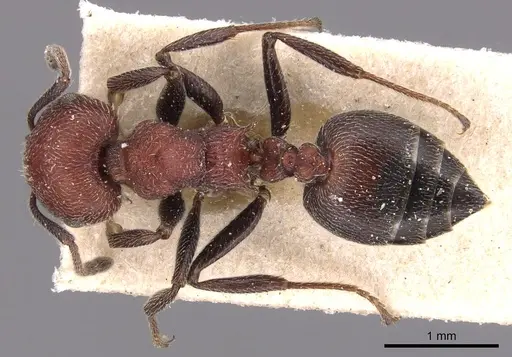
CASENT0912704
View on AntWeb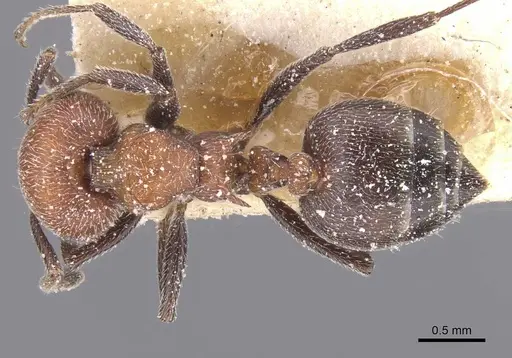
CASENT0914297
View on AntWeb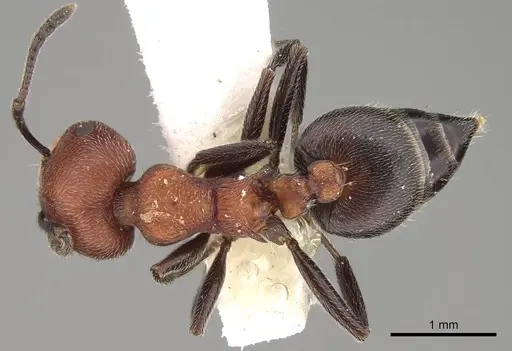
CASENT0922652
View on AntWeb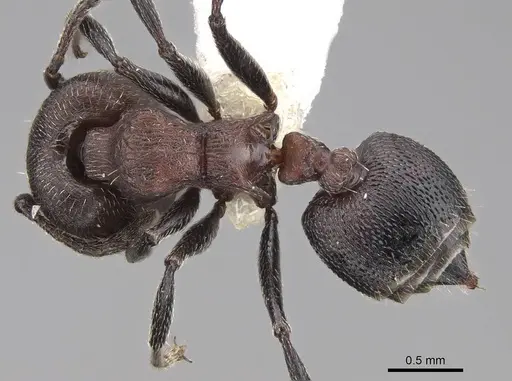
Literature
Loading...Loading products...