

Crematogaster sjostedti
- Scientific Name
- Crematogaster sjostedti
- Tribe
- Crematogastrini
- Subfamily
- Myrmicinae
- Author
- Mayr, 1907
- Distribution
- Found in 1 countries
Crematogaster sjostedti Overview
Crematogaster sjostedti is an ant species of the genus Crematogaster. It is primarily documented in 1 countries , including Kenya. Detailed taxonomic data and occurrence records can be further explored via authoritative databases such as AntWeb or the Global Biodiversity Information Facility (GBIF).
Crematogaster sjostedti
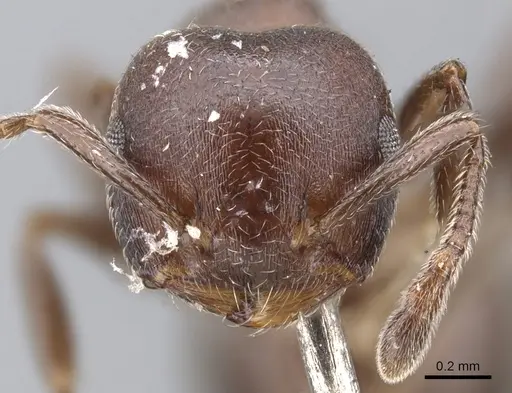
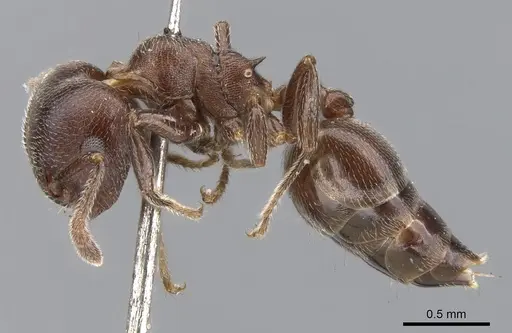
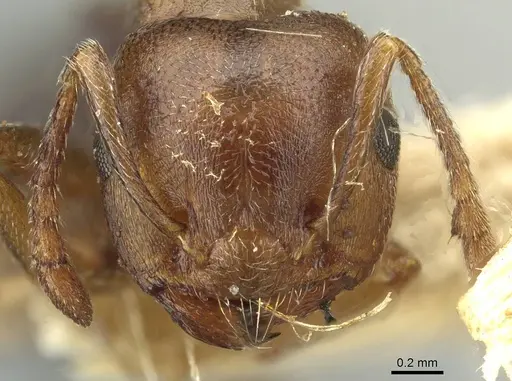
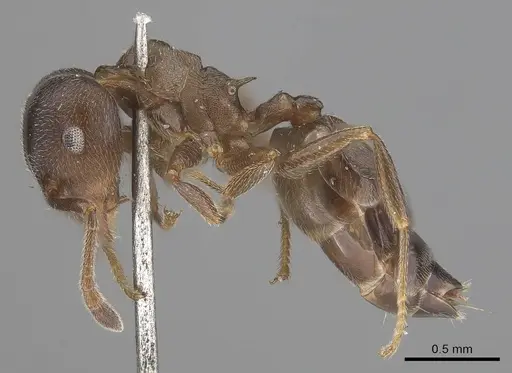
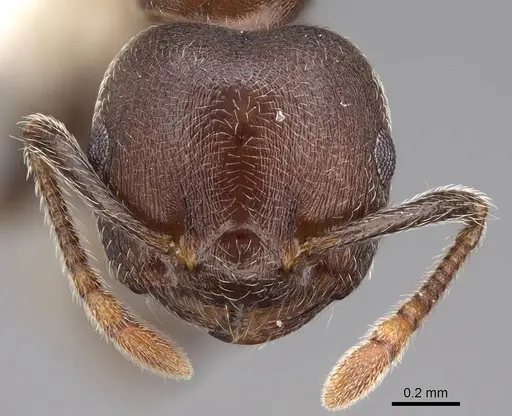
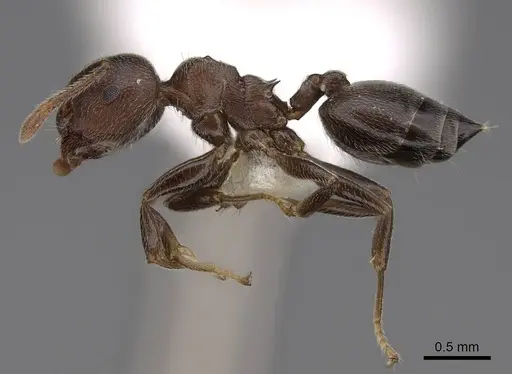
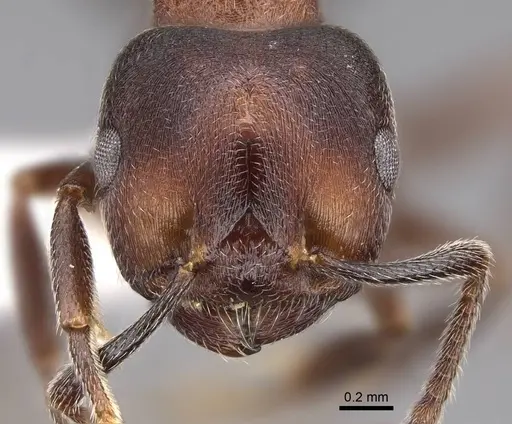
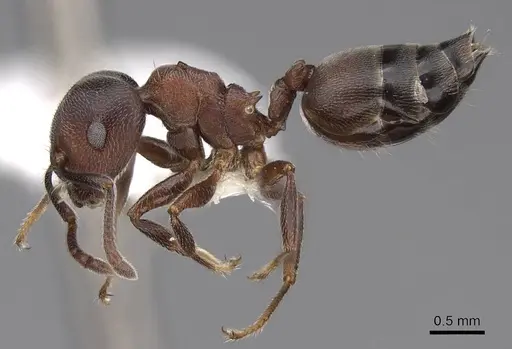
Crematogaster sjostedti is a small arboreal ant (3.0-5.5mm workers) native to East African savannas, where it lives almost exclusively on Vachellia drepanolobium, the whistling thorn acacia [1]. Unlike the other three acacia-ant species that nest in the tree's swollen thorns, this species excavates nest space within trunk and stem cavities created by wood-boring beetle larvae [2]. Workers are small with an average wet mass of 7.2mg, and they have a distinctive black coloration [3][4].
What makes this species unusual is its complex relationship with its host tree. While it provides minimal protection against herbivores (recruiting only about 1.3 workers on average when disturbed), it tends scale insects for honeydew rather than using the tree's extrafloral nectaries [5]. Colonies are highly polydomous, a single colony can span 20 or more trees, making this one of the most expansive ant colonies in the acacia-ant guild [3]. This is a species for advanced antkeepers interested in studying fascinating ant-plant mutualism dynamics.
Quick Summary
- Difficulty: Expert
- Origin & Habitat: East African savannas, Kenya, Tanzania, Mozambique, Zimbabwe. Lives on Vachellia drepanolobium (whistling thorn acacia), nesting in stem cavities rather than swollen thorns [1][2].
- Colony Type: Polygynous (multiple egg-laying queens) and highly polydomous (colonies span multiple trees). Mature colonies can occupy 20+ trees with 7 documented egg-laying queens in a single colony [3]. Queens are virtually absent from the pool of independent foundresses, new colonies establish primarily through colony expansion rather than independent colony founding [6].
- Colony: Polygyne, Supercolonial
- Size & Growth:
- Queen: Estimated 5-6mm based on worker size (TL 3.0-5.5mm) and typical Crematogaster proportions [1]
- Worker: 3.0-5.5mm total length [1]
- Colony: Very large, colonies can span 20+ trees with thousands of workers. Approximately 2.5x larger than C. mimosae colonies and nearly 6x larger than T. penzigi [3][7]
- Growth: Moderate, polygynous colonies grow through colony expansion rather than rapid individual brood development
- Development: Unknown for this species, estimated 4-6 weeks based on typical Crematogaster development at warm temperatures (No specific development data available. Related Crematogaster species suggest several weeks at optimal temperature. Colonies grow primarily through colony expansion to new trees rather than rapid individual brood production.)
- Antkeeping:
- Temperature: Based on native East African habitat: keep around 24-28°C with a gentle gradient. Room temperature (22-25°C) is likely suitable. Avoid temperatures below 20°C.
- Humidity: Moderate, as an arboreal species, they prefer drier conditions than ground-nesting ants. Keep nest area at 50-60% humidity. Provide a water tube but avoid excessive moisture.
- Diapause: No, as a tropical species, they do not require hibernation. Maintain consistent temperatures year-round.
- Nesting: Arboreal nesting, they need above-ground nest spaces. In captivity, they do well in acrylic nests or Y-tong nests with horizontal chambers. They prefer nesting in cavities rather than tight chambers, so provide wider passages. Avoid test tube setups, they need more vertical/arboreal-style housing.
- Behavior: Low aggression compared to other acacia ants, only about 1-2 workers typically respond to disturbances [5]. Workers forage primarily on the ground within 1m of their host trees, scavenging insect parts [8]. They tend scale insects for honeydew and are not particularly territorial or defensive. Colonies are highly polydomous and will expand to multiple nest sites. Escape risk is moderate due to small size, use standard barrier methods but no special escape prevention needed beyond standard practices.
- Common Issues: colonies are difficult to establish, queens rarely foundress independently, making colony foundation challenging, requires multiple connected nest sites due to polydomous nature, single nest setups may limit colony development, tropical species requires warm temperatures year-round, cold snaps can be fatal, low defensive behavior means colonies may be bullied by more aggressive ant species if housed nearby, ground-forage behavior requires outworld space for scavenging, isolated nest-only setups may limit natural behavior
Housing and Nest Setup
Crematogaster sjostedti requires arboreal-style housing that differs from typical test tube setups. These ants naturally nest in stem cavities and hollow branches, so acrylic nests or Y-tong nests with wider horizontal chambers work best. The chambers should be somewhat spacious rather than tight, they prefer cavity nesting over tight passages. Because colonies are highly polydomous in the wild (spanning 20+ trees), consider providing multiple connected nest modules to allow for natural colony expansion behavior. A formicarium with multiple chambers connected by tubes mimics their natural multi-tree colony structure. Ensure the outworld provides foraging space since workers scavenge on the ground near their host trees. [3][2][10]
Feeding and Diet
In the wild, Crematogaster sjostedti primarily tends scale insects (homopterans) on their host acacia trees for honeydew, rather than using the tree's extrafloral nectaries like other acacia ants [5][10]. Workers also forage on the ground within about 1 meter of their host trees, scavenging insect parts and small prey [8]. In captivity, offer sugar water or honey regularly (they'll take it from the scale insects they tend), along with small protein sources like fruit flies, small crickets, and other tiny insects. Their diet is more omnivorous than strictly honeydew-dependent, they'll accept most standard ant foods. Feed protein 2-3 times per week and keep sugar water available constantly.
Temperature and Seasonal Care
As a tropical East African species, Crematogaster sjostedti requires warm temperatures year-round. Maintain nest temperatures between 24-28°C. Room temperature (22-25°C) is typically suitable, but avoid any prolonged periods below 20°C. No hibernation or diapause is required, these ants remain active throughout the year in their native habitat. A small heating cable on one side of the nest can provide additional warmth if your room runs cool, but ensure there's a temperature gradient so workers can self-regulate. Consistent warmth is more important than dramatic temperature swings. [1]
Colony Structure and Behavior
This species has one of the most complex social structures among the acacia ants. Colonies are polygynous (multiple egg-laying queens) and highly polydomous (spanning multiple trees). A single colony can occupy 20 or more trees, with an average of 4.4-22 trees per colony depending on location [3][9]. Research found 7 egg-laying queens in just two trees of a 23-tree colony [3]. Unlike other acacia ants, foundress queens rarely establish independent colonies, new colony growth occurs primarily through colony expansion into nearby empty trees [6]. Workers are small (7.2mg average wet mass) and relatively inactive when disturbed, with only 1-2 workers typically responding to threats [5]. This low defensive response is a key behavioral trait that distinguishes them from more aggressive acacia ants like C. mimosae.
Ecological Role and Interactions
Crematogaster sjostedti has a unique and somewhat controversial relationship with its host acacia trees. Unlike the other three acacia-ant species, it does not effectively protect the tree from herbivores, trees occupied by C. sjostedti show significantly higher leaf damage (8% shoots browsed vs lower rates for other species) and experience doubled mortality compared to trees with other ant species [5][2]. Interestingly, C. sjostedti actively facilitates attack by cerambycid beetles (longhorn beetles) whose tunnels provide the nest cavities the ants use [2][11]. Despite these costs to the tree, trees occupied by C. sjostedti produce more fruit, likely because they inhabit larger, older trees that are more reproductive [5][12]. Researchers have described this species as a 'parasite' that nonetheless provides some beneficial services within the mutualist assemblage [5].
Frequently Asked Questions
How long does it take for Crematogaster sjostedti to produce first workers?
The exact development time is unknown for this species. Based on typical Crematogaster development, expect first workers (nanitics) in approximately 4-6 weeks at optimal warm temperatures (24-28°C). However, established colonies are polygynous and grow primarily through colony expansion rather than rapid individual brood development.
Can I keep multiple Crematogaster sjostedti queens together?
Yes, this species is naturally polygynous, meaning colonies have multiple egg-laying queens. Research has documented 7 egg-laying queens in a single colony [3]. However, combining unrelated foundress queens has not been studied and is not recommended. If you acquire a colony, it will likely already have multiple queens.
Do Crematogaster sjostedti ants sting?
Crematogaster ants have a stinger but are not considered particularly aggressive. This species shows very low recruitment to disturbances (only 1-2 workers typically respond) [5]. They are not a significant stinging threat and are actually among the least defensive of the acacia ants.
What do Crematogaster sjostedti eat?
They primarily tend scale insects for honeydew and scavenge insect parts on the ground near their host trees [8][10]. In captivity, offer sugar water or honey regularly, plus small protein sources like fruit flies, small crickets, or other tiny insects. They are not picky eaters and will accept most standard ant foods.
Are Crematogaster sjostedti good for beginners?
No, this is an expert-level species. They are difficult to establish (queens rarely foundress independently), require warm year-round temperatures, need polydomous housing (multiple connected nest sites), and have complex ecological requirements tied to their mutualistic relationship with acacia trees. They are best suited for experienced antkeepers interested in studying ant-plant mutualisms.
Do Crematogaster sjostedti need hibernation?
No, as a tropical East African species, they do not require hibernation or winter cooling. Maintain consistent warm temperatures (24-28°C) year-round. Cold temperatures below 20°C for prolonged periods can be harmful.
How big do Crematogaster sjostedti colonies get?
Very large, colonies can span 20 or more trees in the wild with thousands of workers [3]. They are approximately 2.5 times larger than other acacia ant colonies like C. mimosae and nearly 6 times larger than T. penzigi colonies [7]. In captivity, well-established colonies can become quite populous.
Why do my Crematogaster sjostedti keep dying?
Common causes include: temperatures below 20°C (tropical species, cannot tolerate cold), improper nesting setup (they need cavity-style nests, not test tubes), insufficient space for their polydomous nature (multiple connected nests help), or isolation from their natural host plant context. Also ensure they have constant access to sugar and regular protein. Poor colony establishment success is common because queens rarely foundress independently in this species.
When should I move Crematogaster sjostedti to a formicarium?
Move them when the colony reaches several dozen workers and you observe them using the outworld regularly. However, they do well in acrylic or Y-tong style nests from the start since they prefer cavity nesting over test tube setups. The key is providing multiple connected chambers to accommodate their natural multi-tree colony structure.
References

This caresheet is licensed under CC BY-SA 4.0 .
CASENT0902105
View on AntWeb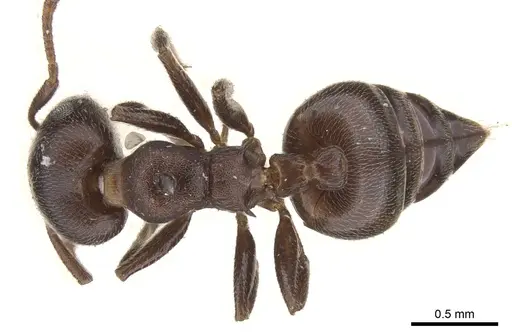
CASENT0912676
View on AntWeb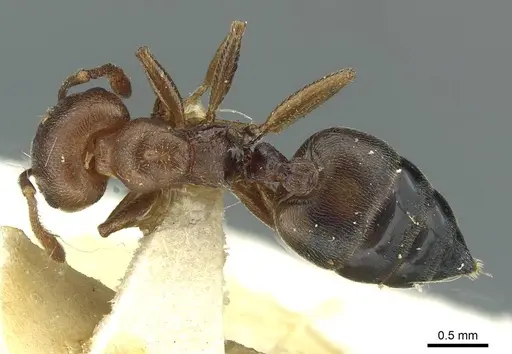
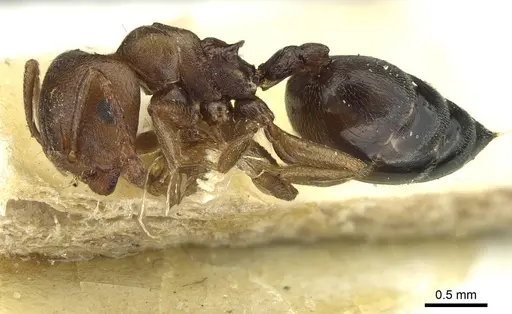
CASENT0919667
View on AntWeb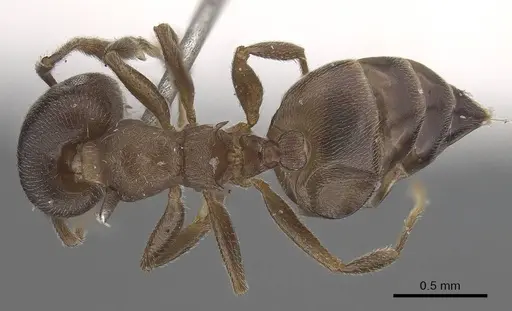
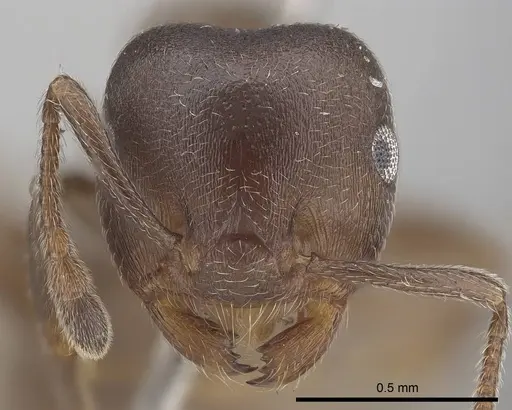
CASENT0922654
View on AntWeb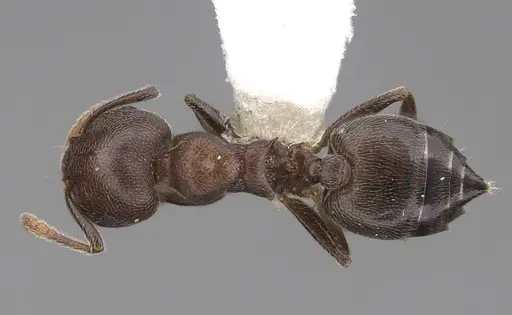
CASENT0922655
View on AntWeb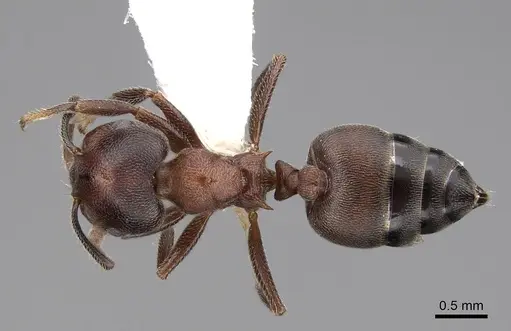
Literature
Loading...Loading products...