

Crematogaster mahery
- Scientific Name
- Crematogaster mahery
- Tribe
- Crematogastrini
- Subfamily
- Myrmicinae
- Author
- Blaimer, 2010
- Distribution
- Found in 1 countries
Crematogaster mahery Overview
Crematogaster mahery is an ant species of the genus Crematogaster. It is primarily documented in 1 countries , including Madagascar. Detailed taxonomic data and occurrence records can be further explored via authoritative databases such as AntWeb or the Global Biodiversity Information Facility (GBIF).
Crematogaster mahery
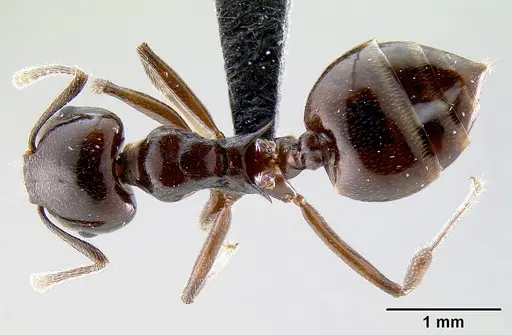
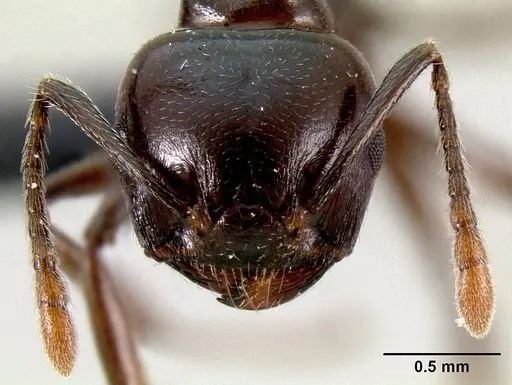
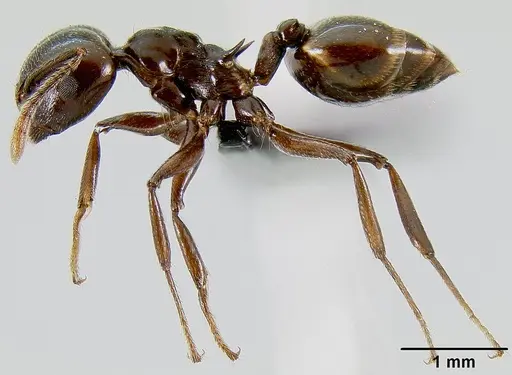
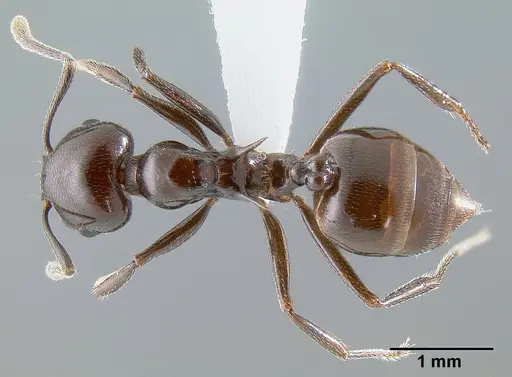
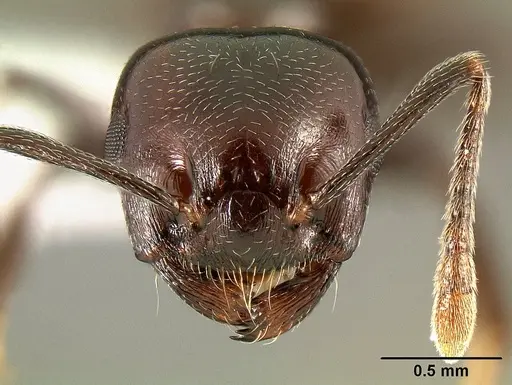
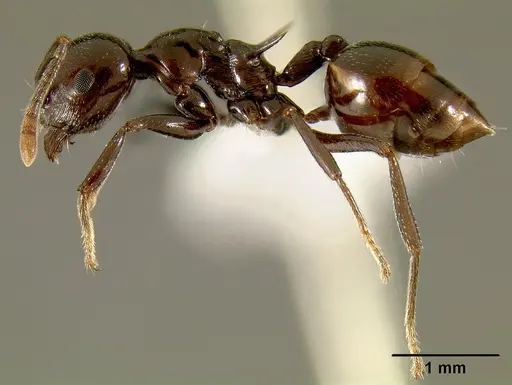
Crematogaster mahery is a large to very large arboreal ant species endemic to Madagascar. Workers measure 1.09-1.21mm in head width and are part of the Crematogaster hova-group (subgenus Decacrema). They get their name from the Malagasy word 'mahery' meaning 'powerful', a fitting reference to their impressive size compared to other Crematogaster species. Their coloration ranges from medium brown to black, sometimes with brown or ochre abdominal segments. This species has an unusual distribution, found in both montane rainforest at higher elevations and littoral forest at sea level, making it one of the more ecologically flexible Crematogaster species in Madagascar. They build their nests in dead twigs, branches, and construct distinctive carton nests in trees. A unique feature of this species is its mutualistic relationship with scale insects (pseudococcids of the genus Tylococcus), which they tend inside their carton structures for honeydew.
Quick Summary
- Difficulty: Expert
- Origin & Habitat: Madagascar, specifically P.N. Zahamena, P.N. Andringitra, R.S. Manombo, and P.N. Andohahela. Found in mid-elevation to montane rainforest (around 780m) and littoral forest at sea level (around 30m) [1][2].
- Colony Type: Colony structure is unconfirmed, no queens or males have ever been collected, so the exact colony type is unknown. Workers have been found nesting in dead twigs/branches and in carton nests, sometimes with multiple nest structures in a single colony [1].
- Size & Growth:
- Queen: Unknown, no queens have been collected to date [1]
- Worker: 1.09-1.21mm head width (HW),1.18-1.32mm Weber's length (WL) [1]
- Colony: Unknown, only fragmentary colonies have been observed
- Growth: Unknown
- Development: Unknown, no breeding data exists for this species (This is one of the least-studied Crematogaster species. No queen, male, or developmental stages have ever been collected.)
- Antkeeping:
- Temperature: Based on Madagascar's subtropical to tropical climate and the montane/littoral forest habitats they occupy, aim for 22-27°C with moderate humidity. Avoid extremes, they come from forested environments with stable conditions.
- Humidity: Moderate to high, these are forest ants that need humidity but not saturation. Keep nest areas around 60-80% relative humidity. Provide a water tube for drinking.
- Diapause: Unknown, no seasonal data exists. Madagascar has mild winters, so they may not require a true diapause but may reduce activity in cooler months.
- Nesting: This is an arboreal species that nests in dead twigs, branches, and carton nests. In captivity, they do well in naturalistic setups with twigs/branches or in acrylic/formicarium nests with added twig sections. They prefer having their nest attached to vertical or elevated structures. Avoid fully underground nests, they need above-ground nesting space.
- Behavior: Crematogaster mahery is an arboreal species that builds distinctive carton nests, similar to their relatives. They are known to tend scale insects (pseudococcids) for honeydew, making them part of the 'coccoid-tending' Crematogaster group. Workers are relatively large and robust. They likely have the typical Crematogaster defensive behavior, when threatened, they raise their abdomen forward over their head (the 'acrobat' position) and may release caustic secretions from their abdominal glands. They are not aggressive but will defend their nest. Escape prevention is important as they are good climbers, use fluon on container edges.
- Common Issues: no documented captive breeding means you may not be able to establish a long-term colony, arboreal nesting means standard test tube setups are poorly suited, they need twig/branch space, extremely rare in the hobby, wild-caught colonies are essentially unavailable, no queen or male data means founding behavior is completely unknown, tending scale insects may be required for colony health, they may be specialized honeydew feeders
Why This Species Is So Challenging
Crematogaster mahery is one of the rarest and least-studied ant species in the world. Since its description in 2010,no one has ever collected a queen, male, or any reproductive caste. Every scientific specimen known is a worker collected from the wild through beating samples, pitfall traps, or by finding their nests. This means we have almost no biological data about how they reproduce, how their colonies function, or what they need to survive in captivity. The few colonies that have been found were partial, either just workers in a twig or a carton nest without a queen. This makes C. mahery fundamentally different from most ants kept in captivity, where we at least know the basic biology. If you encounter this species, you would essentially be pioneering all captive husbandry knowledge from scratch. This is not a species for beginners or even intermediate antkeepers, it's a species for researchers or very advanced hobbyists willing to experiment extensively. [1]
Natural History and Nesting
In the wild, C. mahery shows fascinating nesting flexibility. At R.S. Manombo (a littoral forest at sea level), workers were found nesting in dead twigs and branches and in rotten logs, typical substrate nesting. But at P.N. Andringitra (a montane rainforest at 780m), a single colony was found nesting in three separate carton nests built in a small, solitary tree in an open, riverine habitat. This is unusual, most Crematogaster in the Decacrema group are strictly arboreal carton-nesters, but C. mahery uses both strategies. The colony at Andringitra also contained pseudococcids (scale insects of an undescribed Tylococcus species) living inside the carton structure, feeding on the branch. This confirms they are active tenders of sap-sucking insects, similar to other Decacrema species. The colony had workers and brood but no queen, suggesting the colony was either polygynous (multiple queens) or that the queen was in a different nest section. Their unusual distribution across Madagascar, spanning from sea-level littoral forest to montane rainforest, suggests they are ecologically flexible but still tied to forested habitats. [1]
Housing and Nest Setup
If attempting to keep this species, you would need to replicate their arboreal natural history. Standard test tube setups are poorly suited, they are twig-dwelling ants that need vertical or elevated nesting options. A naturalistic setup with actual twigs or branches, or a formicarium with attached twig sections, would be most appropriate. The key insight from their biology is that they build carton nests, a papier-mâché-like material made from chewed plant fibers and wax. In captivity, they might accept cork, cardboard, or similar materials as nest-building substrates. They should be provided with scale insects (pseudococcids) or alternative sugar sources, since their wild colonies actively tend Tylococcus for honeydew. A small container with a constant sugar source (honey water, sugar water) would be essential. Given their arboreal nature, they need climbing surfaces and should be housed in enclosures that prevent escape, Crematogaster are excellent climbers and will use fluon barriers effectively. [1]
Feeding and Diet
Based on their relationship with Tylococcus pseudococcids, C. mahery likely relies heavily on honeydew as a primary food source, this is characteristic of the Decacrema group. They almost certainly supplement with protein from small insects, as most Crematogaster are opportunistic omnivores. In captivity, you should provide: constant access to sugar water or honey water (they need this more than most ants), and protein sources like small crickets, fruit flies, or mealworm pieces offered regularly. The key question is whether they can survive without scale insects, in the wild, their colonies are always associated with pseudococcids, suggesting this may be a required part of their diet. If you obtain a colony, consider establishing a small scale insect culture as well. This level of specialized care makes them one of the most demanding species to keep successfully. [1]
Temperature and Environmental Conditions
Given their range across Madagascar's diverse habitats, from sea-level littoral forest to 780m montane rainforest, they likely tolerate a range of conditions but prefer warmth and humidity. The littoral forest at R.S. Manombo is warm and humid year-round, while the montane sites are cooler but still mild. A temperature range of 22-27°C would be a reasonable starting point, with humidity around 60-80%. They should not be allowed to get cold, Madagascar ants generally do not tolerate temperatures below about 15°C for extended periods. Since they are arboreal and live in forests, they likely prefer some vertical space and may avoid completely dark/enclosed nests. A naturalistic setup with some light exposure (not direct sunlight) would likely be appreciated. Without any direct data on their temperature tolerance, you would need to observe colony behavior and adjust accordingly, if workers become sluggish, warm them up, if they avoid heated areas, reduce temperature. [1][2]
Frequently Asked Questions
Can I keep Crematogaster mahery as a pet ant?
This species is essentially unavailable in the antkeeping hobby and is one of the least-studied ants in the world. No one has ever collected a queen or male, so there are no captive-bred colonies. Even if you found a wild colony, the lack of biological data makes successful captive husbandry extremely unlikely. This is an expert-only species that would require pioneering all captive care knowledge.
How big do Crematogaster mahery workers get?
They are large for Crematogaster, workers measure 1.09-1.21mm in head width and 1.18-1.32mm in body length (Weber's length). This is why their species name 'mahery' (meaning 'powerful' in Malagasy) was chosen.
What do Crematogaster mahery eat?
Based on their relationship with scale insects (pseudococcids), they likely rely heavily on honeydew from tended insects. They almost certainly also eat small insects and arthropods for protein. In captivity, provide constant sugar water or honey water, plus regular protein like small crickets or fruit flies.
Where does Crematogaster mahery live?
This is a Madagascar endemic found at only four locations: P.N. Zahamena, P.N. Andringitra, R.S. Manombo, and P.N. Andohahela. They live in both littoral forest at sea level and montane rainforest up to about 780m elevation.
Do Crematogaster mahery ants sting?
Crematogaster ants can release caustic secretions from their abdomen when threatened and may bite, but they are not considered dangerous to humans. Their main defense is raising the abdomen forward over the head (the 'acrobat' position) to smear attackers with chemicals.
Can I keep multiple Crematogaster mahery queens together?
We don't know. No queen has ever been collected, so we have no data on their colony structure or whether they are monogyne (single queen) or polygyne (multiple queens). The one partial colony found had no queen at all, so even basic colony structure is unknown.
What is the difficulty level for keeping Crematogaster mahery?
Expert/Research level. This is one of the least-studied ant species on Earth. No queen, male, or developmental biology has ever been documented. Successfully keeping this species would require extensive experimentation and likely access to wild colonies. It is not suitable for beginners.
Do Crematogaster mahery need hibernation?
Unknown. Madagascar has mild winters, and their habitats range from sea-level forest to montane rainforest, neither experiences harsh winters. They likely do not require true diapause but may reduce activity in cooler months. Without any data, observe your colony and adjust accordingly.
How long does it take for Crematogaster mahery to develop from egg to worker?
Unknown, no developmental data exists for this species. No eggs, larvae, or pupae have ever been collected or documented. This is one of many fundamental biology questions that remain unanswered for C. mahery.
References

This caresheet is licensed under CC BY-SA 4.0 .
Literature
Loading...Loading products...