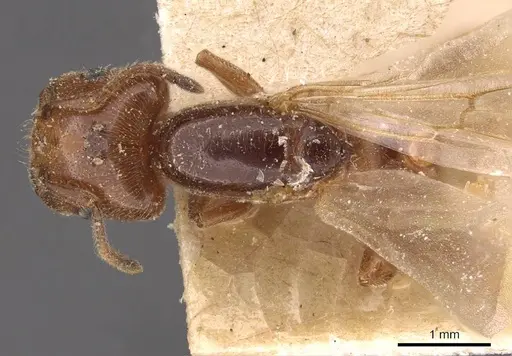
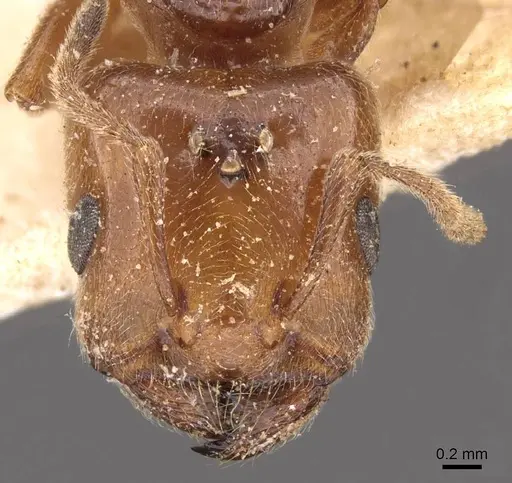
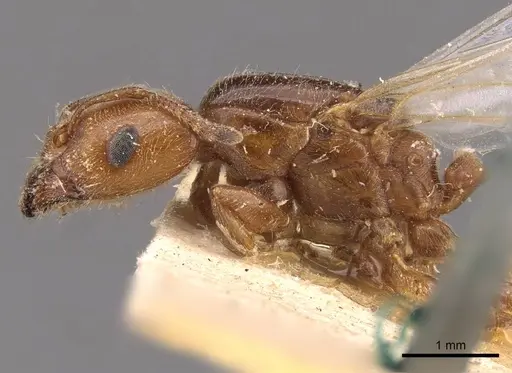
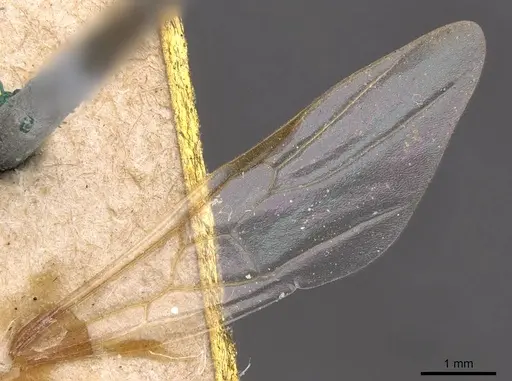
Crematogaster lorteti shows a June to August flight window. Peak activity occurs in July, with nuptial flights distributed across 3 months.

Crematogaster lorteti
- Scientific Name
- Crematogaster lorteti
- Tribe
- Crematogastrini
- Subfamily
- Myrmicinae
- Author
- Forel, 1910
- Distribution
- Found in 7 countries
- Nuptial Flight
- from June to August, peaking in July
AI Identifiable
try →
Crematogaster lorteti Overview
Crematogaster lorteti is an ant species of the genus Crematogaster. It is primarily documented in 7 countries , including Bulgaria, Cyprus, Greece. Detailed taxonomic data and occurrence records can be further explored via authoritative databases such as AntWeb or the Global Biodiversity Information Facility (GBIF).
The nuptial flight of Crematogaster lorteti is a significant biological event, typically occurring from June to August, peaking in July. During this time, winged queens and males leave the nest to mate and establish new colonies.
Crematogaster lorteti
Crematogaster lorteti is a small ant species known for its distinctive heart-shaped gaster that it can raise like an acrobat, giving the genus its common name 'acrobat ants'. This species has a West Palaearctic distribution, found across the northeastern and eastern Mediterranean regions including Greece, Bulgaria, Turkey, Cyprus, Israel, Lebanon, Syria, and Montenegro [1][2]. The species prefers warm habitats overgrown with Mediterranean herbs and shrubs, nesting directly in the ground between roots of herbs or grasses [3][4]. It is considered a rare species throughout its range, with most records coming from low altitudes between 95-510 meters [4].
Quick Summary
- Difficulty: Medium
- Origin & Habitat: Mediterranean region, found in Greece, Bulgaria, Turkey, Cyprus, Israel, Lebanon, Syria, and Montenegro. Prefers warm habitats with Mediterranean herbs and shrubs, often in oak forests, mountain beech forests, and stream valleys. Nests in the ground between root systems of grasses and herbs [3][4].
- Colony Type: Colony structure is not documented in scientific literature. Based on typical Crematogaster patterns, likely single-queen colonies, though this requires confirmation.
- Size & Growth:
- Queen: Size data unavailable, queen measurements have not been documented in available research.
- Worker: Size data unavailable, the research provides head and antenna measurements only (not total body length). Based on Crematogaster genus patterns, workers are likely in the 2.5-4mm range.
- Colony: Colony size is not directly documented. Based on related species and rarity, estimated up to several hundred workers.
- Growth: Moderate, inferred from genus patterns.
- Development: Estimated 6-8 weeks based on typical Crematogaster development. Specific data for C. lorteti is not available. (Development time is estimated from related species, specific data for C. lorteti is not available.)
- Antkeeping:
- Temperature: Keep at 22-26°C. This species comes from warm Mediterranean habitats, so provide a gentle temperature gradient with a warm side around 26°C and cooler area around 22°C. Room temperature in most homes within this range should work well [3].
- Humidity: Moderate humidity around 50-60%. Keep the nest substrate lightly moist but not waterlogged. These ants nest in ground cavities between roots, so they prefer somewhat stable moisture levels. Allow the substrate to dry slightly between waterings rather than keeping it constantly wet [3][4].
- Diapause: Likely required, based on distribution in temperate Mediterranean regions with distinct seasons. Reduce temperature to 10-15°C for 2-3 months during winter. This is inferred from geographic range, not specifically documented.
- Nesting: Ground-nesting species. In captivity, they do well in naturalistic setups with soil substrate or Y-tong/plaster nests with soil sections. They prefer compact spaces between roots, so provide chambers sized appropriately for their small worker size. They also forage on vertical surfaces in nature (oak trunks at ground level), so include some vertical foraging space [4].
- Behavior: Crematogaster ants are known for their defensive behavior, they can raise their heart-shaped gaster over their head and spray formic acid at predators. They are generally not aggressive toward keepers but will defend their nest vigorously. Workers are active foragers, both on the ground and on vertical surfaces. They are moderate escape artists due to their small size, use standard barrier methods like fluon on test tube rims.
- Common Issues: small worker size means escape prevention must be good, they can squeeze through tiny gaps, rare species in the wild, wild-caught colonies may be difficult to establish, mediterranean origin means they need warmth, cold rooms may cause colony decline, ground-nesting behavior requires appropriate substrate or nest setup, winter dormancy is likely required but specific requirements are not well documented
Nuptial Flight Activity Analysis 60 observations
Flight Activity by Hour 60 observations
Crematogaster lorteti nuptial flight activity peaks around 20:00 during the evening. Activity is spread across a 24-hour window (00:00–23:00). A secondary activity peak occurs around 22:00. Times may be influenced by human observation patterns.
Natural History and Distribution
Crematogaster lorteti is a rare Mediterranean ant species with a distribution spanning the northeastern and eastern Mediterranean. It has been documented in Greece (Aegean Islands, Macedonia, Peloponnese, Sterea Ellas, Thessaly, Thrace), Bulgaria, Turkey, Cyprus, Israel, Lebanon, Syria, and Montenegro [2][5][3]. The species was only recently confirmed in Bulgaria in 2022, where previous records had been misidentified as Crematogaster auberti [6]. In Greece, it has been found in various habitats including Mediterranean oak forests, mountain beech forests, and stream valleys with plane trees [4]. All Greek records come from low altitudes between 95-510 meters, indicating a strong preference for warmer, lower-elevation sites [4]. The species is considered strictly Mediterranean in its ecological requirements [7].
Nest Preferences and Housing
In the wild, C. lorteti nests directly in the ground, typically between the roots of herbs or grasses [3][4]. Workers have been observed foraging on oak trunks but only in the ground-level portion of the tree, not climbing high into the canopy [4]. For captive care, provide a naturalistic setup with a soil substrate or a hybrid nest (like a Y-tong or plaster nest with a soil chamber attached). The chambers should be appropriately sized for their small worker size, tight spaces that mimic their natural root-gap nesting environment work best. Include some vertical space or structures for foraging since they naturally explore vertical surfaces.
Temperature and Seasonal Care
As a Mediterranean species from warm, low-altitude habitats, C. lorteti requires warmer temperatures than many temperate ants. Keep the nest area at 22-26°C, with a gentle gradient allowing workers to choose their preferred temperature zone. A heating cable or mat on one side of the nest can create this gradient. Based on their distribution in temperate regions with distinct seasons, they likely require a winter dormancy period. Reduce temperatures to 10-15°C for 2-3 months during winter months. This diapause period is important for colony health and likely triggers reproductive cycles in spring. Do not keep them at room temperature year-round without a cooling period. [3][4]
Feeding and Diet
Crematogaster species typically feed on honeydew from aphids and scale insects, along with small insects and other protein sources. Provide a varied diet including sugar water or honey as an energy source, and protein sources like small insects (fruit flies, small crickets, mealworms). Since they are small ants, prey items should be appropriately sized. Offer sugar sources consistently as they need carbohydrates for their active foraging. Protein should be provided 2-3 times per week for established colonies. Remove uneaten prey after 24 hours to prevent mold issues.
Behavior and Defense
The genus Crematogaster gets its common name 'acrobat ants' from their distinctive defensive behavior. When threatened, workers can raise their heart-shaped gaster over their head like an acrobat balancing on their legs. They can then spray formic acid at the threat. This makes them effective defenders of their nest, though they are not typically aggressive toward keepers. Workers are active foragers, both on the ground and on vertical surfaces. They are moderate escape risks due to their small size, ensure that any test tube or formicarium setup has proper barriers. [4]
Colony Establishment and Growth
This is a rare species in the wild, which means established colonies may be difficult to acquire. If you obtain a founding queen, she will likely seal herself in a chamber and raise the first brood alone using stored fat reserves (claustral founding, inferred from genus patterns). The first workers (nanitics) will be smaller than mature workers. Colony growth is expected to be moderate, not as fast as some tropical species but faster than some slow-growing temperate ants. Expect 6-8 weeks from egg to first worker at optimal temperatures. Once established, colonies may reach several hundred workers over time, though maximum colony size is not well documented for this species.
Frequently Asked Questions
How long does it take for Crematogaster lorteti to produce first workers?
Estimated 6-8 weeks from egg to first worker at optimal temperatures (22-26°C). This is based on typical Crematogaster genus development patterns, as specific development data for C. lorteti is not available in scientific literature.
What temperature do Crematogaster lorteti ants need?
Keep them at 22-26°C with a gentle gradient. As a Mediterranean species from warm, low-altitude habitats, they need warmth to thrive. A heating cable on one side of the nest can help maintain appropriate temperatures.
Do Crematogaster lorteti ants need hibernation?
Likely required. As a species from temperate Mediterranean regions with distinct seasons, they probably need a winter dormancy period of 2-3 months at 10-15°C. This is inferred from their geographic distribution, though specific diapause requirements are not documented.
What do Crematogaster lorteti ants eat?
Feed them sugar sources (honey water or sugar water) continuously for energy, and protein sources like small insects (fruit flies, small crickets, mealworms) 2-3 times per week. This follows typical Crematogaster diet patterns.
Are Crematogaster lorteti good for beginners?
This species is rated as Medium difficulty. While not the most challenging species, it is rare in the wild and has specific temperature requirements. Beginners should ensure they can maintain warm temperatures year-round and provide appropriate nesting setups before attempting this species.
How big do Crematogaster lorteti colonies get?
Colony size is not well documented, but based on related species and the fact that this is considered a rare species, colonies likely reach several hundred workers at maximum. They are not among the largest Crematogaster species.
Do Crematogaster lorteti ants sting?
Crematogaster ants do not have a painful sting like some ants. Instead, they defend by raising their heart-shaped gaster and spraying formic acid. This is effective against predators but generally not harmful to humans beyond mild irritation.
What type of nest is best for Crematogaster lorteti?
They are ground-nesting ants that naturally nest between roots of herbs and grasses. In captivity, naturalistic setups with soil substrate work well, or hybrid nests (Y-tong or plaster with soil chambers). Provide tight chambers scaled to their small worker size.
Can I keep multiple Crematogaster lorteti queens together?
Colony structure (monogyne vs polygyne) has not been documented for this species. Based on typical Crematogaster behavior, they likely form single-queen colonies. Combining unrelated queens is not recommended without evidence they can coexist.
Why are my Crematogaster lorteti dying?
Common causes include: temperatures too cold (below 20°C), improper humidity (too dry or waterlogged), escape through small gaps due to their tiny size, or stress from acquisition if wild-caught. Ensure proper temperature gradient, appropriate moisture levels, and excellent escape prevention.
Report an Issue
The current care sheet is based fully on literature. See inconsistencies, or something that's incorrect? Please , it will be resolved after review from an admin. Contributing to the blogs tab also helps providing information, to make us be able to further improve the caresheets. Thank you for your support!
References

This caresheet is licensed under CC BY-SA 4.0 .
CASENT0908483
View on AntWeb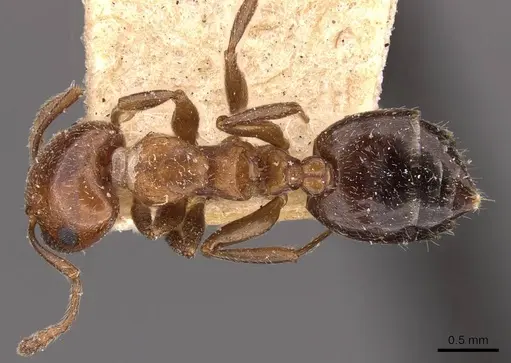
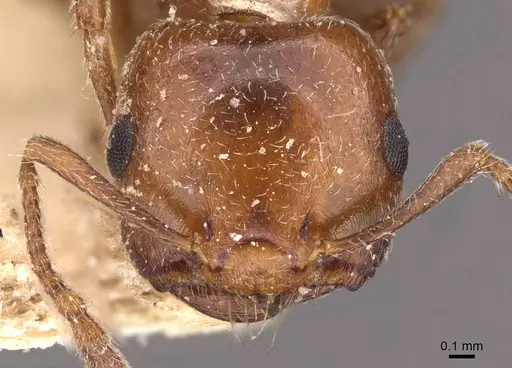
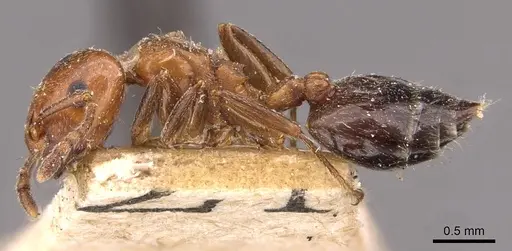
CASENT0908484
View on AntWeb