

Crematogaster larreae
- Scientific Name
- Crematogaster larreae
- Tribe
- Crematogastrini
- Subfamily
- Myrmicinae
- Author
- Buren, 1968
- Distribution
- Found in 1 countries
Crematogaster larreae Overview
Crematogaster larreae is an ant species of the genus Crematogaster. It is primarily documented in 1 countries , including United States of America. Detailed taxonomic data and occurrence records can be further explored via authoritative databases such as AntWeb or the Global Biodiversity Information Facility (GBIF).
Crematogaster larreae
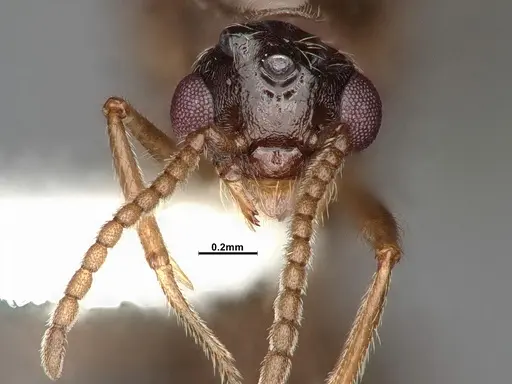
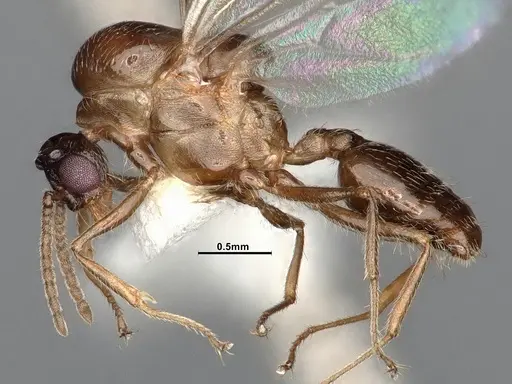
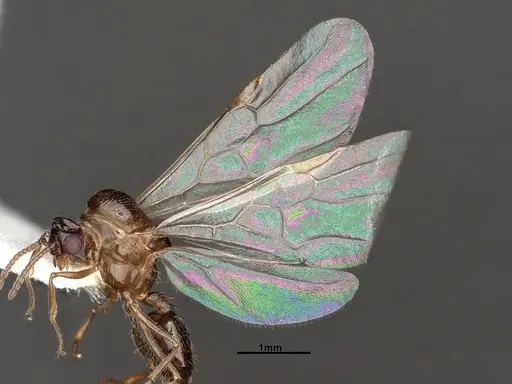
Crematogaster larreae is a small, dark ant native to the desert regions of the southwestern United States and northern Mexico. Workers measure 3-4mm and are uniformly dark brown to black, lacking the reddish coloration seen in the similar Crematogaster depilis. Queens are substantially larger at 8.5-10mm. This species has an unusually specific relationship with the creosotebush (Larrea tridentata), nesting exclusively in the roots and lower stems of this desert shrub. Colonies contain around 789 workers on average and maintain a single queen. Foragers remain active 24 hours a day, with peak activity during summer months [1][2].
Quick Summary
- Difficulty: Medium
- Origin & Habitat: Desert regions of the southwestern US (California, Arizona, west Texas) and northern Mexico, specifically in creosotebush scrub habitat at elevations between 2900-5500 feet [1][2].
- Colony Type: Monogyne (single queen) colonies with an average of 789 workers per nest. Queens are known to have ergatoid (wingless) replacement reproductives that can take over if the primary queen dies [3].
- Colony: Monogyne
- Founding: Claustral
- Size & Growth:
- Queen: 8.5-10mm [3]
- Worker: 3-4mm [3]
- Colony: Approximately 789 workers on average [3]
- Growth: Moderate
- Development: Unknown, specific development timeline has not been documented. Based on typical Crematogaster patterns, expect 6-10 weeks at optimal temperature. (Larval populations peak in fall and winter, pupae appear in spring. Males are produced in June with nuptial flights occurring late June through July [3].)
- Antkeeping:
- Temperature: Desert species, keep at warm room temperature around 22-26°C. Provide a gentle temperature gradient allowing ants to self-regulate. They are adapted to hot desert conditions but avoid extreme heat above 35°C.
- Humidity: Low to moderate. These are desert ants adapted to dry conditions. Keep nest substrate moderately dry with occasional moisture zones. Avoid damp or humid conditions that could cause mold.
- Diapause: Yes, this species experiences seasonal slowdown. Workers are active October through May in the Mojave Desert [1]. Reduce temperatures to around 15-18°C during winter months to simulate natural dormancy.
- Nesting: In nature, they nest in the roots and lower stems of creosotebush, utilizing galleries left by wood-boring beetles. In captivity, they do well in Y-tong (AAC) nests or plaster nests with dry to moderately moist conditions. Provide materials that mimic their natural root system environment.
- Behavior: Generally peaceful and non-aggressive toward keepers. Workers are active day and night, with peak foraging during summer. They tend hemiptera (aphids, scale insects) for honeydew and also scavenge dead insects. They have a mild sting but are too small to cause discomfort to humans. Their small size (under 4mm) means escape prevention should be taken seriously, use fine mesh barriers and tight-fitting lids. They are not aggressive defenders and rarely display threat postures.
- Common Issues: escape prevention is critical due to their small size, they can squeeze through tiny gaps, overhumidity can kill colonies, these are desert ants adapted to dry conditions, winter dormancy is required, colonies may decline if kept warm year-round, wild-caught colonies may have parasites that can devastate captive colonies, slow founding means colonies take time to establish, patience is essential
Housing and Nest Setup
Crematogaster larreae is a desert species adapted to dry, warm conditions. In captivity, provide a Y-tong (AAC) nest or plaster nest with low to moderate humidity. The nest should have chambers scaled appropriately for their 3-4mm worker size. Because they naturally nest in creosote bush roots, you can include small pieces of dried wood or twigs to simulate their natural environment. Keep one section of the nest slightly moist and another dry, allowing the colony to self-regulate. Outworld space should be adequate for foraging, with a water test tube as a humidity source. Use fluon or other barrier methods on the outworld rim to prevent escapes, these tiny ants are excellent climbers. [1][3]
Feeding and Diet
These ants are generalist feeders with a preference for sugar sources and protein. In the wild, they feed on nectar, honeydew from tended hemiptera, and dead insects. In captivity, offer sugar water (1:1 ratio) or honey water constantly. For protein, provide small insects like fruit flies, small mealworms, or cricket pieces. Feed protein 2-3 times per week, removing uneaten prey after 24 hours. They will also accept small amounts of seeds or other organic matter. Fresh water should always be available. Monitor feeding patterns, these ants are moderate eaters compared to some other Crematogaster species. [3]
Temperature and Seasonal Care
As a desert species, Crematogaster larreae prefers warm conditions. Keep the nest area at 22-26°C, with a slight gradient if possible. A heating cable on one side of the nest can create this gradient, place it on top of the nest material to avoid drying out the nest too quickly. During summer months (their peak activity period), room temperature is often sufficient. Winter care requires a cooling period, reduce temperatures to 15-18°C for 2-3 months starting in late fall. This mimics their natural seasonal cycle where workers are less active from October through May in their native desert habitat. Do not skip this dormancy period as it is important for colony health and reproductive development. [1][3]
Colony Development and Founding
New colonies start claustrally, the queen seals herself in a small chamber and raises her first workers (nanitics) entirely on stored fat reserves. She does not leave to forage during founding. Expect the first workers to emerge 6-10 weeks after founding, though this timeline is estimated based on typical Crematogaster behavior since specific data for this species is lacking. Initial colony growth is slow as the queen can only produce a small number of workers initially. Once the first nanitics emerge, the colony expands more quickly as workers can forage for food. Colonies reach approximately 789 workers on average in established nests. The colony produces males in June, with nuptial flights occurring during the last two weeks of June through July. [3]
Behavior and Temperament
Crematogaster larreae workers are active around the clock, though peak foraging occurs during summer months. They are generally peaceful and not aggressive toward keepers. When disturbed, they may raise their abdomen (the characteristic Crematogaster gaster tilt) and release a mild chemical alarm, but they rarely bite or sting. Workers are excellent climbers and can scale smooth surfaces easily, making escape prevention essential. They tend to form trails when foraging and will establish consistent paths to food sources. The colony maintains a single queen with documented ergatoid replacement reproductives that can take over if the primary queen dies. This social structure makes the colony resilient to queen loss. [3]
Frequently Asked Questions
How long does it take for Crematogaster larreae to produce first workers?
The specific timeline is unconfirmed, but based on typical Crematogaster patterns, expect first workers (nanitics) to emerge 6-10 weeks after the queen lays her first eggs. Founding is claustral, the queen seals herself in and relies on stored fat reserves until her first workers hatch.
Do Crematogaster larreae ants sting?
Yes, they have a stinger, but it is too small to penetrate human skin or cause any noticeable pain. They are considered non-aggressive and pose no danger to keepers.
What temperature do Crematogaster larreae need?
Keep them at warm room temperature, ideally 22-26°C. They are desert-adapted and can tolerate higher temperatures, but avoid extremes above 35°C. A temperature gradient is beneficial.
Do Crematogaster larreae need hibernation?
Yes, they require a winter dormancy period. In their native desert habitat, workers are less active from October through May. Reduce temperatures to 15-18°C for 2-3 months during winter to maintain natural seasonal cycles.
How big do Crematogaster larreae colonies get?
Established colonies reach approximately 789 workers on average. This is a moderate-sized colony for Crematogaster, not among the largest but substantial enough for an engaging display.
Can I keep multiple Crematogaster larreae queens together?
No, this species is monogyne, colonies have a single queen. Unlike some Crematogaster species that can be polygynous, C. larreae maintains one queen per colony. However, they do have ergatoid replacement reproductives that can take over if the primary queen dies.
What do Crematogaster larreae eat?
They are generalists that accept sugar sources (honey water, sugar water) and protein (small insects like fruit flies, mealworms, crickets). In the wild, they feed on nectar, honeydew from aphids, and dead insects.
Are Crematogaster larreae good for beginners?
They are moderate difficulty. Their desert-adapted nature requires attention to humidity (keep it low) and seasonal temperature changes (winter dormancy). They are not aggressive and are fascinating to watch, but their small size and specific habitat requirements make them better suited for keepers with some experience.
When do Crematogaster larreae have nuptial flights?
Males are produced in June, with nuptial flights occurring during the last two weeks of June through July. This timing coincides with the summer active season in their desert habitat.
Why are my Crematogaster larreae dying?
The most common causes are overhumidity (these are desert ants that need dry conditions), lack of winter dormancy, or escapes due to their small size. Check that the nest is not too damp, ensure you are providing a winter cooling period, and verify that escape barriers are secure.
References

This caresheet is licensed under CC BY-SA 4.0 .
CASENT4031433
View on AntWeb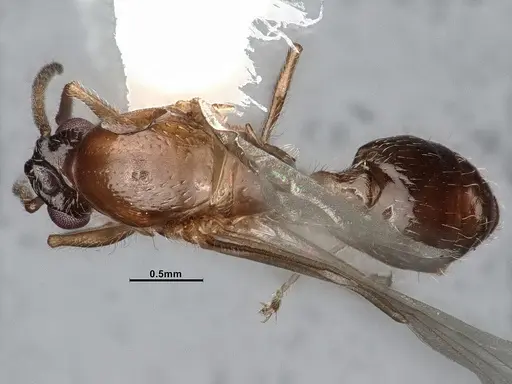
Literature
Loading...Loading products...