

Crematogaster inflata
- Scientific Name
- Crematogaster inflata
- Tribe
- Crematogastrini
- Subfamily
- Myrmicinae
- Author
- Smith, 1857
- Distribution
- Found in 4 countries
Crematogaster inflata Overview
Crematogaster inflata is an ant species of the genus Crematogaster. It is primarily documented in 4 countries , including Brunei Darussalam, Indonesia, Malaysia. Detailed taxonomic data and occurrence records can be further explored via authoritative databases such as AntWeb or the Global Biodiversity Information Facility (GBIF).
Crematogaster inflata
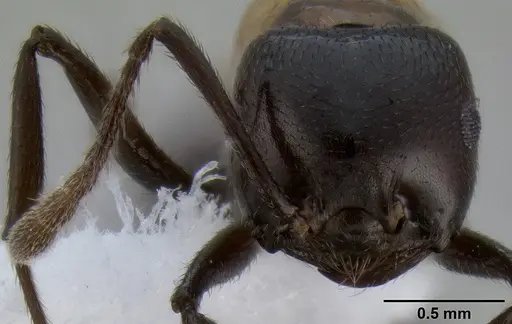
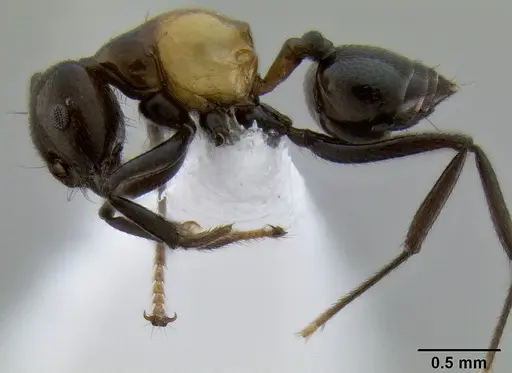
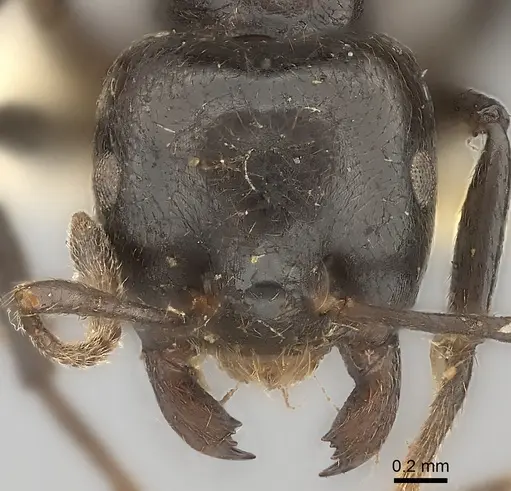
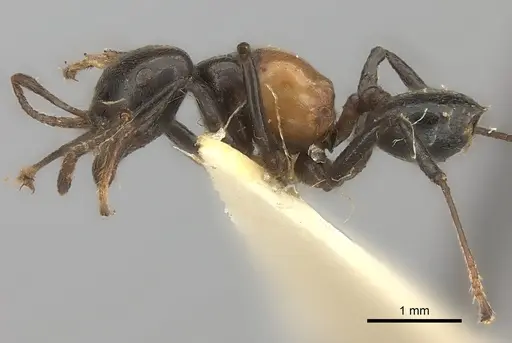
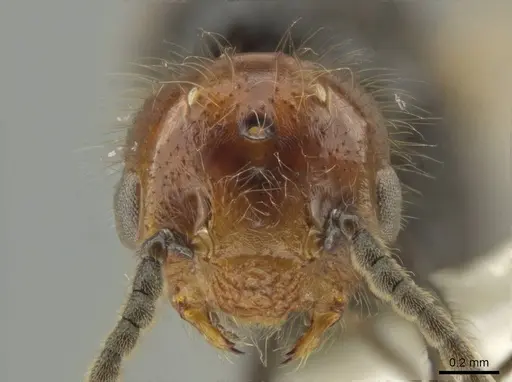
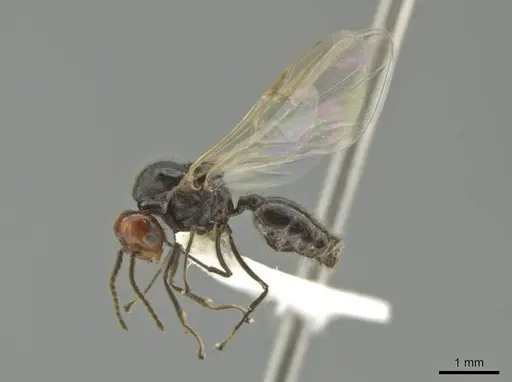
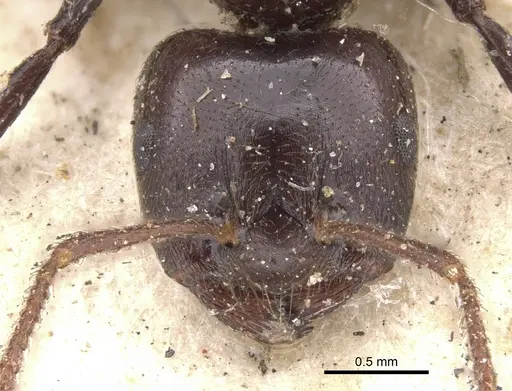
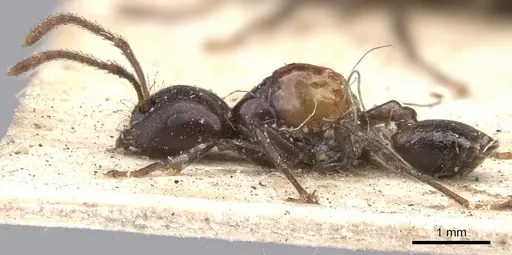
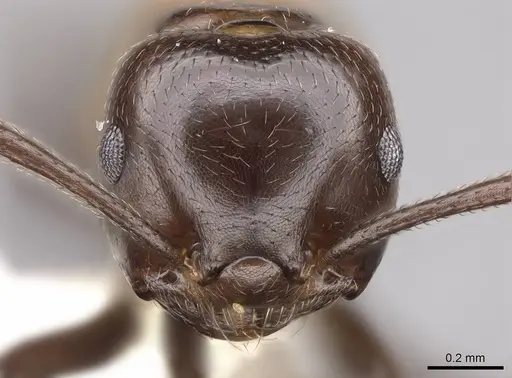
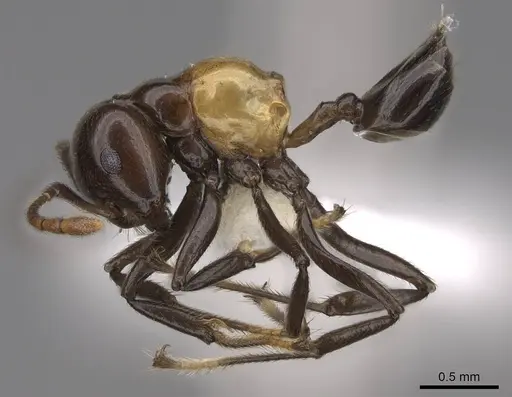
Crematogaster inflata is a distinctive arboreal ant found throughout Southeast Asia, from Thailand and Malaysia through Borneo to the Philippines. Workers are polymorphic, ranging from 4-5mm in total length, with a striking bicolored pattern: the head, mesosoma, petiole, postpetiole, gaster and legs are red-brown, while the metanotal and propodeal area is bright yellow [1][2]. This yellow coloration corresponds to the position of their massively enlarged metapleural glands, which serve as a warning signal to predators, a form of Batesian mimicry [3][4]. The propodeum is strongly swollen and lacks spines, giving the ant a unique profile among acrobat ants [5].
What makes this species truly remarkable is its defensive system. C. inflata possesses the largest metapleural glands known among ants, with reservoirs extending forward to the junction between the pro- and mesothorax and over 1400 secretory cells [3]. When threatened, workers can instantly expel large amounts of a whitish, viscous, sticky secretion containing toxic alkylresorcinols [4][6]. This secretion acts as both a chemical deterrent and a physical glue, ensnaring attackers. The bright yellow coloration advertises this unpalatability, chicks in studies learned to avoid these ants after just 2-7 encounters [4]. This makes C. inflata a Batesian mimicry model, with other arthropods (including Camponotus ants and beetles) evolving similar yellow coloring to benefit from predator learning [1].
Quick Summary
- Difficulty: Medium
- Origin & Habitat: Southeast Asian rainforests, found in Borneo, Brunei, Malaysia, Indonesia, Philippines, Singapore, Thailand, and eastern India. Inhabits secondary wet forest and lowland dipterocarp rainforest, typically nesting in large cavities in tree trunks in the canopy [7][3][8].
- Colony Type: Colony structure is unconfirmed. Based on typical Crematogaster patterns, likely single-queen (monogyne) colonies, though this requires confirmation.
- Size & Growth:
- Queen: Undocumented, no queen measurements available
- Worker: Polymorphic workers: 0.86-1.08mm head width (HW),1.18-1.34mm mesosoma length (WL) [1]. Total length approximately 4-5mm [9].
- Colony: Unknown, no colony size data available
- Growth: Unknown, development timeline not documented
- Development: Unconfirmed, no direct development data available. Based on typical Crematogaster patterns in tropical conditions, estimate 4-6 weeks at 26-28°C. (Development time is unconfirmed for this species. Related tropical Crematogaster species typically develop faster than temperate species due to year-round warm conditions.)
- Antkeeping:
- Temperature: Keep at 24-28°C. As a tropical arboreal ant from Southeast Asian rainforests, they prefer warm, stable conditions. Room temperature (24-26°C) is likely suitable, with a slight heating gradient if your space runs cooler.
- Humidity: Maintain 70-85% humidity. These rainforest ants need consistent moisture, use a moist formicarium or provide humidity through a water reservoir. The nest substrate should remain damp but not waterlogged.
- Diapause: No, as a tropical species from near-equatorial regions, they do not require hibernation. Keep them at stable temperatures year-round.
- Nesting: Arboreal nesters, in captivity they do well in acrylic nests, Y-tong, or plaster formicariums with chambers scaled to their size. Provide connections to an outworld for foraging. Avoid completely dry setups.
- Behavior: Active and alert foragers that travel in trails through vegetation [4]. They use trail pheromones from their hind leg tibia to recruit nestmates to food sources [4]. When disturbed, they readily deploy their defensive metapleural gland secretions, a sticky, whitish droplet that repels attackers [3][4]. Workers are aggressive toward other ant species and can attack and kill single workers of related species like Crematogaster modiglianii [10]. They are unpalatable to vertebrate predators due to their chemical defenses. Escape prevention should be moderate, workers are small but not among the tiniest ants, though their arboreal nature means they explore vertical spaces readily.
- Common Issues: metapleural gland secretion can glue workers together if they fight in confined spaces, provide adequate space and minimize disturbances, arboreal nature means they explore and may escape if outworld connections have gaps, use tight-fitting connections, tropical humidity requirements can lead to mold in poorly ventilated nests, ensure adequate ventilation, wild-caught colonies may carry parasites from rainforest environments, quarantine and observe new colonies, their defensive secretions have a strong chemical odor that may linger, keep colony setup in ventilated areas
The Remarkable Metapleural Gland System
Crematogaster inflata possesses the most impressive defensive gland system of any known ant species. Their metapleural glands are hypertrophied to an extraordinary degree, the reservoirs extend anteriorly all the way to the junction between the pro- and mesothorax, and contain over 1400 secretory cells per side [3]. When a worker is threatened, it can instantly expel a large droplet of whitish, viscous, sticky secretion through the large, permanently open metathoracic openings [3][4]. This secretion contains toxic compounds including 6-alkylresorcinols and 6-alkylsalicylic acids [6][11]. The secretion serves dual purposes: it acts as a chemical deterrent (the compounds are unpalatable to predators) and as a physical glue that can immobilize attackers [12][13]. Studies show chicks quickly learn to avoid these ants after just 2-7 encounters [4]. The bright yellow coloration of the metathorax area serves as an honest signal of this unpalatability, a classic example of Batesian mimicry where other arthropods have evolved similar coloring to benefit from predator learning [3][1].
Housing and Nest Setup
As an arboreal ant species that naturally nests in tree cavities, C. inflata does well in acrylic nests, Y-tong (AAC) formicariums, or plaster nests with appropriately sized chambers. The chambers should be scaled to their worker size (roughly 4-5mm) with standard passage widths. Provide a water reservoir or hydration system to maintain humidity, as these rainforest ants need consistent moisture [3][8]. Connect the nest to an outworld that allows for vertical exploration, they naturally forage in vegetation and will explore upward. Use tight-fitting connections as they are active foragers, though not among the smallest ants so escape risk is moderate. Ensure some ventilation to prevent mold while maintaining humidity.
Feeding and Diet
In their natural rainforest habitat, C. inflata is a generalist forager that exploits various food sources. They are known to engage in myrmecochory, seed dispersal, having been observed removing seeds of Globba franciscii and G. propinqua (Zingiberaceae) in Borneo rainforests, with a mean transport distance of 6.8cm [14]. They also use trail pheromones from their hind leg tibia to recruit nestmates to food sources [4]. In captivity, offer a varied diet including sugar water or honey as an energy source, and protein sources like small insects (fruit flies, small crickets, mealworms). Their small worker size means prey items should be appropriately sized. The presence of their defensive secretions suggests they may also tend honeydew-producing insects in captivity, though this is not directly documented.
Temperature and Seasonal Care
As a tropical species from Southeast Asian rainforests near the equator, C. inflata requires warm, stable temperatures year-round. Keep the nest area at 24-28°C, room temperature in most homes (24-26°C) should be suitable. If your space runs cooler, a small heating cable on one side of the nest can provide a gentle gradient. Avoid temperature drops below 22°C for extended periods. Unlike temperate ants, they do not require diapause or hibernation, maintain consistent conditions throughout the year. The key is stability rather than exact temperature precision. Their natural range spans regions with minimal seasonal temperature variation (Singapore, Borneo, Malaysia), so they have not evolved cold tolerance.
Defense and Handling Notes
When keeping C. inflata, be aware that they have one of the most potent defensive systems in the ant world. When disturbed, workers readily expel their sticky metapleural gland secretions [3][4]. This secretion can glue together anything it contacts, including other ants and, unfortunately, your forceps if you're not careful. The secretion has a low pH (3-4) and contains toxic alkylresorcinols [12][13]. While not dangerous to humans in small amounts, it can be irritating and has a noticeable chemical odor. Handle their nest setup gently and avoid excessive disturbances. The bright yellow coloration serves as a warning, these ants are unpalatable and defended, not passive. They can also be aggressive toward other ant species, with documented attacks on Crematogaster modiglianii workers [10].
Frequently Asked Questions
How long does it take for Crematogaster inflata to produce first workers?
The exact development timeline is unconfirmed for this species. Based on typical tropical Crematogaster patterns, expect first workers (nanitics) in approximately 4-6 weeks at optimal warm temperatures (26-28°C). The lack of specific development data makes this an estimate.
Do Crematogaster inflata ants sting?
Crematogaster ants have a stinger but rely primarily on their metapleural gland secretions for defense rather than stinging. Their defense is chemical, they can expel a sticky, toxic droplet that deters predators [3][4]. The bright yellow coloration advertises this unpalatability.
Are Crematogaster inflata good for beginners?
This species is rated as Medium difficulty. While visually striking and fascinating, they have specific humidity and temperature requirements as tropical rainforest ants. Their potent defensive secretions and arboreal nature require appropriate housing. They are not the best choice for absolute beginners, but manageable for those with some antkeeping experience.
What do Crematogaster inflata eat?
They are generalist foragers. Offer sugar sources (honey water, sugar water) for energy, and protein (small insects like fruit flies, pinhead crickets, mealworms) for colony growth. They have been documented dispersing seeds in the wild, showing they exploit diverse food sources [14].
Do Crematogaster inflata need hibernation?
No. As a tropical ant from near-equatorial regions (Singapore, Borneo, Malaysia), they do not require hibernation. Keep them at stable warm temperatures (24-28°C) year-round without seasonal cooling.
Can I keep multiple Crematogaster inflata queens together?
Colony structure is unconfirmed for this species. Most Crematogaster are monogyne (single queen), but polygyny has been documented in some related species. Without specific data on C. inflata, it is not recommended to combine unrelated foundress queens, start with a single queen colony.
Why is Crematogaster inflata yellow?
The bright yellow coloration on the metathorax corresponds to the position of their massively enlarged metapleural glands [3]. This serves as an aposematic (warning) signal to predators, the yellow advertises that the ant is unpalatable and chemically defended. This is an example of Batesian mimicry, where other arthropods have evolved similar coloring to benefit from predator learning [4][1].
How big do Crematogaster inflata colonies get?
Colony size is not documented in available literature. As an arboreal species with large defensive glands, colonies are likely moderate in size compared to some Crematogaster species that can reach thousands of workers. More research is needed on maximum colony size.
What is the best nest type for Crematogaster inflata?
Arboreal ants do well in acrylic nests, Y-tong (AAC) formicariums, or plaster nests with chambers scaled to their worker size. Provide humidity through a water reservoir and connect to an outworld for foraging. Avoid completely dry setups.
Are Crematogaster inflata aggressive?
They are defensive but not typically aggressive toward humans. Their main defense is chemical, they readily deploy metapleural gland secretions when threatened [3]. They can be aggressive toward other ant species, with documented attacks on related Crematogaster workers [10]. They are unpalatable to vertebrate predators.
References

This caresheet is licensed under CC BY-SA 4.0 .
CASENT0193621
View on AntWeb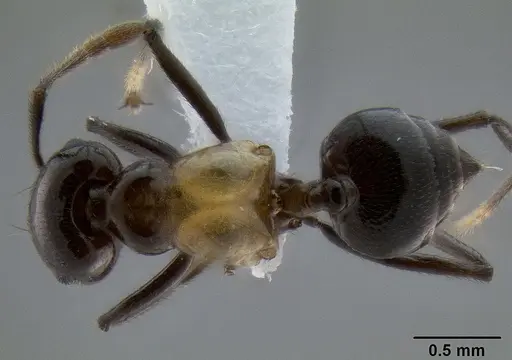
CASENT0217847
View on AntWeb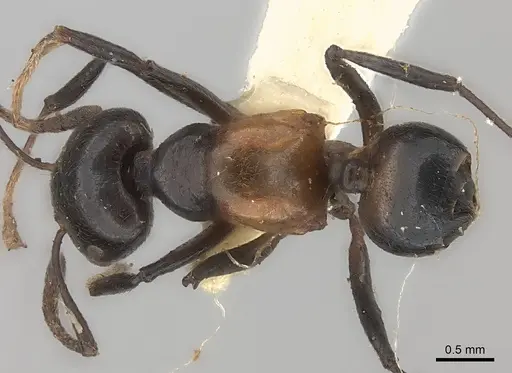
CASENT0634240
View on AntWeb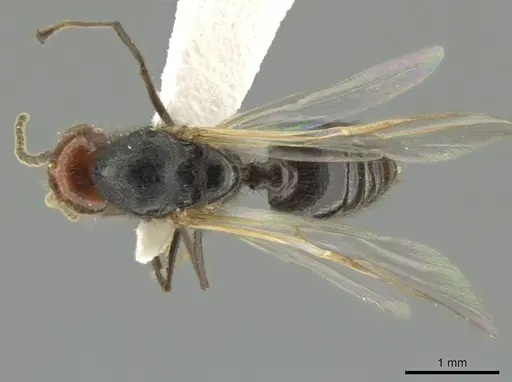
CASENT0901438
View on AntWeb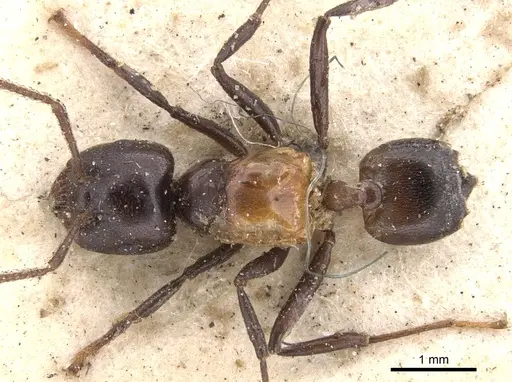
CASENT0922670
View on AntWeb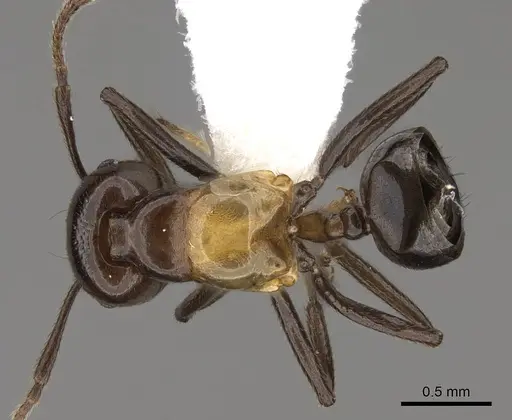
Literature
Loading...Loading products...