

Crematogaster hafahafa
- Scientific Name
- Crematogaster hafahafa
- Tribe
- Crematogastrini
- Subfamily
- Myrmicinae
- Author
- Blaimer, 2013
- Distribution
- Found in 1 countries
Crematogaster hafahafa Overview
Crematogaster hafahafa is an ant species of the genus Crematogaster. It is primarily documented in 1 countries , including Madagascar. Detailed taxonomic data and occurrence records can be further explored via authoritative databases such as AntWeb or the Global Biodiversity Information Facility (GBIF).
Crematogaster hafahafa
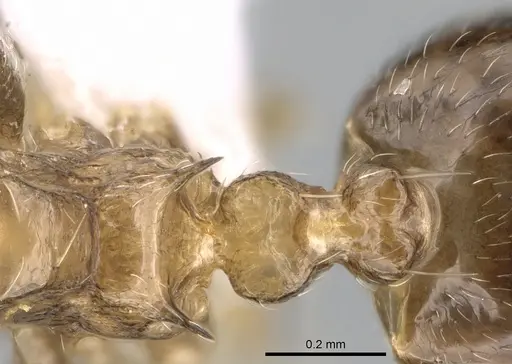
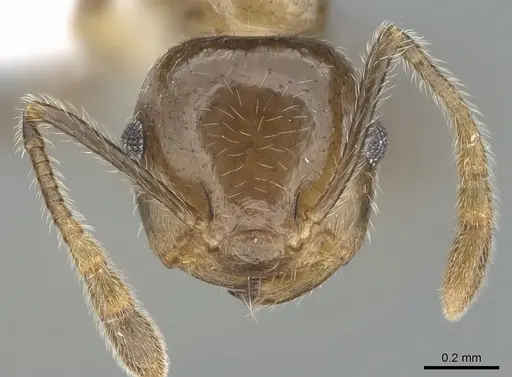
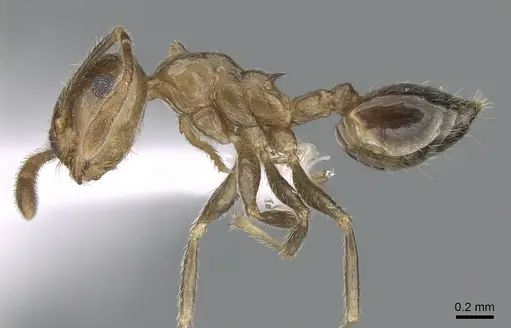
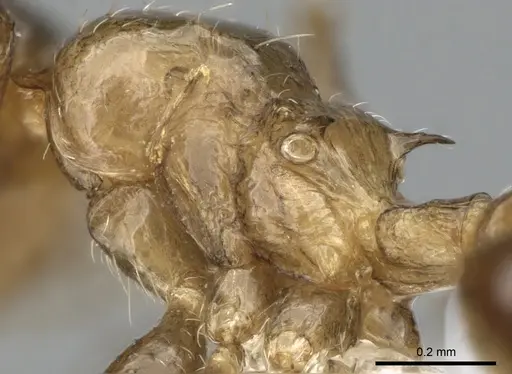
Crematogaster hafahafa is an extremely rare ant species from Madagascar, only known from two specimens collected in mid-elevation rainforest in the Montagne d'Ambre massif at 925 meters elevation. These are tiny ants, workers measure just 0.68-0.72mm in head width, making them among the smallest ants in the genus. They belong to the Crematogaster kelleri group and can be identified by their rounded promesonotum (the middle body section) in side view, which distinguishes them from the similar C. kelleri. Their coloration is pale yellow with darker abdominal segments. The species name 'hafahafa' means 'peculiar or odd' in Malagasy, reflecting their unusual appearance and extreme rarity [1]. Nothing is known about their natural history, behavior, or colony structure.
Quick Summary
- Difficulty: Expert
- Origin & Habitat: Montagne d'Ambre massif in northern Madagascar, mid-elevation rainforest at 925m elevation. Collected by beating low vegetation [1].
- Colony Type: Unknown, only worker specimens have been collected, no queens or colony observations exist.
- Size & Growth:
- Queen: Unknown, queen caste has never been documented [1]
- Worker: 0.68-0.72mm head width,0.73-0.74mm Weber's length [1]
- Colony: Unknown, colony size has never been studied
- Growth: Unknown
- Development: Unknown, no development data exists for this species (Development timeline has not been studied. Based on typical Crematogaster patterns from related species, expect several months at tropical temperatures, but this is entirely speculative.)
- Antkeeping:
- Temperature: Keep at tropical temperatures around 24-28°C. This is inferred from their Madagascar rainforest habitat and related species' preferences. Monitor colony activity and adjust as needed.
- Humidity: High humidity is essential, they come from montane rainforest in Madagascar. Keep nest substrate consistently moist but not waterlogged. Provide a water source.
- Diapause: Unknown, no seasonal data exists. As a tropical rainforest species from Madagascar, they likely do not require hibernation, but this is unconfirmed.
- Nesting: Arboreal or semi-arboreal nesting is likely based on collection method (beating low vegetation) and related species in the C. kelleri group. A naturalistic setup with vegetation or a Y-tong/plaster nest with high humidity works well. Avoid dry conditions.
- Behavior: Behavior is completely unstudied. Based on genus patterns, they are likely relatively docile with typical Crematogaster heart-shaped abdomens and the ability to raise their abdomen when threatened. They may use chemical defenses. Their tiny size means excellent escape prevention is critical, they can squeeze through standard gaps. Foraging style is unknown but likely involves foraging on vegetation.
- Common Issues: this species is virtually unknown in captivity, extreme caution is advised, no established care protocols exist for this species, tiny size makes escape prevention challenging, no information on diet acceptance, experimental feeding required, no data on colony founding or queen behavior
Why This Species Is Extremely Challenging
Crematogaster hafahafa represents one of the most poorly known ant species in the hobby. It was only described in 2013 from two worker specimens collected in Madagascar, and absolutely no natural history research exists for this species. This means there is no data on colony size, queen behavior, founding, diet, temperature preferences, or any other aspect of their biology. You will essentially be pioneering captive care for a species that has never been kept in captivity before. This makes it an expert-level project suitable only for experienced antkeepers who are prepared for experimental husbandry and who understand that most attempts may fail due to our complete lack of knowledge about their needs. The species was named 'hafahafa' meaning 'peculiar or odd' in Malagasy, an apt description for an ant that remains mysterious even to scientists [1].
Inferred Care Based on Related Species
Since direct research on C. hafahafa does not exist, we can make educated inferences from the Crematogaster kelleri group and general Crematogaster genus behavior. These ants were collected by beating low vegetation, suggesting they are arboreal or at least forage in bushes and low plants, not ground-nesting. Related species in the C. kelleri group likely nest in vegetation or rotting wood in humid forest environments. Expect them to prefer high humidity and may need vertical space or climbing structures. Most Crematogaster species are omnivorous, accepting both sugar sources and protein, but specific dietary preferences for this species are completely unknown. Start with standard Crematogaster offerings: sugar water, honey, and small protein sources like fruit flies or pinhead crickets, and observe what they accept [1].
Housing Recommendations
Given their likely arboreal nature and tiny size, use a setup that prevents escape while providing appropriate humidity. A small test tube setup can work for founding colonies, but their small size means you must use cotton plugs that are well-packed or use fine mesh barriers. For established colonies, a small naturalistic setup with cork or twigs for climbing, or a Y-tong/plaster nest with high humidity chambers would be appropriate. The key is maintaining consistently high humidity without flooding, these are rainforest ants from montane Madagascar. Ensure excellent escape prevention regardless of setup, as their tiny size allows them to squeeze through gaps that would hold larger ants. A water test tube should always be available.
Temperature and Seasonal Care
As a tropical species from Madagascar, keep them warm, aim for 24-28°C. This range is inferred from their montane rainforest habitat in northern Madagascar and aligns with typical tropical ant requirements. Use a heating cable on one side of the nest if room temperature falls below this range. Place the heating element on top of the nest to avoid evaporating moisture too quickly. Whether they require any seasonal temperature variation is completely unknown. There is no data on nuptial flight timing, so if you ever obtain a queen, there is no guidance on when to expect mating flights. This is entirely uncharted territory for this species.
Frequently Asked Questions
Can I keep Crematogaster hafahafa as a pet ant?
This species is virtually unavailable in the antkeeping hobby and has never been kept in captivity. It is only known from two wild specimens collected in Madagascar in 2001. Unless you are a professional researcher with access to field collection permits in Madagascar, you will not be able to obtain this species. Even if you could, the complete lack of any care information makes successful keeping extremely unlikely. This is not a species for hobbyists, it remains a mystery to science.
How big do Crematogaster hafahafa colonies get?
Unknown, colony size has never been studied. Only two worker specimens have ever been collected. Related species in the Crematogaster kelleri group may form colonies of dozens to a few hundred workers, but this is purely speculative for C. hafahafa.
What do Crematogaster hafahafa eat?
Diet is completely unconfirmed. Based on genus patterns, they likely accept sugar sources (honey, sugar water) and small protein prey. Their tiny size suggests they would need very small prey items like fruit flies, springtails, or tiny arthropods. Experimental feeding would be required to determine actual acceptance.
Do Crematogaster hafahafa ants sting?
Unknown, no behavioral observations exist for this species. Most Crematogaster ants have the ability to raise their heart-shaped abdomen and may use chemical defenses rather than stinging. Their tiny size (under 1mm) means any sting would likely be imperceptible to humans.
Are Crematogaster hafahafa good for beginners?
Absolutely not. This species is one of the least known ants in the world from a husbandry perspective. There is zero established care information, no queen specimens, no colony observations, and no developmental data. Only attempt this species if you are an expert antkeeper conducting original research and are prepared for experimental care with uncertain outcomes.
What is the best nest type for Crematogaster hafahafa?
Unknown, no captive colonies have ever been established. Based on their collection from beating low vegetation, they likely prefer arboreal or semi-arboreal setups. A small Y-tong or plaster nest with high humidity, possibly with climbing structures, would be the most logical starting point. Their tiny size requires excellent escape prevention.
How long does it take for Crematogaster hafahafa to develop from egg to worker?
Unknown, no development data exists for this species. No eggs, larvae, pupae, or colony development has ever been documented. Any timeline would be pure speculation based on typical Crematogaster development.
Do Crematogaster hafahafa need hibernation?
Unknown, no seasonal data exists. As a tropical species from Madagascar, they likely do not require hibernation, but this is entirely unconfirmed. There is no information on what conditions they experience seasonally in their montane rainforest habitat.
Can I keep multiple Crematogaster hafahafa queens together?
Unknown, queen caste has never been documented. We do not know if they are monogyne (single queen), polygyne (multiple queens), or have any specific colony structure. There is no data to guide this decision.
Where does Crematogaster hafahafa live in the wild?
Only known from the Montagne d'Ambre massif in northern Madagascar, at 925 meters elevation in mid-elevation rainforest. They were collected by beating low vegetation, suggesting they forage in bushes and small trees rather than on the ground. They occur in sympatry with Crematogaster kelleri [1].
References

This caresheet is licensed under CC BY-SA 4.0 .
CASENT0436524
View on AntWeb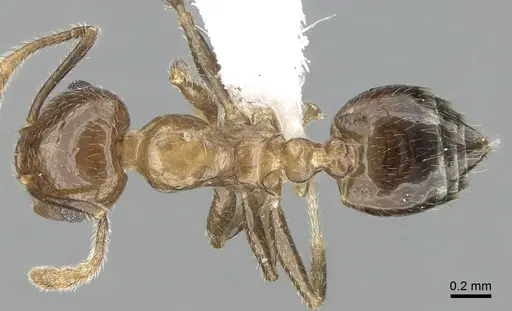
Literature
Loading...Loading products...