

Crematogaster goeldii
- Scientific Name
- Crematogaster goeldii
- Subgenus
- Orthocrema
- Tribe
- Crematogastrini
- Subfamily
- Myrmicinae
- Author
- Forel, 1903
- Distribution
- Found in 4 countries
Crematogaster goeldii Overview
Crematogaster goeldii is an ant species of the genus Crematogaster. It is primarily documented in 4 countries , including Brazil, Colombia, Guyana. Detailed taxonomic data and occurrence records can be further explored via authoritative databases such as AntWeb or the Global Biodiversity Information Facility (GBIF).
Crematogaster goeldii
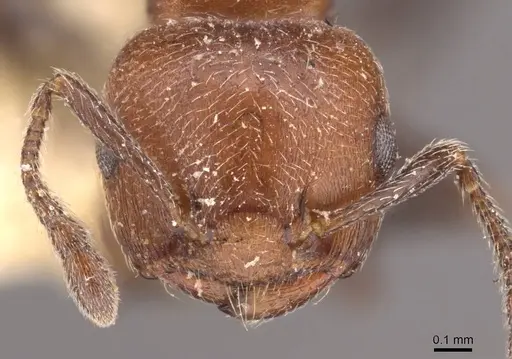
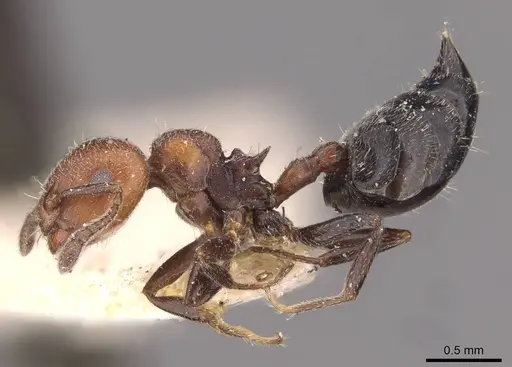
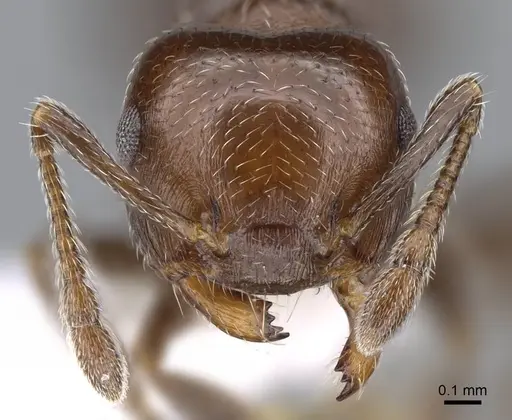
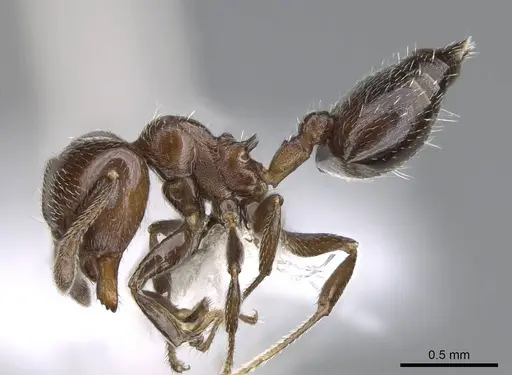
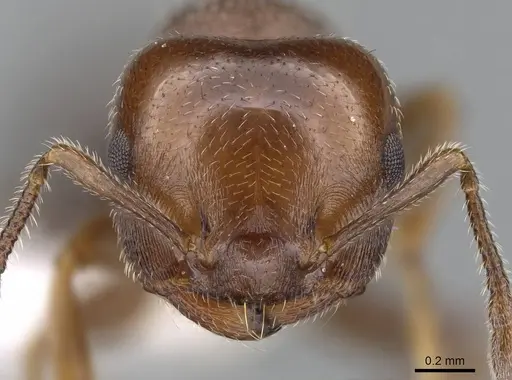
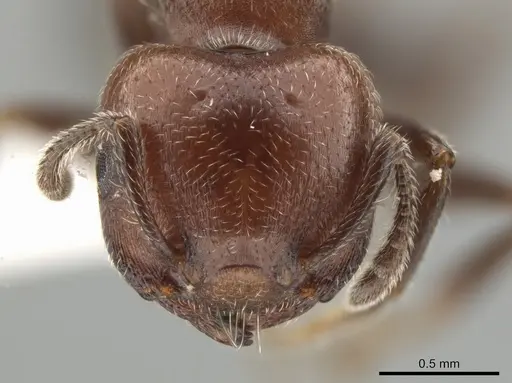
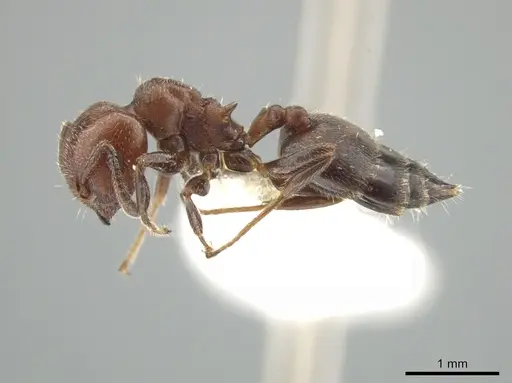
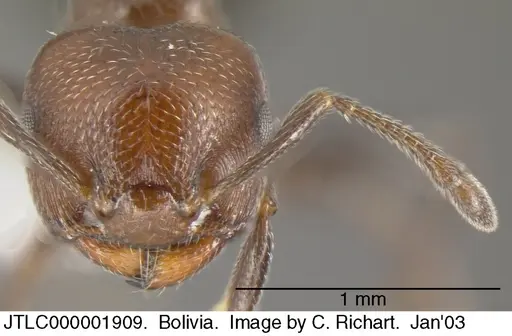
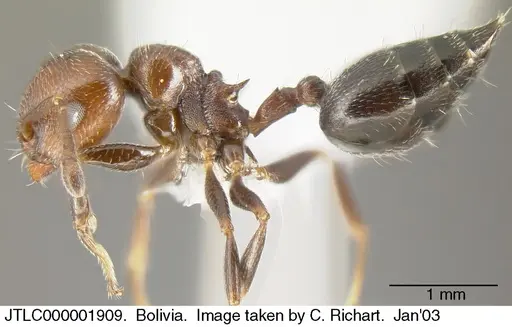
Crematogaster goeldii is a small Myrmicinae ant native to South America, found in Brazil, Bolivia, and Argentina. Workers are bicolored with a reddish-brown head and mesosoma contrasting against a distinctive black gaster (abdomen). They belong to the Crematogaster crinosa complex, a group characterized by a deeply invaginated propodeal suture and an elevated, compressed dorsal face of the propodeum. This species requires further taxonomic study as it closely resembles C. stigmatica and C. unciata, and they may represent synonyms or a variable species complex [1]. In the wild, these ants are known to visit extrafloral nectaries of plants like Tocoyena formosa in Brazilian cerrado habitats, where they forage for sugar sources in canopy environments.
Quick Summary
- Difficulty: Medium
- Origin & Habitat: Native to the Neotropical region, Brazil, Bolivia, and Argentina. Found in cerrado habitats and forest canopies, often nesting in stem galls on trees like Eremanthus erythropappus [2][3].
- Colony Type: Colony structure is unconfirmed for this species. Based on related Crematogaster species, likely single-queen colonies. Colonies in the wild are small, with a median of 23 individuals per gall nesting site [2].
- Size & Growth:
- Queen: Unconfirmed, related species typically 5-7mm
- Worker: Small, approximately 3-4mm based on genus patterns [3]
- Colony: Small colonies, up to perhaps 100-200 workers based on typical Crematogaster crinosa complex patterns [2]
- Growth: Moderate
- Development: Estimated 6-8 weeks based on genus-level data for tropical Crematogaster species (Development time is estimated from related species in the crinosa complex. Small colony size suggests relatively slow colony growth compared to faster-growing Myrmicinae.)
- Antkeeping:
- Temperature: Keep at 24-28°C, these are tropical ants from Brazil and Argentina. A gentle temperature gradient is recommended [3].
- Humidity: Moderate to high humidity (60-80%). Provide a moist nest chamber but ensure ventilation to prevent mold. These ants nest in tree galls in humid forest habitats [2].
- Diapause: No, as a tropical species, they do not require hibernation. Keep them warm year-round.
- Nesting: Prefers tight, enclosed spaces similar to their natural gall-nesting behavior. Y-tong nests, acrylic nests, or test tube setups work well. Provide narrow chambers scaled to their small size. Avoid overly large, open spaces.
- Behavior: These ants are active foragers that readily climb and explore vertical surfaces. They are known for visiting extrafloral nectaries, indicating strong attraction to sugar sources. Workers are relatively small but agile. They may show moderate aggression when defending their nest. Escape prevention is important due to their small size, use fine mesh barriers. They tend to be arboreal (tree-dwelling) in nature, so they may prefer elevated foraging areas.
- Common Issues: small colony size means colonies are vulnerable to stress and disturbance, escape prevention requires fine mesh barriers due to their tiny size, tropical species requires consistent warmth, cold temperatures can be fatal, small colony size makes them sensitive to overfeeding and mold from uneaten food, taxonomic uncertainty means exact care requirements may vary
Housing and Nest Setup
Crematogaster goeldii is a small ant that naturally nests in tree galls and similar enclosed spaces. For captivity, Y-tong (AAC) nests or acrylic nests with narrow chambers work well. Test tube setups can also work for founding colonies. The key is providing appropriately scaled chambers, these ants are tiny, so passages should be narrow. Because they are arboreal (tree-dwelling) in nature, they may appreciate some vertical space for foraging. Ensure escape prevention is excellent, their small size means they can squeeze through gaps that larger ants cannot. Use fine mesh on any openings and check connections regularly. A small outworld area with vertical surfaces (like cork or twigs) will mimic their natural canopy-foraging behavior. [2][3]
Feeding and Diet
In the wild, these ants are known to visit extrafloral nectaries, showing a strong attraction to sugar sources. In captivity, offer sugar water, honey, or diluted honey water as a constant energy source. For protein, provide small insects like fruit flies, pinhead crickets, or small mealworms. Given their small colony sizes in the wild (median 23 individuals per gall), be careful not to overfeed, remove uneaten prey within 24-48 hours to prevent mold. Feed protein 1-2 times per week, and keep sugar water available at all times. Their small size means even tiny prey items are appropriate. [2]
Temperature and Humidity
As a tropical species from Brazil and Argentina, Crematogaster goeldii requires warm temperatures. Keep the nest area at 24-28°C. A heating cable on one side of the nest can create a gentle gradient if your room temperature is below this range. Place the heating on top of the nest, not underneath, to avoid evaporating moisture too quickly. For humidity, aim for 60-80%, these ants naturally inhabit humid forest environments and tree hollows. Keep the nest substrate consistently moist but not waterlogged. Provide a water tube or moisture chamber, and check that condensation is present but not excessive. Good ventilation is important to prevent mold while maintaining humidity. [3]
Colony Dynamics and Growth
Wild colonies of C. goeldii are relatively small, with a median of only 23 individuals per gall including workers, brood, and eggs [2]. This suggests colonies in captivity will also remain modest in size, likely reaching 100-200 workers at maturity rather than the thousands seen in some Myrmicinae. The small colony size means growth will feel slow compared to species like Lasius or Camponotus. Be patient, founding colonies may take many months to reach 20-30 workers. Avoid the temptation to overfeed or disturb the colony frequently. Small colonies are more vulnerable to stress, so minimize disturbances during the founding stage.
Behavior and Temperament
Crematogaster ants have a distinctive behavior, when threatened, they raise their gaster (abdomen) in a defensive posture, ready to spray formic acid or sticky substances at intruders. This is their primary defense mechanism. They are active foragers and will readily explore their outworld, including climbing vertical surfaces. Their small size makes them quick and agile. They are not particularly aggressive toward humans but will defend their nest vigorously. When keeping them, watch for escape attempts, their tiny size means they can slip through surprisingly small gaps. Regular colony checks and fine mesh barriers are essential. [3]
Frequently Asked Questions
How long does it take for Crematogaster goeldii to have first workers?
Based on related species in the Crematogaster crinosa complex, expect first workers (nanitics) approximately 6-8 weeks after the queen lays her first eggs. This is an estimate since founding behavior has not been directly documented for this specific species. The small colony size in the wild suggests growth will be gradual.
What do Crematogaster goeldii ants eat?
They are attracted to sugar sources in the wild (they visit extrafloral nectaries), so offer sugar water, honey, or diluted honey constantly. For protein, provide small insects like fruit flies, small mealworms, or pinhead crickets. Feed protein 1-2 times per week and remove uneaten prey within a day or two.
Do Crematogaster goeldii ants sting?
Crematogaster ants do not have a functional stinger like some other ants. Instead, they defend by raising their gaster and spraying formic acid or sticky defensive secretions. This can be irritating to skin and eyes, so handle with care. They are not dangerous to humans.
What temperature do Crematogaster goeldii need?
Keep them warm at 24-28°C. These are tropical ants from Brazil and Argentina, so they need consistent warmth year-round. A heating cable on part of the nest can help maintain proper temperatures if your room is cooler.
How big do Crematogaster goeldii colonies get?
Based on wild data showing median colony sizes of only 23 individuals per gall, colonies remain relatively small. In captivity, expect up to approximately 100-200 workers at maturity rather than large colonies. This is a small-colony species.
Are Crematogaster goeldii good for beginners?
They are rated as Medium difficulty. They require warm temperatures year-round and have small colonies that are sensitive to disturbance. If you have experience with other Myrmicinae like Crematogaster or Tetramorium, this species is manageable. However, their small size and specific temperature needs make them less ideal for complete beginners.
Do Crematogaster goeldii need hibernation?
No, they do not require hibernation. As a tropical species from Brazil and Argentina, they need to be kept warm year-round. Do not expose them to cold temperatures below about 20°C for extended periods.
What size nest do Crematogaster goeldii need?
Use a small nest with narrow chambers scaled to their tiny size. Y-tong nests, small acrylic nests, or test tube setups work well. Avoid large, open spaces, these ants naturally nest in tight tree galls. Provide chambers only slightly larger than the colony.
Why are my Crematogaster goeldii dying?
Common causes include: temperatures below 24°C (tropical ants need warmth), too large nest spaces causing stress, mold from overfeeding or poor ventilation, disturbance during founding, or escape through tiny gaps. Check your temperature, reduce nest size, improve ventilation, and minimize disturbances.
Can I keep multiple Crematogaster goeldii queens together?
The colony structure for this species is unconfirmed. Based on related Crematogaster species, they are likely single-queen (monogyne) colonies. Combining unrelated queens has not been documented for this species and is not recommended.
References

This caresheet is licensed under CC BY-SA 4.0 .
CASENT0908417
View on AntWeb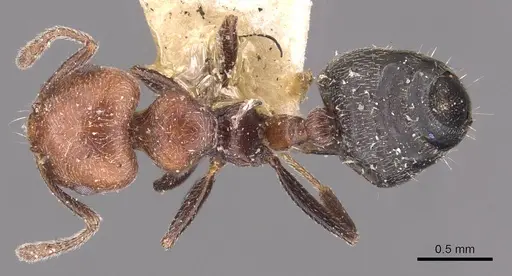
CASENT0914568
View on AntWeb
CASENT0914636
View on AntWeb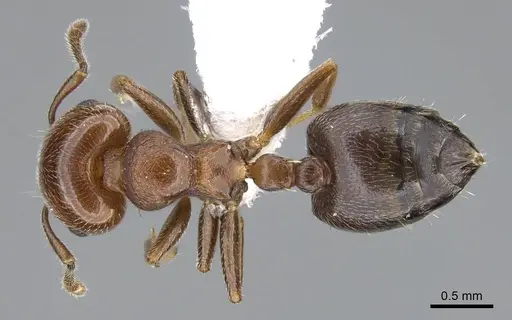
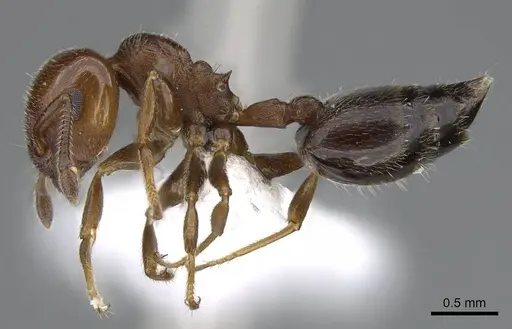
CBUMAGENT41930
View on AntWeb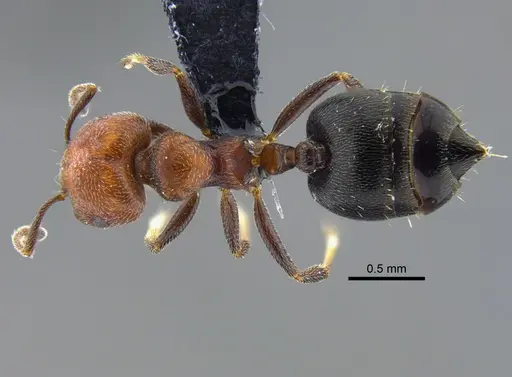
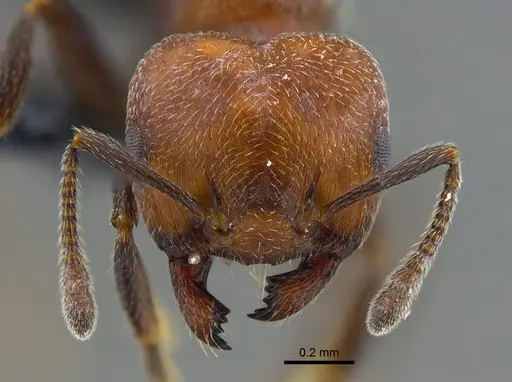
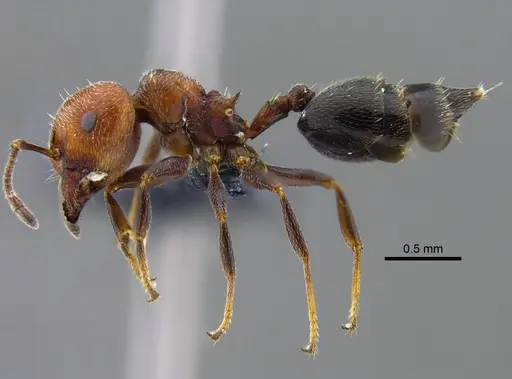
JTLC000001447
View on AntWeb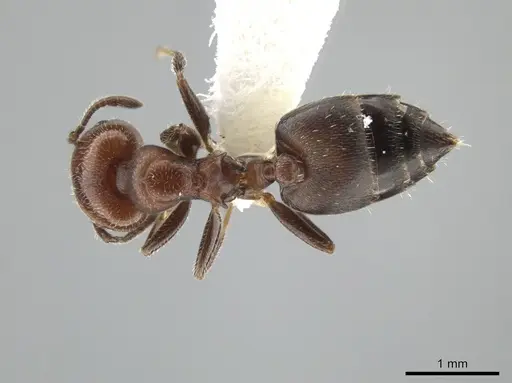
JTLC000001909
View on AntWeb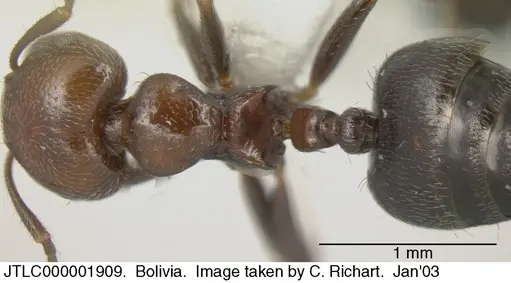
Literature
Loading...Loading products...