Crematogaster curvispinosa - "Acrobat Ant"
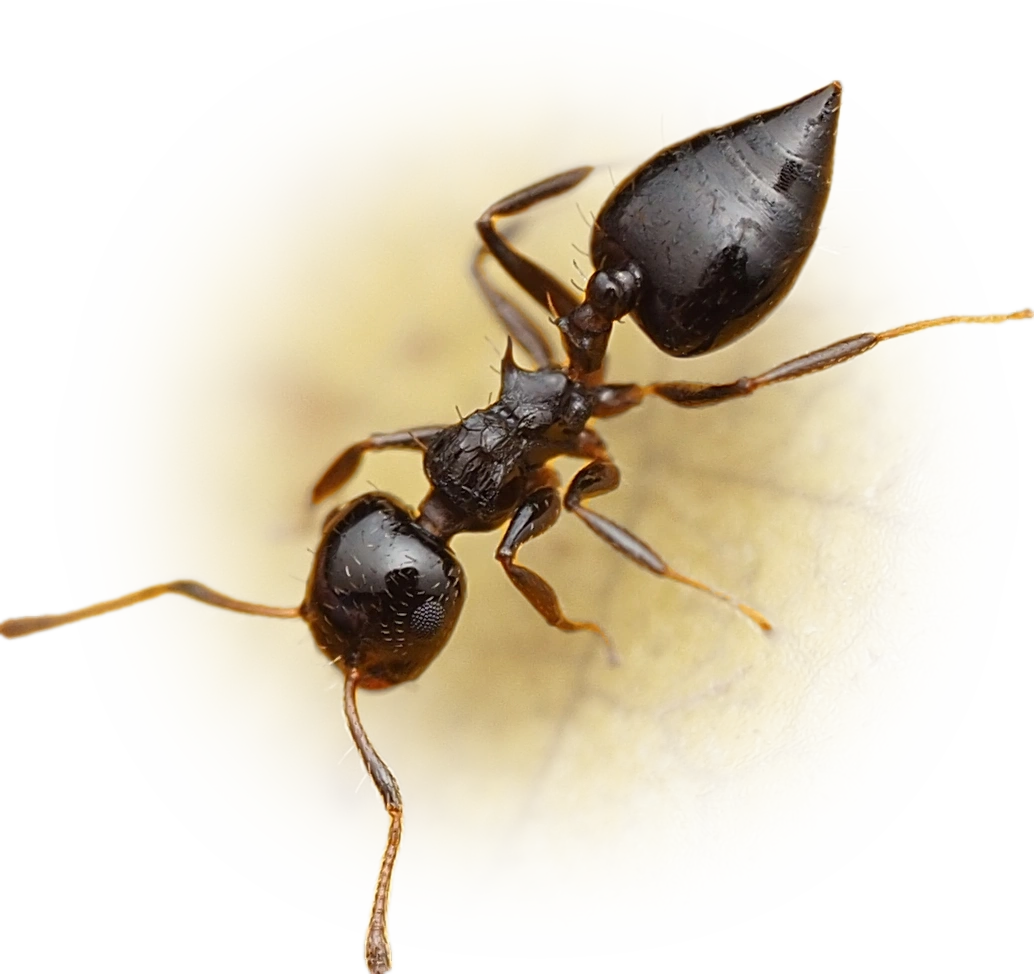
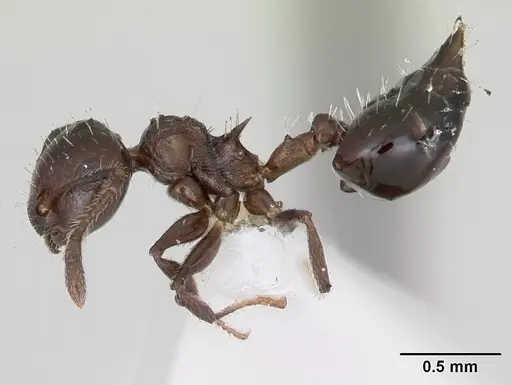
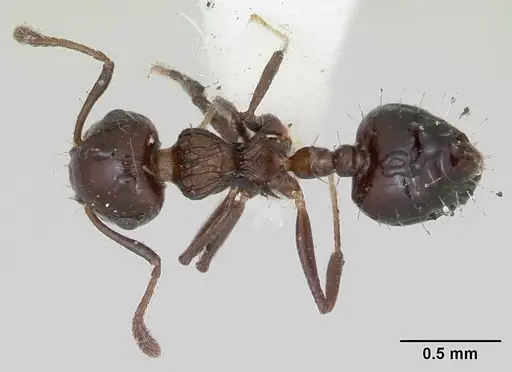
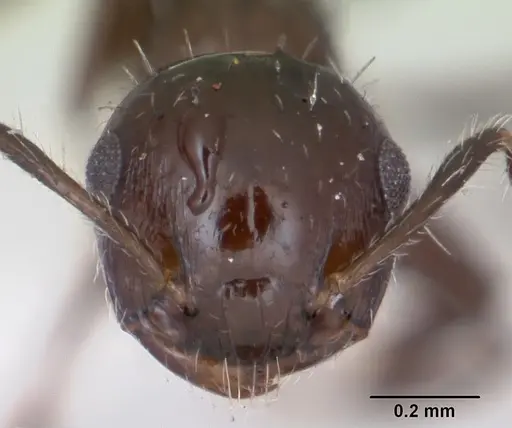
Crematogaster curvispinosa is a fascinating ant species notable for its small colony size, typically consisting of just a few dozen workers. These ants are often called 'Acrobat Ants' or 'Cocktail Ants' because of their distinctive habit of raising their heart-shaped gaster (abdomen) over their head when alarmed or defending themselves. Workers feature uniquely shaped propodeal spines with broad, divergent bases and an abrupt transition to small, posteriorly directed tips. They also exhibit abundant short, stiff setae on their face and a clathrate (lattice-like) sculpture on their pronotum. This species is quite inconspicuous in its natural habitat and is an omnivorous forager, readily recruiting nestmates to food sources and frequently visiting extrafloral nectaries. Interestingly, the colony structure can be quite variable, often including specialized reproductive workers known as ergatogynes, which can lay viable eggs.
- Difficulty: Medium
- Origin & Habitat: Neotropics (e.g., Central and South America, including Costa Rica, Brazil, Colombia, Peru, and Mexico) in Brushy habitats, road edges, young secondary growth, disturbed areas. They prefer nesting opportunistically in small cavities within dead or live plants, such as narrow dead stems, grass stalks, vine stems, and chambers of antplants like Cecropia. They can also be found in logs, stumps, under leaf litter, and occasionally within termite mounds or under stones. While primarily arboreal, some populations may nest in the ground, especially in higher elevations or disturbed sites..
- Colony Type: Monogyne (single queen) with common occurrence of ergatogynes (reproductive workers) which can contribute to colony reproduction, sometimes coexisting with the primary queen., claustral founding.
- Size & Growth:
- Queen: 7-9mm
- Worker: 2-4mm
- Colony: Small (hundreds). Medium growth.
- Antkeeping:
- Temperature: Ideally, maintain temperatures between 21-25°C (70-77°F). While adaptable to room temperature, providing a warmer spot with a heat mat or cable can accelerate brood development and encourage faster colony growth. Avoid extreme fluctuations..
- Humidity: Nest humidity should be kept between 50-60%, with the outworld at 30-50%. These ants prefer a drier nest setup and will often gravitate away from overly wet areas in a test tube. Ensure good ventilation to prevent mold..
- Diapause: Required. 2-3 months at 10-15°C.
- Nesting: Given their natural nesting habits, a wooden formicarium is highly recommended for Crematogaster curvispinosa, as they thrive in and love excavating wood. They also do well in other artificial setups like Ytong, acrylic, or 3D-printed nests, especially those that offer tight spaces and narrow tunnels mimicking their preferred small cavities. Providing a good outworld with climbing opportunities is beneficial..
- Behavior: Medium (towards handler, food or other ants) aggressiveness.
- Common Issues: Mold in nest, Mites, Humidity fluctuations, Queen stress.
One of the most captivating traits of Crematogaster curvispinosa, and indeed the entire Crematogaster genus, is their iconic 'cocktail' posture. When disturbed or faced with a threat, workers will dramatically raise their heart-shaped gaster over their heads. This isn't just for show; it's a defensive maneuver where they can topically apply venom from their blunt, spatulate sting, repelling invaders. It’s an incredibly unique behavior that makes observing these ants truly engaging for any antkeeper.
Beyond their striking defense, these ants are incredibly adaptable nesters in the wild, often making homes in surprisingly tight and small cavities. You might find them in hollow plant stems or even in the internodes of specialized antplants. This adaptability translates well to captivity, but it means providing narrow, secure nesting chambers is crucial. Their preference for wood-based nests or setups with small, intricate tunnels will greatly contribute to their comfort and the colony's overall success.
A particularly intriguing biological aspect of Crematogaster curvispinosa is the common presence of ergatogynes. These are not typical winged queens, but rather workers that have developed reproductive capabilities. They are morphologically intermediate between standard workers and queens and play a vital role in egg production, often laying trophic eggs for the larvae or even viable eggs that can develop into males. Understanding this aspect of their colony structure adds another layer of appreciation for their complex social dynamics.
Despite their small colony size in nature, typically only a few dozen workers, Crematogaster species generally can exhibit a medium to fast growth rate when provided with optimal conditions in captivity. Ensuring a consistent food supply of both sugars and proteins, along with stable temperature and humidity, can help these colonies flourish. Remember that consistent monitoring without excessive disturbance will be key to their well-being, especially during the founding stage, as queens can be sensitive to stress.
Frequently Asked Questions
What makes Crematogaster curvispinosa unique for antkeepers?
Their distinctive heart-shaped gaster and 'cocktail' defense posture, where they raise their abdomen when threatened, truly set them apart. Observing this acrobatic behavior is a highlight for many ant enthusiasts. Plus, their natural nesting preferences in small cavities make for interesting formicarium choices.
Do Crematogaster curvispinosa colonies get very large?
In the wild, colonies are often quite small, consisting of only a few dozen workers. While they can grow to low hundreds in captivity under ideal conditions, they aren't typically a species that forms massive supercolonies like some other popular ant species.
Are these ants easy to keep for beginners?
While not considered 'expert' level, their specific needs for narrow nesting spaces and potential sensitivity during colony founding make them a 'Medium' difficulty. However, dedicated beginners who research their care can certainly succeed with them.
What is an ergatogyne and why is it important for Crematogaster curvispinosa?
An ergatogyne is a reproductive worker, a female ant that's morphologically intermediate between a standard worker and a queen. For Crematogaster curvispinosa, these ergatogynes are common and can lay eggs, playing a significant role in the colony's reproductive output, often alongside the main queen. They are fascinating to observe as they contribute to the colony's growth without engaging in foraging or defense.
What kind of nest is best for Crematogaster curvispinosa?
They absolutely love wooden nests! Mimicking their natural habit of nesting in dead wood and hollow stems is ideal. Formicaria made of wood, or even those with very narrow acrylic or Ytong chambers, will make them feel at home. Providing an outworld with plenty of climbing structures is also a good idea.
Do Crematogaster curvispinosa sting or bite?
Yes, they possess a well-developed sting. However, it's blunt and spatula-shaped, meaning they don't inject venom like a bee. Instead, they topically apply it, which might cause mild discomfort if they feel truly threatened. They are generally not overtly aggressive towards keepers unless their nest is disturbed.
What do Crematogaster curvispinosa eat?
These ants are omnivores. Their diet should consist of a balance of protein (like small feeder insects such as mealworms or crickets, freshly killed) and carbohydrates (such as sugar water or honey water). They are known to visit extrafloral nectaries in the wild and readily tend to honeydew-producing insects.
Do they need a hibernation period?
Given their broad natural range which includes areas with seasonal temperature changes, a cool-down period or 'diapause' is generally recommended for Crematogaster curvispinosa to ensure the queen's long-term health and fertility. This typically involves reducing temperatures to around 10-15°C for 2-3 months during winter.
How fast do Crematogaster curvispinosa colonies grow?
Under optimal conditions with consistent feeding and appropriate temperature, their colonies can exhibit a medium growth rate. The full development from egg to adult worker takes roughly 4-5 weeks, allowing for steady population increase once established.
Can I keep multiple queens together?
While it's possible to find multiple reproductives (a primary queen and ergatogynes) in a mature wild colony, it's generally best to assume a monogyne setup for founding. Attempting pleometrosis (multiple alate queens founding together) is not typically recommended for this species, as it is not their standard founding behavior.