Colobopsis moeschi - "Moesch's Ant"
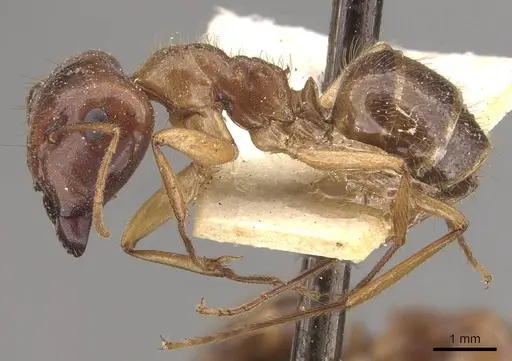
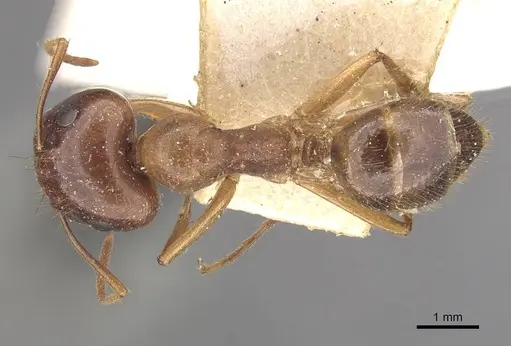
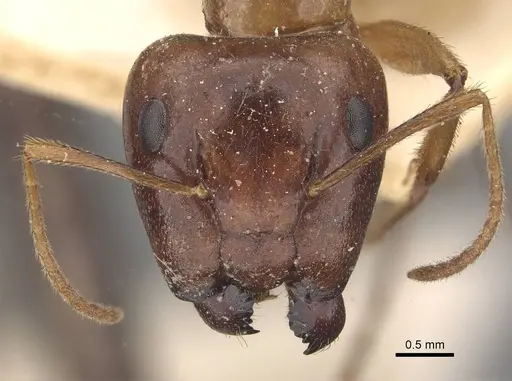
Colobopsis moeschi is a fascinating arboreal ant species known for its unique 'phragmotic' head shape, particularly in major workers and queens. These specialized heads, often flattened or truncated, serve a crucial purpose: they act as living doors, perfectly plugging the nest entrance to protect the colony. This species was formerly classified under the genus Camponotus but has since been properly reclassified into Colobopsis, recognizing its distinct characteristics. Workers are dimorphic, meaning there are both smaller minor workers and larger major workers, with the majors exhibiting the characteristic 'doorkeeper' head.
- Difficulty: Medium
- Origin & Habitat: Indo-Australian Region, including Borneo, Brunei Darussalam, Indonesia (Sumatra), and Malaysia, with a subspecies found in Singapore. in These ants are strictly arboreal, meaning they make their homes in dead wood, branches, twigs, and sometimes galls within lowland dipterocarp forests..
- Colony Type: Monogyne (single queen), claustral (queen seals herself in) founding.
- Size & Growth:
- Queen: 7-9mm
- Worker: 4-8mm
- Colony: Small (hundreds of workers). Medium growth.
- Antkeeping:
- Temperature: Maintain a warm environment for these tropical ants. The nest area should ideally be kept between 24-28°C, while the foraging arena can tolerate a slightly wider range of 22-30°C..
- Humidity: High humidity is crucial. Aim for 50-70% humidity within the nest and 40-60% in the foraging area to mimic their natural tropical habitat..
- Diapause: Not required. Not specified at Not specified.
- Nesting: Given their arboreal nature, Colobopsis moeschi thrive in nests that replicate dead wood cavities. Wooden nests, cork nests, or specialized acrylic nests designed with wood inserts are ideal. The entrance holes should be appropriately sized to allow their phragmotic majors and queens to block them..
- Behavior: Low (towards handler, primarily defensive with phragmosis) aggressiveness.
- Common Issues: Humidity fluctuations (can lead to stress or mold), Improper nest setup (lack of suitable wood cavities), Stress due to vibrations or excessive light, Mites (can be an issue in humid setups).
One of the most captivating features of Colobopsis moeschi, and indeed the entire Colobopsis genus, is their 'phragmotic' behavior. Major workers and even queens possess uniquely shaped, often truncated heads that they use to perfectly plug the nest entrance. This acts as a living barricade, allowing only fellow colony members to pass while deterring intruders. Providing a formicarium with appropriately sized entrance holes that cater to this fascinating defense mechanism is paramount for their well-being and allows you to observe this unique ant behavior up close.
These ants are obligate arboreal nesters, meaning they make their entire home within wood. In the wild, this would be dead branches or hollow twigs. For antkeepers, this translates to needing a nest setup that truly mimics these conditions. A simple test tube might work for founding, but as the colony grows, a dedicated wooden or cork nest, or an acrylic setup with ample wood inserts, will be essential for their long-term health and growth. Ensure any wood provided is free from pesticides or other harmful chemicals.
Distinguishing Colobopsis from their former genus, Camponotus, can be tricky due to similar appearances, but a key difference lies in their pupae. Colobopsis species, including C. moeschi, have naked pupae, meaning their pupal stage is not encased in a silk cocoon. In contrast, most Camponotus species spin cocoons for their pupae. This small detail can be a useful identifier for experienced antkeepers observing their brood development.
It's important to note that while some Colobopsis species, particularly those in the 'cylindrica group,' are famous for their 'exploding ant' defense mechanism where workers rupture their gastr to release a toxic chemical, Colobopsis moeschi is not known to exhibit this behavior. While all ant species have their unique defenses, you won't observe this dramatic, self-sacrificing act with your Moesch's ants. Their primary defense is their phragmotic head, which is equally impressive in its own right.