

Colobopsis maafui
- Scientific Name
- Colobopsis maafui
- Tribe
- Camponotini
- Subfamily
- Formicinae
- Author
- Mann, 1921
- Distribution
- Found in 1 countries
Colobopsis maafui Overview
Colobopsis maafui is an ant species of the genus Colobopsis. It is primarily documented in 1 countries , including Fiji. Detailed taxonomic data and occurrence records can be further explored via authoritative databases such as AntWeb or the Global Biodiversity Information Facility (GBIF).
Colobopsis maafui
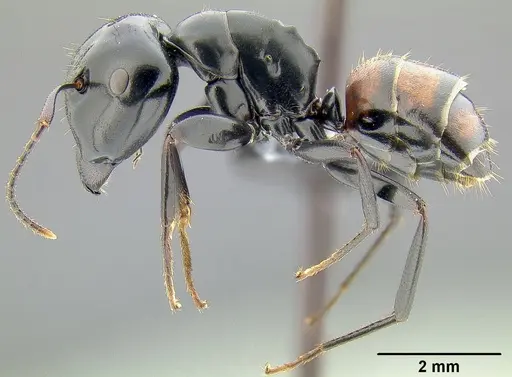
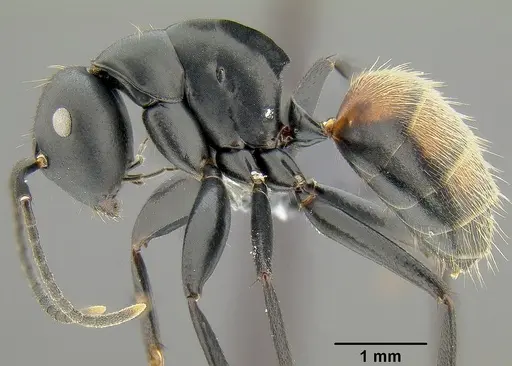
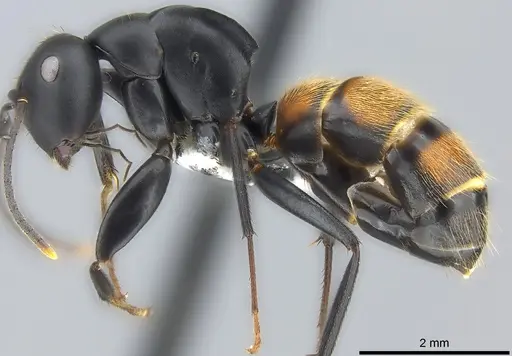
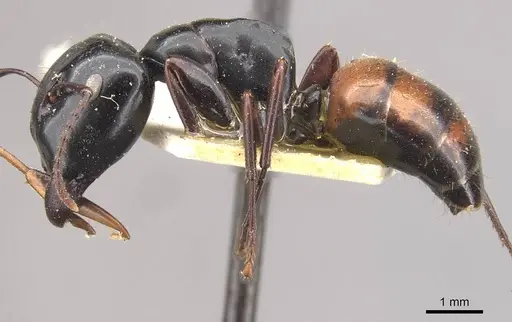
Colobopsis maafui is a small to medium-sized ant endemic to the Fiji islands, specifically found only on Vanua Levu. Workers are distinctive with a golden to light brownish-red gaster (the rear body section) that contrasts sharply with the black integument covering the rest of their body. Minor workers have an especially striking appearance thanks to a dense covering of long yellow hairs on the dorsal portion of their gaster. This species is closely related to Colobopsis cristatus and was named in honor of Enele Ma'afu'atuitoga, a 19th century Tongan prince who became chief of a large region of northern Fiji. The ants are most often encountered recruiting among vegetation, sometimes in large numbers, making them a visible part of Fiji's ant fauna.
Quick Summary
- Difficulty: Unknown, no captive husbandry data available
- Origin & Habitat: Endemic to Vanua Levu, Fiji Islands. Found across the island but not recorded from nearby islands including Taveuni. These are tropical ants that live in vegetation rather than on the forest floor [1][2].
- Colony Type: Colony structure is unconfirmed. As a Colobopsis species (formerly in Camponotus), they likely form single-queen colonies like most Formicinae, but this has not been documented.
- Size & Growth:
- Queen: Unknown, no measurements available for this species
- Worker: Unknown, only described as minor and major castes without specific measurements [1]
- Colony: Unknown, no colony size data available
- Growth: Unknown
- Development: Unknown, no development data available for this species (Based on typical Colobopsis/Camponotus patterns, expect 6-10 weeks at tropical temperatures, but this is an estimate only)
- Antkeeping:
- Temperature: As a tropical Fiji species, keep at warm temperatures roughly 24-28°C. This is an estimate based on their origin, no specific thermal studies exist for this species.
- Humidity: Moderate to high humidity likely preferred. Fiji has a humid tropical climate. Provide a water tube and keep the nest moderately moist.
- Diapause: No, as a tropical species from near the equator, they likely do not require hibernation. This is inferred from their geographic origin.
- Nesting: In the wild, they nest in vegetation and woody debris. In captivity, a Y-tong (AAC) nest or plaster nest with some wood material works well. They are arboreal/nesting-in-vegetation type ants.
- Behavior: Workers are highly active foragers that recruit nestmates in large numbers to food sources. They are not aggressive and pose no sting threat to humans. Their small size means escape prevention should be taken seriously, use fine mesh barriers. They are primarily active in the warmer parts of the day.
- Common Issues: no captive husbandry data exists, this species has never been kept in captivity by antkeepers, tropical species may be sensitive to temperature drops below 24°C, small size means escapes are possible without proper barriers, endemic status means very few colonies exist in captivity even among specialized collectors
Appearance and Identification
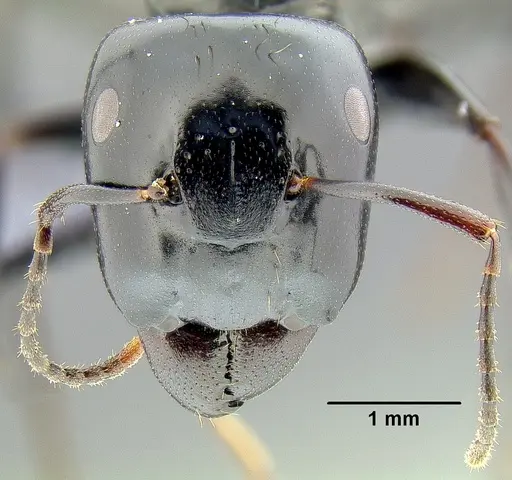
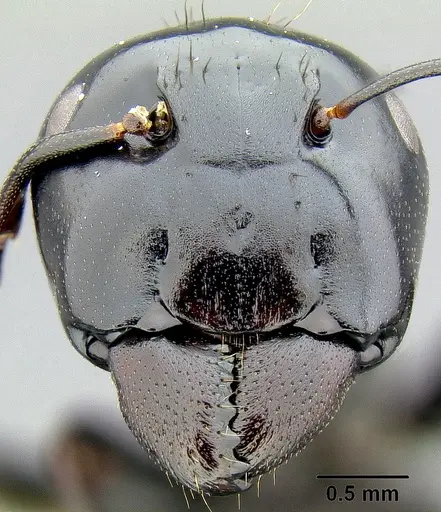
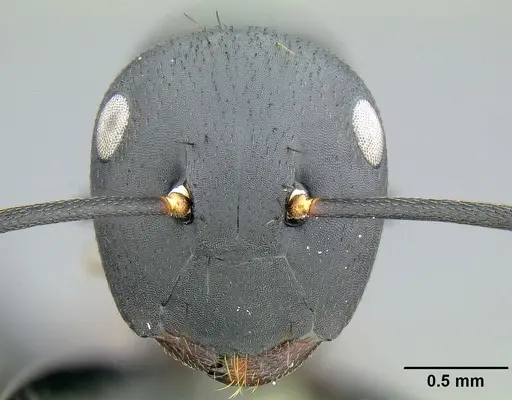
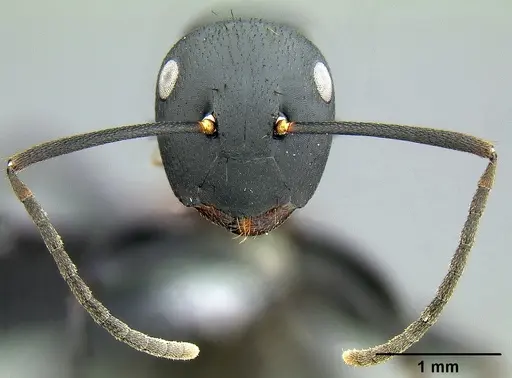
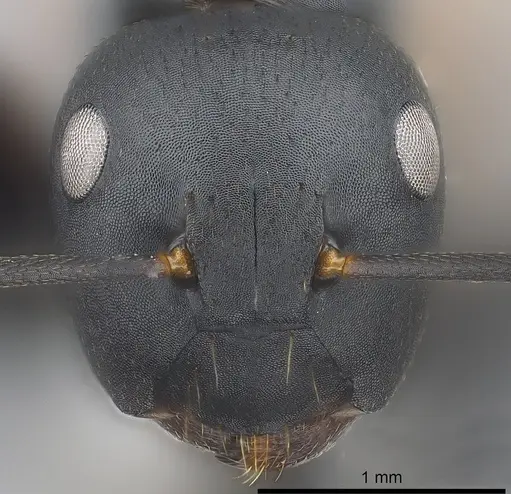
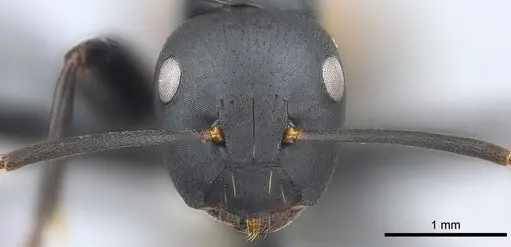
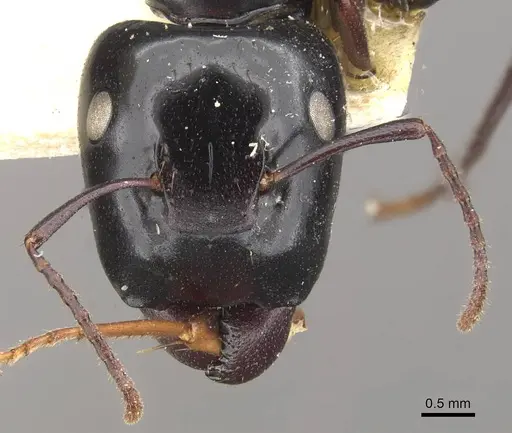
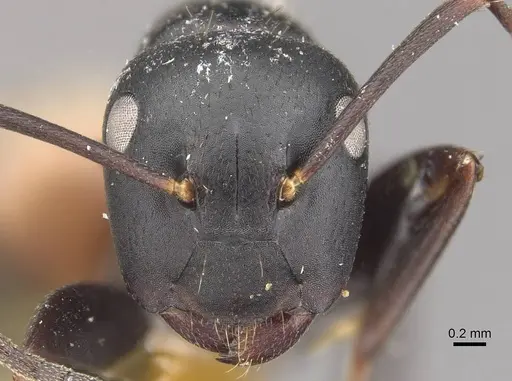
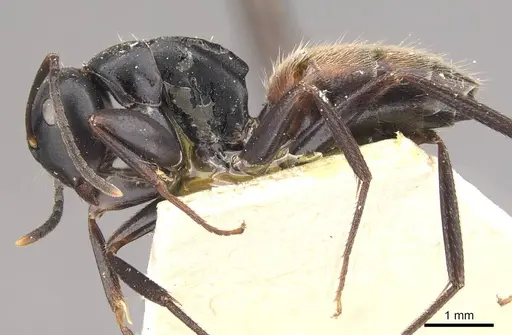
Colobopsis maafui workers are immediately recognizable by their distinctive coloration. The dorsal portions of the first three gastral tergites (the upper surface of the rear body segments) are light brownish-red, creating a striking contrast with the black integument covering the rest of the body. This golden gaster effect is especially pronounced in minor workers, which have a dense pelt of long semierect to semidecumbent yellow hairs covering the dorsal portion of their gaster. Both minor and major castes can be identified in the field and under microscope by this golden gaster characteristic. The species is otherwise quite similar in appearance to its close relative Colobopsis cristatus. [1]
Distribution and Endemism
This species is endemic to the Fiji islands, meaning it is found nowhere else on Earth. Specifically, it occurs widely across Vanua Levu, which is the second-largest island in Fiji. Interestingly, despite being found on Vanua Levu, the species has never been recorded from any other islands in the Fiji group, including the nearby island of Taveuni which is very close by. This limited distribution makes C. maafui a particularly special species for myrmecologists studying Fiji's unique island biogeography. The species was named in honor of Enele Ma'afu'atuitoga, a 19th century Tongan prince who became chief of a large region of northern Fiji. [1][2]
Natural History and Foraging
In their natural habitat on Vanua Levu, these ants are most often encountered recruiting among vegetation, sometimes in large numbers. This indicates they are arboreal or at least frequently foragers in plants and trees, rather than ground-nesting ants. They form foraging trails and recruit nestmates to food sources through chemical communication, similar to other Formicine ants. The fact that they are often found in large recruiting groups suggests they have efficient recruitment mechanisms and likely exploit abundant food sources in their tropical habitat. [1]
Captive Care Considerations
This is an extremely rare species in the antkeeping hobby, with no documented captive husbandry information available. As a tropical ant from Fiji, they likely require warm temperatures (24-28°C) and moderate to high humidity. Their arboreal nature suggests they would do well in a Y-tong or plaster nest with some woody material, rather than a simple test tube setup. Since no captive colonies are known to exist, prospective keepers would need to locate wild-caught founding queens from Vanua Levu. This represents a species for advanced keepers interested in working with rare, endemic Pacific island species. Always check local regulations before attempting to acquire or transport this species.
Frequently Asked Questions
Is Colobopsis maafui available in the antkeeping hobby?
No, this species is extremely rare in captivity and has no documented captive husbandry history. It is endemic to Vanua Levu, Fiji, and would be very difficult to acquire.
What does Colobopsis maafui look like?
Workers have a distinctive golden to light brownish-red gaster that contrasts sharply with the black body. Minor workers have especially noticeable long yellow hairs on their gaster.
Where is Colobopsis maafui found?
This species is endemic to Vanua Levu in the Fiji Islands. It has never been recorded from any other island, including the nearby island of Taveuni.
What temperature do Colobopsis maafui ants need?
As a tropical species from Fiji, they likely require warm temperatures around 24-28°C. This is an estimate based on their geographic origin since no specific thermal studies exist for this species.
Do Colobopsis maafui ants need hibernation?
No, as a tropical species from near the equator, they do not require hibernation or diapause.
How big do Colobopsis maafui colonies get?
Colony size is unknown, no colony size data has been documented for this species.
What do Colobopsis maafui ants eat?
Like other Formicine ants, they likely accept sugar sources (honey, sugar water) and protein (insects). Their vegetarian foraging behavior suggests they may also collect honeydew from aphids.
Is Colobopsis maafui a good species for beginners?
No, this species is not recommended for beginners. There is no captive husbandry data available, and the species is extremely rare even among specialized collectors.
Can I keep multiple Colobopsis maafui queens together?
This is unknown. Colony structure has not been documented for this species. Most Colobopsis species form single-queen colonies, but this has not been confirmed for C. maafui.
How long does it take for Colobopsis maafui to develop from egg to worker?
This is unknown, no development data exists for this species. Based on typical Colobopsis/Camponotus patterns, expect roughly 6-10 weeks at optimal tropical temperatures.
What is the best nest type for Colobopsis maafui?
Based on their arboreal nature (found foraging in vegetation), a Y-tong or plaster nest with some woody material would likely work well. Avoid simple test tube setups.
References

This caresheet is licensed under CC BY-SA 4.0 .
CASENT0171160
View on AntWeb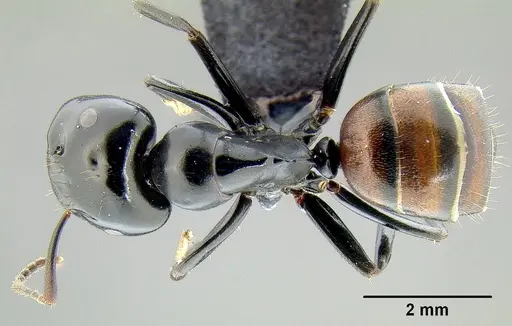
CASENT0171161
View on AntWeb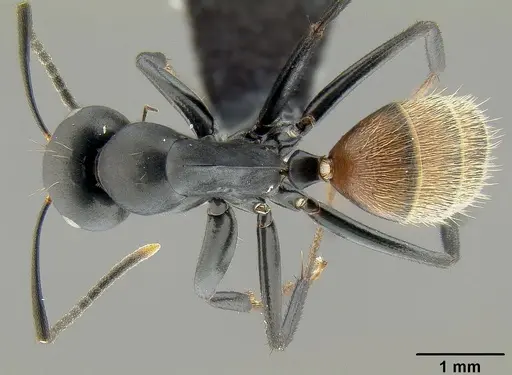
CASENT0180410
View on AntWeb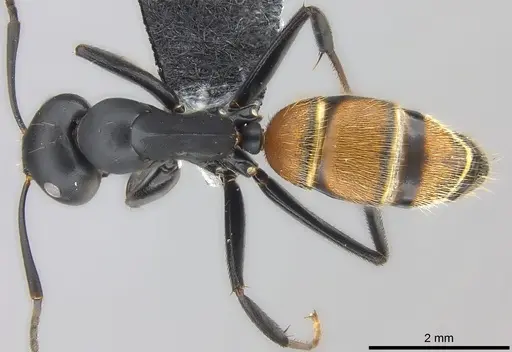
CASENT0910568
View on AntWeb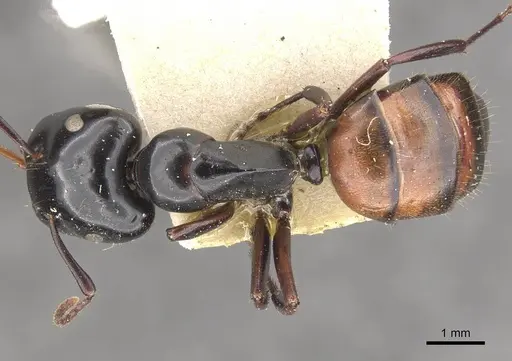
CASENT0910569
View on AntWeb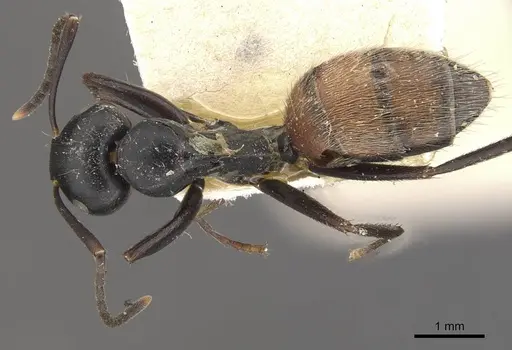
Literature
Loading...Loading products...