

Colobopsis imitans
- Scientific Name
- Colobopsis imitans
- Tribe
- Camponotini
- Subfamily
- Formicinae
- Author
- Schifani <i>et al.</i>, 2022
- Distribution
- Found in 3 countries
Colobopsis imitans Overview
Colobopsis imitans is an ant species of the genus Colobopsis. It is primarily documented in 3 countries , including Spain, Italy, Morocco. Detailed taxonomic data and occurrence records can be further explored via authoritative databases such as AntWeb or the Global Biodiversity Information Facility (GBIF).
Colobopsis imitans
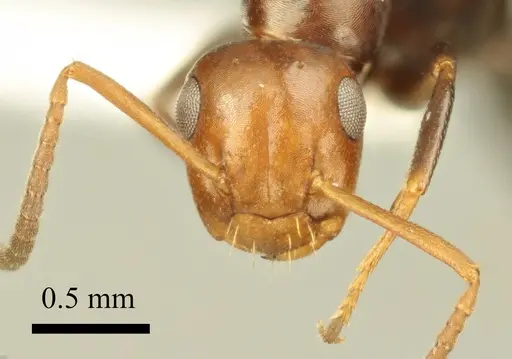
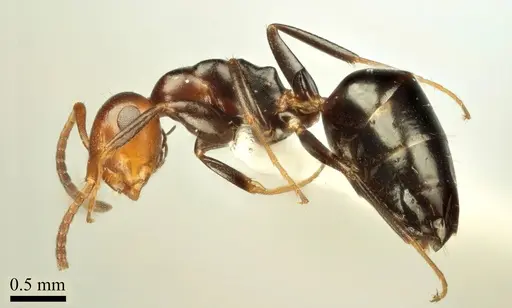
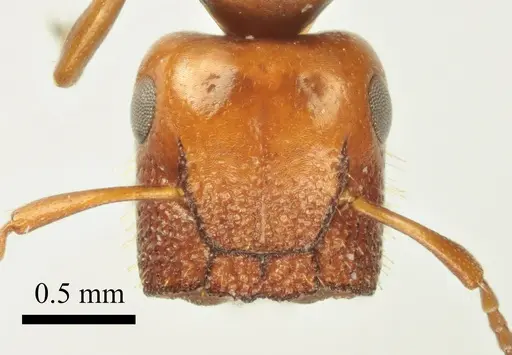
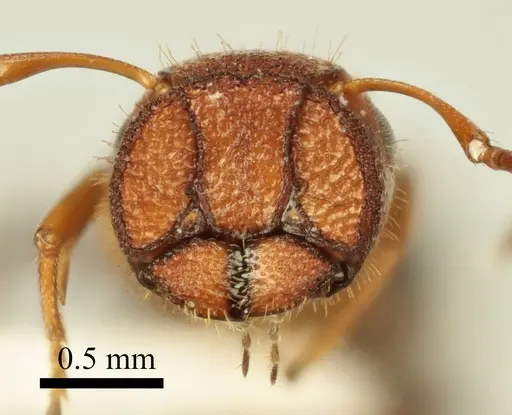
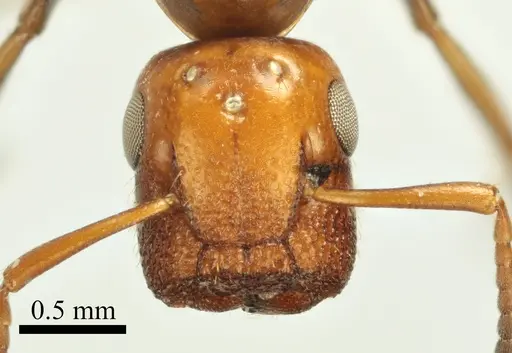
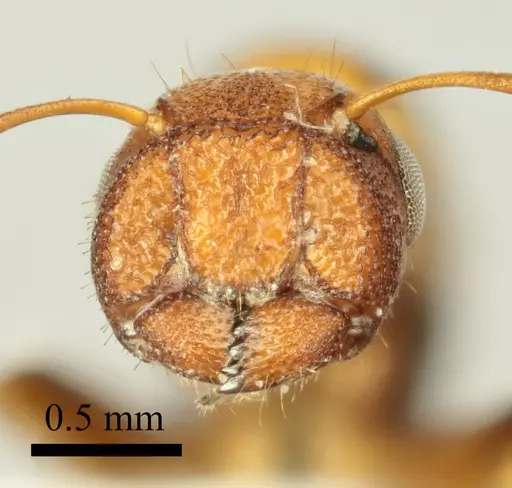
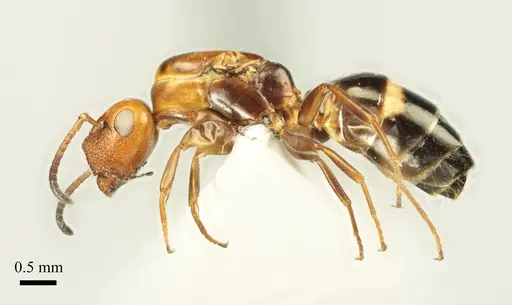
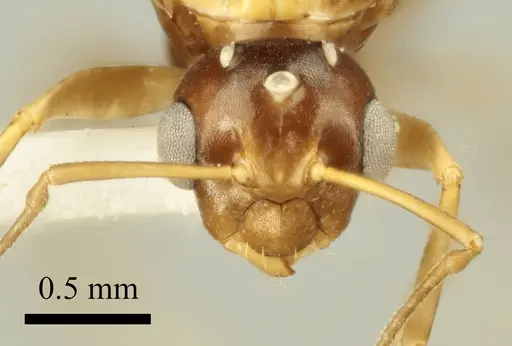
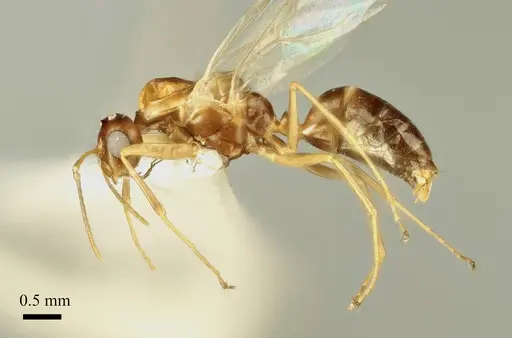
Colobopsis imitans is a small arboreal ant from the Mediterranean region that was only recently identified as a separate species in 2021,having previously been confused with the related Colobopsis truncata. These ants are famous for their remarkable mimicry, they closely resemble Crematogaster scutellaris (the acrobat ant) in both their red and black coloration and their behavior, following the same pheromone trails to exploit food sources. Workers have a red head and anterior mesosoma with a dark, almost black abdomen, while soldiers serve as living door guards at the nest entrance. Queens are slightly larger and also participate in gatekeeping behavior. This species nests in tiny cavities in dead wood, including hollow oak galls, and is found across Sicily, southern Iberia, and North Africa in warm Mediterranean habitats.
Quick Summary
- Difficulty: Medium
- Origin & Habitat: Mediterranean region, Sicily (Italy), southern Iberia (Spain, Portugal), and North Africa (Algeria, Morocco). Found from sea level to around 1290m elevation in warm, thermophilous arboreal habitats including citrus orchards, cork oak woods, and deciduous oak forests [1][2].
- Colony Type: Likely monogyne (single queen) with small colonies rarely exceeding 500 workers. Polydomy appears probable based on findings of worker groups without queens in separate oak galls [1].
- Colony: Monogyne
- Founding: Claustral
- Size & Growth:
- Queen: Approximately 5-6mm (queen head length 1437-1531μm) [1].
- Worker: Approximately 3-4mm (minor workers with characteristic red head/dark body pattern) [1].
- Colony: Small colonies, rarely exceeding 500 workers [1].
- Growth: Moderate, based on typical Colobopsis development patterns.
- Development: Estimated 6-10 weeks based on genus-level data for related Camponotus species, at optimal warm temperatures. (Development time is estimated as this is a newly described species with no specific captive data. Warm temperatures will accelerate development.)
- Antkeeping:
- Temperature: Warm conditions required, aim for 22-26°C. As a thermophilous Mediterranean species, they prefer temperatures in the low-to-mid 20s°C. A gentle gradient with a heating cable on one side of the nest allows workers to regulate their temperature [1].
- Humidity: Moderate humidity around 50-70%. Keep the nest substrate slightly moist but allow some drying periods. These arboreal ants are adapted to variable conditions in tree cavities.
- Diapause: Likely yes, as a Mediterranean species from temperate latitudes, they probably require a winter rest period. Reduce temperature to around 15-18°C for 2-3 months during winter.
- Nesting: Arboreal nesting specialists. In captivity, they do well in acrylic nests (Y-tong style) or plaster nests with narrow chambers and small tunnels. Provide small entrance holes that soldiers can guard. Avoid large open spaces, scale chambers to their tiny size.
- Behavior: Generally peaceful and non-aggressive. Workers are shy and spend most of their time in the nest or on tree surfaces. They are excellent escape artists due to their small size, use fine mesh and tight-fitting barriers. The most fascinating behavior is their trail-following, 77% of colonies were observed following Crematogaster scutellaris pheromone trails, using this mimicry to access food sources. When they encounter actual Crematogaster workers, they perform evasive movements to avoid conflict. Soldiers act as gatekeepers, blocking the nest entrance with their specialized heads. Queens also sometimes serve as gatekeepers.
- Common Issues: escape prevention is critical due to their very small size, they can squeeze through tiny gaps, limited availability as this is a newly described species rarely available in the antkeeping hobby, wild-caught colonies may be difficult to establish due to their specialized arboreal lifestyle, small colony size means slower population growth than more common species, may be stressed by incorrect humidity, too dry causes brood failure, too wet causes mold
Housing and Nest Setup
Colobopsis imitans is an arboreal species that naturally nests in tiny cavities in dead wood, including hollow oak galls and small holes in tree trunks. In captivity, they do best in acrylic (Y-tong style) nests or plaster nests with chambers scaled to their tiny size. The chambers should be narrow and the entrance holes small, this allows soldiers to effectively guard the nest entrance, which is their natural role. Avoid large, open spaces in the nest as these ants feel more secure in tight quarters. A small outworld connected to the nest works well for foraging. Because they are so small, excellent escape prevention is essential, use fine mesh barriers and check all connections regularly. [1]
Feeding and Diet
Like most Camponotini ants, Colobopsis imitans likely has an omnivorous diet. They probably consume honeydew from aphids and scale insects, as well as small insects for protein. In captivity, offer sugar water or honey as a constant energy source, and provide small protein sources like fruit flies, pinhead crickets, or mealworm pieces. Their small size means prey items should be appropriately sized, very small insects or pre-killed pieces work well. The fascinating trail-following behavior suggests they are opportunistic foragers that benefit from following other ant species to food sources. [1]
Temperature and Seasonal Care
As a thermophilous (warmth-loving) Mediterranean species, Colobopsis imitans needs warm conditions year-round. Keep the nest area at 22-26°C, with a gentle temperature gradient allowing workers to choose their preferred spot. A heating cable on one side of the nest works well to create this gradient. During winter, they likely require a diapause period typical of Mediterranean ants from temperate latitudes. Reduce temperatures to around 15-18°C for 2-3 months during winter, reducing feeding as well. This rest period helps synchronize their annual cycle and promotes healthy colony development. [1]
The Mimicry Complex
One of the most fascinating aspects of Colobopsis imitans is its remarkable mimicry of Crematogaster scutellaris, the acrobat ant. These ants have evolved to match the red and black coloration pattern of Crematogaster scutellaris, and even more remarkably,77% of observed colonies were seen following Crematogaster pheromone trails. This trail-following behavior allows them to exploit food sources discovered by the more aggressive Crematogaster ants without having to find food themselves. When they encounter a Crematogaster worker directly, they perform sudden accelerations and evasive movements to avoid conflict. This mimicry likely provides protection from predators who avoid the aggressive Crematogaster ants. In captivity, you might observe this behavior if other ant species are kept nearby. [1][2]
Behavior and Colony Dynamics
Colobopsis imitans colonies are small and relatively peaceful. The most notable behavioral trait is the soldier's role as gatekeepers, these specialized workers position themselves at the nest entrance and use their enlarged heads to block access, just like living door guards. Interestingly, founding queens have also been observed performing this gatekeeper behavior. Workers are shy and rarely descend to the ground, preferring to stay on the tree trunk where they nest. Polydomy appears probable, researchers have found groups of workers without queens in separate oak galls on the same tree, suggesting the colony may occupy multiple connected cavities. This arboreal lifestyle and small colony size means they are less active than many common ant species, making them a peaceful, low-maintenance pet. [1]
Frequently Asked Questions
How long does it take for Colobopsis imitans to produce first workers?
Exact development time has not been documented for this newly described species. Based on typical Colobopsis and Camponotus patterns, expect around 6-10 weeks from egg to first worker at warm temperatures (24-26°C). Be patient, small colonies grow slowly.
Are Colobopsis imitans good for beginners?
They are moderately difficult for beginners. While their colony care is straightforward once established, they are rarely available in the antkeeping hobby (being a newly described species), and their small size makes escape prevention challenging. They are best suited for keepers with some experience who can provide proper arboreal-style housing.
What do Colobopsis imitans eat?
They are omnivorous. Offer sugar water or honey constantly for energy, and provide small protein sources like fruit flies, tiny crickets, or mealworm pieces twice weekly. Their small size means prey should be appropriately sized.
Can I keep multiple Colobopsis imitans queens together?
This is not recommended. Based on their likely monogyne (single queen) colony structure, unrelated queens would likely fight. If you find a dealate queen, house her alone in a founding setup.
What temperature do Colobopsis imitans need?
Keep them warm at 22-26°C. As a Mediterranean thermophilous species, they prefer low-to-mid 20s°C. A heating cable on one side of the nest creates a temperature gradient they can regulate themselves.
Do Colobopsis imitans need hibernation?
Yes, they likely require a winter rest period. Reduce temperatures to around 15-18°C for 2-3 months during winter, corresponding to the Mediterranean winter. Reduce feeding during this period as well.
How big do Colobopsis imitans colonies get?
Colonies remain small, rarely exceeding 500 workers even at maturity. This is typical for the genus, they maintain smaller but sustainable colonies rather than the massive populations of species like Camponotus or Formica.
Why does my Colobopsis imitans look like a Crematogaster ant?
This is their natural appearance! Colobopsis imitans evolved to mimic Crematogaster scutellaris in both coloration and behavior. The red head and dark body is their characteristic pattern, you have nothing to worry about.
When do Colobopsis imitans have nuptial flights?
Based on observations in Sicily, nuptial flights occur from late June through mid-July, approximately June 30 to July 13. Queens and males are also attracted to artificial lights at night during this period.
References

This caresheet is licensed under CC BY-SA 4.0 .
ANTWEB1041481
View on AntWeb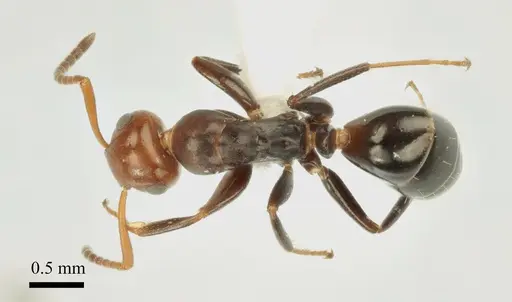
ANTWEB1041482
View on AntWeb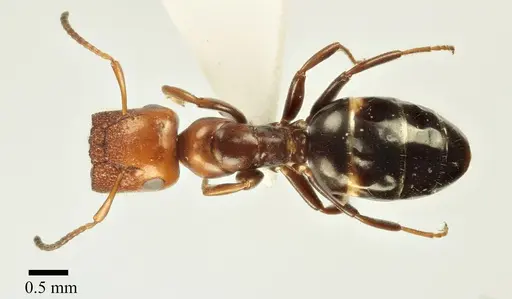
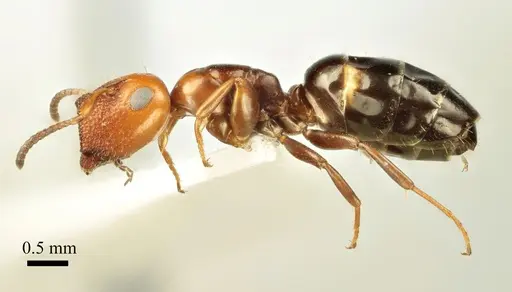
ANTWEB1041483
View on AntWeb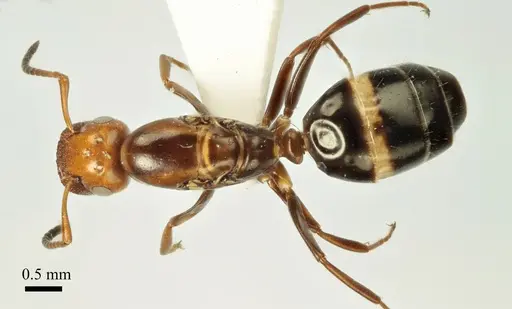
ANTWEB1041484
View on AntWeb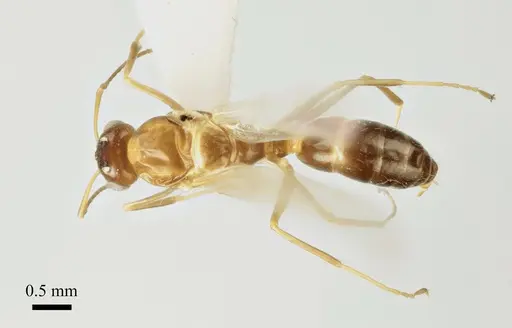
Literature
Loading...Loading products...