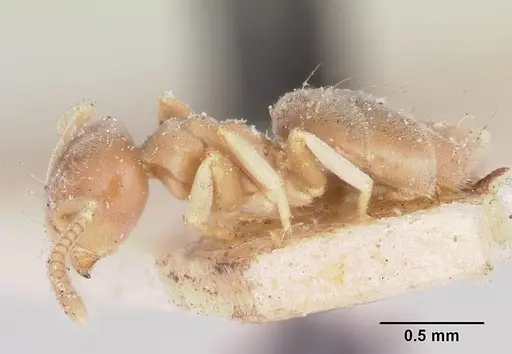
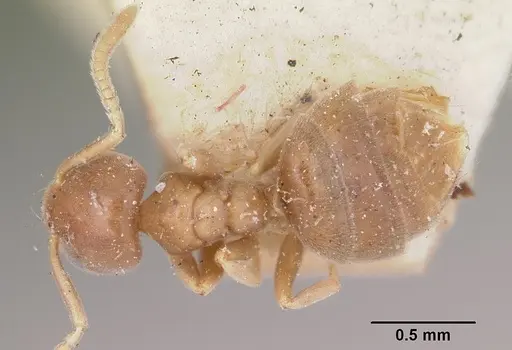
Chronoxenus wroughtonii - "Wroughton's Ant"
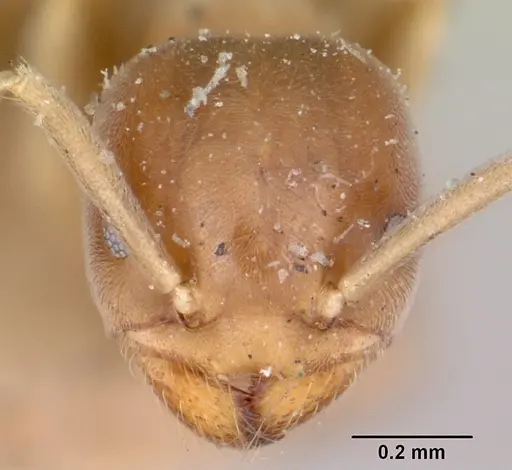
Chronoxenus wroughtonii are captivating little ants from the Dolichoderinae subfamily, known for their unique appearance and diverse foraging habits. Workers of this species have a rather distinctive head shape, often described as square-ish without the mandibles, and thick, relatively long antennae. Their coloration typically ranges from brownish-yellow on the head and thorax to a darker brown on the abdomen, which is covered in pale, soft hairs. Queens are generally larger and darker than workers, featuring prominent, very large eyes and a massive thorax. These ants are omnivorous and are fascinating to observe, as they utilize both underground and arboreal spaces for foraging.
- Difficulty: Medium
- Origin & Habitat: India (Maharashtra, Karnataka, Uttarakhand), Sri Lanka, China, South Korea in Forests (dry mixed deciduous, Chir-Pine, dry deciduous scrub, Khair and Dalbergia sissu, dry bamboo brakes, subtropical Euphorbia scrub), urban areas (implied by wide distribution), primarily nesting underground in hypogaeic sites or within leaf litter, but also foraging arboreally..
- Colony Type: Monogyne, claustral founding.
- Size & Growth:
- Queen: Not specified
- Worker: Not specified
- Colony: Small (hundreds). Medium growth.
- Antkeeping:
- Temperature: These ants thrive in warmer conditions, ideally maintained between 24-28°C for optimal colony development and activity. While they can tolerate a wider range, keeping them consistently within this warmer spectrum will encourage faster growth and more active foraging. Avoid sudden temperature drops..
- Humidity: A moderate to high humidity level of around 60-80% is preferred within the nest area to ensure proper brood development and prevent desiccation. However, the foraging area, or 'outworld,' should be kept drier to mimic their natural habitat and prevent mold growth. Good ventilation is key to balancing these needs..
- Diapause: Required. 2-4 months at 8-12°C.
- Nesting: Given their natural hypogaeic (underground) nesting habits, Chronoxenus wroughtonii will do well in artificial nests that simulate these conditions. Plaster or Ytong nests with good hydration systems are excellent choices. Natural substrate setups, utilizing a mix of sand, loam, and forest soil, can also be highly enriching, provided you can maintain proper visibility and hygiene. They will happily start in a test tube setup..
- Behavior: Low aggressiveness.
- Common Issues: Humidity fluctuations, Escape artists (due to small size), Mold in nest, Colony stalling (if conditions aren't right).
One of the most striking features of Chronoxenus wroughtonii workers is their distinct head shape, which is quite square-ish when viewed from above, excluding their mandibles. This unique characteristic, along with their broad, multi-toothed mandibles, sets them apart visually from many other ant species. Observing these detailed features under magnification can be a truly rewarding experience for any ant enthusiast, highlighting the incredible diversity even among smaller ants.
Their diet is omnivorous, meaning they readily consume both sugary liquids and protein sources. In the wild, they're known to forage in diverse environments, from subterranean tunnels and leaf litter on the forest floor to climbing trees for arboreal resources. This adaptability in foraging suggests they can be quite flexible with their diet in captivity, making them interesting to feed and observe as they seek out various food items within their outworld.
Hailing from parts of India, Sri Lanka, China, and South Korea, Chronoxenus wroughtonii are accustomed to a range of climates, including areas with cooler periods. This broad natural distribution, spanning diverse forest types, implies a certain resilience. For antkeepers, this means they can likely adapt to slight variations in husbandry, although consistent temperatures and humidity within the recommended range will always yield the best results for colony health and growth.
Due to their relatively uncommon presence in the antkeeping hobby, detailed long-term care information for Chronoxenus wroughtonii can be sparse. This can present a unique challenge and opportunity for experienced keepers to contribute to our collective understanding of this species. Patience and careful observation are paramount to ensure their well-being, especially when fine-tuning temperature, humidity, and feeding routines. Documenting your experiences can be incredibly valuable to the wider community.
Frequently Asked Questions
What's the best diet for my Chronoxenus wroughtonii colony?
These ants are true omnivores, so a balanced diet is key! Offer them a mix of sugary treats like sugar water, honey water, or ant-specific syrups, alongside protein sources. Small, freshly killed feeder insects such as fruit flies, mealworms, or small crickets work great. Ensure the protein items are small enough for them to manage easily.
How large can a Chronoxenus wroughtonii colony get?
While exact figures are still being studied, colonies of Chronoxenus wroughtonii are generally considered to be on the smaller side, typically reaching into the hundreds of workers. They won't form massive supercolonies like some other species, making them a great choice for keepers with limited space.
Do Chronoxenus wroughtonii sting or bite?
Good news for keepers – Chronoxenus wroughtonii ants are not known to sting. As Dolichoderinae ants, they typically rely on defensive chemicals, often a distinct odor, rather than a painful sting. They might try to bite if threatened, but their small size means this is usually harmless to humans.
What kind of formicarium is ideal for these ants?
Since Chronoxenus wroughtonii naturally nest underground, a formicarium that mimics these conditions is ideal. Plaster or Ytong nests with good moisture gradients work wonderfully. You could also consider a natural substrate setup with a mix of sand and loam, provided you can maintain proper humidity and visibility. A test tube setup is perfect for starting out your founding queen.
Is diapause necessary for Chronoxenus wroughtonii?
Yes, it is highly recommended! Given their native range includes areas with distinct cold seasons, a period of diapause (winter hibernation) is crucial for the long-term health and reproductive cycle of your colony. Aim for 2-4 months at temperatures between 8-12°C to simulate their natural winter conditions.
Are Chronoxenus wroughtonii suitable for a beginner ant keeper?
While they are fascinating, Chronoxenus wroughtonii are probably best suited for intermediate to experienced ant keepers. The limited specific care information available means beginners might find it challenging to troubleshoot issues. However, if you're up for a learning experience and are diligent with your research and observation, they can be a very rewarding species to keep!
Where exactly can I find Chronoxenus wroughtonii in the wild?
These intriguing ants have a fairly broad distribution across Asia. You'll find them in various regions of India, including Maharashtra, Karnataka, and Uttarakhand, as well as in Sri Lanka, China, and South Korea. They adapt to a variety of forested environments within these areas.
What are their typical foraging behaviors?
Chronoxenus wroughtonii are quite adaptable foragers! They're known to utilize both subterranean tunnels and the leaf litter layer on the forest floor, searching for food. Interestingly, they also venture into arboreal spaces, climbing trees to find resources. This dual foraging strategy makes observing their outworld activity quite engaging.
How quickly do Chronoxenus wroughtonii colonies grow?
Their growth rate is generally considered medium. They won't explode in numbers overnight, but with consistent care, appropriate temperatures, and a good diet, you'll see a steady increase in their worker force. Patience is a virtue when raising these colonies.
What's the ideal temperature for Chronoxenus wroughtonii?
For optimal activity and growth, maintain your colony at a temperature between 24-28°C. This range best mimics the warm periods in their natural habitat, encouraging the queen to lay and the brood to develop efficiently. Fluctuations outside this range can slow down their progress.
How big are the queens and workers of this species?
Chronoxenus wroughtonii are on the smaller side when it comes to ant species. While exact millimeter measurements aren't widely documented, their workers are quite petite, and the queens, though larger, are still proportionally small. This makes observing them with a magnifying glass or a macro lens a delightful experience to appreciate their intricate details.
Do they have different castes, like majors or minors?
From available information, Chronoxenus wroughtonii workers appear to be monomorphic, meaning there isn't a significant size difference or distinct major/minor caste system among the workers. All workers generally look quite similar in size and form, though individual variation is always present.