

Chelaner pubescens
- Scientific Name
- Chelaner pubescens
- Tribe
- Solenopsidini
- Subfamily
- Myrmicinae
- Author
- Heterick, 2001
- Distribution
- Found in 1 countries
Chelaner pubescens Overview
Chelaner pubescens is an ant species of the genus Chelaner. It is primarily documented in 1 countries , including Australia. Detailed taxonomic data and occurrence records can be further explored via authoritative databases such as AntWeb or the Global Biodiversity Information Facility (GBIF).
Chelaner pubescens
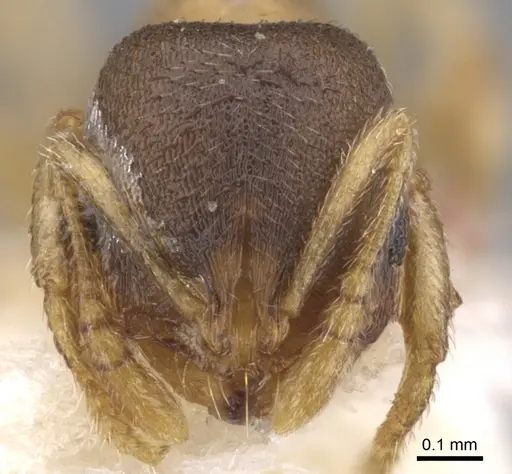
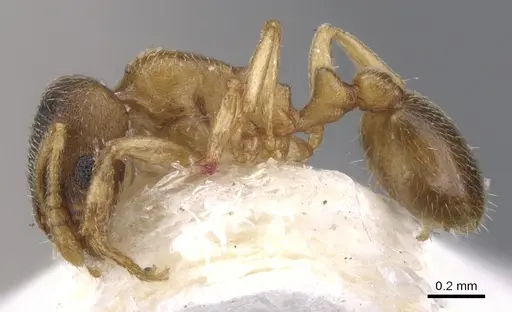
Chelaner pubescens is a tiny yellow ant species native to Western Australia, specifically the Perth region. Workers measure just 1.35-1.51mm in total body length, making them among the smaller ants you might encounter [1]. They belong to the bicorne species group and closely resemble the more common Chelaner rufoniger, so much so that researchers suspect C. pubescens may simply be pale, aberrant individuals of that species rather than a distinct species [1]. The body color is tawny yellow with a darker head, and workers are monomorphic (all the same size). This is an exceptionally rare ant, fewer than ten workers have ever been collected in the wild, all from urban areas around Perth and nearby Rottnest Island [1].
Quick Summary
- Difficulty: Unknown, too little data to assess
- Origin & Habitat: Western Australia, specifically the Perth metropolitan area (Mosman Park) and Rottnest Island. Found in remnant native vegetation on the edge of urban golf courses and parkland [1].
- Colony Type: Unknown, colony structure has not been documented. Based on related Chelaner species, likely single-queen colonies, but this is unconfirmed.
- Size & Growth:
- Queen: Unknown, no queens have been described [1]
- Worker: 1.35-1.51mm total body length (HL 0.49-0.57mm, HW 0.43-0.52mm) [1]
- Colony: Unknown, only six workers have ever been collected [1]
- Growth: Unknown
- Development: Unconfirmed, no development data exists for this species (Based on related Monomorium/Chelaner species, expect 4-8 weeks at warm temperatures, but this is an estimate)
- Antkeeping:
- Temperature: Unconfirmed, likely prefers warm conditions similar to other Australian Monomorium species. Start around 22-26°C and observe colony activity [1].
- Humidity: Unconfirmed, Western Australia has dry to semi-arid conditions. Likely prefers moderate to low humidity. Allow the nest to dry out between waterings.
- Diapause: Unknown, Western Australia has mild winters, but diapause requirements have not been studied. Consider a mild winter cool-down period.
- Nesting: Unconfirmed, found in remnant native vegetation in urban settings. Likely nests in soil or under stones. Use a standard test tube setup or small acrylic nest. Given their tiny size, ensure escape prevention is excellent.
- Behavior: Behavior is unstudied. Based on related species, they are likely generalist foragers that scavenge and may tend aphids for honeydew. Their tiny size means excellent escape prevention is critical, they can squeeze through remarkably small gaps. Handle gently as they are very small and could easily be crushed [1].
- Common Issues: extremely limited data means care recommendations are largely inferential, tiny size makes them difficult to house and observe properly, wild-caught colonies may not be obtainable since so few have ever been collected, may be confused with C. rufoniger, verify identification carefully
Identification and Relationship to Chelaner rufoniger
Chelaner pubescens was originally described as Chelaner pubescens in 2001 by Brian Heterick. The species was later moved to the genus Chelaner based on genetic analysis [2]. The key identifying features are the pale tawny yellow coloration (darker on the head) and the complete absence of erect or suberect setae (bristles) on the alitrunk (middle body section). This makes them much paler than any Chelaner rufoniger minor worker. In fact, researchers openly wonder if C. pubescens is truly a separate species or just pale/callow workers of the much more common C. rufoniger [1]. This identification uncertainty is something to keep in mind, if your ants darken as they age, they may actually be C. rufoniger.
Rarity and Collection History
This is one of the rarest ant species in Australia, only six workers have ever been documented. The holotype and paratypes came from Mosman Park, a suburb of Perth, collected in 1988 from remnant native vegetation bordering an urban golf course. Later, a single worker was found on Rottnest Island, and more recently specimens were collected from Eneabba [1]. This extreme rarity means that wild-caught colonies are essentially unavailable, and captive populations likely do not exist outside of research institutions. If you want to keep this species, you would need to source a colony from someone who has successfully cultured it, which is unlikely given how little is known about it.
Housing Recommendations (Inferred)
Since we have no direct data on this species' nesting preferences, we must infer from its habitat and related species. It was found in remnant native vegetation in an urban area, suggesting it tolerates disturbed habitats. Western Australia's climate is warm and generally dry, so avoid overly humid conditions. Use a small test tube setup or acrylic nest, their tiny 1.4mm size means you need excellent escape prevention with fine mesh barriers. A small outworld with a simple feeding area will work for offering food. Since colony size and behavior are unknown, start with standard Monomorium-type care and adjust based on how your colony responds.
Feeding Recommendations (Inferred)
No direct data exists on what C. pubescens eats. Related Monomorium species are generalist scavengers and predators that will eat small insects, sweet liquids, and honeydew. Given their tiny size, offer very small prey items like fruit flies, pinhead crickets, or small mealworm pieces. A drop of sugar water or honey can be offered, but remove it before it dries out. Start with small prey and observe what they accept. Since they're so small, even tiny insects that other ants would ignore may be appropriate prey.
Frequently Asked Questions
How do I identify Chelaner pubescens ants?
Chelaner pubescens workers are very small (1.35-1.51mm) with a pale tawny yellow body and darker head. They lack erect bristles on the alitrunk (middle body section), which distinguishes them from similar species. However, they closely resemble Chelaner rufoniger and may simply be pale variants of that common species. Verification by an expert is recommended.
Where does Chelaner pubescens live in the wild?
This species is known only from Western Australia, specifically the Perth metropolitan area (Mosman Park), Rottnest Island, and Eneabba. They have been found in remnant native vegetation on the edges of urban golf courses and parkland areas.
How big do Chelaner pubescens colonies get?
Unknown, only six workers have ever been collected in the wild, so we have no data on maximum colony size. Based on related species, colonies are likely small, possibly under 100 workers.
What do Chelaner pubescens ants eat?
Unconfirmed, no feeding observations exist for this species. Based on related Monomorium species, they likely accept small insects, sweet liquids, and honeydew. Offer small prey items and sugar water, adjusting based on what your colony accepts.
What temperature do Chelaner pubescens ants need?
Unconfirmed, no thermal studies exist for this species. Start around 22-26°C and observe colony behavior. Related Australian Monomorium species typically prefer warm conditions.
Do Chelaner pubescens ants need hibernation?
Unknown, no studies on overwintering behavior exist. Western Australia has mild winters, so a cool-down period may be beneficial but is not clearly required. Monitor your colony's activity levels.
Can I keep multiple Chelaner pubescens queens together?
Unknown, colony structure has not been documented for this species. The related C. rufoniger typically has single-queen colonies, but this may not apply to C. pubescens. Do not combine unrelated queens without documented evidence that this species tolerates polygyny.
How long does it take for Chelaner pubescens to develop from egg to worker?
Unconfirmed, no development data exists for this species. Based on related Monomorium species, expect 4-8 weeks at warm temperatures (around 24-26°C), but this is a rough estimate.
Are Chelaner pubescens good for beginners?
No, this species is not recommended for beginners or even experienced keepers. Almost no information exists about its care requirements, and wild colonies are essentially unavailable. The identification uncertainty (may be just a color variant of C. rufoniger) adds another layer of complexity.
Where can I get Chelaner pubescens ants?
This species is exceptionally rare in the wild and unlikely to be available in the antkeeping hobby. Only six workers have ever been documented. If you encounter what appears to be C. pubescens, verify the identification with an expert, as they closely resemble the much more common C. rufoniger.
References

This caresheet is licensed under CC BY-SA 4.0 .
CASENT0902320
View on AntWeb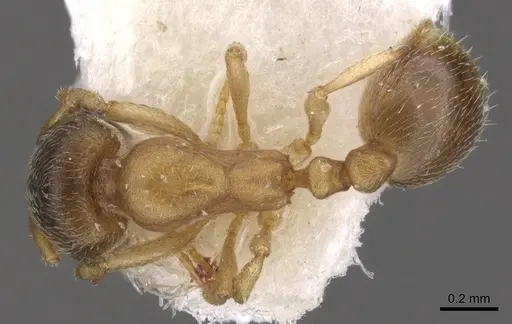
Literature
Loading...Loading products...