

Chelaner rufoniger
- Scientific Name
- Chelaner rufoniger
- Tribe
- Solenopsidini
- Subfamily
- Myrmicinae
- Author
- Heterick, 2001
- Distribution
- Found in 1 countries
Chelaner rufoniger Overview
Chelaner rufoniger is an ant species of the genus Chelaner. It is primarily documented in 1 countries , including Australia. Detailed taxonomic data and occurrence records can be further explored via authoritative databases such as AntWeb or the Global Biodiversity Information Facility (GBIF).
Chelaner rufoniger
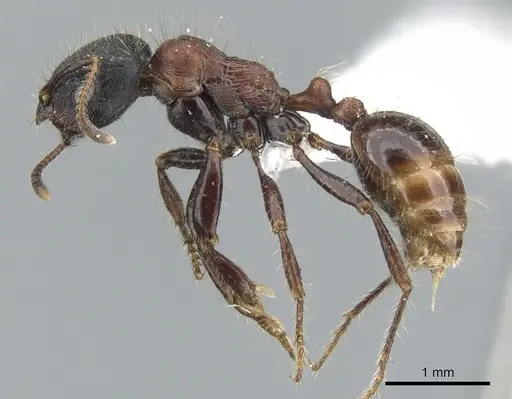
Chelaner rufoniger is a small to medium-sized Myrmicine ant native to Australia, particularly common in Western Australia including the Perth metropolitan area. Workers measure 1.57-3.88mm and display remarkable polymorphism, some colonies produce red-and-black workers while others have uniformly brown workers [1]. Queens are larger at 3.23-4.19mm. The species name comes from Latin 'rufoniger' meaning red-and-black, referring to the distinctive bicolored form. This ant occupies diverse habitats from mallee to Callitris scrub across southwestern Australia and has been recorded in South Australia and New South Wales [1].
Quick Summary
- Difficulty: Medium
- Origin & Habitat: Western Australia (common in southwest including Perth area), also South Australia and New South Wales. Inhabits mallee and Callitris scrub habitats [1].
- Colony Type: Colony structure is unconfirmed. Workers show polymorphism with major and media workers being red-and-black or uniformly brownish, while minor workers are uniformly brown or bicolored. Some colonies appear monomorphic while others contain polymorphic workers [1].
- Size & Growth:
- Queen: 3.23-4.19mm [1]
- Worker: 1.57-3.88mm (highly polymorphic) [1]
- Colony: Unknown, no colony size data available
- Growth: Unknown, no development timing data available
- Development: Unknown, no direct measurements. Based on typical Myrmicinae patterns from similar Australian species, estimate 6-10 weeks at optimal temperature. (Development timeline has not been directly studied. Estimates based on genus-level patterns for Myrmicinae ants in similar climates.)
- Antkeeping:
- Temperature: Aim for 22-28°C. As an Australian species from temperate-warm regions, they likely prefer warmer conditions. Provide a gentle gradient allowing workers to self-regulate.
- Humidity: Moderate humidity. Based on mallee and scrubland habitat preferences, they likely tolerate drier conditions compared to forest-dwelling species. Keep nest substrate lightly moist but allow some drying between waterings.
- Diapause: Likely not required. Australian species from temperate regions (Perth area) may have reduced activity in cooler months but true hibernation is unlikely.
- Nesting: Natural nesting occurs in soil under stones or in rotting wood. In captivity, test tubes work well for founding colonies. For established colonies, Y-tong nests or plaster nests with moderate humidity work well. Avoid overly damp conditions.
- Behavior: Workers are active foragers. Based on genus patterns, they likely accept small insects and honeydew/sugar sources. Their small to medium size and polymorphic workforce suggests flexible task allocation. Escape risk is moderate due to variable worker size, use standard barrier methods. Temperament is typically peaceful, they are not known to be particularly aggressive.
- Common Issues: no development data makes timing predictions difficult, keepers must monitor colony progress, polymorphic worker production may confuse beginners expecting uniform worker sizes, Australian species may have specific humidity requirements not fully understood, wild-caught colonies may carry parasites or diseases not yet documented, temperature tolerance range is inferred, not confirmed, observe colony behavior
Appearance and Identification
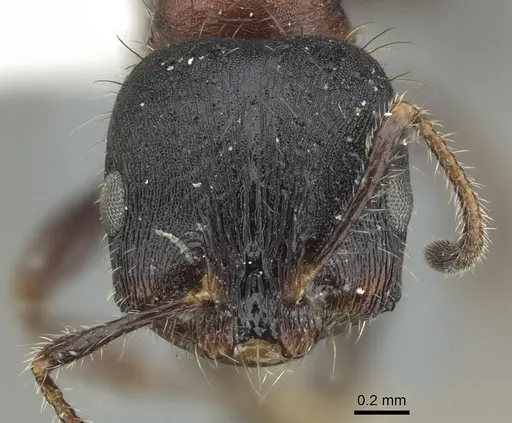
Chelaner rufoniger workers are highly variable in size, ranging from 1.57mm to 3.88mm (HML). This polymorphism is a key trait, larger major and media workers may be red-and-black bicolored or uniformly brownish, while smaller minor workers tend to be uniformly brown or bicolored light and dark brown. Some colonies produce only monomorphic workers. The head capsule is square to rectangular with a slightly concave vertex. The propodeum (the section behind the waist) shows variable sculpturing. Queens are larger at 3.23-4.19mm with a dark brown to black head and gaster, while the alitrunk (middle body section) is orange to crimson. Males are smaller at 1.91-4.09mm and chocolate-colored [1].
Natural Distribution and Habitat
This ant is widespread in southwestern Western Australia and is particularly common in the Perth metropolitan area. Outside Western Australia, the species has been recorded from single collections in Tarcoola (South Australia) and Barooga (New South Wales). The species occupies varied habitats including mallee woodland and Callitris scrub. The red-and-black form has been specifically collected in the Perth area [1]. This distribution pattern suggests the species is well-adapted to temperate Australian conditions with varied vegetation types.
Feeding and Diet
Based on typical Monomorium and Myrmicinae feeding patterns, Chelaner rufoniger likely accepts a varied diet including small insects and other arthropods as protein sources, plus honeydew from aphids or scale insects and sugar sources. In captivity, offer small live prey such as fruit flies, pinhead crickets, or mealworms. Sugar water, honey, or commercial ant jelly can be offered as carbohydrate sources. Feed protein prey 2-3 times per week and provide constant access to sugar sources. Remove uneaten prey after 24-48 hours to prevent mold.
Temperature and Humidity Requirements
As an Australian species from temperate southwestern regions, Chelaner rufoniger likely prefers warmer conditions in the 22-28°C range. Provide a temperature gradient so workers can choose their preferred zone. A heating cable on one side of the nest can create this gradient, place it on top of the nest to warm the area without excessive drying. For humidity, aim for moderate levels, the mallee and scrubland natural habitat suggests they tolerate drier conditions than rainforest species. Keep the nest substrate lightly moist but allow portions to dry between waterings. Good ventilation helps prevent mold while maintaining appropriate moisture.
Colony Structure and Social Organization
One of the most interesting aspects of Chelaner rufoniger is its social polymorphism. Some colonies contain highly polymorphic workers with major, media, and minor workers that may be red-and-black or uniformly brown. Other colonies appear to have monomorphic workers that are either all red-and-black or all uniformly brown. The head shape differs between color morphs, red-and-black workers have relatively broader heads. This variation may reflect a single species with alternative phenotypes depending on genetic alleles, or possibly a species complex [1]. The colony structure (number of queens) has not been documented.
Nesting in Captivity
In the wild, this species nests in soil under stones or in rotting wood. For captive colonies, test tube setups work well for founding queens. Once the colony reaches 20-30 workers, consider moving to a Y-tong (acrylic) nest or a plaster formicarium. The chambers should be appropriately sized for their variable worker sizes, larger chambers can accommodate major workers while smaller passages suit minor workers. Provide a water tube for humidity and ensure the nest has some open areas for foraging space connected to the nest area.
Frequently Asked Questions
How long does it take for Chelaner rufoniger to produce first workers?
The exact development timeline is unknown, it has not been directly studied. Based on typical Myrmicinae patterns for Australian species in similar climates, expect approximately 6-10 weeks from egg to first worker at optimal temperature (around 24-26°C). Monitor your colony's progress and adjust conditions accordingly.
What do Chelaner rufoniger ants eat?
They likely accept small insects and arthropods as protein sources, plus honeydew or sugar water. Offer small live prey like fruit flies or pinhead crickets, and provide constant access to sugar water or honey. This is based on typical Monomorium feeding patterns since species-specific diet data is unavailable.
Are Chelaner rufoniger ants aggressive?
Based on typical Monomorium behavior, they are generally peaceful and not particularly aggressive toward keepers. They are small ants and their sting is likely negligible to humans. However, they will defend their nest if threatened.
Do Chelaner rufoniger ants need hibernation?
Likely not required. As an Australian species from temperate regions (Perth area), they may reduce activity in cooler months but true hibernation is probably unnecessary. If you live in a temperate climate, you can reduce temperatures slightly in winter (to around 15-18°C) but complete hibernation is not necessary.
Can I keep multiple Chelaner rufoniger queens together?
The colony structure is unconfirmed, we don't know if they are single-queen (monogyne) or multi-queen (polygyne) in nature. Combining unrelated foundress queens is not recommended since this has not been documented and could result in fighting.
Why are my Chelaner rufoniger workers different sizes?
This is normal for the species! Chelaner rufoniger produces polymorphic workers, some colonies have major, media, and minor workers of different sizes. This is a natural trait of the species and not a cause for concern. Your colony may produce larger major workers over time.
What temperature should I keep Chelaner rufoniger at?
Aim for 22-28°C based on their Australian origin. A temperature gradient is ideal, let workers choose their preferred zone. If your room is within this range, room temperature may suffice. Otherwise, use a heating cable on part of the nest.
How big do Chelaner rufoniger colonies get?
The maximum colony size is unknown, no data is available on wild or captive colony sizes. Based on similar Monomorium species, colonies likely reach several hundred workers. Their polymorphic worker system suggests efficient task allocation.
References

This caresheet is licensed under CC BY-SA 4.0 .
CASENT0902321
View on AntWeb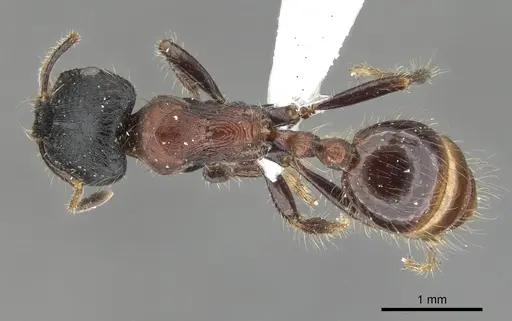
Literature
Loading...Loading products...