

Chelaner legulus
- Scientific Name
- Chelaner legulus
- Tribe
- Solenopsidini
- Subfamily
- Myrmicinae
- Author
- Heterick, 2001
- Distribution
- Found in 1 countries
Chelaner legulus Overview
Chelaner legulus is an ant species of the genus Chelaner. It is primarily documented in 1 countries , including Australia. Detailed taxonomic data and occurrence records can be further explored via authoritative databases such as AntWeb or the Global Biodiversity Information Facility (GBIF).
Chelaner legulus
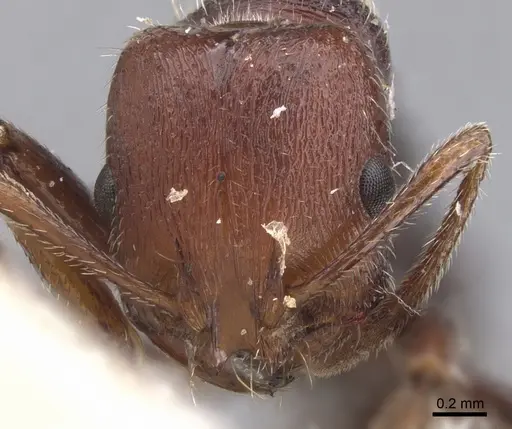
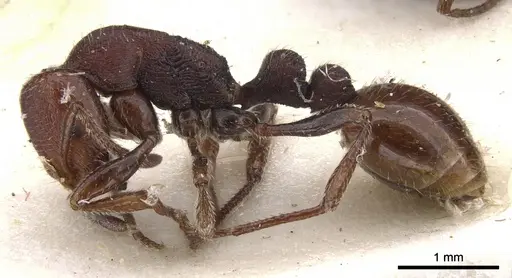
Chelaner legulus is a small to medium-sized ant native to southern Western Australia, measuring 2.86-3.95mm in total length [1]. Workers have a distinctive red head and anterior mesosoma, contrasting with a heavily darkened (almost black) posterior mesosoma, propodeum, and petiole, while the gaster is orange [1]. This species belongs to the rubriceps species group and is superficially similar to Chelaner bihamatus, with which it occurs in the same areas, but can be distinguished by its darker band on the mesosoma [1]. The species name 'legulus' means 'collector' in Latin, referencing its unusual behavior of carrying small seeds, a trait not commonly seen in this genus [2].
Quick Summary
- Difficulty: Medium
- Origin & Habitat: Southern Western Australia, though may occur elsewhere in the region. Found in dry sclerophyll forest and rural environments, with workers observed trailing on the ground and up tree trunks [1].
- Colony Type: Likely single-queen (monogyne) colonies based on typical Monomorium/Chelaner patterns. Colony size appears moderate, though exact maximum is unconfirmed.
- Colony: Monogyne
- Founding: Claustral
- Size & Growth:
- Queen: Unconfirmed, no queen measurements available in primary literature
- Worker: 2.86-3.95mm total length (HML), head length 0.99-1.34mm, head width 0.82-1.21mm [1]
- Colony: Unknown, not documented in available research
- Growth: Moderate, estimated based on related Australian Monomorium species
- Development: Estimated 6-10 weeks at optimal Australian summer temperatures based on genus-level patterns (Development time inferred from related Monomorium species, specific data for C. legulus is unavailable)
- Antkeeping:
- Temperature: Keep at warm room temperature, roughly 22-28°C. This species is adapted to the temperate to warm conditions of southern Western Australia. A gentle gradient allowing workers to self-regulate is beneficial.
- Humidity: Moderate humidity. Provide a moist area in the nest but allow for drier zones as well, reflecting the dry sclerophyll habitat where this species naturally occurs.
- Diapause: Likely yes, Western Australian ants typically require a winter rest period matching the Southern Hemisphere winter (roughly May-August). Reduce temperature to 10-15°C during this period.
- Nesting: Will likely accept standard test tube setups or acrylic/formicarium nests. In the wild, they nest in soil and under stones in dry environments. Provide a nesting area with moderate moisture and some dry space.
- Behavior: Workers are active foragers that travel in trails, both on the ground and up tree trunks [1]. They show unusual seed-carrying behavior, collecting seeds from Eucalyptus trees [1]. Workers are not particularly aggressive but will defend their colony. Their small size means escape prevention should be taken seriously, they can squeeze through small gaps.
- Common Issues: seed-feeding behavior may require offering appropriate seed or grain options alongside protein, small size means escape prevention must be excellent, use fine mesh and tight-fitting lids, Southern Hemisphere seasonal timing means diapause is in May-August, not Northern Hemisphere winter, limited availability in the antkeeping hobby due to restricted range, wild-caught colonies may struggle to adapt to captive conditions
Appearance and Identification
Chelaner legulus workers measure 2.86-3.95mm in total length, making them small but not tiny ants [1]. They have a striking two-tone coloration: the head and front part of the mesosoma are red or reddish-orange, while the rear of the mesosoma, the propodeum, petiole, and postpetiole are heavily darkened with black. The gaster is orange, and the legs are brown [1]. This color pattern helps distinguish them from the similar Chelaner bihamatus, which lacks the dark band across the mesosoma. The species name 'legulus' (meaning 'collector') was chosen because workers were observed carrying small seeds, this seed-carrying behavior is unusual for the genus and makes this species distinctive [2].
Natural History and Foraging
This species is known only from southern Western Australia, though it may occur in adjacent regions [1]. Workers have been observed trailing along the ground and climbing tree trunks, carrying small seeds that have been identified as coming from Eucalyptus trees (subgenus Symphyomyrtus) [1]. This seed-collecting behavior is notable because most Monomorium and Chelaner species are primarily predatory or honeydew-feeding. The species occurs in dry sclerophyll forest and rural environments, suggesting it prefers relatively open, drier habitats. The type specimens were collected from tree trunks, litter, and soil in native vegetation areas [1].
Housing and Nesting
In captivity, Chelaner legulus will likely thrive in standard test tube setups or acrylic formicarium nests. In the wild, they nest in soil and under stones in dry environments, so provide a nesting area with moderate moisture but also access to drier zones. A test tube setup with a water reservoir works well for founding colonies. For established colonies, ensure the nest has chambers sized appropriately for their small to medium size. Because workers are active foragers that travel in trails, provide adequate foraging space in the outworld.
Feeding and Diet
The seed-carrying behavior observed in the wild suggests this species may have an unusually broad diet for a Chelaner/Monomorium species [1]. In captivity, offer a varied diet including: protein sources like small insects (fruit flies, small crickets, mealworms), and potentially small seeds or grain as they appear to collect seeds in nature. They will likely also accept sugar water or honey as an energy source. Offer protein 2-3 times per week and keep sugar water available at all times. The seed-feeding aspect makes this an interesting species for keepers who want to observe diverse foraging behaviors.
Temperature and Seasonal Care
Keep colonies at warm room temperature, roughly 22-28°C, reflecting the temperate to warm conditions of southern Western Australia. A temperature gradient allowing workers to self-regulate is beneficial. Importantly, this species follows Southern Hemisphere seasons, so if you provide a winter rest period, it should occur during May-August (not the Northern Hemisphere winter). During this time, reduce temperatures to 10-15°C to simulate their natural seasonal cycle. This winter rest is important for colony health and may trigger reproductive behavior in spring.
Colony Development
Specific development times for Chelaner legulus have not been documented. Based on related Australian Monomorium species, expect 6-10 weeks from egg to first worker at optimal temperatures. Queens have not been described in the primary literature, so exact size and appearance of the queen caste is unknown. Colony growth is likely moderate, not as fast as some tropical species but faster than cold-climate ants. The founding queen likely seals herself in a claustral chamber and raises the first workers alone on stored fat reserves, as is typical for the genus.
Frequently Asked Questions
How long does it take for Chelaner legulus to produce first workers?
Specific development time is unconfirmed, but based on related Australian Monomorium species, expect 6-10 weeks from egg to first worker at warm temperatures (around 25°C).
What do Chelaner legulus ants eat?
They likely accept a varied diet including small insects (protein) and sugar sources. Notably, they also collect seeds in the wild, so you could experiment with offering small seeds or grains alongside their regular diet.
What temperature should I keep Chelaner legulus at?
Keep them at warm room temperature, roughly 22-28°C. A gradient allowing self-regulation is beneficial. They are adapted to southern Western Australia's temperate to warm climate.
Do Chelaner legulus need hibernation?
Yes, they likely require a winter rest period. Since they are from the Southern Hemisphere, this should occur during May-August, with temperatures reduced to 10-15°C.
Are Chelaner legulus good for beginners?
They are rated as Medium difficulty. They are not as common in the hobby due to their restricted range, but their care requirements are straightforward once established. The main challenges are obtaining a colony and providing appropriate seasonal care.
How big do Chelaner legulus colonies get?
Exact maximum colony size is unknown, but based on related species, they likely reach several hundred workers. They are not among the largest Monomorium species.
Why is this species called 'legulus'?
The species name 'legulus' means 'collector' in Latin. It was chosen because workers were observed carrying small seeds, which is unusual for the genus [2].
Can I keep multiple Chelaner legulus queens together?
This has not been documented. Based on typical Chelaner/Monomorium patterns, they likely form single-queen colonies. Combining unrelated queens is not recommended without evidence they can coexist.
When do Chelaner legulus have nuptial flights?
The timing of nuptial flights is unconfirmed. For Southern Hemisphere Australian ants, spring (September-November) is typical, but specific data for this species is not available.
References

This caresheet is licensed under CC BY-SA 4.0 .
CASENT0902312
View on AntWeb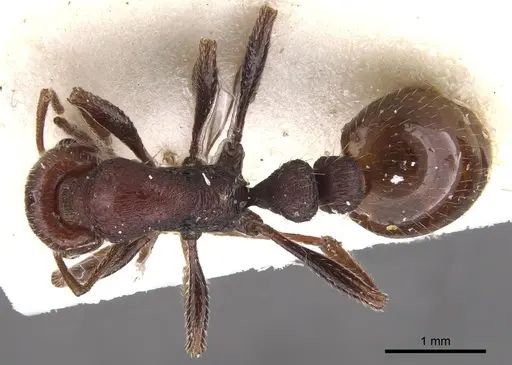
Literature
Loading...Loading products...