

Chelaner lacunosus
- Scientific Name
- Chelaner lacunosus
- Tribe
- Solenopsidini
- Subfamily
- Myrmicinae
- Author
- Heterick, 2001
- Distribution
- Found in 1 countries
Chelaner lacunosus Overview
Chelaner lacunosus is an ant species of the genus Chelaner. It is primarily documented in 1 countries , including Australia. Detailed taxonomic data and occurrence records can be further explored via authoritative databases such as AntWeb or the Global Biodiversity Information Facility (GBIF).
Chelaner lacunosus
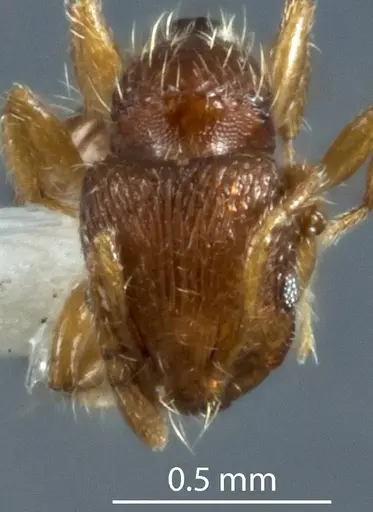
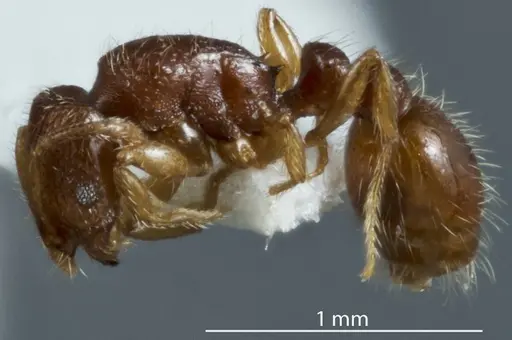
Chelaner lacunosus is a small, rare ant species native to arid and semi-arid regions of Western Australia and South Australia. Workers measure 1.62-1.72mm in total body length, making them tiny compared to many other Australian ants. They belong to the falcatum species group and are distinguished by their unusually hairy appearance, unlike most Monomorium species which are mostly smooth and shiny, these ants have body surfaces covered with many short, erect setae [1]. Their coloration varies: some specimens are tawny yellow to yellow-orange, while others have a chocolate-colored head and gaster with russet alitrunk, petiole, and appendages [1]. This species is known from only a handful of specimens, but this likely reflects the sparse human settlement in their remote habitat rather than true rarity [1].
Quick Summary
- Difficulty: Unknown, likely Expert
- Origin & Habitat: Arid and semi-arid regions of Western Australia and South Australia, particularly around the Great Australian Bight. Found in Queen Victoria Spring Nature Reserve, Cape Arid National Park, and near Pinnaroo in South Australia [1].
- Colony Type: Unknown, colony structure has not been documented
- Size & Growth:
- Queen: Undocumented, no queen specimens have been described
- Worker: 1.62-1.72mm [1]
- Colony: Unknown, only five workers have ever been recorded [1]
- Growth: Unknown
- Development: Unknown, no development data exists for this species (No direct observations of colony development have been recorded. Related Monomorium species typically develop from egg to worker in 4-8 weeks at optimal temperatures.)
- Antkeeping:
- Temperature: Unknown, no thermal studies exist. Based on its arid Australian habitat, likely tolerates warm conditions. Start around 22-26°C and observe colony activity.
- Humidity: Unknown, no humidity data exists. Arid habitat suggests preference for drier conditions. Keep nest substrate moderately dry with a small water source available.
- Diapause: Unknown, no seasonal studies have been conducted. Arid Australian ants may have reduced activity during extreme summer heat rather than winter diapause.
- Nesting: No nesting data exists for this species. Most Monomorium species nest in soil or under stones. A test tube setup with minimal water reservoir or a small acrylic/plaster nest would be appropriate starting points.
- Behavior: Behavior is undocumented. Based on related species, they are likely generalist foragers. Their small size (under 2mm) means escape prevention must be excellent, they can squeeze through tiny gaps. No information on sting potency exists, but given their tiny size, any sting would be negligible to humans.
- Common Issues: this species is virtually unknown in captivity, no established care protocols exist, only five worker specimens have ever been documented in scientific literature, colony structure (single queen vs multiple queen) is completely unstudied, founding behavior is unconfirmed, may be claustral like most Monomorium or semi-claustral, extreme rarity means wild colonies are essentially unavailable to collectors
Species Overview and Identification
Chelaner lacunosus was originally described as Chelaner lacunosus in 2001 by Brian Heterick before being transferred to the genus Chelaner in 2019. The species name 'lacunosus' comes from Latin, meaning 'full of holes', referring to the distinctive pitted or sculpted appearance of the workers [2]. This species belongs to the falcatum group within the genus Chelaner, a group of Australian ants characterized by specific morphological features including the shape of their clypeus and propodeal structures. What makes C. lacunosus unusual within its group is the dense covering of erect setae on its body, most members of the falcatum group are predominantly smooth and glabrous, but this species has many short, erect hairs covering its alitrunk and other body parts [1]. Workers can be identified by their small size (under 2mm), the presence of erect propodeal setae exceeding ten in number, and the acutely angled metapleural lobes at the rear of the thorax.
Distribution and Habitat
This species has one of the most restricted and unusual distributions among Australian ants. In Western Australia, it has been recorded from Eneabba and Cape Arid National Park in the Southwest Botanical Province, as well as Queen Victoria Spring Nature Reserve. In South Australia, there is a single record from near Pinnaroo, approximately 25km SSW of the town [1]. The gap between the Western Australian and South Australian records spans a vast area of almost unstudied arid terrain between Esperance (WA) and Ceduna (SA). This region around the Great Australian Bight has very sparse human settlement, and the ant fauna of this coastal strip remains almost completely unknown [1]. The fact that only five workers have ever been documented likely reflects the difficulty of sampling this remote region rather than true rarity, many more colonies probably exist in unsurveyed areas.
Taxonomy and Nomenclature
The nomenclatural history of this species is noteworthy. Originally described as Chelaner lacunosus by Heterick in 2001,the species was transferred to the genus Chelaner in 2019 by Sparks et al. during a multi-gene phylogeny study of Australian Monomorium species [2]. This transfer required a gender adjustment: because 'Monomorium' is neuter, the adjectival species name used the neuter ending '-um' (lacunosum), but when moved to Chelaner (which is masculine), the name legally had to change to the masculine form 'lacunosus' to maintain proper grammatical agreement under ICZN Article 31.2 [2]. The species was also noted to have distinct regional variation, Western Australian specimens are much darker than the South Australian material from Pinnaroo, and have reduced propodeal denticles, though they retain the diagnostic characters that confirm they belong to the same species.
Challenges for Antkeepers
Chelaner lacunosus presents extraordinary challenges for anyone wishing to keep it. This is not a species that can be readily obtained, only five worker specimens have ever been collected and described in scientific literature, all from remote arid locations in Australia. There is no established captive breeding population, and no documented attempts to keep this species in captivity exist. Beyond availability, almost no biological information is available: we do not know their colony structure, founding behavior, diet preferences, temperature requirements, or any other basic husbandry parameters. Thefalcatum group ants are poorly studied compared to more common Australian species like Monomorium pharaonis or M. rubra. For these reasons, C. lacunosus cannot be recommended for any keeper except the most dedicated researcher with access to Australian field sites and the ability to work with academic institutions conducting ant surveys in the region. [1]
Frequently Asked Questions
Can I keep Chelaner lacunosus as a pet ant?
No. This species is virtually unknown in the antkeeping hobby. Only five worker specimens have ever been documented in scientific literature, all from remote arid regions of Australia. No established captive colonies exist, and no care protocols have been developed. This is not a species you will find available for purchase.
Where does Chelaner lacunosus live in the wild?
It lives in arid and semi-arid regions of Western Australia and South Australia, particularly around the Great Australian Bight. Known locations include Queen Victoria Spring Nature Reserve, Cape Arid National Park, and near Pinnaroo in South Australia. The ant fauna of this vast region remains almost completely unknown due to sparse human settlement.
How big are Chelaner lacunosus workers?
Workers are very small, measuring 1.62-1.72mm in total body length. Their head is 0.56-0.60mm long and 0.47-0.49mm wide, with scapes measuring 0.34-0.38mm.
What makes Chelaner lacunosus different from other Monomorium ants?
Most Monomorium species are smooth and shiny (glabrous), but C. lacunosus has body surfaces covered with many short, erect setae, this is unusual within its falcatum species group. They also have distinctive propodeal denticles and acutely angled metapleural lobes.
Why is Chelaner lacunosus so rarely recorded?
The species is likely not as rare as it appears. The region between Esperance (WA) and Ceduna (SA) where it lives has very sparse human settlement, and the ant fauna of this coastal strip has been almost completely unsampled. The five known specimens probably represent limited sampling rather than true scarcity.
What is the colony structure of Chelaner lacunosus?
Unknown. No research has documented whether they form single-queen colonies (monogyne) or multi-queen colonies (polygyne). This is one of many basic biological questions that remain unanswered for this species.
How do Chelaner lacunosus queens found colonies?
Unconfirmed. Founding behavior has not been documented for this species. Most Monomorium species are claustral (queen seals herself in and lives off stored fat), but this needs confirmation for C. lacunosus.
Are Chelaner lacunosus ants available for purchase?
No. This species has never been documented in the antkeeping hobby. It is known only from a handful of scientific specimens collected in remote Australian arid regions. There are no captive breeding programs or commercial sources for this ant.
What do Chelaner lacunosus eat?
Unknown. No dietary studies exist for this species. Most Monomorium are generalist omnivores that forage for small insects and tend honeydew-producing insects, but specific food preferences for C. lacunosus have not been documented.
References

This caresheet is licensed under CC BY-SA 4.0 .
ANTWEB1041202
View on AntWeb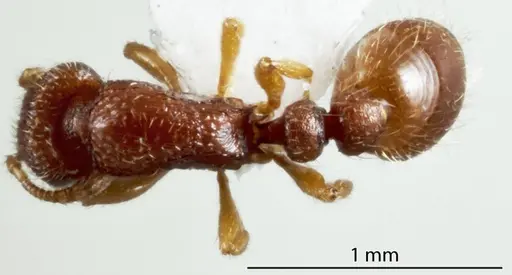
Literature
Loading...Loading products...