

Chelaner flavoniger
- Scientific Name
- Chelaner flavoniger
- Tribe
- Solenopsidini
- Subfamily
- Myrmicinae
- Author
- Heterick, 2001
- Distribution
- Found in 1 countries
Chelaner flavoniger Overview
Chelaner flavoniger is an ant species of the genus Chelaner. It is primarily documented in 1 countries , including Australia. Detailed taxonomic data and occurrence records can be further explored via authoritative databases such as AntWeb or the Global Biodiversity Information Facility (GBIF).
Chelaner flavoniger
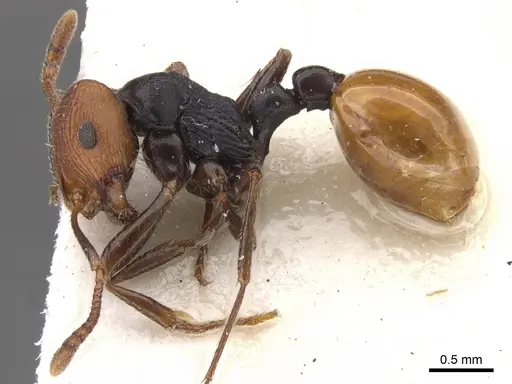
Chelaner flavoniger is a small, striking ant native to the Geraldton region in Western Australia. Workers measure 2.55-2.82mm and feature a distinctive bicolored pattern: the gaster is bright gamboge yellow while the head, alitrunk, petiole, and postpetiole are dark brown to black [1]. This species belongs to the longinodis species group and is closely related to Chelaner longinodis, from which it can be distinguished by its trapezoid head shape and yellow-and-black coloration rather than various shades of red and brown [1]. Queens are ergatoid (wingless), measuring 3.39mm, which is notable as this species appears to have ergatoid queens only rather than fully winged reproductive queens [2][1]. The species has a very restricted distribution, known only from the Geraldton region and nearby Canna and Kalbarri National Park in mid-north Western Australia [1].
Quick Summary
- Difficulty: Medium
- Origin & Habitat: Semi-arid mallee habitat in Western Australia, specifically the Geraldton region and surrounding areas including Canna and Kalbarri National Park [1]. This is a dry to semi-arid region in southwestern Australia.
- Colony Type: Ergatoid queen system, this species has only ergatoid (wingless) queens rather than fully winged alates. Ergatoid queens serve as replacement reproductives if the primary queen dies. The colony structure appears to be single-queen based with ergatoid replacement reproductives present [2][1].
- Colony: Monogyne
- Size & Growth:
- Queen: 3.39mm (ergatoid queen) [1]
- Worker: 2.55-2.82mm [1]
- Colony: Unknown for this specific species, likely small to moderate based on related Monomorium species
- Growth: Unknown, estimated moderate based on genus patterns
- Development: Unconfirmed, estimated 6-10 weeks based on related Monomorium species at optimal temperature (No specific development data exists for this species. Related Australian Monomorium species typically develop in 6-10 weeks at warm temperatures.)
- Antkeeping:
- Temperature: Aim for 22-26°C, based on its Australian origin, this species likely prefers warm conditions. Provide a gentle temperature gradient allowing workers to self-regulate.
- Humidity: Low to moderate, semi-arid mallee habitat suggests this species prefers drier conditions. Keep nest substrate moderately dry, with a small water tube for humidity access.
- Diapause: Likely, Australian ants from temperate regions typically require a winter rest period. A 2-3 month diapause at 10-15°C is recommended based on genus patterns.
- Nesting: This species likely nests in soil or under stones in nature. In captivity, a standard test tube setup works well for founding colonies. For established colonies, a Y-tong or plaster nest with moderate dryness is appropriate.
- Behavior: Workers are small and active. Based on genus behavior, they are likely generalist foragers. Their tiny size (under 3mm) means escape prevention is critical, use fine mesh and tight-fitting barriers. Ergatoid queens are ground-dwelling and wingless, so they cannot fly. This species is not known to be aggressive or stinging.
- Common Issues: tiny size makes escape likely without fine mesh barriers, limited distribution means wild colonies are rarely available, ergatoid queen system may affect colony founding dynamics, no specific care data exists, keepers must adapt from related species
Appearance and Identification
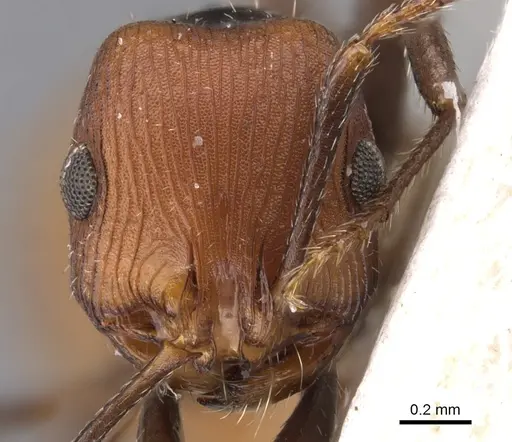
Chelaner flavoniger workers are small ants measuring 2.55-2.82mm with a striking bicolored appearance. The head is orange, the alitrunk (middle body section), petiole, and postpetiole are dark brown to black, and the gaster (abdomen) is a bright gamboge yellow. This yellow-and-black coloring gives the species its name, 'flavoniger' comes from Latin meaning 'yellow-black' [1]. The head is trapezoid in shape, narrowing toward the vertex, which helps distinguish this species from the related Chelaner longinodis which has a more square or rectangular head. Workers are monomorphic, meaning they all look the same size. Queens are ergatoid (wingless), measuring 3.39mm, and are also bicolored with an orange head and gaster but brown alitrunk and petiole parts [1].
Distribution and Habitat
This species has an extremely restricted distribution in Western Australia. It is known only from the Geraldton region in mid-north WA, with collections from Woongondy (Wongoondy), Tardun (90 miles east of Geraldton), Canna (15km south of Tardun), and Kalbarri National Park [1]. The original type material was collected from semi-arid mallee habitat at around 400 feet elevation. This is a dry to semi-arid region in southwestern Australia, characterized by mallee woodland and sandy soils. The restricted distribution makes this species particularly uncommon in the antkeeping hobby, as wild colonies are rarely available [1].
Colony Structure and Reproduction
Chelaner flavoniger has an unusual colony structure, it appears to have only ergatoid queens rather than fully winged alates. Ergatoid queens are wingless replacement queens that can develop from worker larvae and serve as reproductive individuals if the primary queen dies or the colony needs to replace its queen [2]. This is different from most ant species where new queens develop wings and participate in nuptial flights. The presence of ergatoid queens only means this species does not have typical nuptial flights, instead, mating likely occurs within or near the nest. The species is confirmed to have ergatoid replacement reproductives, which means colonies can persist even if the founding queen dies [2][1]. The colony type appears to be functionally monogyne (single queen) with ergatoid backup reproductives.
Temperature and Heating
As an Australian ant from the Geraldton region, Chelaner flavoniger likely prefers warm conditions. Based on its origin in mid-north Western Australia, aim for temperatures in the 22-26°C range. This is consistent with other Australian Monomorium species which thrive at warm room temperatures. Provide a temperature gradient within the nest setup so workers can self-regulate by moving between warmer and cooler areas. A heating cable on one side of the nest can help maintain warmth, but avoid direct heat that could dry out the nest too quickly. Room temperature within this range is often sufficient for established colonies. During the winter rest period (diapause), temperatures should be reduced to around 10-15°C for 2-3 months.
Feeding and Diet
Like other members of the genus Chelaner (formerly Monomorium), this species is likely a generalist omnivore. In nature, they probably forage for small insects, honeydew from aphids, and plant secretions. In captivity, offer a varied diet including sugar water or honey as an energy source, and protein sources such as small insects (fruit flies, small mealworms, crickets). Feed protein prey 2-3 times per week and keep a constant sugar water supply. Small prey items are essential given the tiny worker size, ensure prey is appropriately sized for 2-3mm ants. Remove uneaten food promptly to prevent mold.
Nesting and Setup
In their natural habitat of semi-arid mallee, these ants likely nest in soil or under stones. For captive care, a standard test tube setup works well for founding colonies. The test tube should have a water reservoir with a cotton plug, providing humidity without flooding. Once the colony reaches 20-30 workers, you can consider moving them to a formicarium. A Y-tong (acrylic) nest or plaster nest with moderate dryness suits this species well. Given their origin in a semi-arid region, err on the drier side for humidity, the nest substrate should be lightly moist but not wet. Provide a small outworld for foraging with sugar water and prey items.
Escape Prevention
With workers measuring only 2.55-2.82mm, escape prevention is critical. These tiny ants can squeeze through remarkably small gaps. Use tight-fitting lids on all containers and outworlds. Apply Fluon or similar barrier products to the edges of nest openings. Use fine mesh (at least 0.5mm or smaller) on any ventilation holes. Check for gaps around tubing connections. Even a tiny crack that seems insignificant with larger ants will allow these tiny workers to escape. Regular inspection of setup integrity is essential.
Frequently Asked Questions
How long does it take for Chelaner flavoniger to raise first workers?
The exact development timeline is unconfirmed for this species. Based on related Australian Monomorium species, expect 6-10 weeks from egg to first worker at optimal temperatures (22-26°C). The first workers (nanitics) will be smaller than mature workers.
Can I keep multiple Chelaner flavoniger queens together?
This species has an ergatoid queen system with only wingless replacement queens. Unlike some Monorium species that can be polygynous, C. flavoniger appears to be functionally monogyne. Combining unrelated queens is not recommended as it has not been documented and could result in fighting.
What do Chelaner flavoniger ants eat?
They are generalist omnivores. Offer sugar water or honey as a constant energy source, and small protein prey like fruit flies, small mealworms, or pinhead crickets 2-3 times per week. Ensure prey is appropriately sized for their tiny 2-3mm workers.
Do Chelaner flavoniger ants need hibernation?
Based on their Australian origin and related species, a winter rest period is likely beneficial. Provide a 2-3 month diapause at 10-15°C during the winter months. This helps maintain natural cycles and may improve colony health long-term.
Why are my Chelaner flavoniger ants escaping?
Their tiny size (under 3mm) makes them excellent escape artists. Use fine mesh (0.5mm or smaller), apply Fluon barriers to all edges and openings, and check all tubing connections for gaps. Even microscopic gaps need to be sealed.
What is an ergatoid queen?
An ergatoid queen is a wingless queen that develops from worker larvae rather than developing wings like typical alate queens. Ergatoid queens cannot fly, they mate within or near the nest and serve as replacement reproductives if the primary queen dies. This is the only queen type known for C. flavoniger [2][1].
Are Chelaner flavoniger ants good for beginners?
This species is rated as Medium difficulty. While their care requirements are relatively straightforward, their tiny size makes escape prevention challenging. They also have limited availability since wild colonies are rarely collected. Experience with small ants is helpful before attempting this species.
When should I move my colony to a formicarium?
Keep colonies in a test tube setup until they reach 20-30 workers or the test tube becomes crowded. At that point, you can move them to a Y-tong or plaster formicarium with appropriate humidity levels. Ensure the formicarium has appropriately sized chambers for their tiny size.
Where is Chelaner flavoniger found in the wild?
This species has an extremely restricted distribution in Western Australia, known only from the Geraldton region including Woongondy, Tardun, Canna, and Kalbarri National Park [1]. It is endemic to this area and not found anywhere else in the world.
References

This caresheet is licensed under CC BY-SA 4.0 .
CASENT0902311
View on AntWeb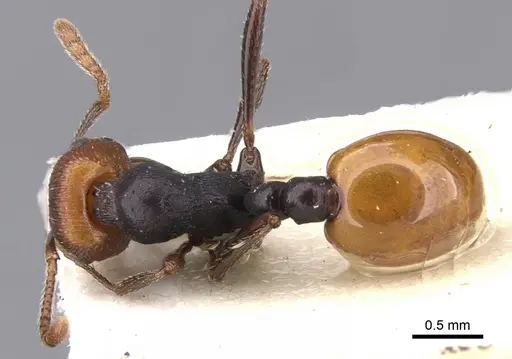
Literature
Loading...Loading products...