

Chelaner falcatus
- Scientific Name
- Chelaner falcatus
- Tribe
- Solenopsidini
- Subfamily
- Myrmicinae
- Author
- McAreavey, 1949
- Distribution
- Found in 1 countries
Chelaner falcatus Overview
Chelaner falcatus is an ant species of the genus Chelaner. It is primarily documented in 1 countries , including Australia. Detailed taxonomic data and occurrence records can be further explored via authoritative databases such as AntWeb or the Global Biodiversity Information Facility (GBIF).
Chelaner falcatus
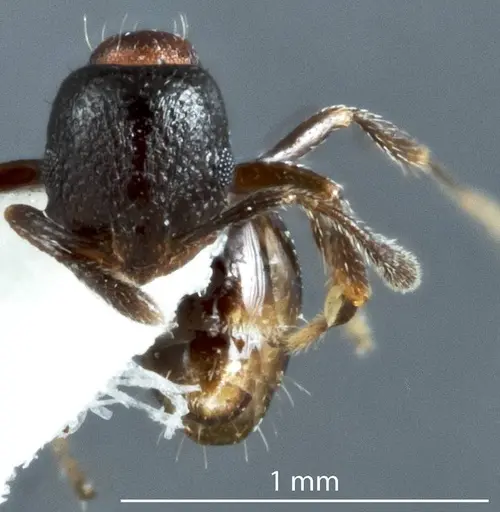
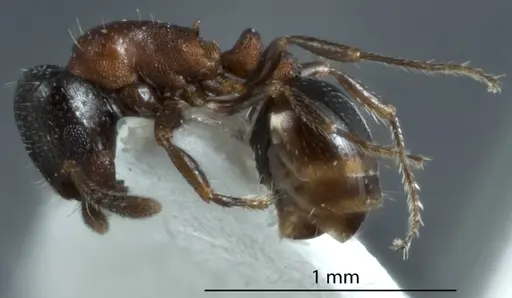
Chelaner falcatus is a small orange ant species endemic to the arid interior of New South Wales, Australia, specifically known only from the Nyngan area along the Bogan River. Workers measure 2.72-2.91mm and have a distinctive orange coloration with smooth, shining body surfaces. The species is extremely rare, it has only been collected twice (1946 and 1964) despite extensive ant surveys in the region, suggesting it may be highly localized or uncommon. Nothing is known about this species' biology in the wild, making it one of the most poorly documented Australian ants.
Quick Summary
- Difficulty: Unknown, biology unstudied
- Origin & Habitat: Arid interior of New South Wales, Australia, specifically the Nyngan area along the Bogan River [1]. The region experiences hot, dry conditions with low rainfall typical of semi-arid Australian outback.
- Colony Type: Colony structure is unconfirmed. A paratype ergatoid (wingless) queen has been documented, suggesting the species may have replacement reproductives within established colonies [1].
- Size & Growth:
- Queen: Unconfirmed, only ergatoid queen measured in paratypes
- Worker: 2.72-2.91mm [1]
- Colony: Unknown, no colony data exists
- Growth: Unknown
- Development: Unconfirmed, no development data exists (Based on related Monomorium species, expect 6-10 weeks at optimal temperature, but this is entirely estimated)
- Antkeeping:
- Temperature: Likely tolerates warm to hot conditions typical of arid Australian interior, start around 22-28°C and observe colony activity. No specific data exists for this species.
- Humidity: Likely prefers drier conditions given arid habitat, keep nest substrate moderately dry with a small water chamber. Avoid excessive moisture.
- Diapause: Unknown, likely experiences reduced activity during Australian winter months but specific requirements unstudied
- Nesting: No natural nesting data exists. Based on related species, likely nests in soil or under stones. Test tubes or small acrylic nests work for initial colonies.
- Behavior: Behavior is completely unstudied. Based on related Monomorium species, likely non-aggressive with small colonies. Escape risk is moderate given their ~3mm size, standard barrier methods should suffice.
- Common Issues: No biological data exists, keepers are essentially pioneering captive husbandry, Extremely rare in the wild, captive colonies may not be available, Growth and development timeline entirely unknown, Colony may have specific requirements that cannot be predicted from related species
Species Overview and Identification
Chelaner falcatus is a tiny orange ant measuring just 2.72-2.91mm in total body length. It belongs to the falcatum species group within the genus Chelaner, which was formerly classified as Monomorium. The species is known only from specimens collected in 1946 and 1964 near Nyngan, New South Wales, making it one of Australia's rarest and most poorly known ant species. The distinctive orange coloration and small size help distinguish it from the similar but larger Chelaner elegantulus. An ergatoid (wingless) queen has been documented in paratypes, which is unusual in the genus and suggests potential for colony reproduction without nuptial flights. [1]
Natural History and Habitat
This species is known only from the Bogan River area near Nyngan in inland New South Wales, Australia. This region experiences a semi-arid climate with hot summers, mild winters, and low annual rainfall. The complete absence of this species from extensive subsequent ant surveys in the region suggests it may be highly localized to specific microhabitats or genuinely rare. No information exists on its nesting preferences, foraging behavior, diet, or seasonal activity patterns in the wild. This represents a significant gap in ant biology knowledge. [1]
Housing and Nesting
Since no natural nesting data exists for this species, housing recommendations must be based on related Monomorium species. Start with a standard test tube setup for founding colonies, a small acrylic nest with narrow chambers becomes appropriate once the colony reaches 20-30 workers. Given the arid origin, err on the side of drier conditions. Provide a water tube for humidity but avoid damp substrate. The small worker size (~3mm) means escape prevention should be adequate but is not as critical as with tiny Solenopsis or Wasmannia species.
Feeding and Diet
Diet is completely unstudied for this species. Based on related Monomorium species in the Solenopsidini tribe, they likely accept both sugar sources (honey, sugar water) and protein (small insects, mealworms). Start with standard ant feeding protocols: constant access to sugar water or honey, and protein prey 2-3 times per week. Monitor for acceptance and adjust accordingly. Given their small size, any prey items should be appropriately sized.
Temperature and Seasonal Care
No specific temperature data exists for this species. The arid interior of NSW experiences extreme temperatures ranging from summer highs above 40°C to winter lows near freezing. Start with a moderate temperature range of 22-28°C and observe colony behavior. If workers are consistently clustered near the heated side, increase slightly, if they avoid heat, reduce. During Australian winter (June-August), a slight temperature reduction simulating natural seasonal cycles may be beneficial, though specific diapause requirements are unknown.
Colony Development and Growth
No data exists on colony development for this species. Related Monomorium species typically develop from egg to worker in 6-10 weeks at warm temperatures, but this is entirely an estimate for C. falcatus. Colonies likely remain small, wild colonies have never been documented, so maximum colony size is entirely unknown. Given the small worker size and apparent rarity, expect relatively modest colony sizes even at maturity. Patience will be essential as keepers pioneer captive husbandry of this species.
Frequently Asked Questions
How long does it take for Chelaner falcatus to produce first workers?
Unknown, no development data exists for this species. Based on related Monomorium species, expect 6-10 weeks from egg to worker at warm temperatures, but this is entirely an estimate.
What do Chelaner falcatus ants eat?
Diet is unstudied. Based on related species, likely accepts sugar sources (honey, sugar water) and small protein prey (fruit flies, small mealworms). Start with standard feeding protocols and adjust based on acceptance.
Are Chelaner falcatus good for beginners?
No, this species is not recommended for beginners. Almost nothing is known about its biology, making captive husbandry essentially experimental. Additionally, the species is extremely rare in the wild and captive colonies are essentially unavailable.
What temperature should I keep Chelaner falcatus at?
No specific data exists. Start around 22-28°C and observe colony activity. The arid Australian origin suggests they tolerate warmer conditions, but specific requirements are unknown.
How big do Chelaner falcatus colonies get?
Unknown, wild colonies have never been documented. Based on the small worker size and apparent rarity, colonies likely remain modest (likely under 100-200 workers at maturity), but this is entirely speculative.
Can I keep multiple Chelaner falcatus queens together?
Unknown, colony structure has not been studied. The presence of ergatoid (wingless) queens in paratypes suggests potential for replacement reproductives within colonies, but whether multiple foundresses can be combined is unstudied.
Where is Chelaner falcatus found in the wild?
Only known from the Nyngan area along the Bogan River in inland New South Wales, Australia. The species has not been found in any subsequent surveys despite extensive collecting in the region.
Is Chelaner falcatus available for purchase?
Extremely unlikely, this is one of Australia's rarest ant species, known only from two collections made in 1946 and 1964. No captive colonies are known to exist in antkeeping.
Do Chelaner falcatus need hibernation?
Unknown, no seasonal biology data exists. The arid Australian interior experiences mild winters, so any cold period would likely be brief and not a true diapause. Observe colony behavior during winter months.
References

This caresheet is licensed under CC BY-SA 4.0 .
JDM32-003562
View on AntWeb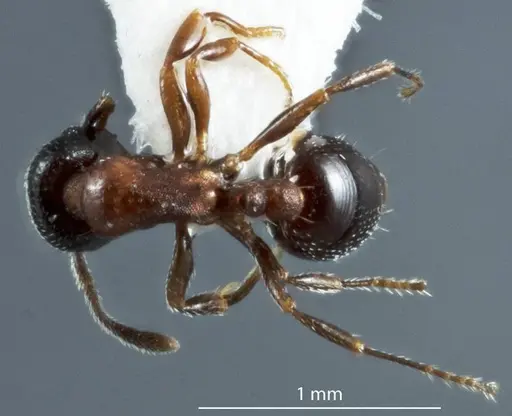
Literature
Loading...Loading products...