

Chelaner anthracinus
- Scientific Name
- Chelaner anthracinus
- Tribe
- Solenopsidini
- Subfamily
- Myrmicinae
- Author
- Heterick, 2001
- Distribution
- Found in 1 countries
Chelaner anthracinus Overview
Chelaner anthracinus is an ant species of the genus Chelaner. It is primarily documented in 1 countries , including Australia. Detailed taxonomic data and occurrence records can be further explored via authoritative databases such as AntWeb or the Global Biodiversity Information Facility (GBIF).
Chelaner anthracinus
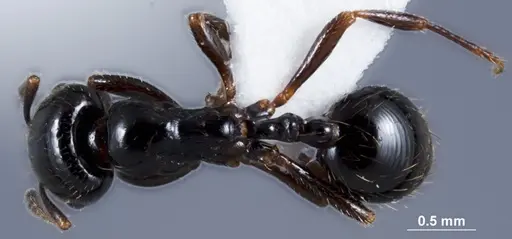
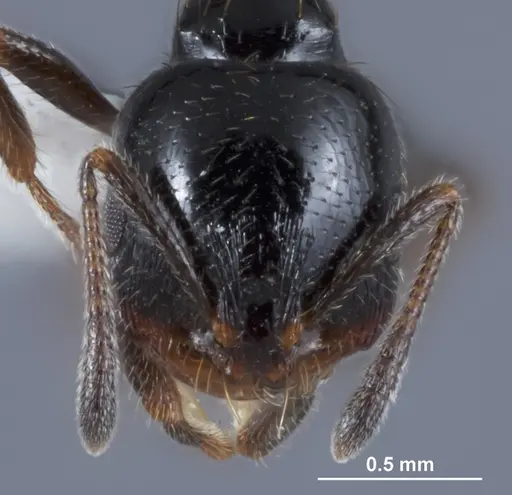
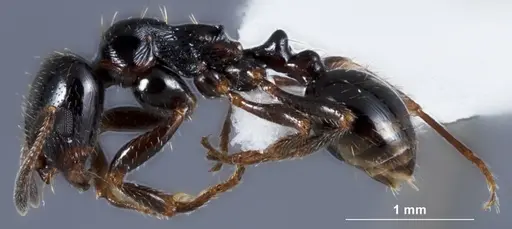
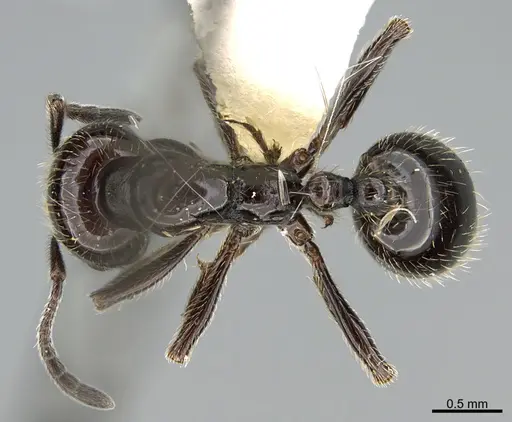
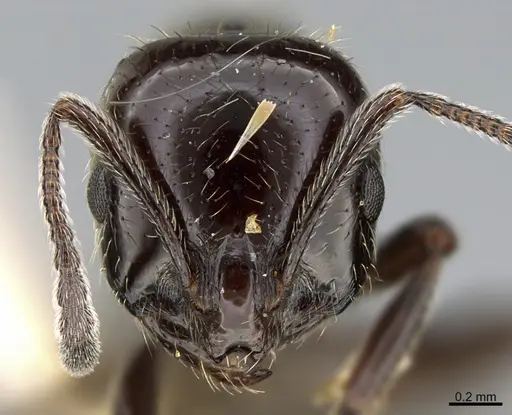
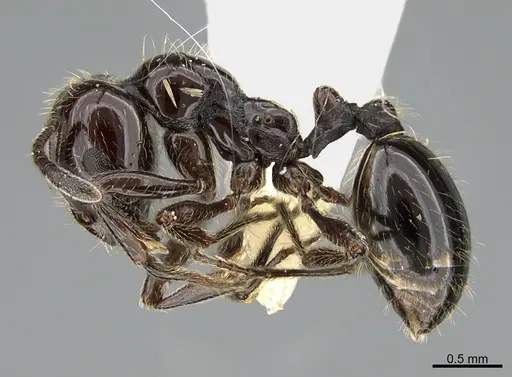
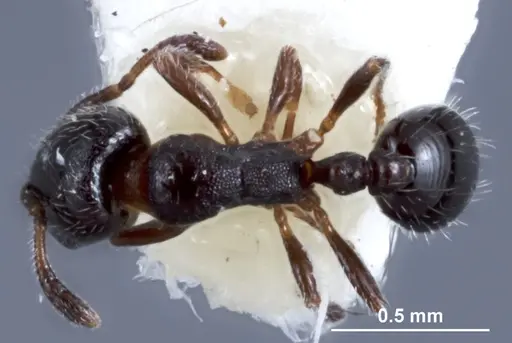
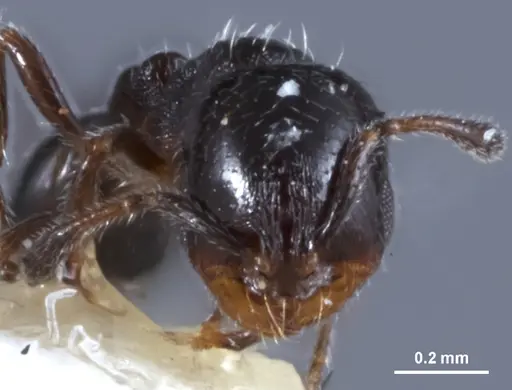
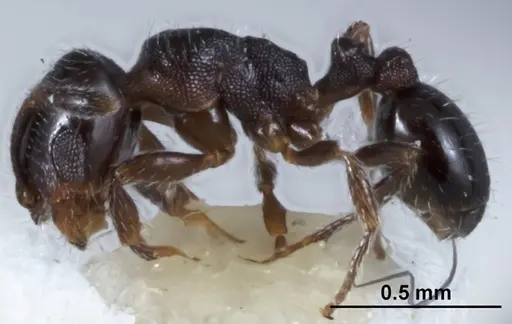
Chelaner anthracinus is a small, dark ant species native to Western Australia. Workers measure approximately 1.2-1.5mm in total body length, making them one of the smaller ant species in the region [1]. They have a distinctive dark chocolate body with orange mandibles, and their most notable identifying feature is their unusually elongated eyes, which are much longer than wide compared to the more typical elliptical eyes of related species [1]. This species belongs to the bicorne species group and was originally described as Chelaner anthracinus before being reclassified to Chelaner in 2019 [2].
This is an exceptionally rare species with almost no biological data available. Only a handful of workers have ever been collected, all via pitfall traps, meaning virtually nothing is known about their colony structure, nesting habits, or behavior in the wild [1]. They appear to inhabit semi-arid regions of southwestern Western Australia, with occasional sightings further north near Carnarvon [1].
Quick Summary
- Difficulty: Unknown
- Origin & Habitat: Western Australia, Australia, semi-arid regions of the Southwest Botanical Province and Carnarvon district [1]
- Colony Type: Unknown, colony structure has never been documented [1]
- Size & Growth:
- Queen: Unknown, queen has never been described [1]
- Worker: 1.24-1.47mm total length, HL 0.48-0.57mm, HW 0.44-0.52mm [1]
- Colony: Unknown, only a few stray workers have ever been collected [1]
- Growth: Unknown
- Development: Unknown, no data available (Cannot provide estimates for a species with no documented colony development. Related Monomorium species typically develop from egg to worker in 4-8 weeks at warm temperatures, but this is speculative.)
- Antkeeping:
- Temperature: Unknown, no thermal data exists for this species. Based on its Western Australian distribution in semi-arid regions, moderate temperatures in the low-to-mid 20s°C are likely appropriate. Start around 22-25°C and observe colony activity.
- Humidity: Unknown, no humidity data exists. Semi-arid Western Australia suggests they prefer drier conditions than tropical species. Allow the nest to dry out partially between waterings, with a small moisture gradient.
- Diapause: Unknown, no seasonal data exists. Many Western Australian ants reduce activity during the cooler winter months, so a brief cool period (15-18°C) may be beneficial but is not confirmed.
- Nesting: No data on natural nesting. Most Monomorium and related small Myrmicinae nest in soil or under stones. A test tube setup with moderate moisture, or a small acrylic/plaster nest would be appropriate starting points.
- Behavior: Completely unstudied, no behavioral observations have been documented. Based on genus-level patterns, they are likely generalist foragers that scavenge and collect small prey. Their tiny size suggests they may be shy and non-aggressive. Escape prevention is critical due to their very small size, standard fine mesh barriers are essential.
- Common Issues: this species has never been kept in captivity, no husbandry guidance exists, no confirmed food preferences, must be determined through trial and error, colony structure unknown, may be single-queen or multi-queen, no documented founding behavior, claustral vs semi-claustrial unknown, extremely limited distribution means wild colonies are essentially unavailable
Species Identification and Appearance
Chelaner anthracinus is a tiny ant species with workers measuring just 1.2-1.5mm in total length. They are easily recognized by their distinctive elongated eyes, which are noticeably longer than wide, a unusual trait among Australian ants. The body is a dark chocolate brown color, while the mandibles are a contrasting orange. This combination makes them visually distinctive, though their small size means they are easily overlooked. The species was originally described as Chelaner anthracinus in 2001 before being reclassified to the genus Chelaner in 2019. The species name anthracinus means 'coal-black' in Greek, referring to their dark coloration [1][2].
Distribution and Habitat
This species is known only from Western Australia, primarily from the semi-arid regions of the Southwest Botanical Province. The type specimen was collected at Avondale Reserve near Beverley, with additional specimens found at Bush Bay in the Carnarvon district, which is just north of the main collection area. All specimens have been captured in pitfall traps, which are ground-level containers used to catch walking insects. This collection method means we have no information about their natural nesting sites or microhabitat preferences. The limited collection records spanning only a handful of workers make this one of the least-known Australian ant species [1].
Current State of Knowledge
Chelaner anthracinus represents a significant knowledge gap in antkeeping, literally nothing is known about its biology beyond worker measurements. No queen has ever been described, no colony has ever been observed, and no behavioral studies exist. This is not a species you can currently keep, as no wild colonies have ever been documented or collected. The species appears to be genuinely rare in the wild, possibly due to its small size making it difficult to detect, or genuinely low population densities. Any antkeeping advice for this species would be entirely speculative rather than based on documented evidence. For now, this species remains a taxonomic curiosity rather than a viable option for antkeepers [1].
Related Species and Taxonomic Notes
Chelaner anthracinus belongs to the bicorne species group, a collection of closely related Australian ants. It closely resembles the minor workers of Chelaner rufoniger, another member of the same group, but can be distinguished by its uniquely elongated eyes versus the more typical elliptical or ovoid eyes of C. rufoniger. The genus Chelaner was formerly part of Monomorium, and many species were reclassified in 2019 based on genetic analysis. The name change from Chelaner anthracinus to Chelaner anthracinus was necessary because the genus Chelaner is masculine, requiring the species name to use the masculine ending -inus rather than the neuter -inum [2].
Frequently Asked Questions
Can I keep Chelaner anthracinus as a pet ant?
No, this species has never been documented in captivity. No wild colony has ever been found or collected, and there is no biological information available to guide successful husbandry. The few known specimens were all collected in pitfall traps in remote Western Australia.
What does Chelaner anthracinus eat?
Unknown, no feeding observations have ever been documented. Based on genus-level patterns, they likely scavenge and hunt small arthropods like other small Myrmicinae, but this is entirely speculative.
How big do Chelaner anthracinus colonies get?
Unknown, colony size has never been documented. Only isolated workers have ever been collected, and no colony structure information exists.
Where does Chelaner anthracinus live?
Only known from Western Australia, specifically the semi-arid Southwest Botanical Province and the Carnarvon district. They have never been collected in large numbers.
How do I identify Chelaner anthracinus?
Workers are tiny (1.2-1.5mm) with dark chocolate-brown body and orange mandibles. Their most distinctive feature is their unusually elongated eyes, which are much longer than wide, unlike most related species.
What temperature do Chelaner anthracinus need?
No thermal data exists for this species. Based on their Western Australian semi-arid distribution, moderate temperatures in the low-to-mid 20s°C are a reasonable guess, but this is entirely speculative.
Do Chelaner anthracinus queens have wings?
Unknown, no queen of this species has ever been described or observed. The species is known only from worker specimens.
Is Chelaner anthracinus endangered?
Unknown, the species has been assessed for conservation status. Its extreme rarity makes it difficult to evaluate, but the limited known range and sparse records suggest it may be uncommon.
Why is so little known about this ant?
Only a handful of workers have ever been collected, all via pitfall traps. This passive collection method doesn't reveal anything about colony structure, behavior, or nesting. The species appears to be genuinely rare or easily overlooked due to its tiny size.
Can I find Chelaner anthracinus in the wild?
Extremely unlikely. They are known from only a few specimens across a wide geographic area in remote Western Australia, and no one has ever documented a colony or nesting site.
References

This caresheet is licensed under CC BY-SA 4.0 .
Literature
Loading...Loading products...