

Cephalotes goeldii
- Scientific Name
- Cephalotes goeldii
- Tribe
- Attini
- Subfamily
- Myrmicinae
- Author
- Forel, 1912
- Distribution
- Found in 1 countries
Cephalotes goeldii Overview
Cephalotes goeldii is an ant species of the genus Cephalotes. It is primarily documented in 1 countries , including Brazil. Detailed taxonomic data and occurrence records can be further explored via authoritative databases such as AntWeb or the Global Biodiversity Information Facility (GBIF).
Cephalotes goeldii
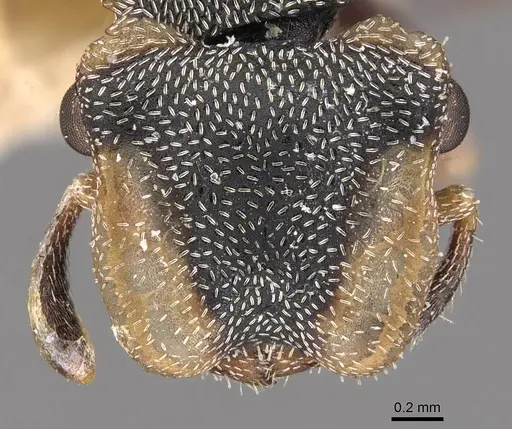
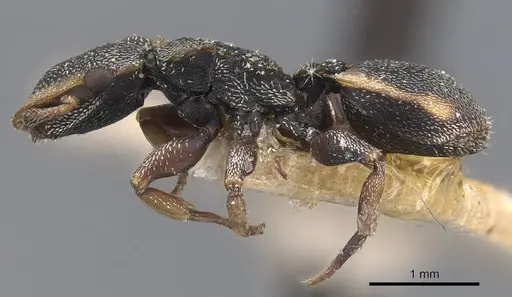
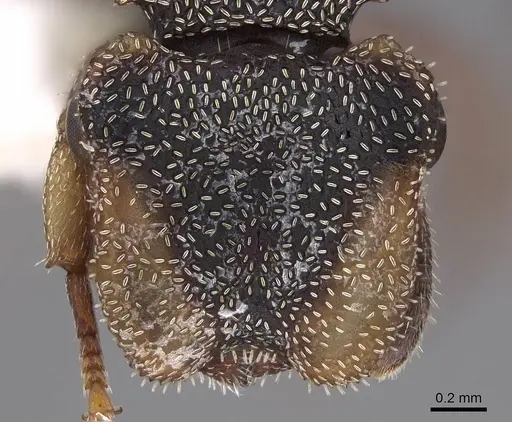
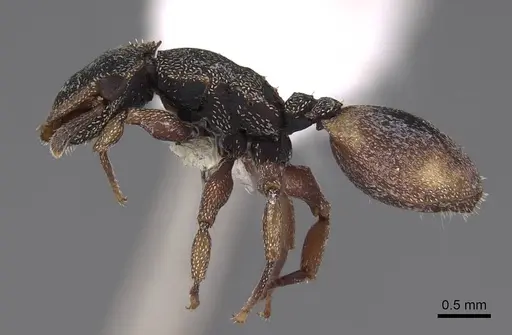
Cephalotes goeldii is a distinctive arboreal ant species native to Brazil and Paraguay, belonging to the genus known as 'turtle ants' due to their flattened, shield-like heads. Workers measure 4.0-4.7mm with a characteristic sharply marginate gaster that extends beyond the first segment. The soldier caste has a remarkable flat, disc-like head structure that serves as a living door to seal nest entrances. Queens are substantially larger at 8.68-9.02mm and also possess the distinctive head disc. This species inhabits the Atlantic forest and Cerrado regions of southeastern Brazil, where they nest in hollow twigs, bark cavities, and bromeliads [1][2].
What makes C. goeldii particularly interesting is its specialized arboreal lifestyle and the soldier caste's unique defensive role. These ants are closely related to Cephalotes notatus but can be distinguished by their more regular foveolation (the tiny pit-like structures on their exoskeleton). They are often found visiting extrafloral nectaries on trees like Cecropia, making them important ecological players in their native habitats [3].
Quick Summary
- Difficulty: Medium
- Origin & Habitat: Southeastern Brazil (Bahia, Minas Gerais, Paraná, Rio de Janeiro, Rio Grande do Sul, Santa Catarina, São Paulo) and Paraguay. Inhabits Atlantic forest and Cerrado biomes, nesting arboreally in hollow twigs, bark cavities, and bromeliads [2][1].
- Colony Type: Single-queen (monogyne) colonies. The genus Cephalotes typically maintains one reproductive queen per colony, with soldiers serving as defensive castes rather than additional reproductives.
- Colony: Monogyne
- Founding: Claustral
- Size & Growth:
- Queen: 8.68-9.02mm [4]
- Worker: 4.0-4.7mm [4]
- Colony: Estimated several hundred workers based on genus patterns
- Growth: Moderate
- Development: Estimated 6-10 weeks at optimal temperature (inferred from related Cephalotes species) (Development time is inferred from typical Attini tribe patterns. Tropical arboreal species generally develop faster than temperate species.)
- Antkeeping:
- Temperature: Keep at 24-28°C. These are tropical ants requiring warm, stable conditions. A gentle temperature gradient allows workers to regulate their exposure [4].
- Humidity: Moderate to high humidity (60-80%). As arboreal nesters, they prefer humid conditions but not saturated. Provide a water source but ensure good ventilation to prevent mold.
- Diapause: No true diapause. As a tropical species, they do not require hibernation. Activity may slow slightly during cooler periods but they remain active year-round.
- Nesting: Arboreal nesting preferences. Provide hollow twigs, bamboo sections, or a formicarium with narrow chambers that mimic their natural twig-nesting behavior. Y-tong nests or acrylic nests with tight chambers work well. They prefer enclosed spaces rather than open foraging areas.
- Behavior: Generally peaceful and non-aggressive compared to many Myrmicinae. Workers are active foragers that search for honeydew, nectar, and small insects. The soldier caste primarily serves as a living door, blocking nest entrances with their specialized disc-like heads. They are not known for painful stings, their primary defense is retreat and soldier closure of nest openings. Escape prevention is important as they can squeeze through small gaps despite their moderate size.
- Common Issues: arboreal species may have difficulty adapting to ground-level test tube setups, provide appropriate vertical/nesting space, colonies may be slow to establish founding chambers, patience is required during claustral founding, escape through small gaps, ensure all openings are sealed tightly, mold issues in overly humid setups, balance humidity with adequate ventilation, wild-caught colonies may carry parasites that affect captive survival
Housing and Nest Setup
Cephalotes goeldii requires arboreal-style housing that mimics their natural twig-nesting preferences. The most suitable options include Y-tong (AAC) nests with narrow chambers, acrylic formicariums designed for small arboreal species, or naturalistic setups using hollow bamboo sections or wooden twigs. The key requirement is tight, enclosed chambers rather than large open spaces. These ants do not fare well in standard test tube setups that lack the enclosed spaces they naturally prefer. Provide multiple chambers connected by small tunnels to allow the colony to organize itself. Since they are arboreal, include some vertical space in the outworld for foraging. Escape prevention is important, while not the smallest ants, they can still squeeze through small gaps, so ensure all connections are secure. [1][4]
Feeding and Diet
As an Attini tribe member, Cephalotes goeldii is omnivorous with a preference for carbohydrate sources. In captivity, offer sugar water or honey as a constant energy source. They also consume protein from small insects like fruit flies, pinhead crickets, or small mealworms. Their natural behavior includes visiting extrafloral nectaries, so offering occasional sweet liquids is beneficial. Feed protein prey 2-3 times per week, and keep sugar water available at all times. Remove uneaten prey after 24-48 hours to prevent mold. These ants are foragers rather than aggressive hunters, so prey should be small enough for workers to manage. Some colonies may accept fruit or other sweet substances, but protein remains essential for brood development. [4]
Temperature and Humidity
Maintain temperatures between 24-28°C for optimal colony health and brood development. As a tropical Brazilian species, C. goeldii requires consistently warm conditions. A heating cable on one side of the nest can create a gentle gradient, but avoid direct heat that could dry out the nest. For humidity, aim for 60-80% relative humidity. These arboreal ants prefer humid conditions but need good ventilation to prevent mold growth. Mist the outworld occasionally rather than the nest directly. A water tube or small water reservoir in the outworld provides drinking water and helps maintain humidity. Monitor for condensation, some moisture is good, but standing water indicates too much humidity. [4]
Behavior and Colony Structure
Cephalotes goeldii colonies are organized into distinct castes: workers, soldiers, queens, and males. The soldier caste is particularly notable, their flattened, disc-like heads function as living doors that can seal nest entrances against predators. This defensive adaptation is unique to the genus Cephalotes. Workers are active foragers that search for nectar, honeydew, and small prey. The colony will establish a queen in an enclosed chamber where she lays eggs and raises the first generation of workers (nanitics). Once workers emerge, they take over foraging and nest maintenance while the queen focuses on reproduction. Colonies grow moderately over time, with soldiers appearing as the colony reaches several hundred workers. These ants are generally peaceful and prefer to retreat rather than engage in aggressive behavior. [1][4]
Acquiring and Establishing Colonies
Cephalotes goeldii is not among the most common ant species in the hobby, so finding a colony may require specialized sources or connecting with breeders who work with rarer Cephalotes species. If obtaining a wild-caught colony, ensure it is legal in your jurisdiction and that the queen is properly claustral-founded in an appropriate enclosure. When introducing a new colony, provide their preferred arboreal-style housing from the start rather than transitioning from test tubes. The founding queen will seal herself in a chamber and remain there until her first workers emerge. During this claustral period, do not disturb the nest or attempt to view the queen. Once workers appear, you can begin offering small amounts of food in the outworld. Colony establishment is slower than many ground-nesting species, so patience is essential. [4]
Frequently Asked Questions
How long does it take for Cephalotes goeldii to produce first workers?
Based on related Cephalotes species, expect 6-10 weeks from egg to first worker at optimal temperature (24-28°C). The claustral queen will remain sealed in her chamber until workers emerge, so resist the urge to disturb the nest during this period.
What is the best nest type for Cephalotes goeldii?
Y-tong (AAC) nests with narrow chambers or acrylic formicariums designed for arboreal species work best. These ants naturally nest in hollow twigs and bark cavities, so they prefer enclosed spaces with small entrances rather than large open chambers.
Are Cephalotes goeldii good for beginners?
This species is rated as medium difficulty. While not the hardest species to keep, they have specific arboreal nesting requirements that differ from more common ground-nesting ants. Beginners should understand their need for enclosed nest spaces and tropical conditions before acquiring this species.
What do Cephalotes goeldii eat?
They are omnivorous with a preference for carbohydrates. Offer sugar water or honey constantly, and supplement with small protein sources like fruit flies, pinhead crickets, or small mealworms 2-3 times per week.
How big do Cephalotes goeldii colonies get?
Based on genus patterns, colonies likely reach several hundred workers over time. The soldier caste becomes more common as the colony grows, with soldiers typically appearing once the colony reaches several hundred individuals.
Do Cephalotes goeldii need hibernation?
No. As a tropical species from Brazil, they do not require a diapause or hibernation period. Maintain warm temperatures (24-28°C) year-round for optimal health.
Can I keep multiple Cephalotes goeldii queens together?
No. Cephalotes goeldii is monogyne (single-queen). Unlike some ant species, they do not form multi-queen colonies. Only keep one queen per colony.
Why is my Cephalotes goeldii colony not growing?
Common causes include temperatures that are too low (below 24°C), insufficient protein in the diet, improper nesting conditions (too open or dry), or disturbance during claustral founding. Ensure warm, humid conditions with proper protein feeding and minimal disturbance.
What makes Cephalotes goeldii different from other ants?
The soldier caste has a unique flat disc-like head that functions as a living door to seal nest entrances, this is their primary defense mechanism. They are also strictly arboreal, nesting in twigs and cavities rather than underground.
References

This caresheet is licensed under CC BY-SA 4.0 .
CASENT0909284
View on AntWeb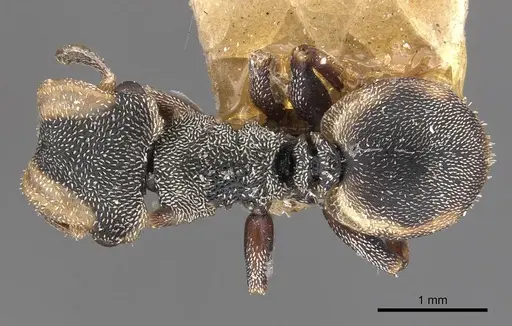
CASENT0922535
View on AntWeb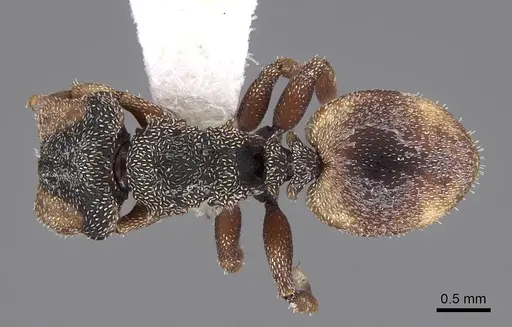
Literature
Loading...Loading products...