

Cephalotes frigidus
- Scientific Name
- Cephalotes frigidus
- Tribe
- Attini
- Subfamily
- Myrmicinae
- Author
- Kempf, 1960
- Distribution
- Found in 1 countries
Cephalotes frigidus Overview
Cephalotes frigidus is an ant species of the genus Cephalotes. It is primarily documented in 1 countries , including Brazil. Detailed taxonomic data and occurrence records can be further explored via authoritative databases such as AntWeb or the Global Biodiversity Information Facility (GBIF).
Cephalotes frigidus
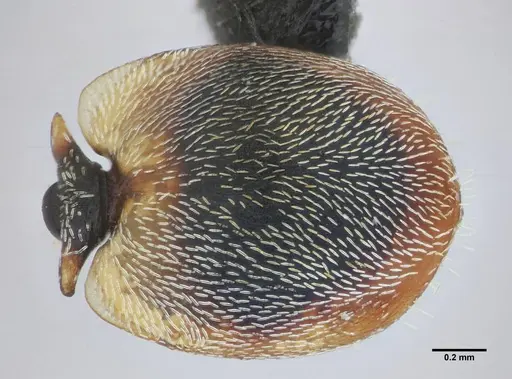
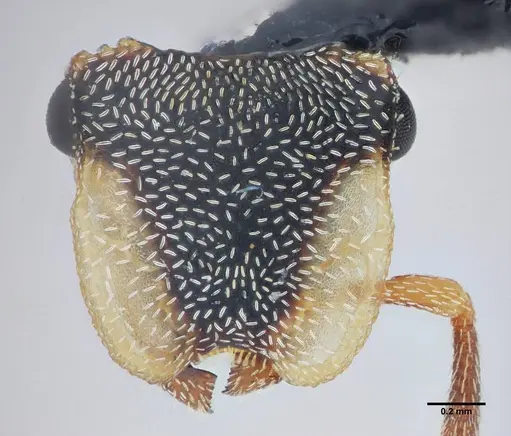
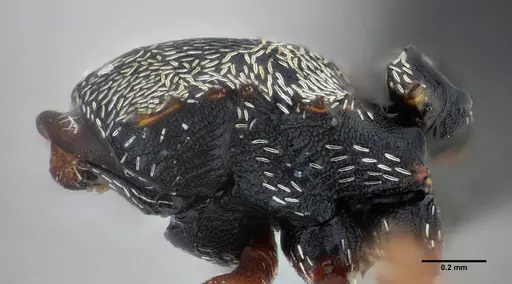
Cephalotes frigidus is a small Neotropical ant belonging to the genus commonly known as turtle ants, named for their ability to retract their heads under their shield-like pronotum like turtles. Workers measure 3.84-4.14mm and are predominantly black with brown to ferruginous mandibles, antennae, and leg tips. The species is distinguished from its closest relatives (C. adolphi and C. dentidorsum) by having flat, lamellaceous pronotal teeth rather than solid upward-curving teeth, along with notably long, thin spines on the petiole and postpetiole [1]. Soldiers are larger at 6.52mm with characteristic shield-shaped heads, while queens reach 7.56mm. This species is a member of the angustus clade and is known only from the Cabo Frio region of Rio de Janeiro, Brazil [2].
Quick Summary
- Difficulty: Unknown, no documented husbandry information available
- Origin & Habitat: Native to the Neotropical region, specifically the Atlantic coast of Brazil (Rio de Janeiro, Cabo Frio) [2]. The natural habitat is unconfirmed but Cephalotes species are typically arboreal, nesting in hollow twigs, branches, and tree cavities in forest environments.
- Colony Type: Unconfirmed, colony structure has not been documented. Most Cephalotes species form monogyne (single-queen) colonies, but this has not been verified for C. frigidus specifically.
- Size & Growth:
- Queen: 7.56mm [1]
- Worker: 3.84-4.14mm [1]
- Colony: Unknown, no colony size data exists for this species
- Growth: Unknown, no development data available
- Development: Unknown, no documented development timeline exists for this species. Related Cephalotes species typically require 6-10 weeks at tropical temperatures, but this is a genus-level estimate only. (No direct observations of founding, brood development, or colony growth have been documented for this species.)
- Antkeeping:
- Temperature: Unconfirmed, no thermal studies exist for this species. As a Brazilian Neotropical species, likely prefers warm conditions in the range of 22-28°C based on typical Cephalotes habitat preferences, but this is an estimate rather than documented requirement.
- Humidity: Unconfirmed, no humidity data exists. Cephalotes species typically prefer humid arboreal environments, likely 60-80% relative humidity, but this is inferred from genus patterns rather than confirmed for C. frigidus.
- Diapause: Unknown, no seasonal studies exist for this species. As a tropical Brazilian species, diapause is unlikely but not documented.
- Nesting: Unconfirmed, no natural nesting observations exist. Based on genus patterns, likely nests in arboreal cavities (hollow twigs, branches, tree holes). In captivity, most keepers use acrylic nests or Y-tong style formicaria with tight chambers scaled to their small size. Provide some vertical space and multiple chambers.
- Behavior: Unconfirmed, no behavioral observations have been documented for this species. Based on genus-level patterns, Cephalotes frigidus likely exhibits typical turtle ant behaviors: soldiers use their shield-like heads to block nest entrances defensively, workers are generalist foragers, and colonies are relatively peaceful. Escape risk is moderate given worker size around 4mm, standard barrier methods (Fluon, fine mesh) should suffice. No sting documentation exists, but Cephalotes species generally cannot sting humans due to their small size.
- Common Issues: No documented husbandry exists, this species has never been kept in captivity according to available records, Colony founding may be difficult, no data on queen founding behavior or success rates, Temperature and humidity requirements are unconfirmed, keepers must experiment with conditions, Growth rate is unknown, keepers may face long waits with no benchmark for normal development, Wild-caught colonies may have parasites or disease with no documented treatment protocols for this species
Species Identification and Morphology
Cephalotes frigidus is a distinctive species within the angustus clade, recognized by its unique pronotal tooth structure. Workers measure 3.84-4.14mm and feature black coloration with brown to ferruginous appendages. The most diagnostic features are the second pair of pronotal teeth, which are lamellaceous and flat (unlike the solid, upward-curving teeth found in C. adolphi and C. dentidorsum), and the notably long, thin spines extending from both the petiole and postpetiole [1]. Soldiers reach 6.52mm and possess the characteristic shield-like head disc that defines the genus, which they use to block nest entrances as a defensive mechanism. Queens are the largest caste at 7.56mm and share the general morphology of soldiers but with less developed head structures. The species was originally described by Kempf in 1960 from specimens collected at Cabo Frio, Rio de Janeiro, Brazil [2].
Distribution and Biogeography
Cephalotes frigidus is known only from a very restricted geographic range along the Atlantic coast of Brazil. The type locality is Cabo Frio in Rio de Janeiro state, representing the southern portion of Brazil's Atlantic Forest region [2]. This limited distribution makes C. frigidus one of the less widely distributed Cephalotes species. The species belongs to the pallidicephalus group and is part of the broader angustus clade within the genus [1]. The Atlantic Forest biome where it occurs is characterized by high humidity, diverse vegetation, and tropical to subtropical temperatures. No additional distribution records exist in the scientific literature, suggesting this species may have a genuinely restricted range or has simply been rarely collected.
Taxonomy and Classification
Cephalotes frigidus was originally described as Paracryptocerus (Harnedia) frigidus by Kempf in 1960 before being transferred to the genus Zacryptocerus by Brandão in 1991,and finally to Cephalotes by de Andrade and Baroni Urbani in 1999 [2]. The species is classified in the subfamily Myrmicinae, tribe Attini (the leaf-cutter ant tribe), and belongs to the angustus species group. Within this group, it is most closely related to C. adolphi and C. dentidorsum, sharing with them the distinctive long spines on the petiole and postpetiole that separate them from other angustus clade members. The 1999 revision by de Andrade and Baroni Urbani provided comprehensive descriptions of all three castes (worker, soldier, queen), which remain the primary taxonomic reference for this species.
Keeping Considerations and Husbandry Gaps
This caresheet must be honest about a significant limitation: absolutely no documented husbandry information exists for Cephalotes frigidus. The AntWiki explicitly states that nothing is known about the biology of this species, making it one of the least studied Cephalotes in captivity. Potential keepers should understand that keeping this species would be essentially experimental, requiring careful observation and documentation of all behaviors, preferences, and requirements. Based on genus-level patterns from better-studied Cephalotes species, keepers might start with warm (22-28°C), humid (60-80%) conditions in an acrylic or Y-tong style nest with appropriately scaled chambers. However, these are educated guesses rather than confirmed requirements. Any successful colony founding and maintenance of this species would represent valuable new knowledge for the antkeeping community. [2]
Frequently Asked Questions
Can I keep Cephalotes frigidus in a test tube?
Possibly, but this is unconfirmed. Test tubes work for many Cephalotes species due to their small size and arboreal nesting preferences. However, no documented successful test tube founding exists for this specific species. A small acrylic nest or Y-tong style formicarium with tight-fitting chambers would be a safer choice.
How long does it take for Cephalotes frigidus to produce first workers?
Unknown, no documented development timeline exists for this species. Related Cephalotes species typically produce first workers (nanitics) in 6-10 weeks under warm tropical conditions, but C. frigidus has never been documented in captivity.
Are Cephalotes frigidus good for beginners?
No, this species is not recommended for beginners. No documented husbandry information exists, making it one of the most challenging Cephalotes to keep successfully. Beginners should start with better-documented species like Cephalotes varians or other established pet ant species.
What do Cephalotes frigidus eat?
Unconfirmed, no dietary observations exist for this species. As members of the tribe Attini, they may be fungus-cultivators like other Attini, or may be generalist omnivores like some other Cephalotes. Based on genus patterns, they likely accept sugar sources and small protein prey, but this is speculative.
What temperature should I keep Cephalotes frigidus at?
Unconfirmed, no thermal studies exist. As a Brazilian Neotropical species, start with warm conditions around 22-28°C and observe colony activity. Increase or decrease slightly based on how workers respond. This is an estimate, not a documented requirement.
Do Cephalotes frigidus need hibernation or diapause?
Unknown, no seasonal studies exist. As a tropical species from coastal Brazil, diapause is unlikely. However, this has never been documented, so observe your colony for seasonal activity changes.
How big do Cephalotes frigidus colonies get?
Unknown, no colony size data exists for this species. Most Cephalotes colonies reach several hundred to a few thousand workers, but C. frigidus has never been documented in the wild or captivity at any colony size.
Can I keep multiple Cephalotes frigidus queens together?
Unconfirmed, colony structure has not been documented. Most Cephalotes are monogyne (single queen), but polygyny has been observed in some species. Without data on this specific species, combining unrelated queens is not recommended.
Where can I get Cephalotes frigidus?
This species is extremely rare in the antkeeping hobby. It is known only from a very restricted range in Brazil (Cabo Frio, Rio de Janeiro) and has never been documented as being kept in captivity. Finding a colony would be highly unlikely.
References

This caresheet is licensed under CC BY-SA 4.0 .
UFV-LABECOL-004441
View on AntWeb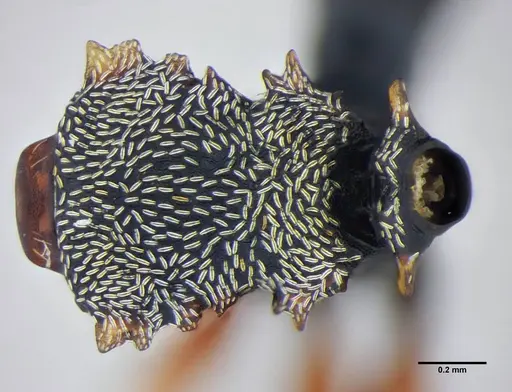
Literature
Loading...Loading products...