

Cephalotes coffeae
- Scientific Name
- Cephalotes coffeae
- Tribe
- Attini
- Subfamily
- Myrmicinae
- Author
- Kempf, 1953
- Distribution
- Found in 1 countries
Cephalotes coffeae Overview
Cephalotes coffeae is an ant species of the genus Cephalotes. It is primarily documented in 1 countries , including Colombia. Detailed taxonomic data and occurrence records can be further explored via authoritative databases such as AntWeb or the Global Biodiversity Information Facility (GBIF).
Cephalotes coffeae
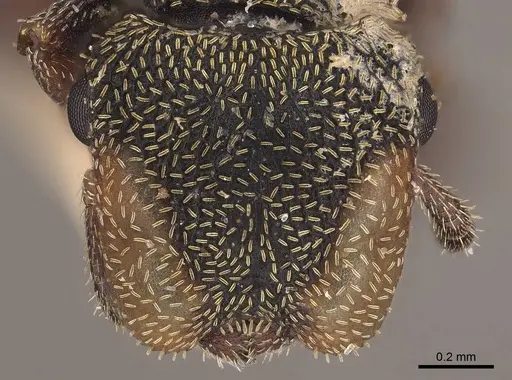
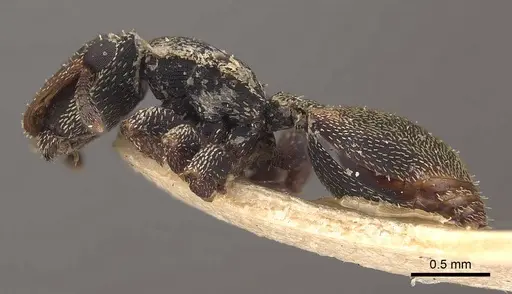
Cephalotes coffeae is a small, striking ant species native to the coffee-growing regions of Colombia. Workers measure 3.9-4.7mm and are mostly black with distinctive rusty ferruginous markings on their legs, mandibles, and antennae. The most remarkable feature of this species is the soldier caste, which has a deeply excavated head disc that they partially cover with a thin layer of camouflage material, a behavior unique among ants. This species belongs to the coffeae clade and is closely related to C. trichophorus, differing in having larger propodeal teeth. Queens reach 6.9-7.2mm, and the species is unusual in that colonies nest directly within coffee plant branches, making it one of the few ant species that lives in association with coffee crops.
Quick Summary
- Difficulty: Unknown, no captive breeding records exist
- Origin & Habitat: Endemic to the coffee-growing regions of Cundinamarca and Quindío in central Colombia, found at elevations between 1160-1500m [1]. The type colony was collected from a nest inside a green coffee plant branch (Coffea arabica) at 1500m elevation [2]. This suggests they prefer humid, shaded coffee plantation habitats.
- Colony Type: Colony structure is unconfirmed. The presence of distinct soldier, worker, queen, and male castes has been documented, but whether colonies are single-queen or multi-queen is unknown.
- Size & Growth:
- Queen: 6.9-7.2mm [3]
- Worker: 3.9-4.7mm [3]
- Colony: Unknown, likely small colonies based on limited type specimen counts [2]
- Growth: Unknown
- Development: Unknown, no development data exists for this species (No scientific studies have documented the development timeline. Related Cephalotes species typically develop in 6-10 weeks at tropical temperatures, but this is a rough estimate only.)
- Antkeeping:
- Temperature: Likely 22-28°C based on Colombian mid-elevation habitat. Start in the mid-20s and observe colony activity. Do not overheat, they come from moderate elevations, not hot lowlands.
- Humidity: High humidity likely required, matching their coffee plantation habitat. Keep nest substrate consistently moist but not waterlogged. The natural nesting in plant branches suggests they prefer humid conditions with good ventilation.
- Diapause: Unknown, Colombian ants from moderate elevations may have reduced activity during cooler months but likely do not require true hibernation. Monitor for seasonal slowdowns.
- Nesting: This species nests in plant stems and branches in the wild. In captivity, a naturalistic setup with narrow vertical passages (like a Y-tong or acrylic stem nest) would best mimic their natural environment. The narrow chambers should be scaled to their small worker size (under 5mm).
- Behavior: Behavior is unstudied. Based on genus patterns, they are likely docile and non-aggressive. The soldier caste's head disc with camouflage material suggests they may use passive defense rather than active aggression. Escape risk is moderate, workers are small (under 5mm) so fine mesh barriers are recommended. Foraging style is unknown but likely involves workers searching for honeydew and small prey in and around plant material.
- Common Issues: no captive breeding records exist, this species may be extremely difficult to keep, complete lack of biological data means all care recommendations are speculative, humidity control may be challenging as they naturally live in plant stems, escape prevention needed due to small worker size, the soldier caste's special behaviors are not understood and may be disrupted in captivity
Species Overview and Discovery
Cephalotes coffeae was first described in 1953 by Walter Kempf from specimens collected in the coffee plantations of Cundinamarca, Colombia. The species name 'coffeae' refers to its association with coffee plants, as the type colony was found nesting inside a green branch of Coffea arabica, the coffee plant. This is unusual because most Cephalotes species nest in rotting wood or hollow plant stems on the forest floor, not in actively growing plant material. The species remained known only from the original collection until recent surveys expanded its known range to include Quindío department, confirming it as endemic to central Colombia [1]. The most distinctive feature is the soldier caste, which has a uniquely modified head disc that they cover with camouflage material, debris, lichen, or other particles adhered to a sticky secretion. This behavior is rare among ants and serves as a form of passive defense, essentially making the soldier invisible when positioned at the nest entrance.
Natural Habitat and Distribution
This species is endemic to the coffee-growing highlands of central Colombia, specifically the departments of Cundinamarca and Quindío. The known altitudinal range is 1160m to 1500m above sea level [1]. This elevation range is significant because it places them in a moderate climate, not the hot lowland tropics, but not the cool highlands either. The original collection site was a coffee plantation (Granja Cafetera 'Alberto J. Williamson'), suggesting they have adapted to agricultural environments, at least in modified coffee agroforests. The fact that they nest inside living coffee branches indicates they prefer humid, shaded conditions with access to plant material. Some older sources suggest the species might also occur in Brazil, but this has never been confirmed by Kempf (1972) or subsequent researchers [1]. For antkeepers, this means the species likely prefers conditions that mimic a humid Colombian mid-elevation environment, warm but not hot, with consistent moisture.
Identification and Castes
Cephalotes coffeae is a polymorphic species with four documented castes: workers, soldiers, queens, and males. Workers are small at 3.9-4.7mm, predominantly black with rusty ferruginous markings on the mandibles, antennae, legs, and thoracic teeth. The soldier caste is larger at 5.3-5.4mm and possesses the genus characteristic head disc, a deeply excavated, oval structure with raised, crenulate borders. The soldiers' most remarkable trait is their ability to cover this head disc with a thin layer of camouflage material, effectively sealing the nest entrance. Queens are the largest at 6.9-7.2mm and similar in appearance to soldiers but with the reproductive anatomy and wings. Males measure about 5.7mm. The species can be distinguished from its closest relative, Cephalotes trichophorus, by having larger propodeal teeth and a cephalic index (CI) of 112 or higher in workers [3]. For keepers, the soldier's head disc is the most distinctive feature, when alive and active, soldiers likely position themselves at nest entrances, their camouflaged head disc making them appear as part of the substrate.
Housing and Nesting
Since nothing is known about the captive care of this species, any recommendations are speculative. However, the natural nesting behavior provides strong clues. In the wild, colonies nest inside living coffee plant branches, specifically in the soft pith of green stems. This means they are adapted to narrow, vertical, plant-based structures with high humidity but also some air circulation. For captivity, a naturalistic setup would likely work best: a small formicarium with narrow vertical chambers (scaled to their 4-5mm worker size) filled with plant material or wooden elements that mimic stems. Alternatively, a Y-tong or acrylic nest with tight chambers could work if humidity is carefully managed. The key challenge is that they naturally live in plant stems that provide both structural support and humidity regulation, replicating this balance in captivity may be difficult. Escape prevention is important because workers are small enough to squeeze through standard mesh. Use fine mesh barriers and tight-fitting lids. [2]
Feeding and Diet
The diet of Cephalotes coffeae has not been studied, but the genus belongs to the tribe Attini, which includes leaf-cutter ants and other fungus-growers. However, Cephalotes (formerly known as 'turtle ants') are not fungus-cultivators, they are generalist foragers that collect honeydew from aphids and scale insects, and hunt small invertebrates. Based on genus patterns, they likely feed on honeydew, sugar water, and small protein sources like tiny insects. Offer a mix of sugar water or honey as a constant energy source, and protein (small fruit flies, pinhead crickets, or similar) a few times per week. The fact that they nest in plant stems may indicate they forage in arboreal contexts, perhaps among coffee plant foliage where they would have access to honeydew-producing insects. Keepers should experiment with both sugar sources and small live prey, starting with offerings every 2-3 days and adjusting based on consumption. [3]
Temperature and Seasonal Care
The natural habitat of 1160-1500m elevation in central Colombia suggests they are adapted to moderate temperatures rather than extreme heat. The average temperature in their range would likely be in the low-to-mid 20s Celsius (around 20-25°C). Unlike lowland tropical ants, they may not tolerate high temperatures well. Keep the nest in the mid-20s Celsius (around 24-26°C) as a starting point, and observe colony behavior, if workers avoid heated areas, reduce temperature. The moderate elevation also suggests they may experience seasonal variation in temperature but probably do not require true hibernation. However, during the cooler months (roughly December-February in the Northern Hemisphere, corresponding to Colombia's dry season), colony activity may naturally slow. Do not attempt to force hibernation, simply allow the colony to reduce activity naturally if it chooses to. Avoid temperatures above 30°C. [1]
Frequently Asked Questions
Can I keep Cephalotes coffeae in captivity?
It is unknown whether this species can be kept in captivity. No records of captive breeding or keeping exist, this is one of the least studied ant species in the hobby. The lack of any biological data means we cannot confirm whether they can survive or thrive in captive conditions. If you obtain a colony, expect a steep learning curve with no established care protocols to follow.
How long does it take for Cephalotes coffeae to develop from egg to worker?
The development timeline is completely unknown. No scientific studies have documented the egg-to-worker time for this species. Related Cephalotes species from tropical regions typically develop in 6-10 weeks at warm temperatures, but this is a rough estimate only. Given their moderate elevation origin, development may be slower than fully tropical species.
What do Cephalotes coffeae ants eat?
Diet is unconfirmed, but based on genus patterns, they likely accept honeydew or sugar water as an energy source, plus small protein like fruit flies or tiny insects. They are in the tribe Attini but are not fungus-growers, they forage like typical generalist ants. Offer sugar water constantly and protein prey 2-3 times per week, then adjust based on what they actually accept.
Are Cephalotes coffeae good for beginners?
No. This species is not recommended for beginners or even experienced antkeepers. There are no captive breeding records, no established care protocols, and almost no biological data. Keeping this species would be entirely experimental with a very high risk of colony failure. Beginners should start with well-documented species like Lasius niger, Camponotus, or Tetramorium.
What temperature do Cephalotes coffeae need?
Based on their Colombian highland origin (1160-1500m), they likely prefer moderate temperatures in the range of 22-26°C. Avoid high heat, they are not lowland tropical ants. Start around 24°C and monitor colony behavior. If workers avoid heated areas, reduce temperature. Do not exceed 30°C.
Do Cephalotes coffeae need hibernation?
Diapause requirements are unknown. As a Colombian species from moderate elevations, they likely experience seasonal temperature variations but probably do not require a true hibernation period. Allow the colony to naturally reduce activity during cooler months rather than forcing hibernation. Monitor for seasonal slowdowns but do not artificially induce dormency.
How big do Cephalotes coffeae colonies get?
Maximum colony size is unknown. The limited type specimen counts (dozens of workers) suggest small colonies, likely under 100 workers. This is consistent with many Cephalotes species which maintain smaller colonies compared to other Myrmicines. Do not expect large supercolonies.
Can I keep multiple Cephalotes coffeae queens together?
This is unknown. The colony structure (monogyne vs polygyne) has never been documented. Combining unrelated queens is not recommended given the complete lack of data about their social structure. Do not attempt pleometrosis without research evidence.
What makes Cephalotes coffeae special compared to other ants?
The soldier caste has a uniquely modified head disc that they cover with camouflage material, debris, lichen, or particles adhered with a sticky secretion. This creates a living 'door' that conceals the nest entrance. This behavior is rare among ants and makes them one of the most visually fascinating Cephalotes species. Additionally, they are one of the few ant species that nests inside living plant stems (coffee branches).
References

This caresheet is licensed under CC BY-SA 4.0 .
CASENT0919595
View on AntWeb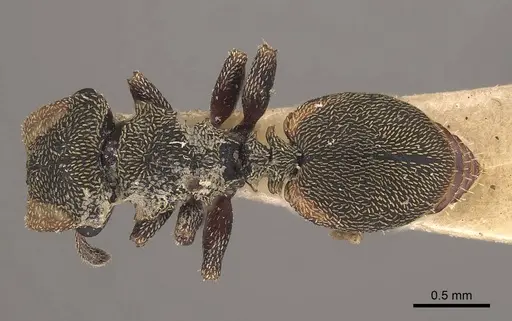
Literature
Loading...Loading products...