

Cephalotes bimaculatus
- Scientific Name
- Cephalotes bimaculatus
- Tribe
- Attini
- Subfamily
- Myrmicinae
- Author
- Smith, 1860
- Distribution
- Found in 3 countries
Cephalotes bimaculatus Overview
Cephalotes bimaculatus is an ant species of the genus Cephalotes. It is primarily documented in 3 countries , including Colombia, Costa Rica, Mexico. Detailed taxonomic data and occurrence records can be further explored via authoritative databases such as AntWeb or the Global Biodiversity Information Facility (GBIF).
Cephalotes bimaculatus
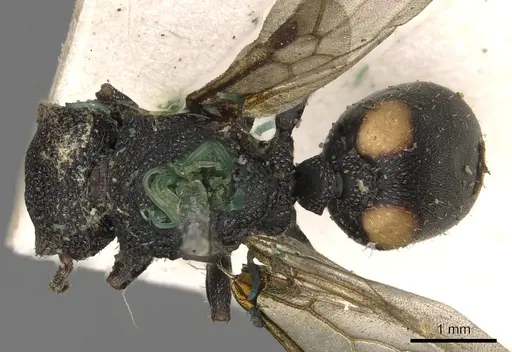
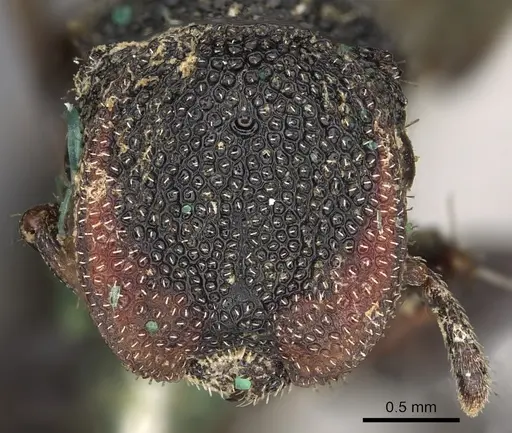
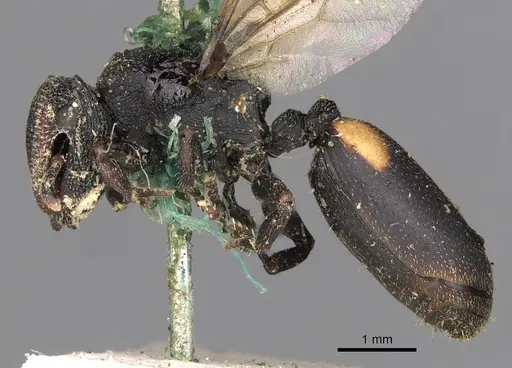
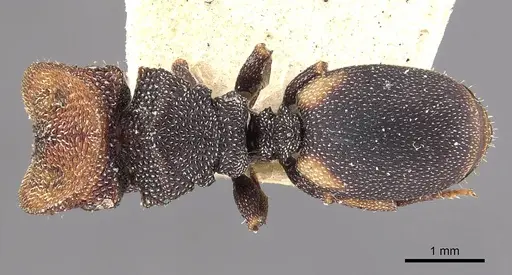
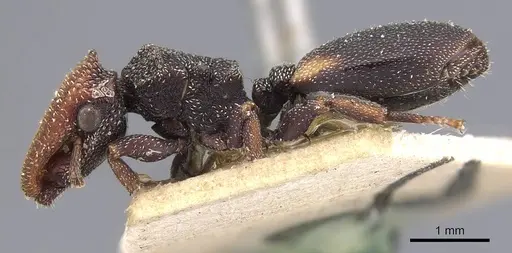
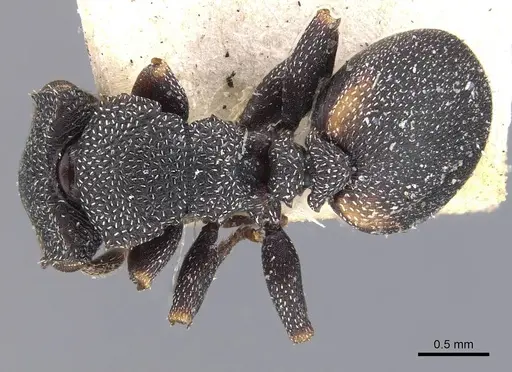
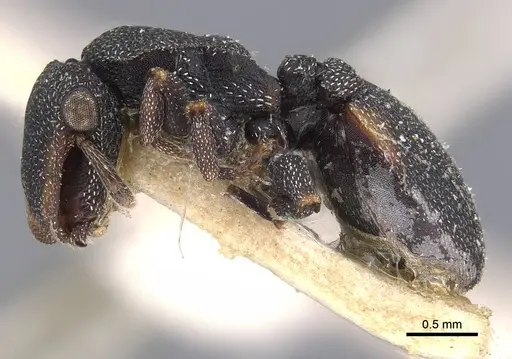
Cephalotes bimaculatus is a small, distinctive ant known for its flattened, turtle-like body shape. Workers measure 4-5mm with a dark body marked by ferruginous (rusty) spots on the gaster and yellowish leg tips. Soldiers are larger at 6-7mm with a broad, concave cephalic disc. Queens reach about 8mm. This species belongs to the bimaculatus clade, making it unique among Cephalotes species. Found only in Mexico, they inhabit semi-arid environments where they nest in fallen trunks and forage on the ground [1][2].
What makes this species interesting is its extremely limited scientific documentation, it's considered one of the poorly known Cephalotes species [3]. The genus Cephalotes is known for their unusual behaviors: they avoid aggressive interactions with other ants, often descend to ground level to forage, and nest in rotting wood. Their gut microbiome shows distinct enterotypes between workers/soldiers/queens and larvae at different developmental stages [4].
Quick Summary
- Difficulty: Unknown, no captive care records exist
- Origin & Habitat: Mexico (Neotropical/Nearctic interface). Semi-arid environments in central Mexico, particularly documented in the Cuernavaca area of Morelos [2][5].
- Colony Type: Colony structure is unconfirmed. Based on related Cephalotes species, likely monogyne (single queen) but this has not been documented.
- Size & Growth:
- Queen: 8.32mm [1]
- Worker: 4.70-5.18mm workers,6.24-6.84mm soldiers [1]
- Colony: Unknown, no colony size data exists for this species
- Growth: Unknown, no development data exists for this species
- Development: Unknown, no development data exists for this species. Based on related Cephalotes species, estimate 6-10 weeks at warm temperatures. (No direct studies on development. Related Cephalotes species typically develop in 6-10 weeks under optimal conditions.)
- Antkeeping:
- Temperature: Unknown for this species. Based on Mexican distribution in semi-arid central regions, likely tolerates 20-28°C. Start around 24°C and observe colony activity.
- Humidity: Unknown. Semi-arid central Mexico suggests moderate humidity needs. Keep nest substrate moderately moist but not wet.
- Diapause: Unknown, no seasonal data exists. Central Mexico has mild winters, so diapause may be minimal or unnecessary in captivity.
- Nesting: In nature they nest in fallen trunks and rotting wood [6]. In captivity, a naturalistic setup with rotten wood or a Y-tong/plaster nest works well. They prefer tight chambers scaled to their small size.
- Behavior: Members of the tribe Cephalotini are known to avoid aggressive interactions with other ants, often descend to ground to forage, and collect nectar and pollen in addition to omnivorous diet [6]. They are not aggressive and likely have minimal defense. Their small size (under 5mm for workers) means escape prevention should be a priority, use fine mesh barriers.
- Common Issues: no captive care records exist, this species has never been kept in captivity, extremely limited natural history data makes care recommendations speculative, small size requires excellent escape prevention, no information on founding behavior or colony establishment, wild-caught colonies may have unknown parasites or health issues
Species Identification and Distinction
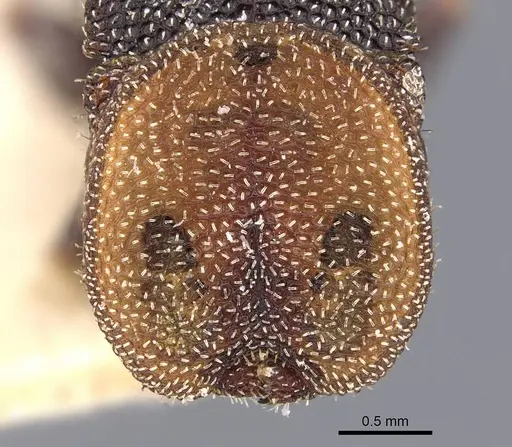
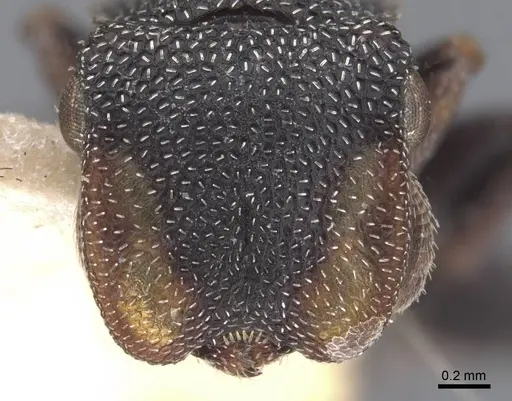
Cephalotes bimaculatus is the sole member of its own bimaculatus clade, making it phylogenetically distinct from other turtle ants [1]. Workers are identifiable by their propodeum bearing a small pair of denticles and a gaster with only one pair of gastral spots. The species was previously known as Cephalotes bimaculatus until de Andrade and Baroni Urbani raised it to species status in 1999 [2]. Soldiers and queens have a distinctive concave cephalic disc, bicolored head, and body covered in dense, irregular foveae (pit-like structures). The queen measures approximately 8.32mm, making her significantly larger than workers at 4.7-5.2mm [1].
Natural History and Distribution
This species is known only from Mexico, with confirmed records from Cuernavaca in Morelos state [2]. The type specimen was collected without specific locality data from Mexico, and the synonym Cephalotes bimaculatus was described from Cuernavaca. They inhabit semi-arid environments in central Mexico, part of the Nearctic-Neotropical interface region. Nothing is known about their biology in the wild, no observations of nesting behavior, foraging, colony size, or reproductive flights have been published [2]. The genus Cephalotes as a whole is known for nesting in fallen trunks and foraging on the ground, but specific behavior for C. bimaculatus remains unstudied [6].
Related Species and Phylogeny
Phylogenomic studies place Cephalotes bimaculatus as sister to Cephalotes scutulatus and Cephalotes betoi in one analysis, and in another study as sister to a larger subclade including Cephalotes texanus [7]. The bimaculatus clade is unique to this species, it does not share its clade with any other currently described Cephalotes [1]. This phylogenetic isolation makes it particularly interesting for ant enthusiasts, though it also means we cannot confidently extrapolate care requirements from closely related species.
Gut Microbiome and Physiology
Research on turtle ant gut symbioses has revealed that C. bimaculatus has distinct gut microbiome compositions depending on caste and developmental stage. All workers, soldiers, and queens show high gut microbiome amplification rates (100%), while larvae show age-dependent patterns, young larvae had only 20.6% amplification, middle-aged larvae 74.6%, and older larvae 94.5% [4]. Adults (workers, soldiers, alate queens) predominantly harbor Enterotype 1,suggesting stable gut communities in mature ants. This research indicates that turtle ants have complex gut symbioses that have been preserved for over 40 million years of evolution [4].
Housing and Care Recommendations
Since no captive care records exist for this species, recommendations must be based on general Cephalotes husbandry and what we know of their natural habitat in central Mexico. Provide a naturalistic setup with rotting wood pieces or a Y-tong/plaster nest with chambers scaled to their small 4-5mm worker size. Maintain moderate humidity, think semi-arid forest floor, not rainforest. Temperature should be warm, around 24°C, with a slight gradient if possible. Feed a varied diet including sugar sources (honey water) and protein (small insects). Escape prevention is critical due to their small size, use fine mesh and tight-fitting lids. This species is not recommended for beginners due to the complete lack of documented care information.
Legal and Ethical Considerations
Cephalotes bimaculatus is native to Mexico and has not been documented as invasive elsewhere. If you obtain a colony, do not release it outside its native range in Mexico. This species has never been documented in the antkeeping hobby, so any acquisition would likely come from wild collection in Mexico. Ensure you have proper collection permits if collecting from the wild, and be aware of local regulations regarding ant collection and export.
Frequently Asked Questions
Has anyone kept Cephalotes bimaculatus in captivity?
No documented cases exist. This species is considered poorly known and has never been kept in captivity according to available literature. The entire biology of this species remains unstudied in the wild, making captive husbandry entirely speculative at this point.
What do Cephalotes bimaculatus ants eat?
No specific diet data exists for this species. Based on tribe-level information (Cephalotini), they likely collect nectar and pollen and are omnivorous, eating small insects and plant-derived foods [6]. Offer sugar water/honey and small protein sources like fruit flies or pinhead crickets.
How big do Cephalotes bimaculatus colonies get?
Colony size is unknown, no colony size data has been documented for this species. Related Cephalotes species typically form colonies of several hundred to a few thousand workers.
What is the best nest type for Cephalotes bimaculatus?
In nature, Cephalotes species nest in fallen trunks and rotting wood [6]. For captivity, use a naturalistic setup with rotten wood pieces or a Y-tong/plaster nest with narrow chambers scaled to their tiny 4-5mm size.
Are Cephalotes bimaculatus good for beginners?
No. This species is not recommended for beginners or even experienced antkeepers due to the complete absence of documented care information. Nothing is known about their founding behavior, development, temperature/humidity preferences, or colony structure. Keeping this species would be entirely experimental.
Where does Cephalotes bimaculatus live?
Only in Mexico, specifically documented from the Cuernavaca area in Morelos state in central Mexico [2]. They inhabit semi-arid environments in the Neotropical/Nearctic interface region.
How long does it take for Cephalotes bimaculatus to develop from egg to worker?
No development data exists for this species. Based on related Cephalotes species, estimate approximately 6-10 weeks from egg to first worker at optimal warm temperatures (around 24°C).
Can I keep multiple Cephalotes bimaculatus queens together?
Unknown, colony structure has not been documented for this species. No information exists on whether they are monogyne (single queen) or polygyne (multiple queens). Combining unrelated queens is not recommended due to lack of data.
Do Cephalotes bimaculatus need hibernation?
Unknown, no seasonal data exists. Central Mexico has mild winters, so a true diapause may not be necessary. If kept in captivity, maintain stable room temperature around 24°C and observe colony behavior for signs of dormancy.
References

This caresheet is licensed under CC BY-SA 4.0 .
Literature
Loading...Loading products...