

Cataulacus marginatus
- Scientific Name
- Cataulacus marginatus
- Tribe
- Crematogastrini
- Subfamily
- Myrmicinae
- Author
- Bolton, 1974
- Distribution
- Found in 1 countries
Cataulacus marginatus Overview
Cataulacus marginatus is an ant species of the genus Cataulacus. It is primarily documented in 1 countries , including China. Detailed taxonomic data and occurrence records can be further explored via authoritative databases such as AntWeb or the Global Biodiversity Information Facility (GBIF).
Cataulacus marginatus
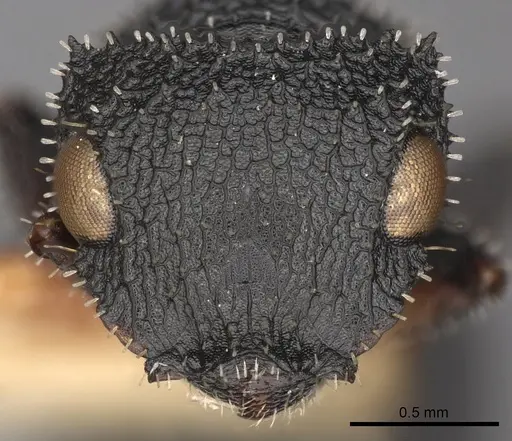
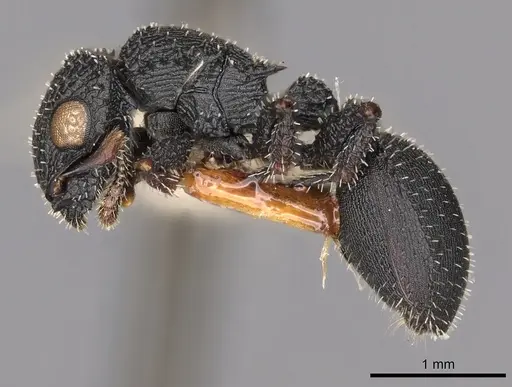
Cataulacus marginatus is a small to medium-sized myrmicine ant native to southern China, specifically Hainan Island with recent records from Yunnan Province. Workers measure 4.8-6.0mm with a distinctive heavily sculptured body featuring strong denticulation on the head and alitrunk. The species is most easily recognized by its strongly marginate (edge-rimmed) first gastral tergite, a trait visible to the naked eye that separates it from its close relative Cataulacus granulatus. The head, body, and appendages are covered in numerous short, thick, blunt whitish hairs, giving them a somewhat fuzzy appearance. This species belongs to the granulatus species group within Cataulacus and is known only from worker specimens collected in the 1920s-1930s.
Quick Summary
- Difficulty: Unknown, biology unconfirmed
- Origin & Habitat: Hainan Island, China and recently recorded in Yunnan Province. Found in grove habitats at low elevations. Specific nesting habits are unknown but the genus Cataulacus is generally associated with arboreal or semi-arboreal habitats, often in rotting wood or tree hollows.
- Colony Type: Colony structure is unconfirmed, only known from worker specimens, no queens have been described.
- Size & Growth:
- Queen: Unknown, queen caste has not been described [1]
- Worker: 4.8-6.0mm (workers measured from type series) [1]
- Colony: Unknown, no colony data exists
- Growth: Unknown, no development data available
- Development: Unknown, no development studies exist for this species (Development timeline unconfirmed. Based on typical Myrmicinae patterns, expect 6-10 weeks at warm temperatures, but this is a rough estimate.)
- Antkeeping:
- Temperature: Unconfirmed, no thermal studies exist. Based on Hainan's tropical-subtropical climate, aim for 22-28°C with a gradient. Room temperature (around 22-24°C) is likely suitable.
- Humidity: Unconfirmed, no humidity data. Cataulacus genus typically prefers moderate to high humidity. Aim for 60-80% relative humidity with moisture-retaining nest substrate.
- Diapause: Unknown, no seasonal data exists. Hainan has mild winters, so a true diapause may not be required, but a cool period (15-18°C) during winter months may be beneficial.
- Nesting: Nesting preferences unconfirmed for this species. Based on genus patterns, they likely prefer arboreal or semi-arboreal setups, rotting wood sections, cork bark, or Y-tong nests work well for related Cataulacus species.
- Behavior: Behavior is unconfirmed for this species. The genus Cataulacus is generally known to be relatively docile and non-aggressive. Workers are likely nocturnal or crepuscular based on genus patterns. Escape risk is moderate, workers are 5-6mm so standard containment measures should suffice, but ensure enclosures are secure.
- Common Issues: biology is completely unconfirmed, all care recommendations are genus-level estimates, no queen or colony founding information exists, cannot provide founding guidance, no documented diet preferences, feeding must be based on related species, hibernation requirements unknown, recommend monitoring colony response to seasonal changes, only known from historical specimens collected 1929-1935, no recent ecological studies
Species Overview and Identification
Cataulacus marginatus was described by Bolton in 1974 based on worker specimens collected from Hainan Island, China between 1929 and 1935. The species is a member of the granulatus species group and is extremely closely related to Cataulacus granulatus, which occurs on Hainan as well. The primary distinguishing feature is the strongly marginate (edge-rimmed) first gastral tergite, which is visible to the naked eye and easily separates the two species. Some researchers suggest marginatus may simply be a local population of granulatus, but the gastral margination is so strongly developed that most treat them as separate species. Workers measure 4.8-6.0mm total length, making them small to medium-sized ants. The body is heavily sculptured with reticulate-rugose sculpture, and the sides of the head behind the eyes, along with the pronotum, mesonotum, and propodeum, are strongly denticulate. This species has only been collected from worker castes, no queens or males have been described in the scientific literature. [1]
Distribution and Habitat
Cataulacus marginatus is known from Hainan Island, China, with a recent 2020 record expanding its range to Yunnan Province on the mainland. The type series was collected from three locations on Hainan: grove near Hoi Man Chuen southwest of Nodoa (July 1929), Ta Hau (July 1935), and Nodoa (March 1935). These collection dates span different seasons, suggesting the species may be active year-round in the tropical-subtropical climate of Hainan. The specific habitat is described simply as 'grove', more detailed ecological information does not exist. The genus Cataulacus as a whole is generally associated with arboreal or semi-arboreal habitats, often nesting in rotting wood, tree hollows, or under bark. Given Hainan's climate (warm, humid, tropical to subtropical), this species likely prefers similar conditions to other Cataulacus ants. [1]
Care Recommendations (Genus-Level Guidance)
Since nothing is known about the specific biology of Cataulacus marginatus, all care recommendations must be based on genus-level patterns. Keep the nest area at 22-28°C, Hainan's climate suggests warmth is beneficial. Use a moisture-retaining substrate (like a Y-tong or plaster nest) and maintain moderate to high humidity around 60-80%. Since the genus is arboreal-leaning, consider using cork bark, rotting wood sections, or similar setups that mimic tree hollows. For feeding, Cataulacus species typically accept sugar sources (honey, sugar water) and protein (small insects, mealworms). Start with standard ant husbandry and adjust based on colony behavior, if workers cluster near moisture, increase humidity, if they avoid heated areas, reduce temperature. This is a species where you'll need to experiment and observe your colony's preferences.
Challenges and Limitations
Cataulacus marginatus presents significant challenges for antkeepers because its biology is essentially unknown. No scientific literature describes colony size, queen behavior, founding, development timeline, or any aspect of its natural history. This means you cannot rely on published care guides, you'll be essentially pioneering husbandry for this species. Additionally, this ant is extremely rare in the antkeeping hobby. There are no established captive colonies that we know of, so acquiring specimens would likely require field collection in China (which may be legally restricted). For these reasons, Cataulacus marginatus is not recommended for beginners or even intermediate antkeepers. Only experienced hobbyists interested in contributing to species knowledge should attempt to keep this ant, and they should be prepared for significant trial-and-error in establishing husbandry protocols. [1]
Frequently Asked Questions
How do I keep Cataulacus marginatus ants?
Since nothing is known about this species' biology, care must be based on genus-level estimates. Use a moisture-retaining nest (Y-tong or plaster), maintain 22-28°C and 60-80% humidity, and offer sugar water and small protein sources. Be prepared to experiment and adjust based on your colony's behavior.
What do Cataulacus marginatus eat?
Diet is unconfirmed for this specific species. Based on genus patterns, they likely accept sugar sources (honey, sugar water) and small insects. Start with standard ant fare and observe what your colony accepts.
How big do Cataulacus marginatus colonies get?
Colony size is completely unknown, no colony data exists for this species. Related Cataulacus species typically form colonies of several hundred to a few thousand workers.
Do Cataulacus marginatus ants sting?
Stinging behavior is unconfirmed for this species. Most Cataulacus ants are relatively docile and not aggressive, but they may have a stinger like other Myrmicinae. Given their small size, any sting would likely be mild.
Is Cataulacus marginatus a good beginner ant?
No. This species is not suitable for beginners. Its biology is completely unconfirmed, making established care protocols nonexistent. Only experienced antkeepers interested in pioneering husbandry for rare species should consider this ant.
Where does Cataulacus marginatus live?
This species is native to Hainan Island, China, with a recent record from Yunnan Province. It lives in grove habitats in a tropical-subtropical climate.
How long does it take for Cataulacus marginatus to develop from egg to worker?
The development timeline is completely unknown, no scientific studies exist on this species. Based on typical Myrmicinae patterns, expect 6-10 weeks at warm temperatures, but this is a rough estimate.
Does Cataulacus marginatus need hibernation?
Diapause requirements are unknown. Hainan has mild winters, so a true hibernation may not be necessary. A cool period around 15-18°C during winter months may be beneficial, but this is unconfirmed.
Can I keep multiple Cataulacus marginatus queens together?
This is unknown. No queen specimens have ever been described, so colony structure is completely unconfirmed. Do not attempt combining unrelated queens without established protocols.
What is the best nest type for Cataulacus marginatus?
Nesting preferences are unconfirmed, but based on genus patterns, arboreal setups like cork bark, rotting wood sections, or Y-tong nests with moisture-retaining substrate would be appropriate.
References

This caresheet is licensed under CC BY-SA 4.0 .
CASENT0900253
View on AntWeb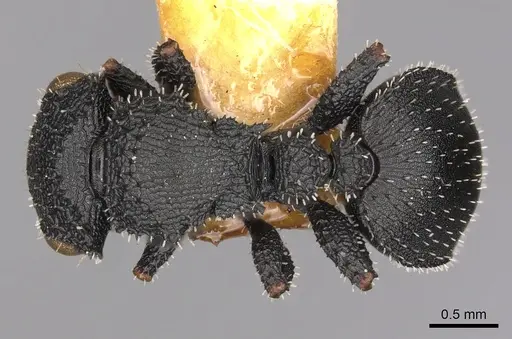
Literature
Loading...Loading products...