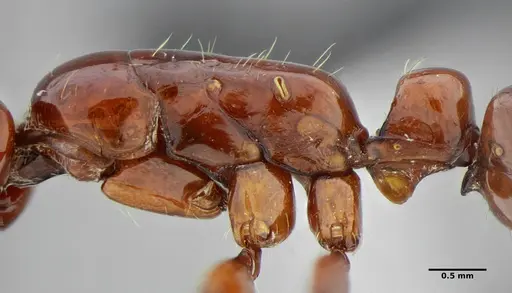
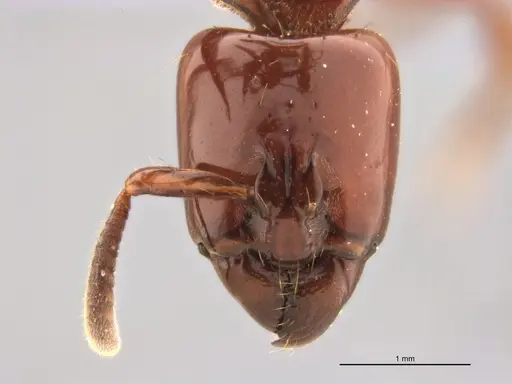
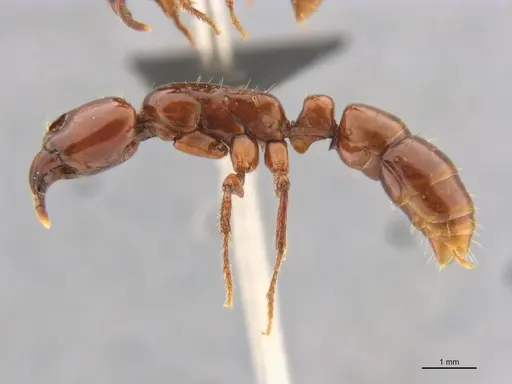
Centromyrmex bequaerti - "Termite-Hunting Ant"
Centromyrmex bequaerti is a fascinating African ponerine ant known for its highly specialized lifestyle. These ants are obligate predators of termites, and they exhibit unique adaptations for this diet. They have a smooth, shiny cuticle, no eyes, flattened antennae (scapes), and short, powerful, spiny legs, all features well-suited for their subterranean and fossorial (burrowing) lifestyle within termite nests. The worker caste displays strong polymorphism, meaning there's a significant size difference among workers, with major workers acting primarily as guards and smaller workers focusing on hunting and general nest duties. Their queens are also notably larger than even the major workers.
- Difficulty: Hard
- Origin & Habitat: Africa (primarily Afrotropical region, including Democratic Republic of Congo, Cameroon, Gabon, Malawi, Tanzania, Zambia, Zimbabwe) in Rainforests, nesting inside active and abandoned termitaries of various termite species (e.g., Cubitermes, Amitermes, Odontotermes), occasionally found in rotten logs or leaf litter..
- Colony Type: Polygyne (multiple queens), with each queen often occupying a separate chamber within the host termite nest., temporary parasitic (they invade and utilize termite nests) founding.
- Size & Growth:
- Queen: 14.0-15.6mm
- Worker: 4.7-10.3mm
- Colony: Medium (several hundred workers, typically around 400, with up to 13 queens). Slow (due to specialized diet and cryptic lifestyle) growth.
- Antkeeping:
- Temperature: Maintain a stable temperature around 28°C (82.4°F). As they live within termite nests in tropical regions, consistent warmth is crucial..
- Humidity: High humidity is essential, ideally above 90%, mimicking their natural environment inside damp termitaries..
- Diapause: Not required. Not specified at Not specified.
- Nesting: Requires a nest setup that closely mimics termite galleries. This could involve specialized formicaria with multiple chambers and narrow tunnels, potentially incorporating a substrate that allows for burrowing. Given their obligate termitophagous nature, a live termite colony (of suitable, non-aggressive species) as a food source/habitat is likely necessary..
- Behavior: Medium (primarily towards termites, but can sting if agitated) aggressiveness.
- Common Issues: Lack of suitable live termite prey, Inadequate humidity leading to desiccation, Improper nest setup (lack of burrowing space or appropriate chamber structure), Stress from excessive light exposure, Difficulty in replicating natural nesting conditions.
Keeping Centromyrmex bequaerti is a significant challenge, even for experienced antkeepers, primarily due to their highly specialized diet. These ants are obligate termitophages, meaning they feed exclusively on termites in the wild. This presents a major hurdle for hobbyists, as providing a consistent and appropriate supply of live termites from various species can be difficult and requires careful management to prevent stress to both the ants and their prey. Successful husbandry would likely involve sourcing and maintaining healthy feeder termite colonies, which adds another layer of complexity to their care.
Their nesting habits are equally unique and demanding. In nature, Centromyrmex bequaerti colonies live inside the intricate galleries of termite mounds, often with each queen occupying a separate chamber. Replicating such an environment accurately in a formicarium is complex. Standard artificial nests may not provide the specific conditions or the multi-chambered, interconnected structure that these ants are accustomed to, potentially leading to stress or colony decline. Innovative nest designs that allow for burrowing and emulate the internal structure of a termitary would be crucial.
Centromyrmex bequaerti workers display fascinating group hunting behaviors. When a scout locates termites, it paralyzes several, then returns to the nest to recruit nestmates using chemical trails. The ants then collectively attack and paralyze large numbers of termites, stacking them into piles before transporting them back to their nest. This specialized predation includes adapting their stinging technique based on the termite caste, stinging soldiers first to minimize counterattacks. Observing these complex behaviors in captivity would be incredibly rewarding but requires careful setup and a consistent live food source to trigger these natural instincts.
These ants are also adapted to a subterranean existence, with workers lacking eyes and having specialized legs for navigating through soil and termite galleries. This means they are particularly sensitive to light and open environments. Their formicarium should be kept in darkness, and any observations should be made with minimal light disturbance. Additionally, their specialized morphology makes them quite helpless when exposed to daylight or placed on open, flat surfaces, often writhing without attempting to flee or sting. This underscores the need for a carefully constructed, secure, and appropriate environment.
Frequently Asked Questions
What makes Centromyrmex bequaerti so challenging for antkeepers?
The biggest challenge for Centromyrmex bequaerti, often called the 'Termite-Hunting Ant' in the antkeeping community, is their strict diet. These fascinating ants are obligate termitophages, meaning they only eat termites. Keeping them happy requires a steady supply of live termites, which can be tricky to source and maintain alongside the ant colony. Plus, their unique subterranean lifestyle means they need a very specific nest setup that mimics natural termite galleries, unlike typical formicaria.
Do Centromyrmex bequaerti queens found their colonies alone?
No, Centromyrmex bequaerti queens are part of a polygynous colony structure, meaning multiple queens can co-exist. They don't typically found colonies alone in the claustral style. Instead, they are considered temporary parasitic, establishing themselves within existing termite nests.
What kind of nest setup is best for these ants?
To truly thrive, Centromyrmex bequaerti needs a formicarium that accurately replicates the complex, multi-chambered, and often deep galleries of a termite mound. This means a setup that encourages burrowing and provides ample, dark, humid spaces. Standard acrylic or ytong nests might not be sufficient; a naturalistic soil-based setup, or a specially designed nest that integrates with a live termite culture, would be ideal.
How do Centromyrmex bequaerti workers hunt their termite prey?
These ants are master termite hunters! When a scout worker finds a termite gallery, it paralyzes a few termites, then rushes back to the nest. It recruits other workers using chemical trails, and together, they launch a coordinated attack. They overwhelm and paralyze large numbers of termites, often piling them up before carrying their bounty back to the nest. They even adjust their stinging technique depending on whether they're facing a termite worker or a more dangerous soldier, stinging soldiers first to neutralize their defenses.
Do they have different types of workers?
Absolutely! Centromyrmex bequaerti exhibits strong worker polymorphism. This means there are noticeable size differences among the worker caste. The larger workers, sometimes referred to as 'majors' or 'soldiers', primarily take on guarding duties, while the smaller workers are more involved in hunting and general nest maintenance.
Are Centromyrmex bequaerti aggressive towards humans?
While they are formidable predators of termites, their aggressiveness towards humans is generally considered medium. They do possess a sting. However, in their natural, subterranean habitat, they are quite reclusive. When exposed to light or open surfaces, they tend to be disoriented and helpless rather than overtly aggressive, often writhing around instead of attempting to sting or flee. Nevertheless, caution is always advised when handling any ant species with a sting.
What kind of humidity and temperature do they need?
Given their life inside damp termite nests in tropical rainforests, Centromyrmex bequaerti needs consistently high humidity, ideally above 90%. They also require a stable and warm environment, with temperatures around 28°C (82.4°F) being optimal. Maintaining these precise conditions is critical for their health and survival in captivity.
Are their workers blind?
Yes, Centromyrmex bequaerti workers are known for lacking eyes. This is a common adaptation for many ant species that live entirely underground or within dark, enclosed spaces like termite mounds. Their senses are geared towards navigating their subterranean world, relying on chemical cues and tactile sensations rather than vision.
How large do Centromyrmex bequaerti colonies get?
Centromyrmex bequaerti colonies can be quite substantial for a ponerine ant, estimated to reach sizes of several hundred workers, typically around 400. What's particularly interesting is their polygynous nature, with colonies potentially housing up to 13 queens, each often maintaining its own separate chamber within the elaborate termite nest.
What should I feed them besides termites if I can't get live ones?
Unfortunately, Centromyrmex bequaerti are obligate termitophages. This means their diet is almost exclusively termites. There isn't a known substitute or readily available alternative protein source that would sustain them long-term in captivity. This dietary specialization is a key reason why they are considered such an expert-level species for antkeepers. Without live termites, successful long-term care is unlikely.