Centromyrmex alfaroi - "Termite-Hunting Ant"
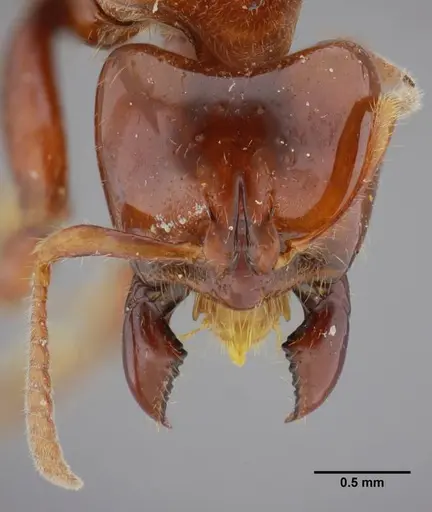
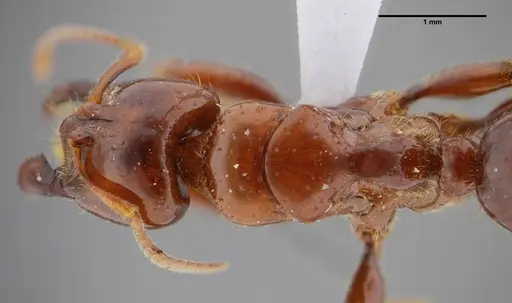
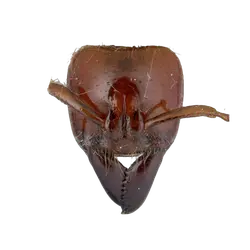
Centromyrmex alfaroi is a fascinating subterranean ant species belonging to the Ponerinae subfamily. These ants are highly specialized predators, primarily preying on termites. Workers of this species are notable for their unique adaptations to a fossorial (burrowing) lifestyle: they often lack eyes or have greatly reduced eyes, possess relatively smooth cuticles with low pigmentation, and are equipped with short, powerful, spiny legs that aid their movement through soil and within termite nests. When removed from their specialized habitat, they can appear quite helpless, sometimes curling and uncurling without attempting to run away. Queens are larger than workers and have very large compound eyes. The total length for a worker can be around 7.75 mm, while queens are larger at approximately 8.8 mm.
- Difficulty: Hard
- Origin & Habitat: Neotropical Region (Bolivia, Brazil, Colombia, Costa Rica, Ecuador, French Guiana) in Subterranean environments, primarily within or in close proximity to termite nests, topsoil, or root-mat below leaf litter..
- Colony Type: Monogyne (single queen), though specific details for C. alfaroi are limited. Generally, most Centromyrmex species are thought to be monogyne., claustral (based on known subterranean, predatory habits, likely queen seals herself in to raise first brood), but precise details are unknown. founding.
- Size & Growth:
- Queen: 8.8mm+
- Worker: 7.75mm+
- Colony: Small (hundreds), precise colony size for C. alfaroi is largely unknown, but other Centromyrmex species tend to have smaller colonies.. Slow, due to their specialized diet and subterranean nature. growth.
- Antkeeping:
- Temperature: Specific temperature requirements are not well-documented, but given their tropical origin, a stable range of 24-28°C would likely be suitable, mimicking their natural environment. Avoid extreme fluctuations..
- Humidity: High humidity, ideally 70-90%, is crucial due to their subterranean and forest floor habitat. Maintaining a consistently moist substrate is vital..
- Diapause: Not required. Not specified at Not specified.
- Nesting: As obligate subterranean and termitophagous ants, they require a specialized nest setup. They prefer nesting directly within or very close to termite nests in the wild. In captivity, a nest that can be integrated with a live termite culture or provides deep, humid soil tunnels is essential. Acrylic or gypsum nests are unlikely to be suitable on their own..
- Behavior: Medium (towards prey, generally not aggressive towards handlers unless provoked, but can sting) aggressiveness.
- Common Issues: Inability to provide specialized termite diet, Incorrect substrate leading to difficulty in movement and nesting, Lack of suitable humid environment, Stress from inappropriate nesting setup, Extreme difficulty in observation due to cryptic nature, Limited availability and high cost if found.
Centromyrmex alfaroi are highly specialized ants, and their care requirements are vastly different from most common ant species kept by hobbyists. Their obligate termitophagous diet means they will exclusively eat termites. This poses a significant challenge for antkeepers, as maintaining a consistent and healthy supply of live termites suitable for their consumption is paramount. Simply offering other insect protein will not suffice, and failure to provide their specific diet will lead to colony failure.
Their subterranean and cryptic lifestyle makes observation difficult. Workers are rarely seen above ground and are adapted for moving through soil and termite galleries. If you manage to acquire a queen or a small colony, providing a deep, naturalistic setup with appropriate substrate, like a mix of loam and sand, that allows them to burrow and mimic their natural tunneling behavior, is critical. Standard acrylic or even many Ytong nests may not offer the specific environment they need to thrive.
Furthermore, their specialized legs are designed for movement within their specific habitat, making them appear 'helpless' on flat, exposed surfaces. This means a traditional outworld setup for foraging might not be practical or even beneficial for them. Instead, integrating the food source (termites) directly into their nesting area, mimicking how they would encounter them in the wild, would be a more suitable approach. This highlights the unique and demanding nature of keeping this species.
Due to their highly specialized nature and the limited information available on their biology and captive care, Centromyrmex alfaroi should only be attempted by highly experienced antkeepers. Even for experts, success is not guaranteed. Acquiring these ants is also a significant hurdle, as they are rarely collected and even less frequently available in the antkeeping trade. This species represents a true challenge for those dedicated to replicating complex natural ant behaviors in a controlled environment.
Frequently Asked Questions
What makes Centromyrmex alfaroi so challenging for antkeepers?
These ants are exceptionally difficult to keep primarily because they are obligate termitophagous, meaning their diet consists exclusively of termites. Sourcing a consistent, healthy supply of live termites is a major hurdle. Beyond that, their subterranean lifestyle means they need very specific, deep, humid soil-based nests that are hard to replicate, and they’re tough to observe due to their reclusive nature.
Can Centromyrmex alfaroi eat anything other than termites?
No, Centromyrmex alfaroi are highly specialized termite predators. Offering other insect proteins like crickets or roaches will not sustain them, and they will likely starve without their specific termite diet.
What kind of nest setup is best for Centromyrmex alfaroi?
Forget your typical acrylic or Ytong formicariums for these guys! They need a deep, naturalistic setup with a loose, humid substrate like a mixture of loam and sand. The nest should be designed to either house a live termite culture directly or allow for easy, consistent introduction of termites into their tunneling system.
Are Centromyrmex alfaroi workers blind?
Many Centromyrmex species, including C. alfaroi, have greatly reduced or absent eyes, a common adaptation for a life lived entirely underground.
How big do Centromyrmex alfaroi colonies get?
Information is scarce, but generally, Centromyrmex colonies are on the smaller side, likely numbering in the hundreds rather than thousands. They're not known for forming supercolonies like some common garden ants.
Do Centromyrmex alfaroi sting?
Yes, like many Ponerine ants, Centromyrmex alfaroi do possess a sting. While they are not typically aggressive towards handlers, caution should always be exercised.
What's their natural behavior like?
In the wild, these ants are masters of the underground. They are fossorial, meaning they spend their lives burrowing through soil, often seeking out and invading termite nests. Their specialized legs help them navigate these tight, subterranean spaces. They're not ones to be seen out foraging in the open.
Are Centromyrmex alfaroi available for purchase in the antkeeping hobby?
Centromyrmex alfaroi are extremely rare in the antkeeping hobby. They are infrequently collected, and their highly specialized care makes them an unfeasible choice for most vendors. You'd be very lucky to find them available.
Do they require diapause?
Given their tropical origin, Centromyrmex alfaroi are not known to require diapause or a hibernation period. They come from climates where activity is year-round.
How fast do Centromyrmex alfaroi colonies grow?
It's expected that their colony growth rate is quite slow, mainly due to their specialized diet and the energy expenditure required for a subterranean, predatory lifestyle. Rapid growth is unlikely with this species.
What should I do if my Centromyrmex alfaroi aren't eating the termites I provide?
If they're not eating, it's a critical situation. First, double-check your termite source to ensure they are healthy and the correct species. Their specialized nature means they might be picky. Also, ensure the nest conditions (humidity, temperature, substrate) are absolutely optimal, as stress from an unsuitable environment can lead to them refusing food. Directly introducing termites into their foraging tunnels might also be necessary. This is a species where success hinges on meticulous care.
Are there any other similar ant species that are easier to keep?
If you're fascinated by predatory ants, there are other Ponerine species that are significantly less challenging than Centromyrmex alfaroi. Species like Odontomachus (trap-jaw ants) or Harpegnathos (jumping ants) are also predatory but have broader dietary requirements and more forgiving care parameters, making them much more suitable for antkeepers looking for something beyond standard beginner species.