

Cataglyphis chionistrae
- Scientific Name
- Cataglyphis chionistrae
- Tribe
- Formicini
- Subfamily
- Formicinae
- Author
- Salata <i>et al.</i>, 2023
- Distribution
- Found in 1 countries
Cataglyphis chionistrae Overview
Cataglyphis chionistrae is an ant species of the genus Cataglyphis. It is primarily documented in 1 countries , including Cyprus. Detailed taxonomic data and occurrence records can be further explored via authoritative databases such as AntWeb or the Global Biodiversity Information Facility (GBIF).
Cataglyphis chionistrae
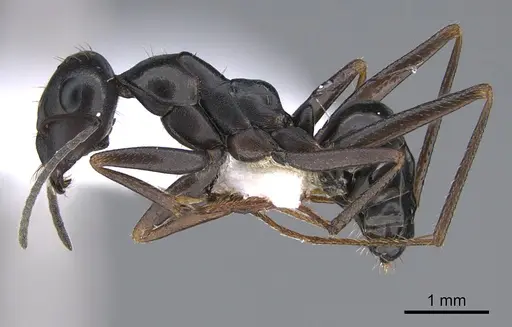
Cataglyphis chionistrae is a recently described ant species (2023) endemic to the high mountains of Cyprus. Workers are striking for their deep black coloration, nearly all black except for yellowish legs and antennae that create a bold contrast. They belong to the Cataglyphis cursor species complex, characterized by their distinctive thick, scale-like petiole. Major workers reach around 2mm in body length while minor workers are slightly smaller. This species is unique within its complex because it prefers the cool, shaded environment of high-altitude pine forests, unlike its relatives that bask in open, sunny mountain habitats [1].
Quick Summary
- Difficulty: Medium
- Origin & Habitat: Endemic to Cyprus, found only in the high montane pine forest of Mt. Chionistra (Mt. Olympus) at altitudes of 1862-1928 meters above sea level. Nests are located under moderate-sized stones in the highest parts of the mountain, in areas overgrown with Pinus nigra (black pine) [1][2].
- Colony Type: Colony structure is not directly documented. Based on the cursor species complex pattern, likely single-queen (monogyne) colonies. Workers show monomorphic or monophasic size variation, meaning there's no extreme size difference between minor and major workers [1].
- Colony: Monogyne
- Founding: Claustral
- Size & Growth:
- Queen: Queens measure approximately 1.54mm head length and 2.485mm mesosoma length (WL) [1].
- Worker: Major workers: 2.085mm mesosoma length (WL), minor workers: 1.710mm mesosoma length (WL) [1].
- Colony: Unknown, no colony size data is available for this newly described species.
- Growth: Growth rate is unconfirmed. Based on related Cataglyphis species, expect moderate development speed.
- Development: Development timeline is unconfirmed for this species. Based on typical Cataglyphis patterns, estimate 6-10 weeks from egg to first worker at optimal temperature. (No direct development data exists. Related species in the cursor complex suggest a multi-week development period typical for Formicinae ants.)
- Antkeeping:
- Temperature: Keep at room temperature, roughly 20-25°C. This species comes from a high-altitude Cypriot mountain environment, so it prefers cooler conditions than many other Cataglyphis. A gentle gradient allowing them to choose their preferred temperature works best. Avoid overheating.
- Humidity: Moderate humidity is appropriate. Their natural habitat in pine forests provides balanced moisture. Keep the nest substrate slightly moist but not waterlogged, with some drier areas available.
- Diapause: Diapause requirements are unconfirmed. However, given their origin in a temperate mountain environment, expect some form of winter rest period. Based on similar temperate Cataglyphis species, a cool period around 10-15°C for 2-3 months may be beneficial.
- Nesting: In captivity, they do well in standard formicarium setups. They naturally nest under stones in soil, so a naturalistic setup with a soil layer and flat stones on top works well. Y-tong (acrylic) nests with appropriate chamber sizes also work. The key is providing a cool, shaded nesting area, avoid bright lighting on the nest.
- Behavior: These ants are active foragers, typical of the genus Cataglyphis. They search for food individually and are not aggressive toward humans. Workers are medium-sized and can escape through standard barriers, but are not particularly prone to escaping compared to tiny ants. They are likely daytime foragers, matching their natural behavior in the sunny mountain habitats where they occasionally forage. Their black coloration helps them absorb heat while foraging in cooler conditions.
- Common Issues: new species means limited husbandry information, be prepared to experiment with conditions, high altitude origin means they may not tolerate warm indoor temperatures well, watch for heat stress, escape prevention should be standard, they can climb smooth surfaces, founding colonies may be difficult to obtain since the species is newly described and rare in the hobby, winter care is uncertain, start with a cool period and observe colony behavior
Natural History and Distribution
Cataglyphis chionistrae is one of the newest ant species described in science, formally named in 2023. It is endemic to Cyprus, meaning it is found nowhere else on Earth. This makes it a truly special species for antkeepers who want something unique. The entire known population lives on Mt. Chionistra (also called Mt. Olympus), the highest peak in Cyprus at 1,952 meters. All nests have been found at altitudes between 1862 and 1928 meters, in a black pine (Pinus nigra) forest [1].
What makes this species unusual is its habitat preference. All other members of the Cataglyphis cursor complex in the eastern Mediterranean are photophilous, meaning they love sunny, open areas like mountain steppes and dry meadows. C. chionistrae is the exception, it prefers the cool, shaded environment inside old pine forests. The researchers who described it found all nests under moderate-sized stones in the highest, shadiest parts of the mountain [1]. This tells us that unlike most Cataglyphis (which are famous for running across hot desert sands), this species has adapted to a much cooler, more shaded lifestyle.
Identification and Appearance
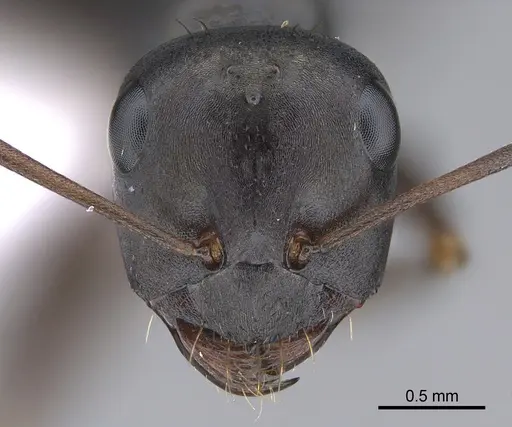
Workers of Cataglyphis chionistrae are striking for their nearly all-black coloration. The entire body is deep black, though in some specimens the front of the head and the area near the eyes (gena) may be slightly paler brownish-black. The legs are bicolored: coxae, trochanters, and femora are black, but the knees are yellowish to yellowish-brown, and the tibiae are yellowish-brown to brown. The tarsi and antennae are yellow to yellowish-brown, creating a bold contrast against the black body [1].
The species has very long antennal scapes (the first segment of the antenna), the scape index (SI) is approximately 1.3,meaning the scape is about 30% longer than the head is wide. This is longer than most related species (which have SI less than 1.22). Workers are monomorphic to monophasic, meaning there is only moderate size variation between minor and major workers, not the extreme polymorphism seen in some ants. Major workers have a mesosoma length (WL) of about 2.085mm, while minors are around 1.710mm [1].
Housing and Nest Setup
For keeping Cataglyphis chionistrae in captivity, standard formicarium setups work well. In nature, they nest under stones in soil, so a naturalistic setup with a soil layer and flat stones on top mimics their natural environment well. Y-tong (acrylic) nests with appropriately sized chambers also work, especially if you provide some soil or substrate in the outworld.
The key consideration is temperature. This species comes from a high-altitude mountain environment, so it prefers cooler conditions than most Cataglyphis. Keep them at room temperature (roughly 20-25°C) rather than the warm conditions some desert Cataglyphis require. Avoid placing the nest in direct sunlight or near heat sources. They also prefer shaded nesting areas, in the wild they live in the shade of pine forests, not open sunny spots.
For the outworld, provide a water test tube as a hydration source and offer food in a shallow dish. Standard escape prevention (fluon on rim edges) is sufficient, these ants are not particularly small or prone to escaping compared to many species. [1]
Feeding and Diet
Like other Cataglyphis species, these ants are generalist foragers that will collect both protein sources and sugar. In captivity, offer a varied diet: small insects (fruit flies, small crickets, mealworms) as protein, and sugar water or honey as an energy source. They are active foragers, so place food in the outworld where workers can find it.
Based on their genus behavior, they likely forage individually during the day, searching for insects, honeydew, and nectar. Since they come from a cooler, more shaded environment, they may be less heat-tolerant for foraging than desert Cataglyphis species. Offer food during daylight hours when the colony is most active.
Seasonal Care and Winter Rest
Since Cataglyphis chionistrae comes from a temperate mountain environment at high altitude, some form of winter rest is likely beneficial. The exact requirements are unconfirmed, but based on similar temperate Cataglyphis species, a cool period around 10-15°C for 2-3 months during winter months (roughly November to February in the Northern Hemisphere) would be appropriate.
During this cool period, reduce feeding and keep the colony in a cool location like an unheated garage or basement. The colony will slow down or become less active, which is natural for their seasonal cycle. Do not feed during deep dormancy. Return to normal temperatures gradually in spring.
This is a newly described species, so some experimentation may be needed to find the ideal conditions. Start with the recommendations and adjust based on how your colony responds.
Frequently Asked Questions
How long does it take for Cataglyphis chionistrae to develop from egg to worker?
The exact development timeline is unconfirmed for this species. Based on typical Cataglyphis patterns, expect 6-10 weeks from egg to first worker at optimal temperature (around 22-25°C). This is an estimate, actual development may vary.
What temperature do Cataglyphis chionistrae ants need?
Keep them at room temperature, roughly 20-25°C. This species comes from a high-altitude Cypriot mountain, so it prefers cooler conditions than many other Cataglyphis. Avoid overheating and direct heat sources.
Do Cataglyphis chionistrae ants need hibernation?
Diapause requirements are unconfirmed, but based on their origin in a temperate mountain environment, a cool winter period is likely beneficial. Try a cool period around 10-15°C for 2-3 months during winter.
Are Cataglyphis chionistrae good for beginners?
This is a newly described species with limited availability in the antkeeping hobby. Difficulty is likely medium, not the hardest species, but also not ideal as a first ant since husbandry information is still being developed. If you can find a colony, expect some experimentation to find optimal conditions.
What do Cataglyphis chionistrae ants eat?
Like other Cataglyphis, they are generalists. Offer small insects (fruit flies, small crickets, mealworms) for protein, and sugar water or honey for energy. They are active foragers that will search for food in the outworld.
How big do Cataglyphis chionistrae colonies get?
Colony size is unknown, no data exists yet for this newly described species. Based on related species in the cursor complex, colonies likely reach several hundred workers over time.
Can I keep multiple Cataglyphis chionistrae queens together?
Colony structure is not directly documented, but based on the cursor species complex pattern, they likely form single-queen colonies. Combining unrelated queens is not recommended without evidence they can found colonies together.
What type of nest is best for Cataglyphis chionistrae?
They naturally nest under stones in soil, so a naturalistic setup with a soil layer and flat stones works well. Y-tong (acrylic) nests with appropriate chamber sizes also work. The key is providing a cool, shaded nesting area.
Where is Cataglyphis chionistrae found in the wild?
This species is endemic to Cyprus, found only on Mt. Chionistra (Mt. Olympus) at altitudes of 1862-1928 meters. All known populations live in a black pine forest at the highest parts of the mountain.
References

This caresheet is licensed under CC BY-SA 4.0 .
CASENT0923724
View on AntWeb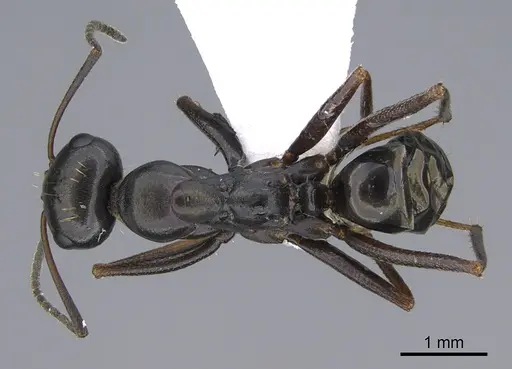
Literature
Loading...Loading products...