

Carebara spinata
- Scientific Name
- Carebara spinata
- Tribe
- Crematogastrini
- Subfamily
- Myrmicinae
- Author
- Bharti & Kumar, 2013
- Distribution
- Found in 1 countries
Carebara spinata Overview
Carebara spinata is an ant species of the genus Carebara. It is primarily documented in 1 countries , including India. Detailed taxonomic data and occurrence records can be further explored via authoritative databases such as AntWeb or the Global Biodiversity Information Facility (GBIF).
Carebara spinata
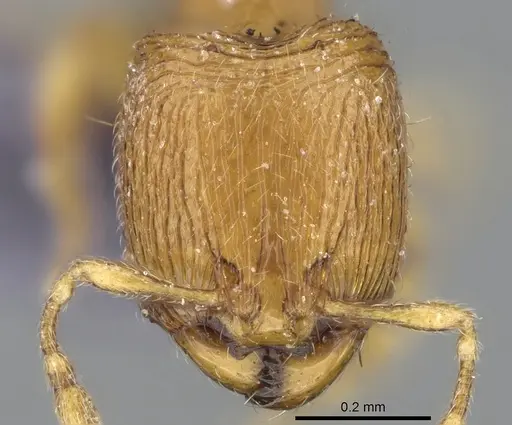
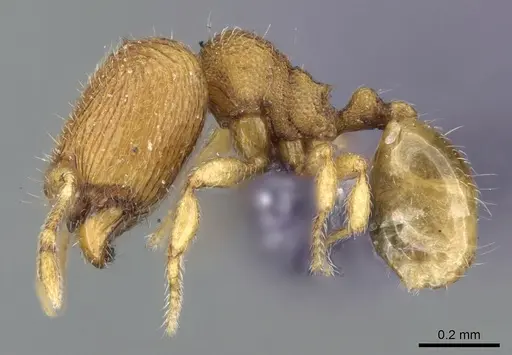
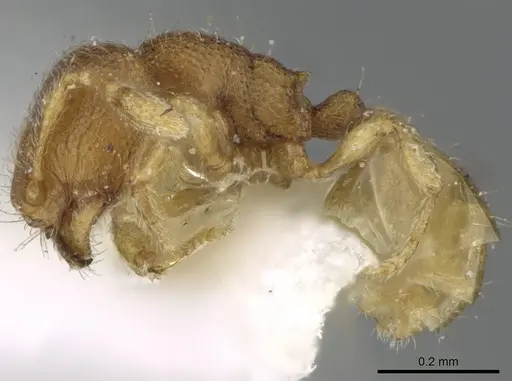
Carebara spinata is a tiny dimorphic ant species endemic to northern India, first described in 2013. Major workers measure around 1.65mm total length with a large, slightly elongated head featuring minute occipital horns and short triangular propodeal spines. Minor workers are smaller at 1.08-1.24mm, lacking the occipital horns but sharing the nine-segmented antennae and yellowish-brown coloration. The species is distinguished from related species by its convex head sides and specific head sculpture patterns. Found only in the Indian Himalayas across Uttarakhand, Himachal Pradesh, and Jammu & Kashmir at elevations between 450-1200m, this species remains poorly studied with no documented biology or colony structure information available [1][2][3].
Quick Summary
- Difficulty: Unknown, Insufficient Data
- Origin & Habitat: Endemic to northern India (Uttarakhand, Himachal Pradesh, Jammu & Kashmir), found in Himalayan foothills at elevations of 450-1200m. Collected from soil cores and leaf litter Winkler samples in forested areas [3][4].
- Colony Type: Unknown, colony structure has not been documented. The species is known only from worker castes, queen caste has not been described [1].
- Size & Growth:
- Queen: Undescribed, queen caste unknown [1]
- Worker: Major: 1.65mm total length, Minor: 1.08-1.24mm total length [1]
- Colony: Unknown, no colony size data available
- Growth: Unknown, no development data exists
- Development: Unknown, no development studies have been conducted on this species (Development timeline unconfirmed. Based on typical Carebara patterns (tiny Myrmicinae), development likely takes several weeks to months at optimal temperature, but this is purely speculative.)
- Antkeeping:
- Temperature: Estimated 20-26°C based on Himalayan origin, no thermal studies exist for this species. Provide a temperature gradient allowing workers to self-regulate. Room temperature in most homes should fall within acceptable range.
- Humidity: Estimated moderate to high (60-80%) based on collection from forested Himalayan foothills. Keep nest substrate consistently moist but not waterlogged. Provide a moisture gradient.
- Diapause: Unknown, no seasonal studies exist. Himalayan origin suggests some cold tolerance, but specific diapause requirements are unconfirmed.
- Nesting: No nesting observations documented. Likely nests in soil or rotting wood based on collection method (soil cores) and typical Carebara genus preferences. A small test tube setup or Y-tong nest with fine chambers scaled to their tiny size would be appropriate.
- Behavior: Behavior is undocumented. Based on genus-level patterns, Carebara ants are typically subterranean or ground-nesting, often cryptic and not frequently observed on the surface. They are likely predatory or scavengers on small arthropods. Escape risk is significant given their tiny size, fine mesh barriers are essential. Temperament is unknown but likely non-aggressive given their diminutive size.
- Common Issues: no documented biology means all care is estimated from genus patterns, colony structure unknown, cannot confirm monogyne/polygyne status, queen caste undescribed, wild colonies have never been observed, development timeline completely unknown, tiny size creates high escape risk, standard test tube setups may need additional barriers
Species Overview and Identification
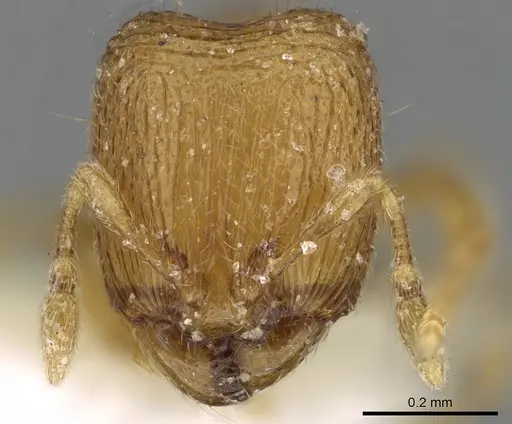
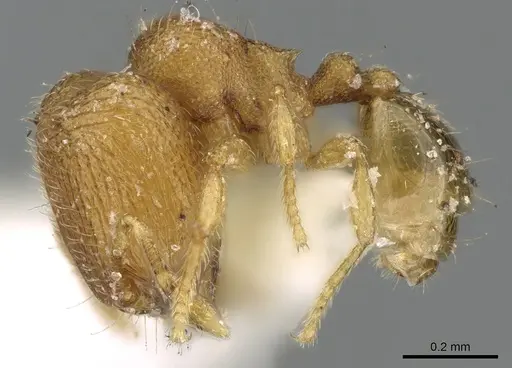
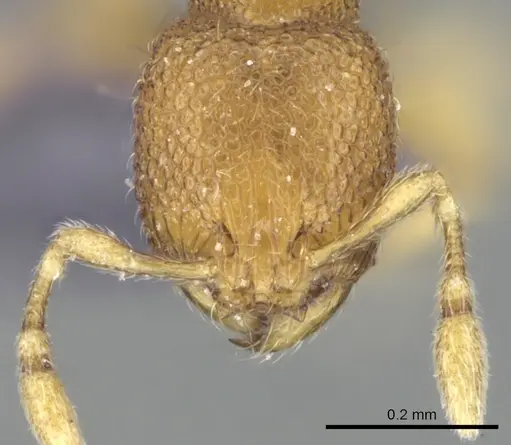
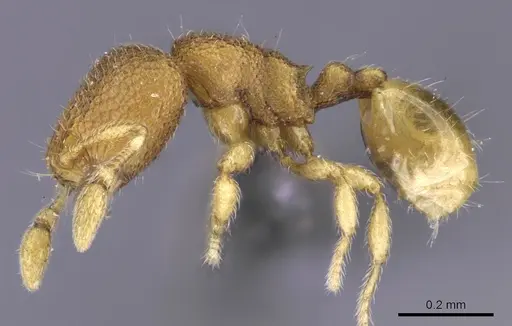
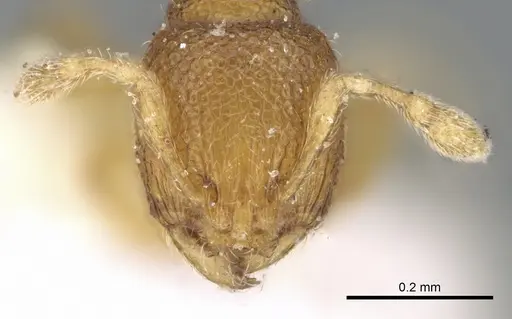
Carebara spinata is a recently described species (2013) known only from worker castes. The major workers reach approximately 1.65mm in total length with a distinctive large head that is slightly longer than broad, convex sides, and minute horns on the posterior margin. The propodeal spines are short, triangular, and slightly down-curved, this is the feature referenced in the species name 'spinata' (Latin for spines). Minor workers are significantly smaller at 1.08-1.24mm and lack the occipital horns. Both castes have nine-segmented antennae and a yellowish-brown body with darker mandible tips. The species can be distinguished from close relative Carebara obtusidenta by the head shape (convex vs parallel sides) and the presence of occipital horns in minor workers [1][2].
Distribution and Habitat
This species is endemic to the Himalayan region of northern India, known only from three states: Uttarakhand, Himachal Pradesh, and Jammu & Kashmir. Collection localities include Dakpathar (750m elevation), Rajaji Forest Area (660m), Lwasa (1200m), Ghati (450m), and Shukrala (1040m). All collections came from soil cores and leaf litter extraction (Winkler method), suggesting a subterranean or ground-nesting lifestyle in forested habitats. The elevation range of 450-1200m indicates adaptation to subtropical to warm temperate Himalayan conditions [3][4].
Known Biology and Care Considerations
No biological information exists for this species in the scientific literature. The queen caste has never been described, and colony structure (single-queen vs multi-queen) is completely unknown. Nuptial flight timing, founding behavior, and development timeline have not been documented. This is one of the most poorly known Carebara species in India. For antkeepers, this means all care recommendations are estimates based on typical Carebara genus behavior rather than species-specific data. The genus Carebara contains many tiny, subterranean ants that are often cryptic and difficult to observe. They are typically predatory or scavengers, feeding on small invertebrates and likely honeydew from aphids. Given their tiny size and unknown biology, this species is recommended only for experienced antkeepers who can adapt care to individual colony responses [1][5].
Housing and Nesting
Since natural nesting behavior is unobserved, housing recommendations are estimates. Based on collection data (soil cores) and typical Carebara behavior, this species likely nests in soil or rotting wood in nature. For captivity, a small test tube setup with moist cotton as a water reservoir works well for founding colonies. Given their tiny size (under 2mm), ensure chambers and passages are appropriately scaled, avoid large, open spaces. A Y-tong (acrylic) nest with fine chambers or a small plaster/soil nest can also work. Escape prevention is critical due to their minute size, standard test tube cotton barriers may need reinforcement with finer materials. Provide a humidity gradient by placing part of the setup on moist substrate and part on drier areas [5].
Feeding and Diet
Diet is unconfirmed for this species. Based on typical Carebara genus behavior, they are likely predatory on small micro-arthropods (springtails, mites, small insects) or scavengers. Offer small live prey items appropriate to their size, such as springtails, fruit flies, or small mealworm pieces. Sugar sources may be accepted (honey water, sugar water) but this is uncertain, offer occasionally but do not rely on carbohydrates as a primary food source. Feed small amounts of protein (live or dead insects) several times per week and monitor acceptance. Remove uneaten food promptly to prevent mold in the small enclosure [5].
Temperature and Seasonal Care
No thermal studies exist for this species. Based on its Himalayan origin (elevations 450-1200m in Uttarakhand, Himachal Pradesh, and Jammu & Kashmir), it likely tolerates a range of temperatures and may experience seasonal cooling. Estimated optimal range is 20-26°C. Provide a temperature gradient by placing heating on one side of the nest so workers can self-regulate. Room temperature in most homes should be acceptable. Regarding diapause: Himalayan ant species typically require some winter cooling period, but specific requirements for C. spinata are unknown. If the colony shows reduced activity in winter, allow temperatures to drop to around 15-18°C for several months, mimicking natural seasonal cycles [5].
Frequently Asked Questions
How long does it take for Carebara spinata to develop from egg to worker?
The development timeline is completely unknown, no scientific studies have examined Carebara spinata brood development. Based on typical Carebara genus patterns (tiny Myrmicinae ants), development likely takes several weeks to months at optimal temperature, but this is purely speculative. There is no data to provide a reliable estimate.
What do Carebara spinata ants eat?
Diet is unconfirmed for this species. Based on typical Carebara genus behavior, they likely prey on or scavenge small micro-arthropods like springtails and mites. Offer small live prey (springtails, fruit flies) and small insect pieces. Sugar sources (honey water) may be accepted but are uncertain. This is entirely estimated from genus patterns rather than species-specific feeding observations.
What is the colony structure of Carebara spinata?
Completely unknown. The queen caste has never been described, and no one has documented whether wild colonies have one queen or multiple queens. This is one of the least studied ant species in India with essentially no biological data available.
Are Carebara spinata ants good for beginners?
No. This species is not recommended for beginners due to the complete lack of biological data. All care recommendations are estimates based on genus-level patterns, and the species requires an experienced keeper who can adapt to the colony's specific needs through observation. Beginners should start with better-documented species.
Do Carebara spinata ants sting?
Unknown, stinging behavior has not been documented. Given their tiny size (under 2mm), any sting would likely be imperceptible to humans. Most tiny Myrmicinae ants can sting but are too small to penetrate human skin effectively.
What temperature should I keep Carebara spinata at?
Estimated 20-26°C based on Himalayan origin. No thermal studies exist for this species. Provide a temperature gradient so workers can self-regulate. Room temperature in most homes should fall within this range. Observe colony activity, if workers cluster consistently in warmer areas, increase temperature slightly, if they avoid heated areas, reduce or eliminate heating.
Do Carebara spinata ants need hibernation?
Unknown. Himalayan origin suggests they likely experience seasonal temperature changes and may benefit from a cool period in winter. If the colony shows reduced activity during colder months, allow temperatures to drop to approximately 15-18°C for 2-3 months. This is an estimate based on typical Himalayan ant behavior, not species-specific data.
How big do Carebara spinata colonies get?
Unknown, colony size has never been documented. Many Carebara species form small to moderate colonies, but without any data on this specific species, maximum colony size cannot be estimated. The species is known only from scattered worker specimens, never from an observed colony.
What nest type is best for Carebara spinata?
Estimated based on collection data and genus patterns. A small test tube setup with moist cotton works well for founding colonies. For established colonies, a Y-tong (acrylic) nest with small, tight chambers scaled to their tiny size, or a small plaster/soil nest maintains appropriate humidity. Ensure chambers are appropriately sized, these are very small ants that may be overwhelmed by large open spaces.
Can I keep multiple Carebara spinata queens together?
Unknown, colony structure has never been documented, and the queen caste is undescribed. There is no data on whether this species is single-queen (monogyne) or multi-queen (polygyne). Do not attempt combining unrelated queens until more is known about their natural colony structure.
References

This caresheet is licensed under CC BY-SA 4.0 .
CASENT0906099
View on AntWeb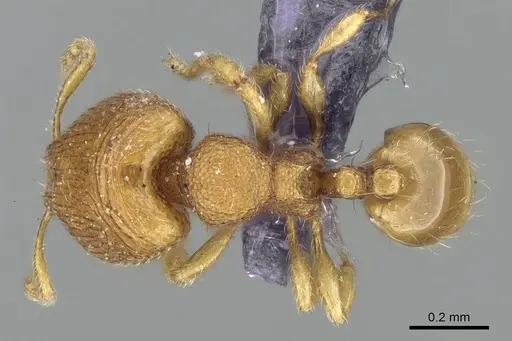
CASENT0906100
View on AntWeb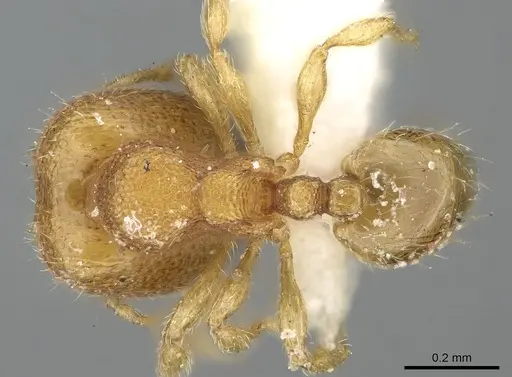
CASENT0906101
View on AntWeb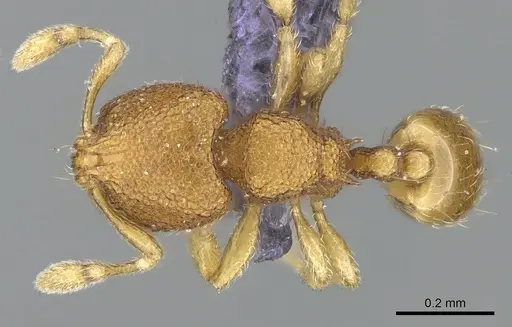
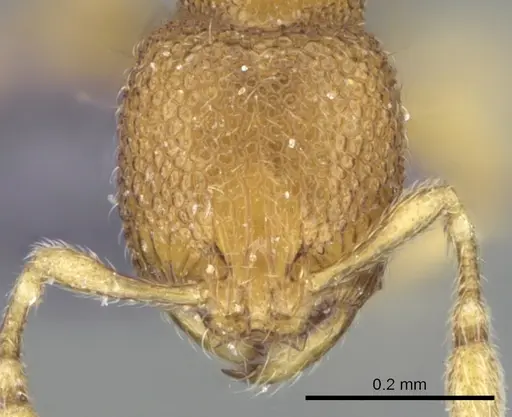
CASENT0906102
View on AntWeb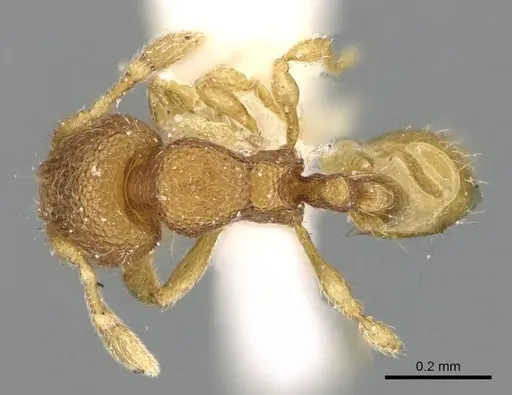
Literature
Loading...Loading products...