

Carebara obtusidenta
- Scientific Name
- Carebara obtusidenta
- Tribe
- Crematogastrini
- Subfamily
- Myrmicinae
- Author
- Xu, 2003
- Distribution
- Found in 2 countries
Carebara obtusidenta Overview
Carebara obtusidenta is an ant species of the genus Carebara. It is primarily documented in 2 countries , including China, Lao People's Democratic Republic. Detailed taxonomic data and occurrence records can be further explored via authoritative databases such as AntWeb or the Global Biodiversity Information Facility (GBIF).
Carebara obtusidenta
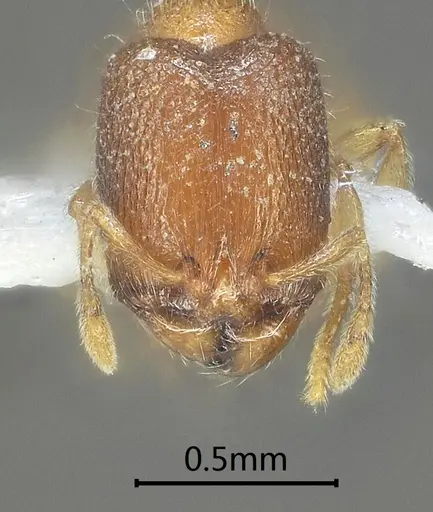
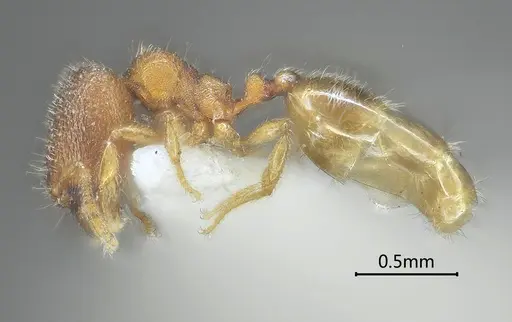
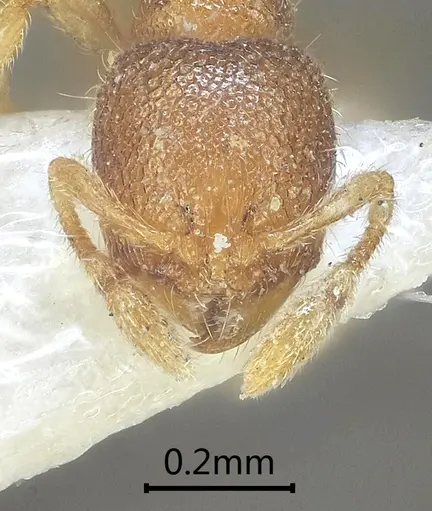
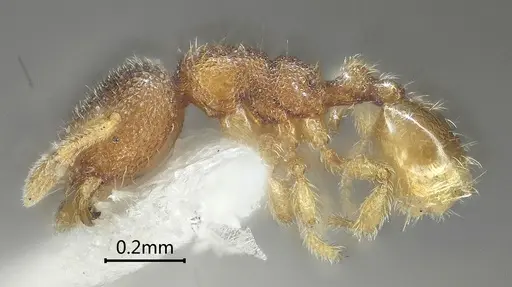
Carebara obtusidenta is a tiny dimorphic ant, meaning they have two distinct worker sizes. Minor workers measure just 1.2-1.3mm while major workers reach 2.1-2.6mm [1]. Major workers have distinctive small horns on the back of the head and up-curved spines on the waist segment [2]. They inhabit moist evergreen broadleaf forests across southwestern China and northeastern India, living at elevations from 587m to 2800m [2][3]. These ants are hypogaeic, which means they live and forage underground in soil and leaf litter rather than on the surface [2].
Quick Summary
- Difficulty: Expert
- Origin & Habitat: Southwestern China (Yunnan, Sichuan, Xizang, Hunan, Chongqing) and India (Arunachal Pradesh, Sikkim, Kerala, West Bengal) [2][3][4]. Found in moist evergreen broadleaf forest and walnut forest at mid to high elevations ranging from 587m to 2800m [1][5].
- Colony Type: Unknown, queen number and colony structure remain unconfirmed in scientific literature.
- Size & Growth:
- Queen: Unknown, not described in available literature.
- Worker: Minor workers 1.2-1.3mm, major workers 2.1-2.6mm [1][2].
- Colony: Unknown.
- Growth: Unknown.
- Development: Unknown, likely 8-12 weeks based on typical Carebara patterns at 20-22°C, but this is speculative and unconfirmed. (No direct studies of development time exist for this species.)
- Antkeeping:
- Temperature: Cool to moderate, approximately 18-22°C. The type locality at 2000m elevation and records up to 2800m suggest preference for cooler conditions, though they also occur at 587m [1][2]. Provide a gentle heat gradient and observe colony preference.
- Humidity: High humidity required. Keep nest substrate consistently moist but not waterlogged to mimic the moist evergreen forest floor where they naturally occur [1].
- Diapause: Unknown, possible winter slowdown given high elevation populations, but diapause requirements are unconfirmed.
- Nesting: Soil and leaf litter nests. Use naturalistic setups with deep substrate layers or plaster nests with very narrow chambers to accommodate their tiny size [5][2].
- Behavior: Hypogaeic (underground-dwelling) with limited surface activity [2]. Slow-moving and cryptic. Major workers show variable development of small occipital horns [1]. Because minor workers are only 1.2mm long, escape prevention must be exceptional, they can pass through the tiniest gaps [1].
- Common Issues: escape prevention is critical, minor workers at 1.2mm can squeeze through standard mesh and the smallest gaps in formicarium design., desiccation risk, high elevation forest habitat means they require consistent moisture, drying substrate kills colonies quickly., unknown dietary requirements, no captive feeding protocols exist, establishing appropriate food sources requires trial and error., difficulty establishing colonies, lack of confirmed founding data means captive propagation success rates are unknown and likely low.
Natural History and Habitat
Carebara obtusidenta inhabits moist evergreen broadleaf forests across a wide elevation range. In China, they occur in Yunnan, Sichuan, Xizang, Hunan, and Chongqing provinces [4]. In India, they have been recorded in Arunachal Pradesh at 2800m, Sikkim at 587m, and Kerala at 1003m [2]. This broad vertical distribution suggests adaptability to temperature variation, though all records come from moist forest habitats [1]. They are strictly hypogaeic ants, meaning they live primarily underground in soil and leaf litter rather than foraging on the surface [2]. In the Wanglang Nature Reserve, they were found specifically in walnut forest habitat with narrow ecological amplitude, nesting strictly in soil and foraging within the soil layer rather than above ground [5].
Nest Preferences
In captivity, replicate their soil-dwelling nature. Naturalistic setups with deep, moist substrate layers allow them to excavate their own chambers as they would in leaf litter [2]. Alternatively, plaster nests with very narrow chambers and tunnels suit their small size, avoid large open spaces that dwarf these tiny ants. They require darkness and will likely avoid exposed areas or bright light [5]. The nest should have minimal open space, tight, soil-like cavities are preferred over spacious chambers.
Temperature and Humidity
Based on their collection at 2000m elevation in the type locality and up to 2800m in Arunachal Pradesh, these ants likely prefer cooler conditions than typical tropical ants [1][2]. However, they also survive at 587m in Sikkim, so they tolerate some temperature variation [2]. Start with temperatures around 18-22°C with a slight gradient from one side of the nest to the other. Humidity must remain high, the substrate should feel damp to the touch, mimicking the moist evergreen forest floor where they naturally occur [1]. Avoid stagnant air, provide gentle ventilation while maintaining moisture to prevent mold growth.
Feeding and Diet
Their natural diet is unstudied. As hypogaeic ants living in soil and leaf litter, they likely prey on small soil arthropods such as springtails, mites, and other micro-invertebrates [2]. In captivity, offer tiny live prey such as springtails, minute fruit flies, or very small cricket nymphs. Sugar acceptance is unknown, offer honey water or sugar water in small quantities, but do not rely on it as a staple until acceptance is confirmed. Because they forage underground, place food directly in the nest area or substrate rather than in a separate outworld, or ensure the outworld connects directly to their nesting substrate [5].
Behavior and Escape Prevention
These ants pose significant escape risks due to their extremely small size. Minor workers at 1.2mm can squeeze through the tiniest gaps in standard formicarium designs and most mesh screens [1]. Use fine insect screening or smaller, and apply barrier products like Fluon or talcum powder on all container walls and lids. They are slow-moving and cryptic, spending most of their time hidden in substrate. Major workers display variable development of small occipital horns (projections on the back of the head), ranging from minute to small [1]. They are included in the Carebara acutispina-group based on morphological characteristics [6].
Frequently Asked Questions
Can I keep Carebara obtusidenta in a test tube?
Yes, but modify the setup. Standard test tubes may be too spacious for these tiny ants. Use smaller diameter tubes or partially fill them with substrate to create tighter spaces. Ensure the water reservoir is secured with cotton to prevent drowning, and check that the cotton plug has no gaps larger than 1mm [1].
How long until Carebara obtusidenta gets first workers?
The egg-to-worker timeline is unconfirmed for this species. Based on typical Carebara development patterns, expect roughly 8-12 weeks at 20-22°C, but this is speculative. Monitor the queen and brood closely as no captive breeding data exists [1].
Can I keep multiple Carebara obtusidenta queens together?
Not recommended. Whether this species accepts multiple queens is unknown. Most Carebara species are monogyne (single queen), and combining unrelated queens risks fighting and mortality. Start with single queens until colony structure is confirmed [1].
Do Carebara obtusidenta ants sting?
Stinging capability is unconfirmed. Given their minute size (1.2-2.6mm), they likely cannot penetrate human skin effectively. They may possess stingers for subduing tiny prey, but they pose no threat to humans [1].
What do Carebara obtusidenta eat?
Their diet is unstudied. As hypogaeic soil-dwellers, they likely hunt micro-arthropods like springtails and mites. Offer tiny live prey and small amounts of sugar water, observing what they accept. Do not rely on standard large insect prey [2].
Are Carebara obtusidenta good for beginners?
No. Their extremely small size, specific humidity requirements, unknown founding behavior, and complete lack of captive care documentation make them suitable only for expert antkeepers with experience handling tiny soil-dwelling species [1].
Do Carebara obtusidenta need hibernation?
Unknown. Populations exist at high elevations (up to 2800m) where winters are cool, suggesting possible winter slowdown, but diapause requirements are unconfirmed. You may reduce temperatures slightly in winter (15-18°C) if the colony slows naturally, but do not force hibernation without evidence [2].
Why is my Carebara obtusidenta colony dying?
Likely causes include desiccation (they need constant moisture), escape of workers (check for gaps in your setup), or inappropriate food (they may refuse standard ant foods like large insects). Without established captive protocols, colony failure is common [1].
When should I move Carebara obtusidenta to a formicarium?
Only when the colony has at least 20-30 workers and you can provide appropriately sized chambers (very small). Premature moves to large formicariums often cause stress and desiccation. Ensure the new nest has tight chambers suitable for 1-2mm ants [1].
How big do Carebara obtusidenta colonies get?
Colony size is unknown. Based on other small Carebara species, they likely remain small to moderate (probably under 1000 workers), but this is speculative [1].
References

This caresheet is licensed under CC BY-SA 4.0 .
ANTWEB1060558
View on AntWeb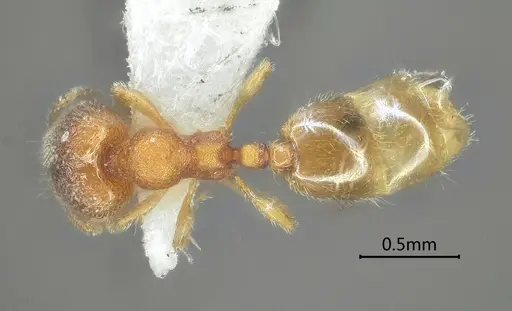
ANTWEB1060559
View on AntWeb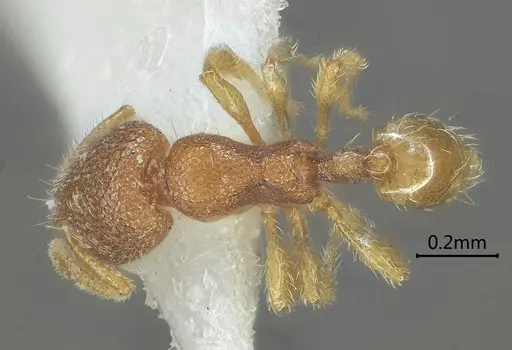
Literature
Loading...Loading products...