

Carebara panhai
- Scientific Name
- Carebara panhai
- Tribe
- Crematogastrini
- Subfamily
- Myrmicinae
- Author
- Jaitrong <i>et al.</i>, 2021
- Distribution
- Found in 1 countries
Carebara panhai Overview
Carebara panhai is an ant species of the genus Carebara. It is primarily documented in 1 countries , including Thailand. Detailed taxonomic data and occurrence records can be further explored via authoritative databases such as AntWeb or the Global Biodiversity Information Facility (GBIF).
Carebara panhai
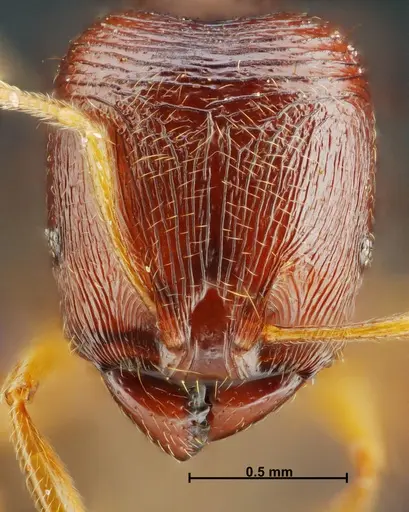
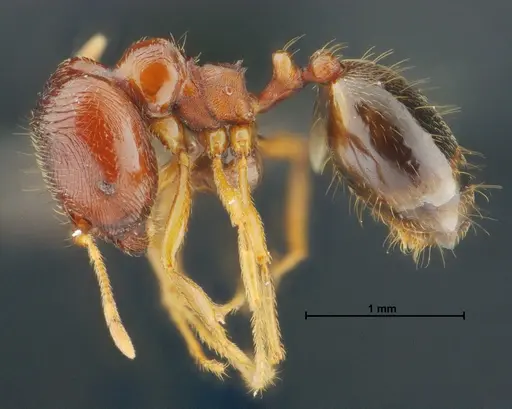
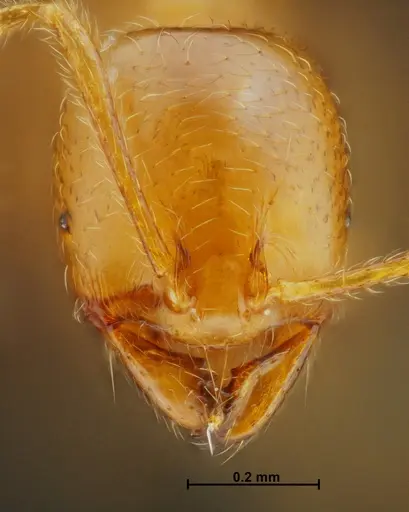
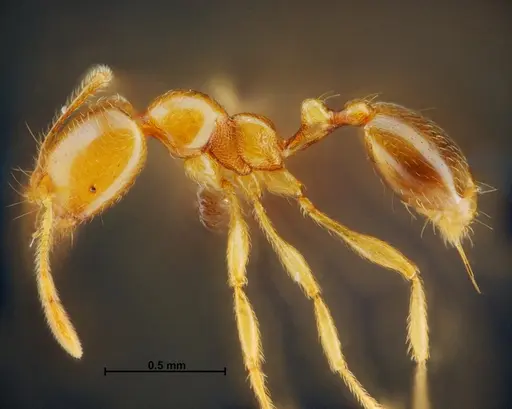
Carebara panhai is a tiny cave-dwelling ant species recently described from Thailand. Major workers reach 3.6-3.8mm while minor workers are even smaller at just 2.15-2.18mm [1]. The species belongs to the Carebara pygmaea species group and was discovered living in the twilight zone of a cave in Kanchanaburi Province, about 3 meters from the entrance [1]. Major workers have distinctive dense erect hairs on the head and gaster, with the head showing a mix of longitudinal striation toward the front and transverse striation toward the back [2]. Minor workers are yellowish with a smooth, shiny propodeum [2]. This is one of the few cave-dwelling ant species known from Thailand, making it a unique and challenging species to keep.
Quick Summary
- Difficulty: Expert
- Origin & Habitat: Thailand (Kanchanaburi Province), cave-dwelling species found in the twilight zone of a limestone cave at approximately 683m elevation, surrounded by dry evergreen forest [1][2]
- Colony Type: 300 individuals including eggs and brood [1].
- Size & Growth:
- Queen: Undescribed, no queen caste has been documented in scientific literature
- Worker: Major workers: 3.6-3.8mm, Minor workers: 2.15-2.18mm [1][2]
- Colony: 300 workers observed in the wild [1]
- Growth: Unknown, no development data available for this species
- Development: Unconfirmed, no direct observations of colony development exist (Development timeline has not been studied. Related Carebara species typically require 4-8 weeks for egg-to-worker at optimal temperatures, but this is an estimate for similar species rather than confirmed data for C. panhai.)
- Antkeeping:
- Temperature: Keep around 20-22°C based on cave conditions (22.4°C midday, dropping to ~14°C at night) [1]. A temperature gradient allowing cooler areas is recommended since wild colonies experience significant temperature drops.
- Humidity: High humidity required, cave conditions showed 77% relative humidity [1]. Keep the nest substrate consistently moist but not waterlogged.
- Diapause: Likely required, the significant temperature drop in their natural cave habitat (from 22°C to 14°C) suggests a seasonal cooling period. However, specific diapause requirements are unconfirmed.
- Nesting: This is a cave-dwelling species. In captivity, provide a naturalistic setup with a small nest chamber (entrance hole in the wild is only ~3.2 × 3 cm) [1]. A small test tube or Y-tong nest with very small chambers scaled to their tiny size works well. They prefer dark, humid conditions with minimal light exposure.
- Behavior: This is an extremely small ant species with minor workers only 2mm long. Workers are primarily ground-dwelling and have been observed guarding and feeding on fungi growing near their nest entrance [1]. They are not aggressive and likely rely on concealment rather than defense. Escape prevention is critical due to their tiny size, they can easily squeeze through standard barriers. They are cave-adapted and likely stress-sensitive to light and temperature fluctuations.
- Common Issues: tiny size means escapes are likely without fine mesh barriers, use tight-fitting lids and fine mesh, cave-dwelling species is highly sensitive to light stress, keep in dark or dim conditions, humidity must be high but stable, avoid drying out the nest, no established care guidelines exist, this is an expert-only species, temperature fluctuations can be harmful, avoid drafts and sudden changes
Natural History and Discovery
Carebara panhai was only described in 2021,making it one of the newest ant species discovered in Thailand. It was found living in a cave in Kanchanaburi Province, Thong Pha Phum District, in the Sahakhom Nikhom Community Forest [1]. The species is named after Dr. S. Phanhai for his support of myrmecological research in Thailand. This ant belongs to the Carebara pygmaea species group, which contains several similar tiny ants found throughout Southeast Asia. What makes C. panhai unique is its cave-dwelling lifestyle, most ants in this group live in soil or rotting wood in forests, not in caves. The type series was collected from a small nest on a cave wall, about 3 meters from the entrance and 2 meters above the ground [1]. The nest entrance was remarkably small, only about 3.2 × 3 cm.
Habitat and Cave Environment
This species lives in the twilight zone of a limestone cave, an environment with stable but unique conditions. The cave is located in a small karstic hill surrounded by dense dry evergreen forest at 683 meters elevation [1]. Researchers measured the cave temperature at 22.4°C during midday, but it drops significantly to at least 14°C (or lower) at night, a dramatic temperature swing that the ants must tolerate. Relative humidity was measured at 77% during midday [1]. The minor workers have lighter coloration than related surface-dwelling species, which may be an adaptation to the dark cave environment (reduced pigmentation is common in cave organisms). Despite living in a cave, the species does not show strong trogloomorphic (cave-adapted) features, its morphology is similar to other soil-dwelling Carebara species [1].
Feeding and Diet
In the wild, workers have been observed guarding and feeding on fungi growing on the cave wall near their nest entrance [1]. This suggests they may have a diet that includes fungal matter, which is unusual among ants. Related Carebara species are typically omnivorous, feeding on small insects, honeydew, and organic matter. For captive care, offer a varied diet including small protein sources (fruit flies, pinhead crickets, mealworms) and sugar sources (honey water, sugar water). Given their association with fungi, they may also accept specialized fungal foods. Feed small amounts every 2-3 days and remove uneaten food to prevent mold. Their tiny size means even small prey items are substantial meals.
Housing and Nest Setup
Caring for this species requires specialized setup due to its cave-dwelling nature and tiny size. Use very small nest chambers scaled to their 2-3mm body size, a small test tube setup or Y-tong nest with narrow chambers works well. The nest entrance in the wild is only about 3.2 × 3 cm, so they prefer tight, enclosed spaces [1]. Keep the nest in darkness or very dim light, exposure to bright light will stress them. Maintain high humidity (around 75-80%) by keeping the nest substrate consistently moist. Provide a temperature gradient if possible, allowing them to move between warmer (~22°C) and cooler (~18°C) areas. Escape prevention is critical, their tiny size means they can squeeze through standard barriers. Use fine mesh and tight-fitting lids.
Temperature and Seasonal Care
Based on the cave environment, maintain temperatures around 20-22°C as a baseline, with the ability to drop slightly lower at night if possible. The natural cave shows dramatic temperature swings from 22°C midday to 14°C night [1], suggesting they can tolerate cooler conditions. However, avoid sudden temperature changes, gradual transitions are safer. A heating cable on one side of the nest can create a gentle gradient. Given their cave origin, they likely do not need extreme warmth. Monitor colony behavior: if workers cluster near heat, increase slightly, if they avoid heated areas, reduce temperature. The humidity requirement is high (around 77% in the wild), so ensure the nest substrate stays moist but not waterlogged.
Frequently Asked Questions
How long does it take for Carebara panhai to raise their first workers?
The development timeline for this species has not been documented. Based on related Carebara species, expect approximately 4-8 weeks from egg to worker at optimal temperatures. However, this is an estimate rather than confirmed data for C. panhai specifically.
What do Carebara panhai ants eat?
In the wild, they have been observed feeding on fungi near their nest entrance. In captivity, offer small protein sources like fruit flies, tiny crickets, or mealworms, along with sugar sources like honey water or sugar water. Their diet may include fungal matter.
Can beginners keep Carebara panhai?
No, this is an expert-only species. It was only described in 2021 and has no established care guidelines in captivity. They require specific cave-like conditions with high humidity, darkness, and stable temperatures. Their tiny size also makes escape prevention challenging.
Do Carebara panhai ants sting?
Given their extremely small size (minor workers are only 2mm), any sting would be negligible even if present. They are not known to be aggressive and likely rely on concealment rather than defense.
What temperature do Carebara panhai ants need?
Keep them around 20-22°C based on their natural cave environment. The wild cave measures 22.4°C midday but drops to ~14°C at night. A gentle temperature gradient allowing cooler areas is recommended.
How big do Carebara panhai colonies get?
300 individuals including eggs and brood [1]. The maximum colony size in captivity is unknown, but expect medium-sized colonies of a few hundred workers.
Is Carebara panhai a good ant species for beginners?
No. This is a newly described cave-dwelling species with no established captive care protocols. They require specialized conditions (high humidity, darkness, stable temperatures) that are difficult to maintain. This species is recommended only for experienced antkeepers who can provide precise environmental control.
What humidity do Carebara panhai ants need?
High humidity around 75-80% is required, matching the 77% relative humidity measured in their natural cave habitat [1]. Keep the nest substrate consistently moist but not waterlogged.
Can I keep multiple Carebara panhai queens together?
The colony structure (monogyne vs polygyne) is unconfirmed for this species. No queen caste has been documented in scientific literature. Do not attempt combining unrelated queens until more is known about their natural colony structure.
Do Carebara panhai ants need hibernation?
The specific diapause requirements are unconfirmed. However, their natural cave habitat shows significant temperature drops at night (from 22°C to 14°C), suggesting they may benefit from a seasonal cooling period. More research is needed to confirm hibernation needs.
References

This caresheet is licensed under CC BY-SA 4.0 .
THNHM-I-14191
View on AntWeb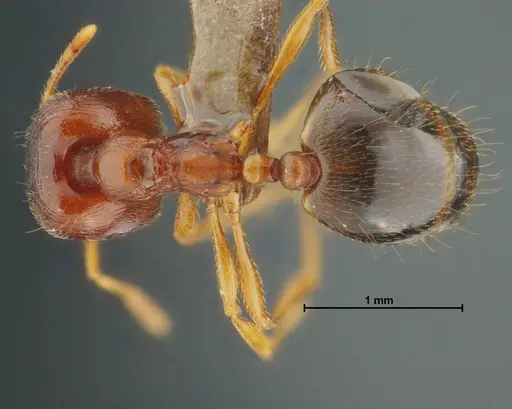
THNHM-I-14193
View on AntWeb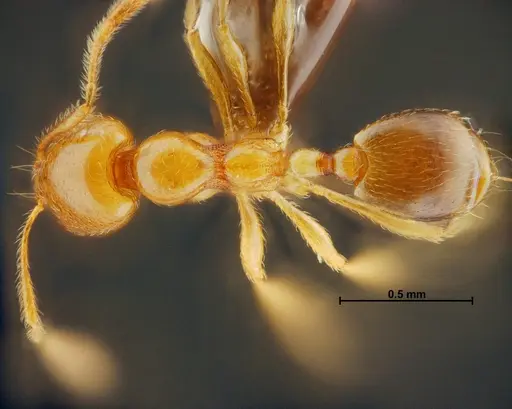
Literature
Loading...Loading products...