

Carebara nuda
- Scientific Name
- Carebara nuda
- Tribe
- Crematogastrini
- Subfamily
- Myrmicinae
- Author
- Fernández, 2004
- Distribution
- Found in 1 countries
Carebara nuda Overview
Carebara nuda is an ant species of the genus Carebara. It is primarily documented in 1 countries , including Brazil. Detailed taxonomic data and occurrence records can be further explored via authoritative databases such as AntWeb or the Global Biodiversity Information Facility (GBIF).
Carebara nuda
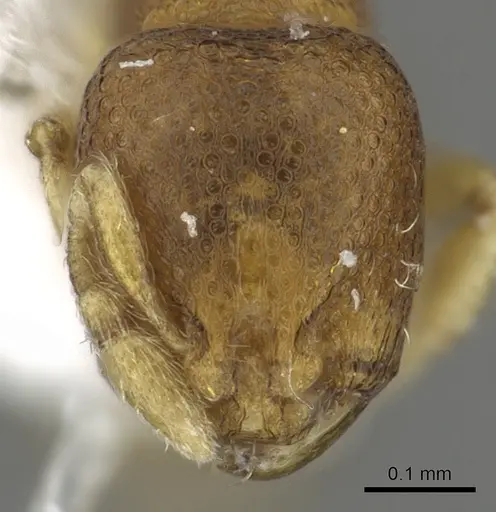
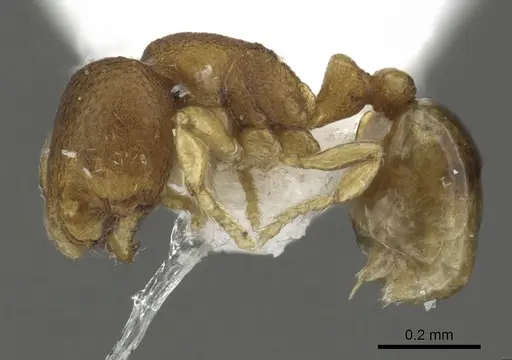
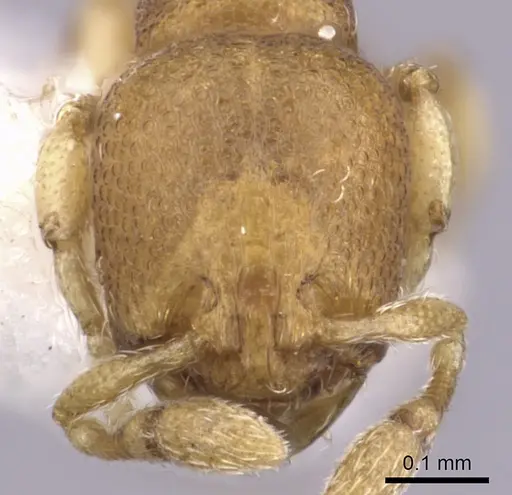
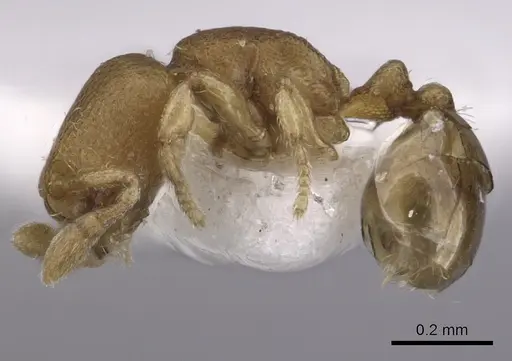
Carebara nuda is an extremely tiny ant species native to southern Brazil, specifically Santa Catarina state. Workers measure a mere 1.25mm in total length, making them one of the smallest ants in the Americas [1]. They belong to the Carebara escherichi species complex and are uniquely characterized by being completely devoid of long body hairs, a trait that gives them their species name 'nuda' (meaning naked) [1][2]. Their eyes are reduced to just a single lens (ommatidium), suggesting they have very limited vision and likely live a subterranean lifestyle [1][2]. The body is yellow-brown with minimal pubescence, and the head is densely sculptured with shallow punctures [1].
Nothing is known about the biology of this species in the wild, including colony size, founding behavior, or diet [3]. However, as a Carebara species, they likely share traits with other members of the genus, these are typically subterranean ants that nest in soil or rotting wood and feed on small invertebrates and honeydew. Their reduced eyes suggest they navigate primarily through chemical and tactile cues rather than vision.
Quick Summary
- Difficulty: Unknown, likely requires experience with micro-ant keeping
- Origin & Habitat: Southern Brazil (Santa Catarina state) at 300-500m elevation in the Neotropical region [1][4]. The area of Nueva Teutonia is characterized by subtropical humid forest. They likely nest in soil or rotting wood like other Carebara species.
- Colony Type: Unknown, colony structure has not been documented. Most Carebara species are monogyne (single queen) but this has not been confirmed for C. nuda.
- Size & Growth:
- Queen: Undocumented, no queen caste has been described [1][3]
- Worker: 1.25mm total length (TL 1.25) [1][2]. Head width 0.29mm, head length 0.38mm [1].
- Colony: Unknown, no colony size data exists for this species [3].
- Growth: Unknown, no development data available [3].
- Development: Unknown, no development data exists for this species [3]. Based on typical Carebara patterns and their tiny size, development may take several months, but this is an estimate only. (No direct measurements exist. Inferring from genus-level patterns suggests development may be slower than larger ants due to their minute size.)
- Antkeeping:
- Temperature: Unknown, no thermal studies exist for this species. Based on their Brazilian origin (subtropical Santa Catarina), aim for warm conditions around 22-26°C. Monitor colony activity and adjust accordingly.
- Humidity: Unknown, no humidity data exists. As a likely subterranean species from humid subtropical Brazil, keep substrate moderately moist. The substrate should feel damp but not waterlogged, with some variation across the nest.
- Diapause: Unknown, no seasonal data exists for this species. Southern Brazil experiences mild winters, so a reduced activity period may occur but has not been documented.
- Nesting: Based on genus patterns, they likely prefer moist soil or rotting wood. A test tube setup with damp cotton works as a starting point. Given their tiny size, use fine mesh barriers to prevent escapes. A small acrylic nest or plaster nest with tight chambers scaled to their minute size would be appropriate once the colony establishes.
- Behavior: Not documented. Based on related Carebara species, they are likely docile and non-aggressive. Their extremely small size (1.25mm) and reduced eyes suggest a cryptic, subterranean lifestyle, they probably forage underground rather than openly on the surface. Escape prevention is critical due to their minute size, they can squeeze through the tiniest gaps. Handle with extreme care as they could easily be crushed.
- Common Issues: their tiny size makes them extremely difficult to handle and observe, no biological data exists, keepers are essentially pioneering captive care, escape prevention must be excellent, they can slip through standard mesh, subterranean lifestyle makes them hard to watch, they may spend most time hidden, no known diet preferences, experimental feeding required, risk of killing them accidentally through improper humidity or handling
Why Carebara nuda Is a Challenge
Carebara nuda represents a unique challenge in ant keeping because absolutely no biological data exists for this species in scientific literature [3]. While most ant species have at least some documented care requirements, this tiny Brazilian ant has never been studied in captivity. The worker caste was described in 2004 from museum specimens collected in the 1950s, but no observations of living colonies have been published [1]. This means you're essentially pioneering the husbandry of a species with no established care protocols. The lack of data extends to every aspect of their biology: colony size, queen behavior, development time, diet preferences, temperature tolerance, and social structure remain completely unknown [3]. This makes C. nuda an expert-level species suitable only for experienced antkeepers who enjoy experimentation and careful observation.
Physical Characteristics and Identification
Carebara nuda workers are among the smallest ants you could keep, measuring just 1.25mm in total length [1][2]. To put this in perspective, they're smaller than a grain of rice. Their most distinctive feature is the complete absence of long hairs on their body, a trait that gives them the species name 'nuda' meaning 'naked' [1]. They have only very short, curved pubescence (flattened hairs) concentrated mainly on the head margins, with almost none on the mesosoma and gaster [1]. Their eyes are dramatically reduced, consisting of just a single ommatidium (lens), meaning they have essentially no vision [1][2]. This extreme eye reduction is typical of subterranean ants that live their lives in darkness. The body is yellow-brown in color, and the head surface is densely sculptured with small punctures [1]. These physical traits tell us they are adapted to life underground, navigating through chemical and tactile senses rather than sight.
Housing and Setup
Given their minute size and likely subterranean lifestyle, housing Carebara nuda requires attention to scale and escape prevention. A standard test tube setup works for founding colonies, but you must use fine mesh (at least 0.5mm or finer) on any ventilation holes because these ants can easily slip through standard ant farm barriers. The test tube should have a water reservoir section for humidity, but avoid overfilling that could drown the colony. Once established, a small acrylic nest or plaster nest with very tight chambers scaled to their tiny size would be appropriate. The chambers should be narrow, wider chambers may cause stress as these ants likely feel secure in confined spaces. Keep the nest area consistently moist but not wet, as excessive water can kill them. Place the setup in a quiet, dark location as their reduced eyes suggest they prefer minimal light exposure.
Feeding and Diet
Diet preferences are completely unconfirmed for Carebara nuda. However, based on genus patterns and their tiny size, they likely feed on small soft-bodied invertebrates (like springtails, tiny mites, or small fly larvae) and probably tend aphids for honeydew. Start with offering tiny live prey items, pinhead crickets and mealworms are likely too large. Live springtails or fruit flies would be more appropriately sized. You might also try a small drop of sugar water or honey, though their acceptance is uncertain. Feed small amounts and observe carefully, any uneaten prey should be removed within 24 hours to prevent mold. Given their likely subterranean foraging, place food near their nest entrance rather than expecting them to travel far. This is very much experimental, document your feeding attempts to contribute to what we know about this species. [3]
Temperature and Seasonal Care
No specific temperature requirements have been documented for Carebara nuda. Their origin in Santa Catarina, Brazil (at 300-500m elevation in a subtropical region) provides some guidance, the climate there is warm and humid with mild winters. Start with temperatures in the 22-26°C range and monitor colony behavior. If workers become sluggish, slightly increase temperature. If they avoid one area of the nest, that might indicate it's too warm. Since nothing is known about diapause (winter rest) for this species, do not assume they need hibernation. The relatively mild climate of their native range suggests they may not require a true diapause, but reduced activity in winter months would not be surprising. Keep temperature stable, sudden swings could be harmful to such a small, unstudied species. [1]
Working with Unknown Species
Keeping Carebara nuda successfully requires a scientific mindset and careful documentation. Since no care protocols exist, you'll be contributing original knowledge to ant keeping. Start with very small test colonies if possible, perhaps try with a small group rather than investing heavily in an unknown species. Document everything: what foods are accepted, temperature preferences (based on where they cluster), humidity preferences (based on where they position themselves), growth rates, and any behaviors you observe. Take photos regularly for size reference. Join ant keeping communities and share your findings. The lack of data also means you have no reference for what 'normal' looks like, so any colony that survives and grows is success. Be prepared for losses, this is experimental husbandry. If your colony thrives, your observations could become the foundation for future Carebara nuda keepers. [3]
Frequently Asked Questions
How long does it take for Carebara nuda to develop from egg to worker?
This is completely unknown, no development data exists for this species. Based on their tiny size (1.25mm), development is likely slower than larger ants, possibly taking several months, but this is an educated guess only.
What do Carebara nuda ants eat?
Diet is unconfirmed. Based on genus patterns, they likely accept small live prey (springtails, tiny mites) and probably honeydew. Start with appropriately-sized live prey and a small drop of sugar water. Document what they accept.
What temperature should I keep Carebara nuda at?
No specific requirements exist. Based on their Brazilian origin, aim for 22-26°C and adjust based on colony behavior. Keep temperature stable.
Are Carebara nuda good for beginners?
No. This species has no documented care requirements in scientific literature, keeping them is experimental. They require expert-level micro-ant keeping experience and careful observation.
How big do Carebara nuda colonies get?
Unknown, no colony size data exists for this species. Most Carebara colonies are relatively small, but we have no specific numbers for C. nuda.
Do Carebara nuda ants sting?
Given their tiny size (1.25mm), any sting would be negligible to humans. However, stinging behavior has not been documented for this species.
Can I keep multiple Carebara nuda queens together?
Unknown, colony structure has not been documented. Most Carebara species are monogyne (single queen), but this is unconfirmed for C. nuda. Do not attempt combining unrelated queens without data.
What makes Carebara nuda different from other Carebara species?
They are the only known American Carebara in the escherichi group that is completely devoid of long body hairs. They also have extremely reduced eyes (just one ommatidium) and are among the smallest ants in the Americas at 1.25mm.
Do Carebara nuda need hibernation?
Unknown, no seasonal data exists. Their native range in subtropical Brazil has mild winters, so a true diapause may not be necessary, but this is unconfirmed.
Why are Carebara nuda so hard to keep?
They are among the smallest ants (1.25mm), require fine escape prevention, have no documented care requirements, and likely have a cryptic subterranean lifestyle that makes observation and feeding challenging.
References

This caresheet is licensed under CC BY-SA 4.0 .
CASENT0902393
View on AntWeb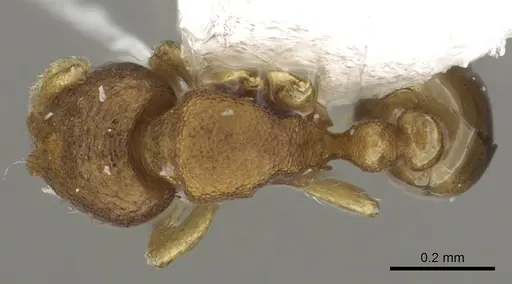
JTLC000003300
View on AntWeb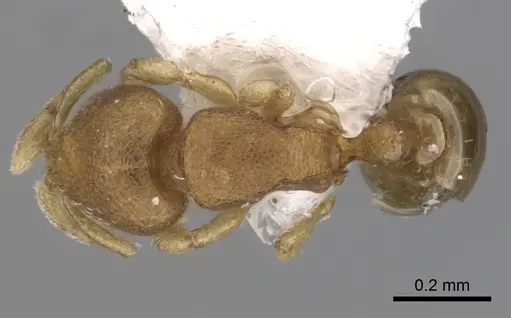
Literature
Loading...Loading products...