

Carebara incerta
- Scientific Name
- Carebara incerta
- Tribe
- Crematogastrini
- Subfamily
- Myrmicinae
- Author
- Santschi, 1919
- Distribution
- Found in 1 countries
Carebara incerta Overview
Carebara incerta is an ant species of the genus Carebara. It is primarily documented in 1 countries , including Zimbabwe. Detailed taxonomic data and occurrence records can be further explored via authoritative databases such as AntWeb or the Global Biodiversity Information Facility (GBIF).
Carebara incerta
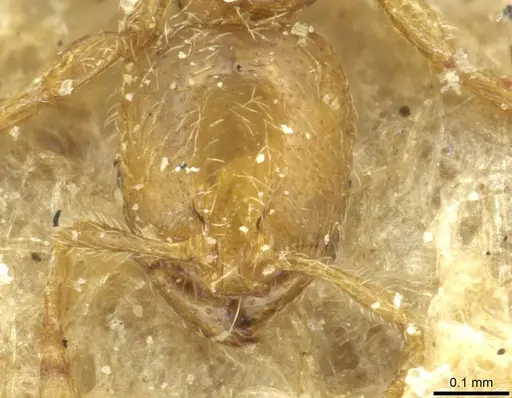
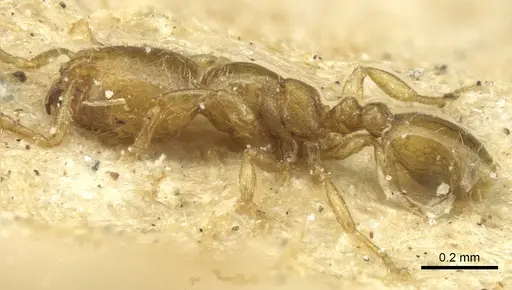
Carebara incerta is one of the most mysterious ants in the hobby, with almost no biological data available beyond museum specimens. First described from Zimbabwe in 1919,this species has also been recorded from Brazil, creating a puzzling distribution across two continents that suggests it may be a widespread tramp species or possibly misidentified in one region [1][2]. Like other Carebara, these are extremely tiny ants. The original description only mentions "minor workers" with no size measurements given, though most Carebara minors measure just 1-2mm [1]. The species has bounced between genera multiple times, originally described as Carebara incerta, moved to Aeromyrma, then back to Oligomyrmex, and finally to Carebara in 2004 [1].
The name "incerta" means uncertain, fitting for a species where even basic facts like colony size, queen appearance, and diet remain unconfirmed. No captive colonies have been documented in antkeeping literature, making this a species for research collections only until basic biology is established. If you encounter this species for sale, treat all care information as experimental guesswork based on related Carebara species.
Quick Summary
- Difficulty: Expert
- Origin & Habitat: Zimbabwe (Bulawayo) and Brazil (Goyaz), an unusual trans-Atlantic distribution that may indicate introduction or taxonomic confusion [1][2]. Likely tropical soil or leaf litter dweller.
- Colony Type: Unknown, likely single-queen based on typical Carebara patterns, but unconfirmed
- Size & Growth:
- Queen: Unknown [1]
- Worker: Unknown, minor workers mentioned in type series, likely 1-2mm based on genus [1]
- Colony: Unknown, possibly small to moderate based on related species
- Growth: Unknown
- Development: Unknown (No development studies exist for this species. Related Carebara species typically develop in 6-10 weeks at tropical temperatures, but this is unconfirmed for C. incerta.)
- Antkeeping:
- Temperature: Likely 24-28°C based on tropical Zimbabwe and Brazilian origins. Start at 25°C and adjust based on activity levels.
- Humidity: Moderate to high, keep nest material damp but not waterlogged, similar to tropical forest floor conditions
- Diapause: Likely unnecessary, tropical species from warm climates typically do not require winter rest
- Nesting: Unknown in nature, likely soil or rotting wood. In captivity, small test tubes or naturalistic setups with fine substrate would be experimental approaches.
- Behavior: Unknown activity patterns. Carebara species are typically slow-moving, cryptic, and non-aggressive toward humans. Extreme escape risk, workers likely small enough to pass through standard mesh barriers.
- Common Issues: complete lack of captive care documentation means any attempt is experimental and likely to fail., minute worker size makes escape prevention nearly impossible with standard equipment., unknown dietary requirements, may require specialized micro-prey like springtails or mites., uncertain founding behavior, queens may fail without specific conditions we cannot predict., possible misidentification in trade, may be confused with other tiny Carebara species.
Taxonomic Confusion and Distribution
Carebara incerta presents a biogeographical puzzle. The type series comes from Bulawayo, Zimbabwe (collected January 1916), placing it firmly in the Afrotropical region [1]. However, Borgmeier's 1927 catalog lists the type locality as Goyaz, Brazil, and the species appears in both Afrotropical and Neotropical regional lists [2][1].
This trans-Atlantic distribution is unusual. It could indicate that C. incerta is a widespread tramp species introduced across continents, or that specimens from one region were misidentified. The species has been moved between four different genus combinations since 1919, from Oligomyrmex to Aeromyrma, back to Oligomyrmex, and finally to Carebara in 2004 [1]. This taxonomic instability reflects the difficulty of identifying these tiny ants. For keepers, this means any purchased "C. incerta" should be verified by an expert, as misidentification is likely common.
Natural History - What We Do Not Know
Honestly, almost nothing is confirmed about how this species lives. The original 1919 description by Santschi provides only a brief worker description with a figure [1]. No nest descriptions, no colony observations, no diet records, and no behavioral studies exist in the accessible literature.
The type specimens were collected at Hillside, Bulawayo, a relatively dry, high-altitude area in Zimbabwe (approximately 1,300m elevation). This suggests the species can handle conditions warmer and potentially drier than true rainforest, but this is speculation based on collection locality alone. The presence of "minor workers" in the type series suggests the species may have the dimorphic worker caste system common in Carebara, with smaller minors and larger majors, but majors have never been documented for this specific species [1].
Experimental Captive Care Guidelines
If you attempt to keep this species, understand that you are conducting original research. Based on general Carebara biology, start with small test tubes or mini-nest setups with extremely fine barriers, these ants are likely small enough to escape through standard 0.5mm mesh.
For founding, assume claustral founding (queen seals herself in and lives on stored fat) as this is typical for Myrmicinae, but be prepared to offer food if she appears stressed or opens the chamber. Keep temperatures around 25°C with minimal fluctuation. Offer a variety of tiny prey, springtails, mites, or fruit fly larvae, as well as sugar water, but do not be surprised if the colony refuses food or fails to thrive.
Humidity should be moderate to high. Use a water test tube or moistened cotton in the founding setup, but avoid flooding. If the species follows Carebara patterns, colonies may remain small (under 100 workers) and grow slowly. [1]
Why This Species Is Not Recommended for Keepers
Until basic biology like colony size, development time, and dietary needs are documented, Carebara incerta should be considered a research specimen only. The combination of extremely small size (likely under 2mm), unknown care requirements, and uncertain taxonomy makes this a poor choice for learning antkeeping.
If you are interested in tiny ants, consider better-documented Carebara species like Carebara diversa (formerly known as Carebara diversa) or Carebara affinis, which have established care guides and confirmed captive breeding. C. incerta should remain in the hands of taxonomists and researchers until someone successfully documents a captive colony through founding to maturity. [1]
Frequently Asked Questions
Where does Carebara incerta come from?
The type specimens come from Bulawayo, Zimbabwe, but the species has also been recorded from Brazil (Goyaz) [1][2]. This unusual distribution across Africa and South America suggests it may be a widespread introduced species, or possibly that specimens from one location were misidentified.
How big are Carebara incerta workers?
Exact measurements are not published in the available literature. The type series mentions only "minor workers" [1]. Based on other Carebara species, minors are likely 1-2mm long, small enough to pass through standard mesh barriers.
Can I keep Carebara incerta in a test tube?
Probably, but with extreme modifications. Standard test tubes may be too large for founding, and the tiny workers (likely 1-2mm) can escape through gaps that larger ants cannot. You would need specialized mini-chambers and extremely fine mesh (under 0.3mm) or complete sealing with ventilation through very fine fabric.
How long until Carebara incerta gets first workers?
Unknown. No development data exists for this species. Related Carebara species typically take 6-10 weeks from egg to worker at 25-28°C, but this is unconfirmed for C. incerta.
Do Carebara incerta need hibernation?
Probably not. The species comes from tropical regions (Zimbabwe and Brazil) where temperatures remain warm year-round [1][2]. They likely remain active throughout the year without a winter rest period.
What do Carebara incerta eat?
Unknown in the wild. Based on related Carebara species, they likely prey on small soil arthropods like springtails, mites, and insect eggs. They may also accept sugar sources like honeydew or sugar water, but this is unconfirmed.
Can I keep multiple Carebara incerta queens together?
Not recommended. Combining unrelated queens has not been documented for this species. While some Carebara are polygyne (multiple queens), others are strictly monogyne (single queen). Without knowing the colony structure, attempting multi-queen setups risks fighting and colony failure.
Are Carebara incerta good for beginners?
No. This species is suitable for expert antkeepers or researchers only. The complete lack of care documentation, extremely small size requiring specialized equipment, and uncertain biology make this a high-risk species that is likely to die in captivity without extensive experience.
How big do Carebara incerta colonies get?
Unknown. No wild colony censuses or captive colony size records exist. Related Carebara species range from small colonies of a few hundred workers to massive supercolonies, so size is impossible to predict.
Do Carebara incerta have major workers (soldiers)?
Possibly. The type series specifically mentions "minor workers, " which implies the existence of major workers in the species [1]. However, majors have never been formally described or photographed for C. incerta, so dimorphism remains unconfirmed.
References

This caresheet is licensed under CC BY-SA 4.0 .
CASENT0913483
View on AntWeb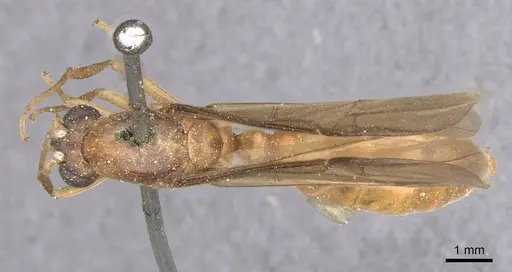
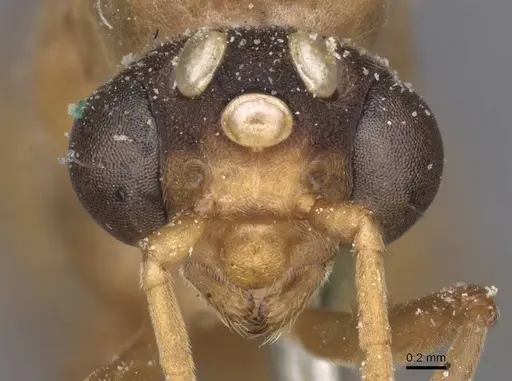
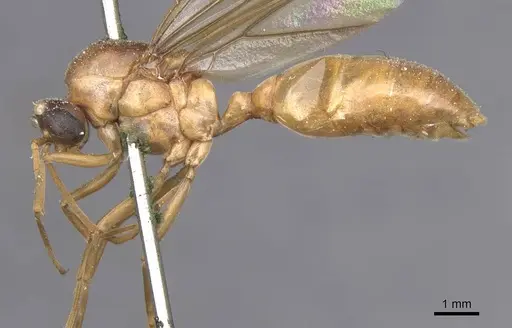
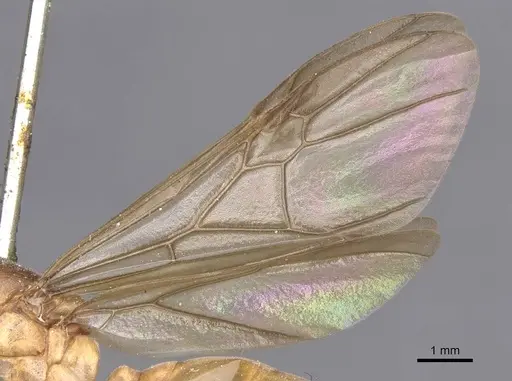
CASENT0913506
View on AntWeb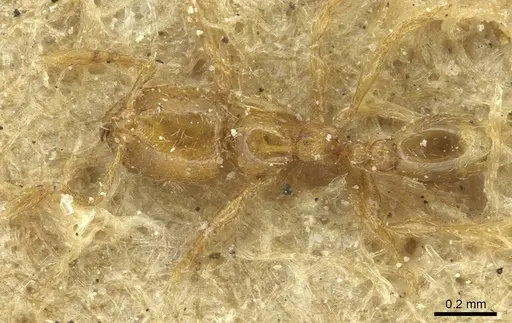
Literature
Loading...Loading products...