

Carebara bruchi
- Scientific Name
- Carebara bruchi
- Tribe
- Crematogastrini
- Subfamily
- Myrmicinae
- Author
- Santschi, 1933
- Distribution
- Found in 1 countries
Carebara bruchi Overview
Carebara bruchi is an ant species of the genus Carebara. It is primarily documented in 1 countries , including Argentina. Detailed taxonomic data and occurrence records can be further explored via authoritative databases such as AntWeb or the Global Biodiversity Information Facility (GBIF).
Carebara bruchi
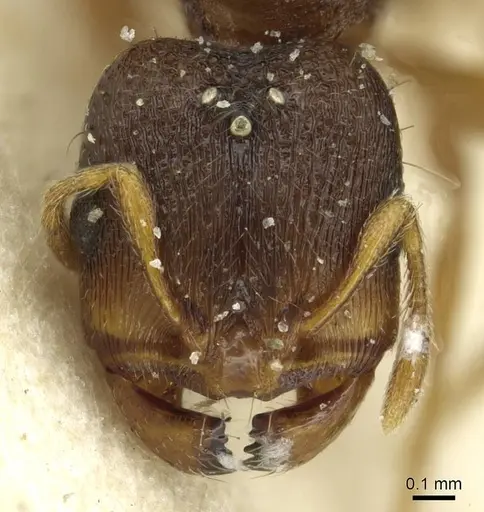
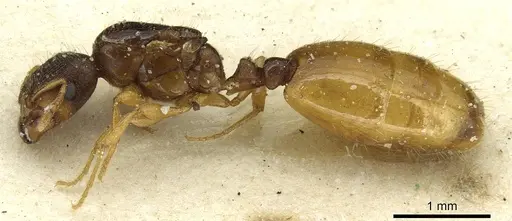
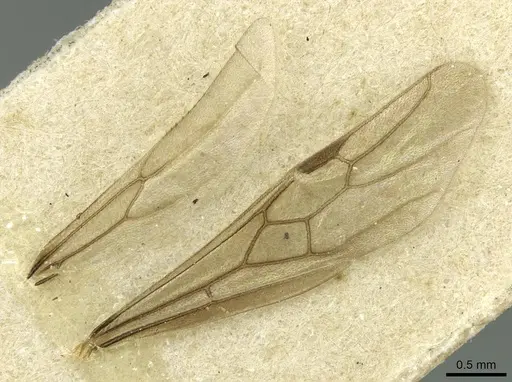
Carebara bruchi is a tiny myrmicine ant species native to Argentina, specifically the Buenos Aires region. This is one of the most poorly documented Carebara species, only the queen has been properly described, with workers and males remaining largely unknown [1][2]. The species was originally described in 1933 and has changed genera multiple times, moving from Oligomyrmex to Erebomyrma before being placed in Carebara [1]. The queen is the only caste with a clear scientific description, and even that is considered inadequate by modern standards [1]. This species is part of the Carebara lignata species complex, but the description is too poor to clearly distinguish it from related species [1].
What makes this species unusual is the documented presence of 'dinergatogynes', essentially wingless ergatoid queens that can serve as replacement reproductives if the primary queen dies [1][2]. This is a rare trait in ants and suggests the colony has backup reproduction strategies. For antkeepers, this is a truly obscure species with virtually no captive husbandry information available, it's really only suitable for advanced keepers interested in working with poorly documented species.
Quick Summary
- Difficulty: Expert
- Origin & Habitat: Native to the Buenos Aires region of Argentina in the Neotropical region [1]. The specific habitat details are unknown, but Carebara species typically nest in soil, rotting wood, or under stones in forested areas.
- Colony Type: Colony structure is poorly documented. The presence of dinergatogynes (ergatoid replacement queens) has been described, suggesting colonies may have multiple reproductive options [1]. Single-queen colonies are likely but not confirmed.
- Size & Growth:
- Queen: Exact measurements unknown, only the queen has been described, and the original description is considered inadequate [1]. Estimated around 4-6mm based on genus typical sizes.
- Worker: Workers have not been clearly described or illustrated [1]. Based on genus Carebara patterns, likely 1-3mm.
- Colony: Unknown, no colony size data exists for this species.
- Growth: Unknown, no development data exists.
- Development: Unconfirmed, no direct observations of colony development exist. Based on typical Carebara patterns and small tropical ants, estimated 4-8 weeks at warm temperatures, but this is a rough guess. (Development timeline is entirely unstudied. Estimates based on genus patterns only.)
- Antkeeping:
- Temperature: Start around 22-26°C and observe colony activity. Argentina has varied climates, but Buenos Aires region is temperate-subtropical, aim for warm room temperature with slight heating if needed. No direct thermal studies exist for this species.
- Humidity: Keep nest substrate moderately moist. Based on typical Carebara microhabitats (soil/rotting wood in forested areas), aim for damp but not waterlogged conditions. Provide a moisture gradient so ants can choose their preferred zone.
- Diapause: Unknown, no seasonal studies exist. Buenos Aires has mild winters, so a light dormancy period may be beneficial, but this is unconfirmed.
- Nesting: No natural nesting data exists. Based on genus Carebara patterns, they likely prefer soil nests or small cavities in rotting wood. For captivity, a test tube setup or small Y-tong/plaster nest with tight chambers scaled to their tiny size would be appropriate.
- Behavior: Behavior is unstudied. Based on genus Carebara patterns, they are likely shy, non-aggressive tiny ants that forage individually or in small groups. Escape prevention is critical due to their very small size, they can squeeze through the tiniest gaps. Workers are likely minor and may not be strongly defensive. No data on sting capability exists, but given their tiny size, any sting would be negligible to humans.
- Common Issues: this species has virtually no documented captive history, expect a steep learning curve with experimental care, workers have never been clearly described, so you may not know if your colony is truly established, very small size means escape prevention must be excellent, use fine mesh and tight-fitting lids, no feeding data exists, start with standard ant foods (sugar water, small insects) and observe what they accept, the queen description is inadequate, so species identification may be uncertain if you find this in the wild
Species Identification and Taxonomic History
Carebara bruchi has a complicated taxonomic history. Originally described as Carebara bruchi by Santschi in 1933 based on a queen collected in Buenos Aires, Argentina [1]. The species was later moved to Erebomyrma by Brandão in 1991,then finally to Carebara by Fernández in 2004 [1]. The original description is considered poor and does not clearly distinguish this species from its neighbors in the Carebara lignata species complex [1]. What makes this species scientifically interesting is Kusnezov's 1951 description of 'dinergatogyne', essentially a wingless ergatoid queen that serves as a replacement reproductive [1]. This is a rare trait in ants and suggests the colony has backup reproduction strategies if the primary queen dies. However, neither males nor workers have been clearly described or illustrated [1]. For antkeepers, this means there's significant uncertainty about what you're actually keeping if you find this species.
Known Distribution and Habitat
This species is only known from the Buenos Aires region of Argentina [1]. That's the extent of confirmed distribution data. Beyond that, we have no specific habitat information, no data on where they nest in nature, what elevation they prefer, or what microhabitats they use [1]. This is one of the least documented Carebara species in existence. For captive care, you'll need to make educated guesses based on what we know about Carebara genus preferences (soil, rotting wood, shaded forest floor microhabitats) and the general Buenos Aires climate (mild temperate to subtropical). The lack of natural history data is honestly the biggest challenge with this species, there's simply nothing documented about how they live in the wild.
Feeding and Diet - An Unknown Frontier
Feeding behavior has never been documented for this species. This is one of the biggest gaps in our knowledge. Based on genus Carebara patterns, these tiny ants are likely omnivorous, probably foraging for small insects, honeydew, and possibly seeds [3]. Many Carebara species are predatory on small invertebrates. For captive care, start with the basics: a constant sugar source (sugar water or honey diluted with water) and small protein sources like fruit flies, pinhead crickets, or other tiny arthropods. Given their likely very small worker size, prey items must be appropriately sized. Observe what they accept and adjust. Without any documented feeding behavior, you're essentially pioneering the husbandry of this species, keep detailed notes of what works and what doesn't.
Housing and Nest Setup
No natural nesting data exists for this species, so we must rely on genus-level inference. Carebara species typically nest in soil, under stones, or in small cavities in rotting wood [3]. For captivity, a test tube setup works well for founding colonies, it's easy to maintain humidity and observe the queen. Once established, a small formicarium with tight chambers scaled to their tiny size would be appropriate. Escape prevention is critical, these ants will be very small and can squeeze through gaps that seem impossible. Use fine mesh barriers and ensure all connections are sealed. Given the complete lack of captive data, start with a simple setup that allows easy observation and adjustment.
Temperature and Seasonal Care
No thermal studies exist for this species. Buenos Aires has a mild temperate to subtropical climate with seasonal variation. Aim for warm room temperature, roughly 22-26°C seems like a reasonable starting point based on the species' origin. Monitor colony activity to find their preferred range. If they cluster near any heat source, increase slightly, if they avoid heated areas, reduce temperature. For diapause/hibernation, we have no data. The mild Buenos Aires winters might suggest they need only a light dormancy period or none at all, but this is entirely speculative. If you notice reduced activity in winter months, a cool but not cold period (15-18°C) for 2-3 months may be appropriate, but this is an educated guess rather than documented requirement.
Frequently Asked Questions
How do I care for Carebara bruchi ants?
This is one of the most poorly documented ant species in existence, there is no established care guide. Based on genus Carebara patterns, provide a test tube for founding, keep temperatures around 22-26°C, maintain moderate humidity, and offer sugar water plus small live prey. Be prepared to experiment and document your observations carefully.
What do Carebara bruchi eat?
Feeding behavior has never been documented. Based on genus patterns, they likely accept sugar sources and small invertebrates. Start with diluted sugar water/honey and tiny prey like fruit flies or springtails. Adjust based on what they actually accept.
How long does it take for Carebara bruchi to produce workers?
Unknown, no development data exists for this species. Based on typical small tropical ants, estimate 4-8 weeks from egg to first worker at warm temperatures, but this is a rough guess.
Are Carebara bruchi good for beginners?
No. This species has virtually no documented captive history, no clear worker description, and no established husbandry protocols. It's only suitable for expert antkeepers interested in working with poorly documented species.
What size is Carebara bruchi?
The queen has been described but exact measurements are not clearly documented. Workers have never been clearly described. Based on genus Carebara patterns, queen is likely 4-6mm and workers likely 1-3mm (very small ants).
Where is Carebara bruchi found?
Only known from the Buenos Aires region of Argentina. That's the entire confirmed distribution.
Do Carebara bruchi ants sting?
Unknown, no data on sting capability exists. Given their very small size, any sting would likely be negligible to humans, but this has not been studied.
How big do Carebara bruchi colonies get?
Unknown, no colony size data exists for this species.
Can I keep multiple Carebara bruchi queens together?
Not documented. The presence of ergatoid (wingless) replacement queens has been described, but combining unrelated queens has not been studied. Not recommended without documentation.
Does Carebara bruchi need hibernation?
Unknown, no seasonal studies exist. Buenos Aires has mild winters, so a light dormancy period may be beneficial but is unconfirmed. Observe your colony's activity patterns.
What is a dinergatogyne?
A dinergatogyne is a wingless ergatoid queen, a true queen born without wings that can serve as a replacement reproductive if the primary queen dies. Kusnezov (1951) described this caste for Carebara bruchi, making it scientifically interesting but not necessarily relevant to captive care.
Why is Carebara bruchi so poorly documented?
Only the queen was ever properly described, and that description is considered inadequate by modern standards. Workers and males have never been clearly described or illustrated. This species has simply not been studied in detail since its original description in 1933.
References

This caresheet is licensed under CC BY-SA 4.0 .
CASENT0913500
View on AntWeb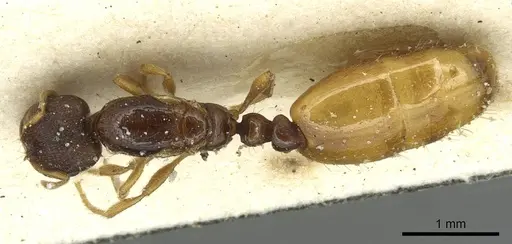
Literature
Loading...Loading products...