

Carebara lignata
- Scientific Name
- Carebara lignata
- Tribe
- Crematogastrini
- Subfamily
- Myrmicinae
- Author
- Westwood, 1840
- Distribution
- Found in 3 countries
Carebara lignata Overview
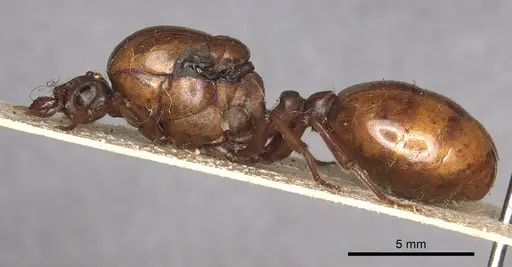
Carebara lignata is an ant species of the genus Carebara. It is primarily documented in 3 countries , including Brazil, China, Indonesia. Detailed taxonomic data and occurrence records can be further explored via authoritative databases such as AntWeb or the Global Biodiversity Information Facility (GBIF).
Carebara lignata
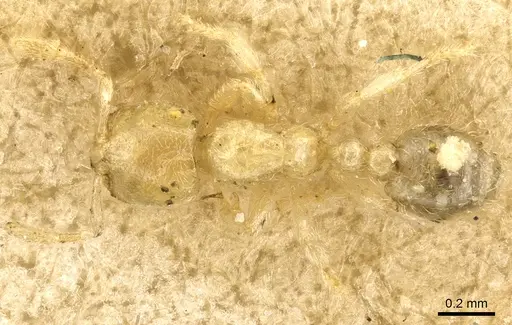
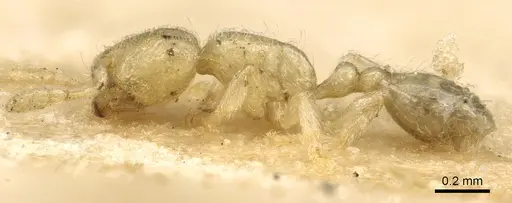
Carebara lignata are tiny pale yellow ants native to tropical Asia. Workers measure just 2-2.5 mm and are completely eyeless, lacking any visible eyes, which means they navigate entirely by touch and chemical trails [1][2]. They live in the leaf litter and soil of forests across India, Southeast Asia, and southern China, and are even collected as food in some regions [3][4]. Their extremely small size, subterranean habits, and eyeless workers make them a challenging specialist species for experienced antkeepers.
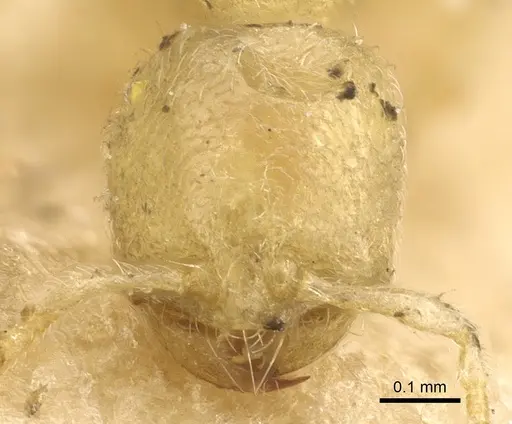
These ants belong to a genus that contains some of the smallest ants in the world [1]. You can identify them by their pale yellow color, brown-tipped mandibles, and distinctive brown rings on their leg joints [5][6]. The workers have reduced antennae with 9 or 10 segments depending on the caste, and a single hair projecting from the center of their upper lip (clypeus) [1][5].
Quick Summary
- Difficulty: Expert
- Origin & Habitat: Tropical and subtropical forests of India, Indonesia, China, Myanmar, Nepal, Thailand, and Vietnam, found in leaf litter and soil at altitudes up to 1000 meters [7][8][2][9][10]
- Colony Type: Unknown, colony structure (single queen vs multiple queens) has not been documented for this species
- Size & Growth:
- Queen: Unknown, not documented in available research
- Worker: 2-2.5 mm [2][5][11]
- Colony: Unknown, not documented in available research
- Growth: Unknown
- Development: Estimated 4-6 weeks at 25-28°C based on similar small tropical Myrmicinae (Development time is unconfirmed for this species. Keep at stable tropical temperatures and observe brood progression.)
- Antkeeping:
- Temperature: 24-28°C, warm tropical conditions. Use a heating cable on one side of the nest to create a gradient
- Humidity: High humidity required. Keep nest substrate damp but not waterlogged, similar to forest floor leaf litter
- Diapause: No, tropical species that remains active year-round
- Nesting: Soil-based or naturalistic setups with leaf litter and small cavities. Avoid tall open spaces, they need tight, secure chambers scaled to their tiny size
- Behavior: Eyeless workers rely entirely on pheromone trails and tactile cues to navigate [1]. They are peaceful and non-aggressive, but their extremely small size makes escape prevention critical. They are subterranean and shy, spending most time in their nest
- Common Issues: workers are completely eyeless and require tactile/chemical navigation, disturbances to scent trails cause confusion, tiny 2mm size means they escape through standard mesh barriers and gaps in test tube cotton, easily desiccated due to small body size, humidity drops are fatal, difficult to observe due to subterranean habits and preference for darkness, prey size must be extremely small, standard fruit flies may be too large for workers to handle
Identification and Eyeless Workers
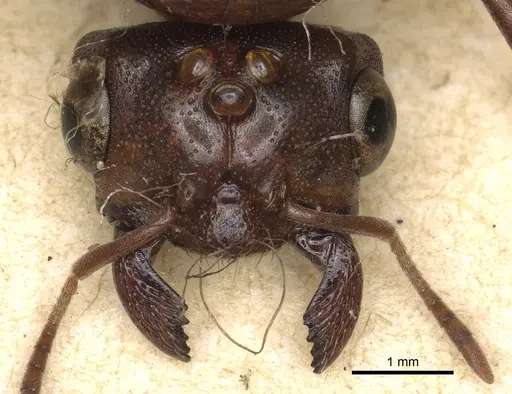
Carebara lignata workers are unmistakable once you know what to look for. They measure only 2-2.5 mm and are pale yellow with brown tips on their mandibles [2][11]. The most striking feature is that minor workers completely lack eyes, they are eyeless and navigate using only their antennae and legs to feel their environment [1].
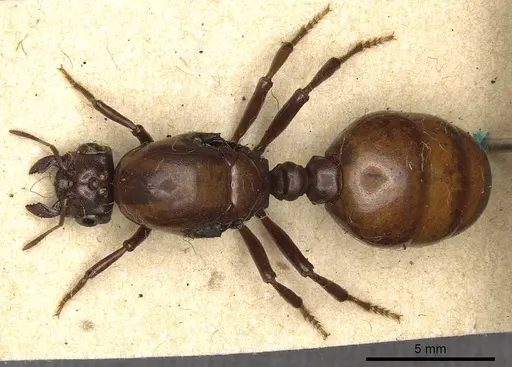
You can also identify them by a single hair sticking up from the center of their clypeus (the plate above their jaws), and brown rings at the joints of their legs [5][6]. Their antennae have only 9 or 10 segments instead of the usual 12 found in many ants, ending in a distinct club [1][5]. Major workers, if present in the colony, may have reduced eyes with just one lens (ommatidium) [1].
Natural Habitat and Distribution
These ants live in the tropical forests of South and Southeast Asia. They have been found in India (Assam, Meghalaya, West Bengal, Karnataka, and Arunachal Pradesh), Indonesia (Java and Sumatra), China (Yunnan), Myanmar, Nepal, Thailand, and Vietnam [7][2][9][10][12].
They inhabit leaf litter and soil in both primary and secondary forests, and can be found at altitudes up to 1000 meters above sea level [8][4]. In Nepal, specimens were collected at 330 meters elevation in May [13]. Their presence in logged and burnt forests suggests they can tolerate some habitat disturbance, though they prefer forest floor environments with decaying organic matter [4].
Escape Prevention and Housing
Because Carebara lignata workers are only 2 mm long and eyeless, they behave differently from typical ants and require extreme escape prevention. They can squeeze through the tiniest gaps in standard test tube cotton and fit through mesh designed for larger species.
You must use Fluon (PTFE) or baby powder barriers on all outworld walls, applied in a thick smooth band at the top. Any ventilation mesh needs to be extremely fine, finer than standard stainless steel mesh used for most ants. In test tubes, use foam plugs or very dense cotton pushed firmly rather than loose cotton balls.
For the nest itself, provide small, tight spaces. Naturalistic setups with soil and leaf litter work well, or plaster nests with very narrow chambers. Avoid tall acrylic nests with open spaces, these ants prefer to feel enclosed and will stay in the darkest, tightest corners. [1][2]
Feeding and Diet
The exact diet of Carebara lignata has not been studied, but based on their genus and habitat, they are likely generalist predators and scavengers that hunt small soil arthropods. In captivity, offer extremely small live prey such as springtails, tiny soil mites, or newly hatched fruit flies. Standard adult fruit flies may be too large for these 2 mm workers to subdue.
Acceptance of sugar water or honey is uncertain for this species. You can offer small drops of sugar water on foil or cotton, but do not rely on liquid sugars as a staple until you confirm your colony accepts them. Protein will likely be the main requirement.
Because they are eyeless, workers hunt by touch and chemical sensing. They may not react to visual movement of prey and instead rely on stumbling upon it or following trails to food sources. [1][2]
Temperature and Humidity
As a tropical species from Indonesia, India, and Southeast Asia, Carebara lignata needs warm, stable temperatures between 24-28°C. Use a heating mat or cable on one side of the nest to create a gradient, but ensure the nest itself does not overheat or dry out.
Humidity must remain high. Keep the nest substrate damp to the touch, similar to a wrung-out sponge. Because of their tiny size, these ants desiccate quickly if humidity drops. However, ensure there is some ventilation to prevent mold growth, stagnant air will kill them just as fast as dry air.
They do not require hibernation or diapause. Being from tropical regions, they remain active year-round and slowing them down with cooling may harm the colony. [7][8]
Colony Founding and Development
Founding behavior for Carebara lignata is unconfirmed, no studies document how queens establish new colonies. Based on patterns in the genus Carebara, queens likely seal themselves in (claustral founding) and raise the first generation of tiny workers using stored body fat, but this is an inference only.
If you acquire a queen, set her up in a standard claustral founding chamber with high humidity and darkness. Monitor whether she forages, if she appears to be searching for food or dies without producing workers, she may be semi-claustral (requiring food during founding), in which case you should offer small amounts of protein.
Development time from egg to worker is unknown for this species. Based on similar small tropical ants, expect roughly 4-6 weeks at 25-28°C, but this is an estimate. The first workers (nanitics) will be extremely small and fragile.
Frequently Asked Questions
Are Carebara lignata workers blind?
Yes, the minor workers are completely eyeless (lack eyes entirely) and navigate using only their antennae and sense of touch [1]. Major workers may have reduced eyes with just one lens.
Can I keep Carebara lignata in a test tube?
Yes, but you need special precautions. Standard cotton plugs are too loose for these 2 mm ants. Use foam plugs or pack cotton extremely tightly, and ensure the test tube has no gaps where they can squeeze out. Place the test tube in a completely sealed container as backup protection.
How long until Carebara lignata gets their first workers?
The exact timeline is unknown as it has not been documented. Based on similar small tropical species, estimate 4-6 weeks at 25-28°C, but this may vary.
Do Carebara lignata need hibernation?
No. They come from tropical regions (Indonesia, India, Southeast Asia) and remain active year-round. Do not cool them for hibernation or diapause.
What do Carebara lignata eat?
Their exact diet is unstudied, but they likely eat tiny soil arthropods. Offer springtails, small mites, or newly hatched fruit flies. Sugar acceptance is uncertain, offer it but do not rely on it.
Are Carebara lignata good for beginners?
No. Their extremely small size (2 mm), eyeless workers, and specific humidity requirements make them suitable only for experienced keepers who can provide excellent escape prevention and micro-scale care.
Can I keep multiple Carebara lignata queens together?
Not recommended. Whether this species accepts multiple queens in one colony is unknown. Combining unrelated queens risks fighting and death.
Do Carebara lignata sting?
They are far too small to sting humans. They are harmless in terms of defense, though they can bite with their mandibles (too small to feel).
Why are my Carebara lignata workers dying outside the nest?
Sick or dying workers leaving the nest is normal ant behavior to protect the colony. However, with eyeless species, ensure your outworld has textured floors or sides they can follow, smooth surfaces may trap them because they cannot see to find their way back.
Are Carebara lignata edible?
Yes, they are documented as an edible insect species in China and have been analyzed for nutritional content as part of studies on edible insects [3].
References

This caresheet is licensed under CC BY-SA 4.0 .
Literature
Loading...Loading products...