

Carebara brevipilosa
- Scientific Name
- Carebara brevipilosa
- Tribe
- Crematogastrini
- Subfamily
- Myrmicinae
- Author
- Fernández, 2004
- Distribution
- Found in 12 countries
Carebara brevipilosa Overview
Carebara brevipilosa is an ant species of the genus Carebara. It is primarily documented in 12 countries , including Argentina, Brazil, Colombia. Detailed taxonomic data and occurrence records can be further explored via authoritative databases such as AntWeb or the Global Biodiversity Information Facility (GBIF).
Carebara brevipilosa
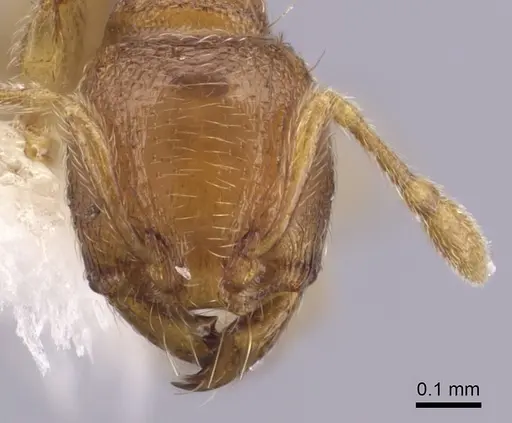
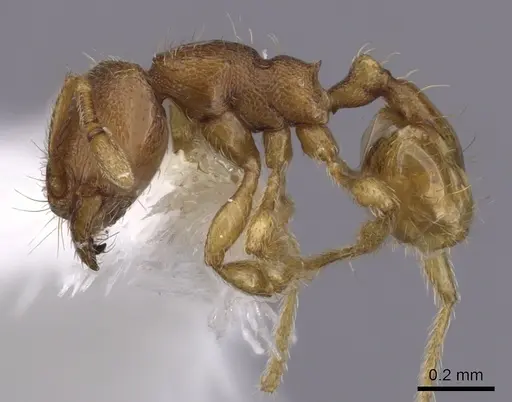
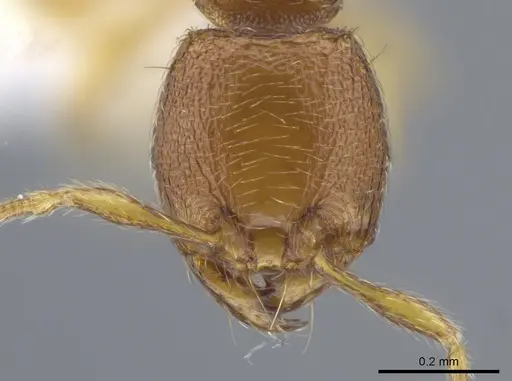
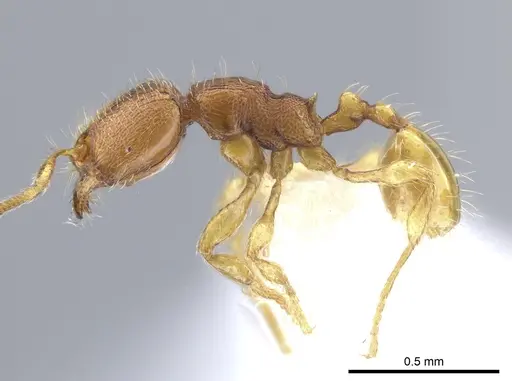
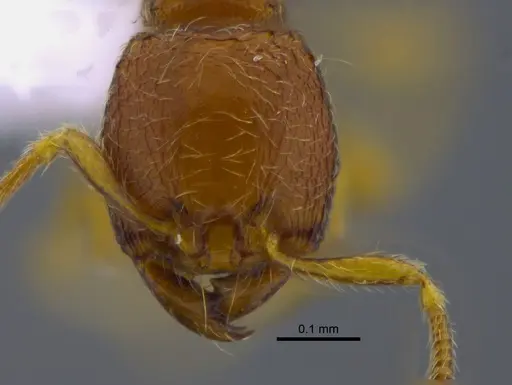
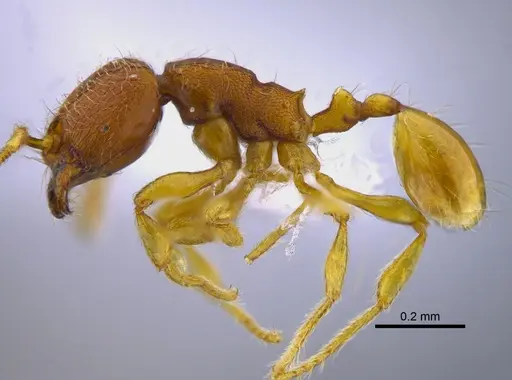
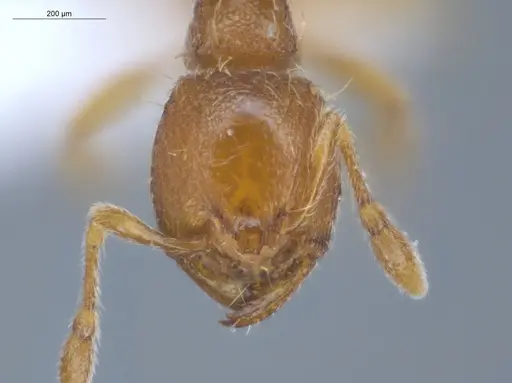
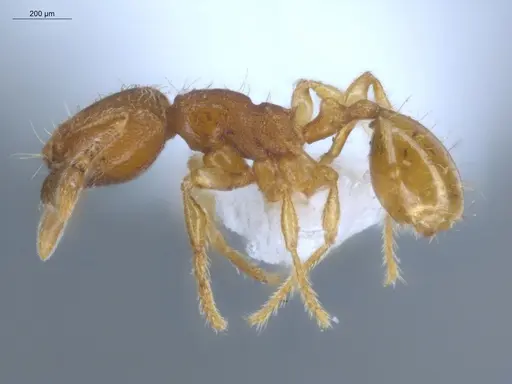
Carebara brevipilosa is a tiny Neotropical ant species belonging to the Myrmicinae subfamily. Minor workers measure just 0.31-0.32mm in head width, making them among the smaller ants you can keep. Their body is dark orange to yellowish-ferruginous in color, with lighter-colored legs and antennae. They have 11-segmented antennae and reduced eyes that consist of only a single lens. This species is part of the Carebara concinna species complex and can be distinguished from the similar C. urichi by the lack of long hairs on the outer edge of the hind tibiae [1].
These ants live in rainforest leaf-litter and soil across a wide geographic range from southern Mexico down through Central America to Brazil and Argentina. They prefer elevations between 50-1050m and are typically collected using Winkler extractors and pitfall traps, which shows they are ground-dwelling ants that live in the forest floor layer [1]. Their tiny size and cryptic lifestyle make them a challenging but rewarding species for experienced antkeepers.
Quick Summary
- Difficulty: Expert
- Origin & Habitat: Neotropical rainforest from southern Mexico to Brazil and Argentina, at elevations of 50-1050m. They live in leaf-litter and soil in tropical forest environments [1][2].
- Colony Type: Colony structure is not well documented in scientific literature. The genus Carebara is known to have various colony structures, but specific data for C. brevipilosa is lacking. Major workers have never been collected or identified for this species [1].
- Size & Growth:
- Queen: Unknown, major workers have not been collected or identified [1]. Queens likely similar to other Carebara species but no specific measurements exist.
- Worker: Minor workers: 0.31-0.32mm head width,0.32-0.33mm head length,0.35-0.37mm Weber's length [1]. Larger workers (possibly media castes): 0.42-0.48mm head width [2].
- Colony: Unknown, no colony size data exists in scientific literature. Based on related Carebara species, colonies likely reach several hundred to a few thousand workers.
- Growth: Unknown, development times have not been studied. Likely relatively fast for tropical Myrmicinae.
- Development: Unknown, no direct development studies exist. Based on typical Carebara patterns and tropical ant development, estimate 4-8 weeks from egg to worker at optimal temperature. This is a rough estimate. (No specific data available. Tropical species typically develop faster than temperate ones.)
- Antkeeping:
- Temperature: Keep at 24-28°C. This species comes from tropical rainforest environments, so warmth is essential. Use a heating cable on one side of the nest to create a gentle gradient, but avoid overheating. Room temperature in the low-to-mid 20s°C may be sufficient if your home is consistently warm.
- Humidity: High humidity is critical. These ants live in rainforest leaf-litter, so aim for 70-85% humidity. Keep the nest substrate consistently moist but not waterlogged. Use a test tube water reservoir or mist regularly, and consider a hydration setup that maintains constant humidity without flooding.
- Diapause: No, this is a tropical species from consistent warm climates. They do not require hibernation or winter dormancy. Keep them warm year-round.
- Nesting: These tiny ants live in leaf-litter and soil, so they need a naturalistic setup with fine substrate. A Y-tong (AAC) nest with tight chambers works well, or a naturalistic setup with moist soil/peat mixture. Because they are so small, avoid large open spaces, they need tight, humid chambers scaled to their tiny size. Test tubes with cotton barriers can work for founding colonies.
- Behavior: Behavior is not well documented, but Carebara species are typically cryptic and ground-dwelling. They likely forage in the leaf-litter layer and are not aggressive. Their tiny size means they are vulnerable and will avoid confrontation. They probably feed on small arthropods, honeydew, and nectar like other Myrmicinae. Escape prevention is critical, their minute size means they can squeeze through incredibly small gaps. Use fine mesh barriers and ensure all connections are sealed tightly.
- Common Issues: escape prevention is critical, they are extremely tiny and can squeeze through gaps invisible to the naked eye, high humidity requirements can lead to mold if ventilation is poor, lack of major workers means colony structure is unusual, may affect how they function, very small size makes feeding challenging, prey must be appropriately sized, limited scientific data means care is largely based on inference from related species
Housing and Nest Setup
Housing Carebara brevipilosa presents unique challenges due to their minute size. These ants are ground-dwelling leaf-litter specialists, so a naturalistic setup with fine substrate works best. A Y-tong (acrylic) nest with narrow chambers scaled to their tiny size is ideal, the chambers should be tight enough that workers can easily walk across them without falling into open spaces. Alternatively, you can use test tubes with a cotton barrier for founding colonies, though the tiny workers may have difficulty navigating standard test tube setups.
The most critical aspect is escape prevention. These ants are among the smallest in the Myrmicinae subfamily, measuring only 0.31mm in head width. They can and will squeeze through gaps that seem impossible. Use fine mesh (at least 0.5mm or finer) on all ventilation holes, seal all connections with fluon or silicone, and check regularly for any potential escape routes. A barrier of fluon around the edges of the outworld is essential.
For the outworld, keep it simple, a small foraging area with a water test tube and small protein foods. The tiny workers cannot carry large prey items, so food must be appropriately sized. [1]
Feeding and Diet
Based on typical Carebara and Myrmicinae feeding behavior, these ants likely have a varied diet including small arthropods, honeydew, and nectar. In captivity, you should focus on appropriately-sized protein sources. Because the workers are so tiny (0.31mm), standard ant feeders like mealworms are far too large. Instead, offer small live prey like fruit flies (Drosophila), springtails, or tiny crickets. You can also try small pieces of insects like crushed fruit flies or bloodworms.
Sugar sources may be accepted, a small drop of diluted honey or sugar water can be offered, though the tiny workers may have difficulty accessing it. A cotton ball soaked in sugar water placed in the outworld can work. Remove any uneaten food promptly to prevent mold, which is especially problematic in the high-humidity setup these ants require.
Feed small amounts of protein 2-3 times per week, and always ensure fresh water is available. The key is appropriately-sized prey, if you can't easily see the food item with your naked eye, it's probably too small for these ants to effectively exploit.
Temperature and Humidity
Carebara brevipilosa comes from tropical rainforest environments in Central and South America, so they need warm, humid conditions year-round. Maintain temperatures in the range of 24-28°C. A heating cable placed on one side of the nest can create a gentle thermal gradient, allowing the ants to regulate their own temperature by moving between warmer and cooler areas. However, be careful not to overheat, temperatures above 32°C can be lethal.
Humidity is perhaps even more critical than temperature. These ants live in rainforest leaf-litter where humidity is consistently high. Aim for 70-85% relative humidity within the nest. This can be achieved by keeping the substrate consistently moist (but not waterlogged) and using a water reservoir. A test tube water setup works well, the cotton allows water to slowly evaporate while maintaining humidity.
However, high humidity creates mold risks. Ensure adequate ventilation while maintaining humidity. Avoid both stagnant air (which promotes mold) and excessive airflow (which dries the nest). A small ventilation hole covered with fine mesh, combined with a moist substrate, usually provides the right balance. [1]
Understanding Their Unique Biology
Carebara brevipilosa has several characteristics that make it unusual among ant species kept in captivity. First, major workers (the larger soldier-like castes) have never been collected or identified for this species [1]. This is unusual, most Carebara species have distinct major workers. The absence means this species may rely entirely on minor workers, which is rare among ants.
Their distribution is extensive, spanning from southern Mexico through Central America to Brazil and Argentina [1][2]. This wide range suggests they are adaptable, but they are always associated with rainforest leaf-litter environments. They have been collected at elevations from 50-1050m, showing they can handle some altitude variation.
The species was only described in 2004 by Fernández, making it a relatively newly described species [2]. This explains why so much about their biology remains unknown. They are part of the Carebara concinna species complex, which contains both Neotropical and Afrotropical species [1].
Their tiny size (minor workers are only about 0.31mm) places them among the smallest ants in the Americas. This has implications for everything from housing to feeding, everything about keeping them must be scaled down.
Challenges and Why This Species Is Expert-Level
Carebara brevipilosa is not a species for beginners. Several factors make it one of the more challenging ants to keep. First, their extreme tiny size means standard antkeeping equipment and techniques simply don't work. You need fine mesh, tight seals, and appropriately-sized food items that most beginners won't have on hand.
Second, the lack of scientific data on their care means you are largely working from inference. We don't know their exact colony structure, founding behavior, development timeline, or specific dietary needs. Keeping this species requires patience, experimentation, and the ability to adapt when standard approaches don't work.
Third, their high humidity requirements create ongoing challenges with mold control. Balancing humidity with ventilation requires ongoing attention. Fourth, sourcing them is difficult, they are not commonly available in the antkeeping hobby and are typically only collected by researchers in their native range.
If you decide to keep this species, approach it as a learning experience. Start with a small colony, document your observations, and be prepared to adjust your setup based on how the colony responds. The reward is keeping a species that very few people have successfully maintained in captivity.
Frequently Asked Questions
How big do Carebara brevipilosa ants get?
Minor workers are extremely tiny, measuring only 0.31-0.32mm in head width and about 0.35-0.37mm in body length [1]. Some larger workers (possibly media castes) reach 0.42-0.48mm head width [2]. Major workers have never been collected or identified for this species.
Where does Carebara brevipilosa live in the wild?
This is a Neotropical species found from southern Mexico through Central America to Brazil and Argentina. They live in rainforest leaf-litter and soil at elevations between 50-1050m [1].
Can I keep Carebara brevipilosa in a test tube?
You can keep a founding colony in a test tube, but their tiny size presents challenges. Standard test tubes may have chambers too large, and the cotton barrier may be difficult for them to navigate. A Y-tong nest with tight chambers scaled to their size is often better. Regardless of nest type, escape prevention is critical, they can squeeze through the tiniest gaps.
What do Carebara brevipilosa eat?
Based on typical Carebara behavior, they likely eat small arthropods and honeydew. In captivity, offer small live prey like fruit flies, springtails, or tiny crickets. Very small pieces of insects can also work. Sugar sources like diluted honey may be accepted. The key is appropriately-sized food, standard ant feeders are too large.
Do Carebara brevipilosa ants sting?
As a Myrmicinae ant, they have a stinger, but their tiny size means they are extremely unlikely to penetrate human skin. They are not aggressive and will flee from confrontation rather than fight.
How long does it take for Carebara brevipilosa to develop from egg to worker?
This has not been studied specifically. Based on typical Carebara patterns and tropical ant development, estimate 4-8 weeks from egg to worker at optimal temperature (24-28°C). This is a rough estimate with low confidence.
Do Carebara brevipilosa need hibernation?
No, this is a tropical species from consistent warm climates. They do not require hibernation or winter dormancy. Keep them warm year-round at 24-28°C.
Are Carebara brevipilosa good for beginners?
No, this is an expert-level species. Their extreme tiny size, high humidity requirements, lack of scientific data on care, and critical escape prevention needs make them unsuitable for beginners. Start with larger, more documented species like Lasius, Camponotus, or Tetramorium before attempting this species.
Why are major workers unknown for Carebara brevipilosa?
Major workers have simply never been collected or identified in any study of this species [1]. This is unusual but does occur in some ant species. The colony may function with only minor workers, or major workers may exist but have not yet been found in sampling. This is one of many aspects of this species that remains poorly understood.
How do I prevent Carebara brevipilosa from escaping?
Escape prevention is absolutely critical. Use fine mesh (0.5mm or finer) on all ventilation, seal all connections with fluon or silicone, and apply a fluon barrier around the outworld edges. Check regularly for any gaps. Their tiny size means they can escape through gaps invisible to the naked eye. There is no such thing as too much escape prevention with this species.
References

This caresheet is licensed under CC BY-SA 4.0 .
CASENT0609948
View on AntWeb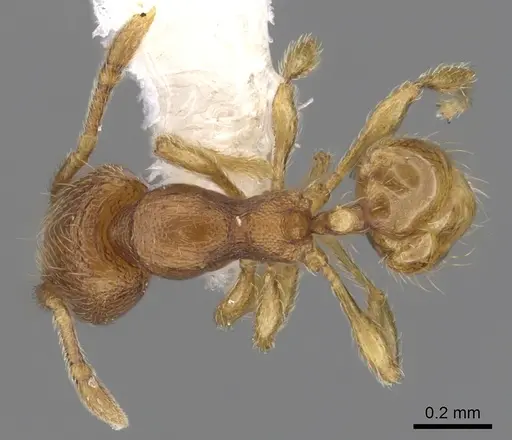
CASENT0636881
View on AntWeb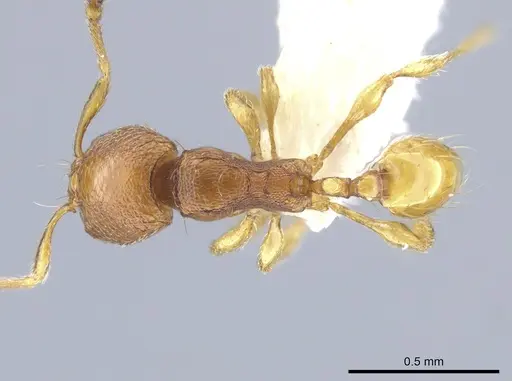
CASENT0643403
View on AntWeb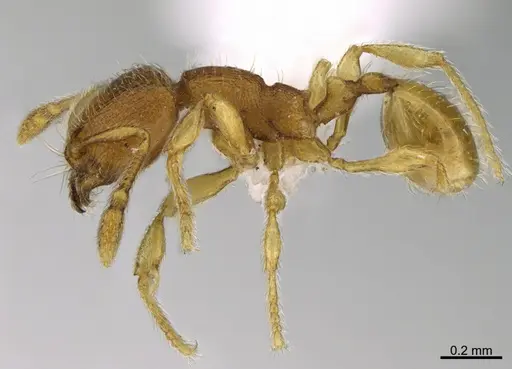
CBUMAGENT41900
View on AntWeb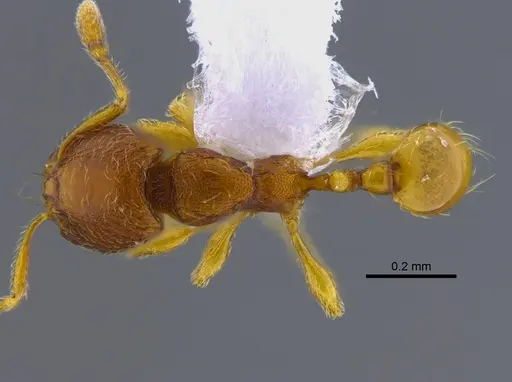
ECOFOG-IT14-0553-19
View on AntWeb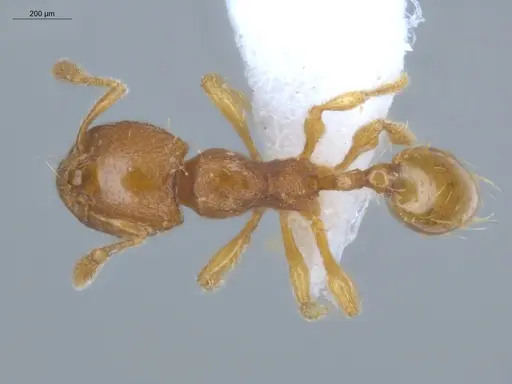
Literature
Loading...Loading products...