

Carebara bicarinata
- Scientific Name
- Carebara bicarinata
- Tribe
- Crematogastrini
- Subfamily
- Myrmicinae
- Author
- Santschi, 1912
- Distribution
- Found in 1 countries
Carebara bicarinata Overview
Carebara bicarinata is an ant species of the genus Carebara. It is primarily documented in 1 countries , including French Guiana. Detailed taxonomic data and occurrence records can be further explored via authoritative databases such as AntWeb or the Global Biodiversity Information Facility (GBIF).
Carebara bicarinata
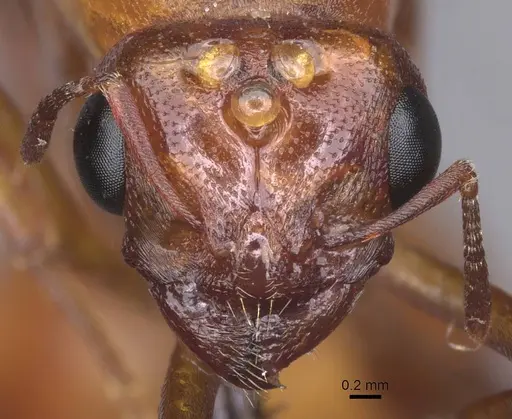
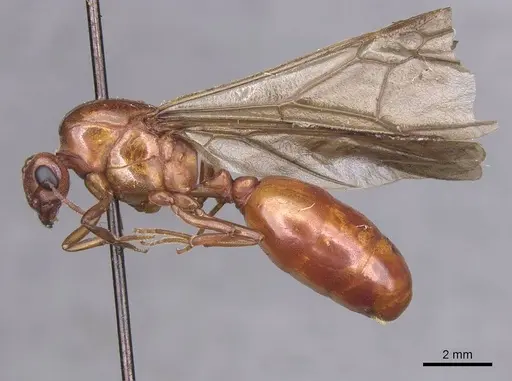
Carebara bicarinata is a tiny Neotropical ant species belonging to the Carebara lignata species complex. This species is known only from female (queen) and male specimens, workers have never been described, which is unusual for ant taxonomy. Queens are relatively small and were originally described from French Guiana, with additional records from Guyana and Brazil. As a member of the Carebara genus, these ants are miniature in size, typically measuring just a few millimeters. The genus Carebara contains some of the world's smallest ants, often called 'pygmy ants' or 'minute ants'. This species remains poorly documented in scientific literature, with much of its biology unknown [1][2].
The main challenge with Carebara bicarinata for antkeepers is the lack of captive breeding history. Unlike more commonly kept ant species, this species has never been documented in the antkeeping hobby, and we have almost no information about its queen size, colony size, or specific care requirements. What we know comes from a handful of scientific papers describing the sexual forms (queens and males) collected in the early 1900s [1].
Quick Summary
- Difficulty: Expert
- Origin & Habitat: Neotropical region, French Guiana, Guyana, and possibly Brazil. The exact habitat type is unconfirmed, but Carebara species typically nest in soil, under stones, or in rotting wood in forested areas [1][2].
- Colony Type: Unknown, colony structure has not been documented. Many Carebara species are polygyne (multiple queens), but this has not been confirmed for C. bicarinata. Workers have never been described, so colony behavior is entirely unknown.
- Size & Growth:
- Queen: Estimated 4-6mm based on genus patterns, actual measurements unavailable in scientific literature [1].
- Worker: Unknown, workers have never been described for this species.
- Colony: Unknown, no colony data exists.
- Growth: Unknown, no development data exists.
- Development: Unknown, no direct measurements or estimates available. (This species has never been documented in captivity, so no development timeline exists. Related Carebara species typically develop from egg to worker in 4-8 weeks under warm tropical conditions.)
- Antkeeping:
- Temperature: Likely 24-28°C based on Neotropical distribution and typical Carebara requirements. Provide a gentle temperature gradient so ants can self-regulate.
- Humidity: Likely requires moderate to high humidity (60-80%) typical of tropical forest floor species. Keep substrate consistently moist but not waterlogged.
- Diapause: Unlikely, being a tropical species, they probably do not require a winter rest period. However, this has not been studied.
- Nesting: Likely prefers small chambers in soil or rotting wood, typical of Carebara nesting habits. A small test tube setup or mini Y-tong nest would be appropriate if colonies are ever established.
- Behavior: Completely unstudied in captivity. In the wild, Carebara species are typically secretive, nesting in concealed locations. Many Carebara species are predatory on small arthropods or scavengers. The escape risk cannot be assessed without worker descriptions, but given the genus includes some of the world's smallest ants, excellent escape prevention would be critical.
- Common Issues: this species has never been documented in the antkeeping hobby, no care protocols exist, no workers have ever been described, making identification and captive maintenance extremely difficult, obtaining a colony would require finding a wild nest, which has rarely been documented, tropical species may be sensitive to temperature drops below 20°C, without established protocols, keeping this species alive would require significant experimentation
Species Identification and Taxonomic History
Carebara bicarinata was first described by Santschi in 1912 based on specimens collected in French Guiana. The original description included only queens and males, workers were never documented. This is a significant gap in our knowledge, as ant species are typically described from worker castes. Wheeler (1922) provided additional notes on the female and male forms and recorded the species from both French Guiana and Brazil. However, Wheeler noted that the males were variable, and Santschi was uncertain whether they truly belonged to the same species as the females. This taxonomic confusion is common with older ant descriptions that focused on sexual forms without associating them with workers. The species is considered part of the Carebara lignata species complex, a group of closely related Neotropical species [1][2].
Distribution and Habitat
Carebara bicarinata is known from the northern Neotropical region, specifically French Guiana and Guyana, with an unconfirmed record from Brazil. The exact habitat preferences are undocumented, but the genus Carebara typically inhabits tropical and subtropical forests. Most Carebara species nest in soil, under stones, or in decaying wood on the forest floor. They are often found in moist, shaded microhabitats. The species has been collected at ground level, but specific elevation and vegetation preferences are unknown. For antkeepers, this suggests a need for humid, forest-floor-type conditions if the species is ever kept [1][2].
Challenges for Antkeepers
Carebara bicarinata presents extreme challenges for antkeeping that cannot be overstated. This species has never been documented in captivity, meaning no established care protocols exist. More significantly, workers have never been scientifically described, only queens and males are known from museum specimens. This creates a fundamental problem: even if you found a wild colony, you could not positively identify it as C. bicarinata. The species is essentially known only from a handful of museum specimens collected decades ago. There is no information on what they eat, how they found colonies, what their workers look like, or how many workers a colony contains. Any attempt to keep this species would be purely experimental and would require significant resources to potentially succeed. For these reasons, this species is not recommended for any antkeeper except the most advanced and research-oriented [1][2].
Related Species and Care Speculation
While C. bicarinata itself has no captive history, looking at the Carebara genus provides some general guidance. The genus contains some of the world's smallest ants, often just 1-3mm for workers. Many Carebara species are predatory or scavengers, feeding on small arthropods, honeydew, and carrion. Colony sizes vary widely, some species have just a few dozen workers while others can reach several hundred. Many Carebara species are polygynous (multiple queens), but this varies by species. Tropical Carebara species typically do not hibernate and require warm, humid conditions year-round. If you are interested in small Myrmicinae ants with similar requirements, consider more commonly kept species like Strumigenys (pygmy trap-jaw ants), some Solenopsis species, or other well-documented Carebara. Starting with a species that has established captive protocols will give you the experience needed to attempt more obscure species in the future [3].
Frequently Asked Questions
Can I keep Carebara bicarinata as a pet ant?
This species is not recommended for antkeeping. It has never been documented in captivity, workers have never been described, and no care protocols exist. The species is essentially known only from a handful of museum specimens collected in the early 1900s. There are no established ways to obtain or keep this species successfully.
Where can I get Carebara bicarinata?
This species is not available through any commercial ant vendors. It has only been recorded from French Guiana, Guyana, and possibly Brazil, and workers have never been scientifically described. Even if you traveled to these locations, finding and identifying a colony would be extremely difficult given how little is known about this species.
What do Carebara bicarinata workers look like?
This is unknown, workers have never been described in scientific literature. The species is only known from queens and males described in 1912 and 1922. Without worker descriptions, we cannot identify this species if we found it in the wild, nor can we provide size, color, or morphological details.
How long do Carebara bicarinata queens live?
This is unconfirmed. No captive colonies have ever been documented, so lifespan data does not exist. Related Carebara species may live for several years, but this is purely speculative for C. bicarinata.
Are Carebara bicarinata ants dangerous?
Unknown, we have no information about their sting or bite capabilities. Given that this is a very small ant species (typical of the genus), any sting would likely be minimal even if present. However, without worker descriptions, we cannot confirm whether they have functional stings.
What is the best nest type for Carebara bicarinata?
This is unconfirmed. If the species were ever kept, a small test tube setup or mini Y-tong nest with tight chambers would likely be appropriate, given that Carebara species are typically very small and prefer concealed nesting sites. However, no one has ever documented keeping this species.
Do Carebara bicarinata need hibernation?
Unlikely, being a tropical Neotropical species, they probably do not require a winter rest period. However, this has not been studied, and diapause requirements are completely unconfirmed for this species.
Why is Carebara bicarinata so poorly documented?
This species was described in 1912 from only queens and males, without associated workers. This was common in early ant taxonomy but creates problems for later researchers. The original collector (E. Le Moult) did not document worker associations, and subsequent researchers have not collected nest series that would allow workers to be matched with the described sexual forms. The species has simply never been a focus of research attention.
Are there easier Carebara species to keep?
Yes, several Carebara species are better documented and available. However, most Carebara species are still considered advanced due to their small size and specific requirements. If you're interested in small ants, consider starting with more commonly kept genera like Strumigenys, Solenopsis, or Messor, which have established captive protocols and are readily available.
Can I help document this species?
Potentially, but it would require significant effort. If you have access to French Guiana, Guyana, or surrounding areas, you could attempt to locate and collect colonies. However, you would need expertise in ant identification, and without workers to describe, confirming any find as C. bicarinata would be extremely difficult. Contributing to ant biodiversity surveys in the region would be the most scientific approach to learning more about this and related species.
References

This caresheet is licensed under CC BY-SA 4.0 .
CASENT0913481
View on AntWeb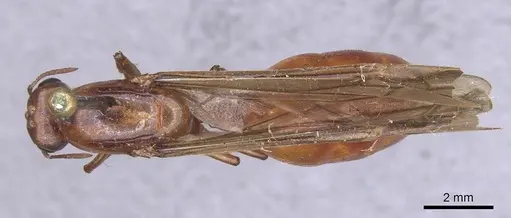
Literature
Loading...Loading products...