

Camponotus yamaokai
- Scientific Name
- Camponotus yamaokai
- Subgenus
- Myrmamblys
- Tribe
- Camponotini
- Subfamily
- Formicinae
- Author
- Terayama & Satoh, 1990
- Distribution
- Found in 2 countries
Camponotus yamaokai Overview
Camponotus yamaokai is an ant species of the genus Camponotus. It is primarily documented in 2 countries , including Japan, Korea, Republic of. Detailed taxonomic data and occurrence records can be further explored via authoritative databases such as AntWeb or the Global Biodiversity Information Facility (GBIF).
Camponotus yamaokai
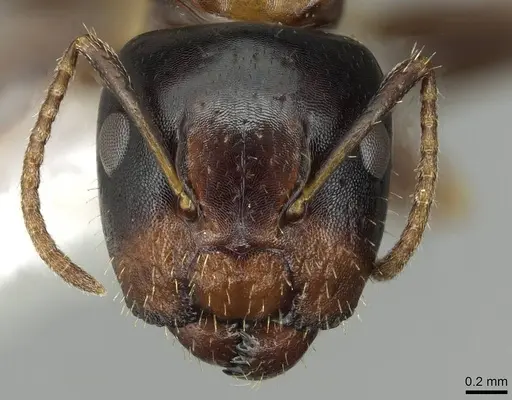
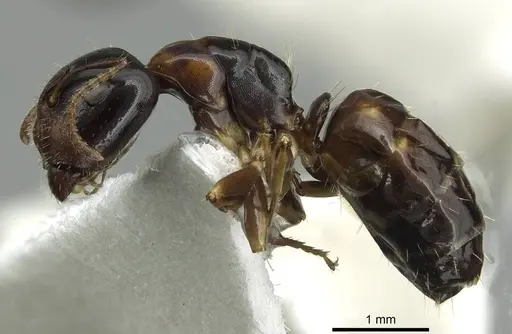
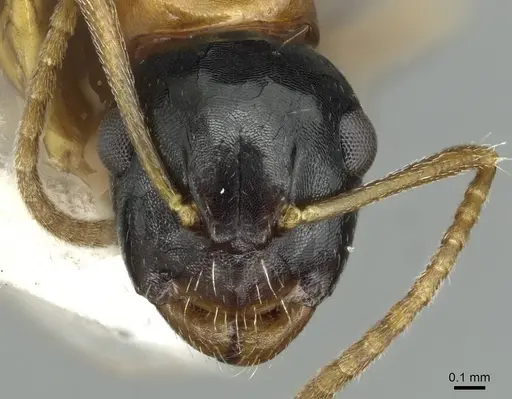
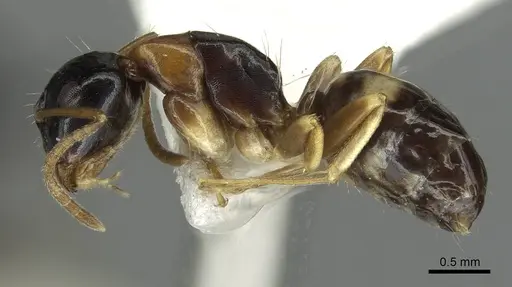
Camponotus yamaokai is a small carpenter ant native to Japan and southern Korea. Workers measure 3.5-4.5mm and have a distinctive appearance: their body is mostly black with a reddish-brown pronotum and brown legs. Their most notable feature is a pair of whitish spots on each of the first two abdominal segments, though these vary in size between individuals. They closely resemble the related species Camponotus nawai, but can be distinguished by their more prominent eyes and relatively smaller head [1]. This species is arboreal, nesting in dead twigs on trees and occasionally in bamboo cavities [1][2].
What makes C. yamaokai particularly interesting is its flexible social structure. It is facultatively polygynous, meaning colonies can have either one queen or multiple queens working together. Some populations form supercolonies where multiple nests behave as a single colony with no aggression between them, while others maintain separate territories. Queens overwinter inside the nest and new queens depart to start their own colonies during May [1][3].
Quick Summary
- Difficulty: Easy
- Origin & Habitat: Japan (Honshu, Shikoku, Kyushu, Yaku Island) and southern Korea. Found in evergreen broad-leaved forests and deciduous broad-leaved thickets. Nests in dead twigs on trees and bamboo cavities [1][4][3].
- Colony Type: Facultatively polygynous, colonies can have a single queen or multiple queens (documented with 1-19 queens per nest). Some populations form supercolonies where multiple nests cooperate. High intranest relatedness (over 0.75) due to inbreeding and queen adoption [3].
- Colony: Optionally polygyne, Supercolonial
- Founding: Claustral
- Size & Growth:
- Queen: Estimated 6-8mm based on genus typical size
- Worker: 3.5-4.5mm [1]
- Colony: Colonies can reach nearly 1000 workers, documented up to 983 minor workers and 173 major workers in a single nest [3]
- Growth: Moderate
- Development: Estimated 6-10 weeks at optimal temperature based on typical Camponotus development (Development time inferred from genus patterns, direct measurements not available for this species)
- Antkeeping:
- Temperature: Keep at 20-26°C. They tolerate a range from roughly 18°C to around 28°C. Room temperature (around 22°C) works well for this species.
- Humidity: Standard room humidity is acceptable. As an arboreal species nesting in twigs, they prefer slightly drier conditions than ground-nesting ants. Avoid excessive moisture in the nest.
- Diapause: Yes, this is a temperate species requiring winter hibernation. Queens overwinter in nests in the wild [1]. Keep at reduced temperature (around 10-15°C) for 2-3 months during winter.
- Nesting: Arboreal nesting, in captivity they do well in Y-tong (AAC) nests, plaster nests, or test tube setups. Provide narrow chambers scaled to their small size. They accept both horizontal and vertical nest orientations.
- Behavior: Generally calm and non-aggressive for a carpenter ant. They are not particularly defensive and rarely sting. Colonies show low aggression toward each other, especially within supercolonial populations [3]. They are moderate foragers, actively searching for food but not overly aggressive in doing so. Workers are small (3.5-4.5mm) so escape prevention should be decent, though always use proper barriers with any ant species. They are primarily nocturnal or crepuscular in their foraging activity.
- Common Issues: colonies may fail if kept too warm during winter, they genuinely need a hibernation period, multi-queen colonies can be sensitive to disturbance during founding, handle gently when combining queens, small size means they can escape through standard barrier gaps if not careful, supercolonial colonies may be less aggressive toward foreign workers, this is normal, not an indication of illness, growth is moderate, beginners may lose patience and overfeed, which causes mold problems
Housing and Nest Setup
Camponotus yamaokai is an arboreal species that naturally nests in dead twigs and bamboo cavities. In captivity, they adapt well to various nest types. Y-tong (AAC) nests work excellently because they provide the narrow chambers this species prefers. Plaster nests or acrylic nests with appropriately sized chambers are also suitable. Test tube setups can work for founding colonies but may need upgrading as the colony grows. The key is providing chambers scaled to their small 3.5-4.5mm worker size, avoid overly large, open spaces. They do well with both horizontal and vertical nest orientations. Place the nest in a quiet area away from direct sunlight and vibrations. [1][3]
Feeding and Diet
Like other Camponotus species, C. yamaokai accepts a varied diet. Offer sugar sources such as sugar water, honey, or maple syrup, these ants will readily consume sweet liquids. For protein, provide small insects like fruit flies, small crickets, mealworms, or frozen insects. They are not specialized predators, so standard ant feeding protocols work well. Feed protein 2-3 times per week depending on colony size, and keep sugar water available at all times. Remove uneaten prey after 24-48 hours to prevent mold. As a small species, portion sizes should be appropriately scaled, tiny insect pieces are better than large prey items.
Temperature and Seasonal Care
Maintain temperatures between 20-26°C for optimal colony development. Room temperature around 22°C is ideal for this species. They can tolerate brief periods outside this range but prolonged exposure to temperatures above 30°C or below 15°C should be avoided. During winter, this temperate species requires a hibernation period. Reduce temperatures to 10-15°C for 2-3 months (typically November through February in the Northern Hemisphere). This mimics their natural cycle where queens overwinter in the nest [1]. Do not skip hibernation, it is important for colony health and reproductive success. Gradual temperature changes are better than sudden shifts.
Colony Structure and Multi-Queen Care
One of the fascinating aspects of C. yamaokai is its flexible social structure. Colonies can be either monogyne (single queen) or polygynous (multiple queens). In the wild, colonies have been documented with anywhere from 1 to 19 queens [3]. Some populations form supercolonies where multiple nests share workers and queens without aggression between them. This is due to extremely high genetic relatedness within colonies (over 0.75) caused by inbreeding and adoption of new queens by existing colonies [3]. If you keep multiple queens together, they typically coexist peacefully, but avoid disturbing the colony during the founding phase. Single-queen colonies are easier to manage and recommended for beginners.
Behavior and Handling
C. yamaokai is a relatively calm species that rarely shows aggression toward keepers. They are not known for stinging and pose no danger to humans. Workers are small and primarily nocturnal or crepuscular in their foraging activity. Colonies within the same population often show low aggression toward each other, especially in supercolonial populations, this is normal behavior and not a sign of illness [3]. They are moderate foragers and will readily explore their outworld for food. While not aggressive, they are active and interesting to watch. Escape prevention should be taken seriously despite their small size, use standard barriers and ensure any connections are secure.
Frequently Asked Questions
Can I keep Camponotus yamaokai in a test tube?
Yes, test tubes work well for founding colonies. Use a small test tube with a cotton-wrapped water reservoir. As the colony grows to around 50+ workers, consider upgrading to a Y-tong or plaster nest with appropriately sized chambers.
How long until first workers appear?
Based on typical Camponotus development, expect first workers (nanitics) around 6-10 weeks after the queen lays eggs. This timeline depends on temperature, warmer temperatures within the safe range speed up development slightly.
Do Camponotus yamaokai need hibernation?
Yes, this is a temperate species requiring winter hibernation. Reduce temperatures to 10-15°C for 2-3 months during winter. This is essential for colony health and mimics their natural cycle where queens overwinter in the nest.
Can I keep multiple queens together?
Yes, this species is facultatively polygynous, meaning multiple queens can coexist in one colony. Queens typically live peacefully together. However, single-queen colonies are easier to manage and recommended for beginners.
How big do colonies get?
Colonies can reach nearly 1000 workers. The largest documented nests had over 983 minor workers and 173 major workers [3]. Most captive colonies will likely reach a few hundred workers.
What do Camponotus yamaokai eat?
They accept sugar sources (honey, sugar water, maple syrup) and protein (small insects like fruit flies, mealworms, crickets). Feed protein 2-3 times per week and keep sugar water available constantly.
Are Camponotus yamaokai good for beginners?
Yes, this is an easy species suitable for beginners. They are relatively calm, don't require specialized care, and tolerate a range of conditions. Their small size and arboreal nesting make them interesting to observe.
What temperature do they need?
Keep them at 20-26°C, with 22°C being ideal. Room temperature is usually suitable. Avoid temperatures above 30°C or below 15°C for extended periods.
When should I move them to a formicarium?
Move to a larger nest when the colony reaches around 50-100 workers and the test tube becomes crowded. A Y-tong or plaster nest with small chambers works well for this small species.
References

This caresheet is licensed under CC BY-SA 4.0 .
CASENT0913701
View on AntWeb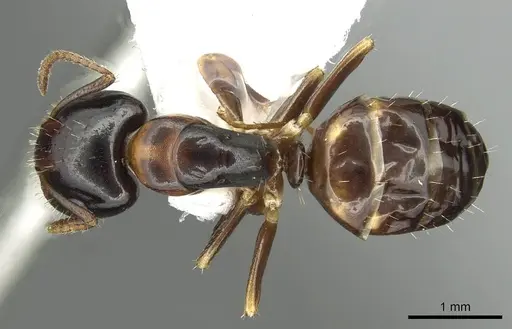
CASENT0913702
View on AntWeb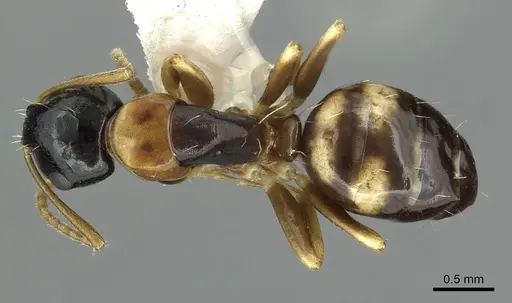
Literature
Loading...Loading products...