

Camponotus versicolor
- Scientific Name
- Camponotus versicolor
- Subgenus
- Myrmosaulus
- Tribe
- Camponotini
- Subfamily
- Formicinae
- Author
- Clark, 1930
- Distribution
- Found in 1 countries
Camponotus versicolor Overview
Camponotus versicolor is an ant species of the genus Camponotus. It is primarily documented in 1 countries , including Australia. Detailed taxonomic data and occurrence records can be further explored via authoritative databases such as AntWeb or the Global Biodiversity Information Facility (GBIF).
Camponotus versicolor
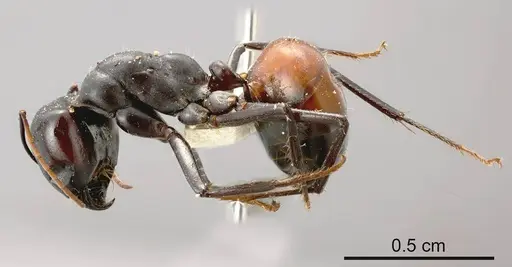
Camponotus versicolor is a striking ant species native to southern Western Australia. Workers are polymorphic with majors reaching 14.8-16mm and minors at 8.5-10mm [1]. The species has a distinctive appearance: the mesosoma is black while the first two gastral tergites are a vivid red, creating a bold two-tone pattern that helps separate it from the similar Camponotus aurocinctus [1]. This is an uncommon species with a limited distribution across a narrow band of southern WA, found in drier regions [2]. Essentially no published research exists on their biology, so all captive care must be inferred from genus patterns and what we know about their natural range.
Quick Summary
- Difficulty: Medium
- Origin & Habitat: Southern Western Australia, specifically the Emu Rocks area near Ongerup. They inhabit drier regions of the southern and south-eastern parts of the state [2]. The climate is Mediterranean with hot dry summers and mild wet winters.
- Colony Type: Likely monogyne (single queen) based on typical Camponotus patterns. Colony size is unknown but likely reaches several hundred workers given the large worker size.
- Colony: Monogyne
- Founding: Claustral
- Size & Growth:
- Queen: Unconfirmed, likely 16-18mm based on genus patterns for large Camponotus species
- Worker: Minors: 8.5-10mm, Majors: 14.8-16mm [1]
- Colony: Unknown, estimated several hundred workers based on worker size
- Growth: Moderate, inferred from genus patterns
- Development: Estimated 6-10 weeks at optimal temperature based on typical Camponotus development (Large Camponotus species typically take longer than smaller ants. First workers (nanitics) will be smaller than normal workers.)
- Antkeeping:
- Temperature: Keep around 22-26°C during active season. Southern WA experiences mild to warm temperatures, so room temperature is likely suitable with a slight boost if needed.
- Humidity: Low to moderate. Their native habitat in southern WA is relatively dry. Provide a water tube but avoid overly damp conditions.
- Diapause: Likely required. Southern WA experiences winter rainfall and cooler temperatures. Provide a cool period around 10-15°C for 2-3 months during winter.
- Nesting: Y-tong or acrylic nests work well. This is a large species that needs appropriately sized chambers. Provide a dry nest area with access to a water tube.
- Behavior: Workers are relatively slow-moving and not aggressive. Major workers are present but foraging is primarily done by minor workers. They are not known to be escape artists but standard escape prevention is still recommended. They likely forage at night during warmer months.
- Common Issues: no published biology means care is based on inference, monitor colony response and adjust, slow growth compared to smaller species may frustrate beginners, hibernation requirements are not documented, assume similar to other southern WA Camponotus, limited availability as a species, wild colonies are protected by their restricted range
Appearance and Identification
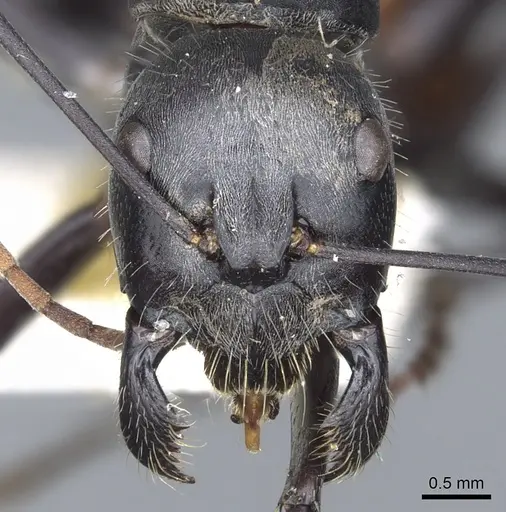
Camponotus versicolor is a large and visually distinctive ant. Major workers reach 14.8-16mm while minors are 8.5-10mm [1]. The most striking feature is the coloration: the head and mesosoma are black or dark red-black, but the first two gastral tergites are a vivid red that contrasts sharply with the rest of the body [1]. This red gaster pattern separates them from the similar C. aurocinctus which has golden-yellow bands [1]. Minor workers lack erect hairs on their tibiae and scapes, and have an angular metanotal groove [1]. The species is quite uncommon and limited to a narrow band across southern Western Australia.
Natural History and Distribution
This species is endemic to southern Western Australia, specifically found around the Emu Rocks area near Ongerup [1]. They inhabit the drier regions of southern and south-eastern WA [2]. The climate there is Mediterranean, hot and dry in summer, mild and wet in winter. Nothing has been published about their specific biology including nesting habits, diet, or colony structure. They are most similar to C. aurocinctus but can be distinguished by their darker overall coloration [2]. This limited distribution makes them a rare find for antkeepers.
Housing and Nesting
As a large Camponotus species, they need appropriately sized nest chambers. Y-tong (AAC) nests or acrylic formicariums work well. Provide chambers sized for their body, these are substantial ants with majors reaching 16mm. They prefer dry to moderately humid conditions matching their arid native habitat. Always provide a water tube for hydration. A naturalistic setup with a digging area can also work if you want to observe their natural tunneling behavior. Because they are a larger species, escape prevention is straightforward, standard barriers like Fluon on container rims are effective.
Feeding and Diet
Like other Camponotus species, they are omnivorous. Offer sugar water or honey as an energy source, they will readily accept these. For protein, provide insects like mealworms, crickets, or other appropriately sized prey. Large Camponotus ants can tackle bigger prey items than tiny ants. Feed protein 2-3 times per week and keep sugar water available constantly. Remove uneaten prey after 24-48 hours to prevent mold. They are likely nocturnal foragers based on typical genus behavior.
Temperature and Seasonal Care
Keep the nest at 22-26°C during the active season. Southern WA experiences warm summers but not extreme heat. Room temperature is likely suitable for most of the year with minor adjustments. During winter (roughly June-August in the southern hemisphere), provide a cool period around 10-15°C to simulate their natural seasonal cycle. This diapause period is important for colony health and likely triggers reproductive cycles. Do not feed heavily during hibernation and keep the nest slightly cooler.
Colony Development
Since nothing is published about their development, we must estimate based on typical Camponotus patterns. Queens likely found colonies claustrally, sealing themselves in a chamber and living off stored fat until first workers emerge. Expect first workers (nanitics) to appear in 6-10 weeks at warm temperatures. These initial workers will be smaller than normal minors. Growth is moderate, large Camponotus species develop slower than small ants. A mature colony likely reaches several hundred workers over several years. Be patient with founding colonies as they can take months to establish.
Frequently Asked Questions
How long does it take for Camponotus versicolor to raise first workers?
Estimated 6-10 weeks from egg to first worker at optimal temperature (22-26°C). This is based on typical Camponotus development patterns since no species-specific data exists. First workers will be smaller (nanitics) and the colony will grow gradually after that.
What do Camponotus versicolor ants eat?
They are omnivorous like most Camponotus. Offer sugar water or honey constantly for energy, and protein sources like mealworms, crickets, or other insects 2-3 times per week. Remove uneaten prey after a day or two.
Do Camponotus versicolor ants need hibernation?
Likely yes. They come from southern Western Australia which has a Mediterranean climate with cool, wet winters. Provide a cool period around 10-15°C for 2-3 months during winter.
Are Camponotus versicolor good for beginners?
They are rated Medium difficulty. The main challenge is that no published care information exists, you must rely on genus-level inference. They are large, relatively docile, and not difficult to keep once you understand basic Camponotus care.
How big do Camponotus versicolor colonies get?
Colony size is not documented. Based on their large worker size (majors up to 16mm), colonies likely reach several hundred workers over several years.
What temperature do Camponotus versicolor need?
Keep nest areas at 22-26°C during the active season. Room temperature is often suitable. Provide a slight heat gradient if needed but they don't require high heat.
Can I keep multiple Camponotus versicolor queens together?
Not recommended. While colony structure is unconfirmed, Camponotus are typically single-queen species. Combining unrelated queens has not been studied and risks fighting.
When should I move Camponotus versicolor to a formicarium?
Wait until the colony has 20-30 workers before moving from a test tube setup. This gives the colony time to establish firmly. Use a formicarium with appropriately sized chambers for their large body size.
Where is Camponotus versicolor found in the wild?
They are endemic to southern Western Australia, specifically around the Emu Rocks area near Ongerup. Their range is a narrow band across the southern part of the state in drier regions.
References

This caresheet is licensed under CC BY-SA 4.0 .
ANTWEB1008153
View on AntWeb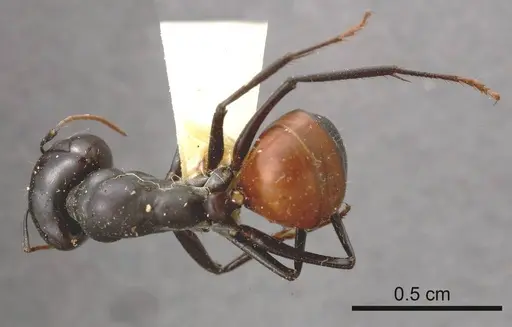
CASENT0903549
View on AntWeb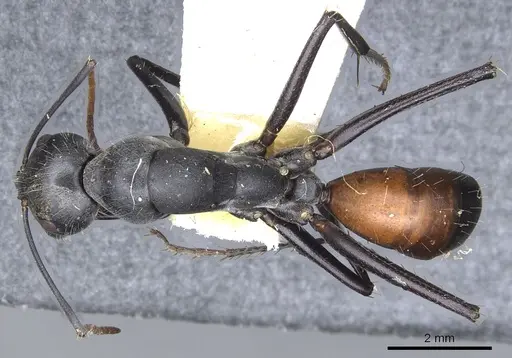

Literature
Loading...Loading products...