

Camponotus tricoloratus
- Scientific Name
- Camponotus tricoloratus
- Subgenus
- Tanaemyrmex
- Tribe
- Camponotini
- Subfamily
- Formicinae
- Author
- Clark, 1941
- Distribution
- Found in 1 countries
Camponotus tricoloratus Overview
Camponotus tricoloratus is an ant species of the genus Camponotus. It is primarily documented in 1 countries , including Australia. Detailed taxonomic data and occurrence records can be further explored via authoritative databases such as AntWeb or the Global Biodiversity Information Facility (GBIF).
Camponotus tricoloratus
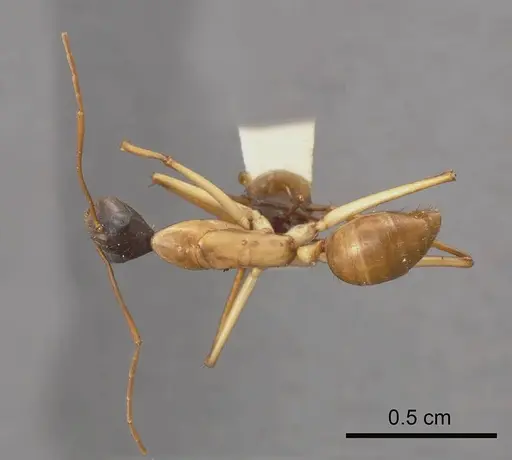
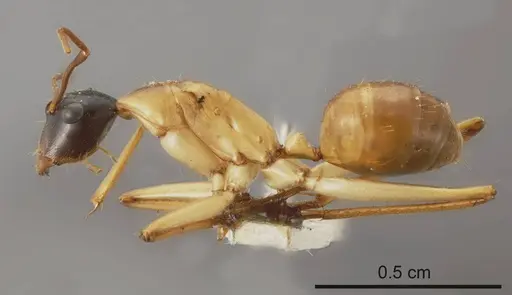
Camponotus tricoloratus is a large Australian carpenter ant belonging to the Camponotus maculatus group. Workers come in two sizes: majors measure 15.5-17mm while minors are 12.5-14mm [1]. The species has distinctive coloring with a brown head and gaster, reddish-brown cheeks and antennae, and yellow thorax, legs, and node. A notable feature is the sparse long erect hairs (setae) on the mesosoma, giving them a somewhat bristly appearance [2]. This ant is found across Australia, particularly in semi-arid and arid regions of Western Australia and Victoria near Mildura [3][1].
Quick Summary
- Difficulty: Medium
- Origin & Habitat: Australia, specifically semi-arid and arid areas of Western Australia and Victoria [3][1]. This species inhabits dry, open landscapes typical of inland Australia.
- Colony Type: Likely single-queen colonies based on typical Camponotus patterns. The colony structure has not been directly studied for this species.
- Colony: Monogyne
- Founding: Claustral
- Size & Growth:
- Queen: Unknown, not yet described in scientific literature
- Worker: Major: 15.5-17mm, Minor: 12.5-14mm [1]
- Colony: Unknown, no colony size data available
- Growth: Moderate, typical for large Camponotus species
- Development: Estimated 8-12 weeks based on typical Camponotus development at warm temperatures (Development time inferred from genus patterns, direct measurements not available for this species)
- Antkeeping:
- Temperature: Keep at 24-28°C for optimal brood development. A heating cable on one side of the nest creates a temperature gradient that allows ants to regulate their own temperature [1].
- Humidity: Low to moderate humidity suits this semi-arid species. Allow the nest to dry out partially between waterings, aim for a damp substrate that doesn't stay constantly wet.
- Diapause: Likely required. Australian ants from temperate regions typically need a winter rest period of 8-12 weeks at 10-15°C. Monitor colony activity and reduce feeding during this time.
- Nesting: Use a dry to moderately humid nest. Y-tong (acrylic) nests work well, or a plaster nest with some moisture. Avoid overly damp conditions that suit tropical species.
- Behavior: These ants are generally calm and not aggressive toward keepers. As with most Camponotus, they are primarily nocturnal foragers. Major workers defend the nest and process food, while minors handle most foraging. They are moderate escape artists for their size, use standard barrier methods but they are not as prone to escaping as tiny species. They likely feed on honeydew and small insects in the wild.
- Common Issues: colonies may struggle if kept too humid, this is a dry-country species, queen loss during founding is common if the queen is disturbed or the setup is too wet, slow initial growth can lead to overfeeding which causes mold problems, winter diapause is often skipped by keepers, leading to colony decline over time, wild-caught colonies may harbor parasites that kill them in captivity
Nest Preferences
Camponotus tricoloratus naturally nests in soil and decaying wood in arid Australian environments. In captivity, they do well in Y-tong (acrylic) nests or plaster nests that can maintain moderate humidity. The key is to avoid overly damp conditions, this species comes from dry habitats. Provide a water tube for drinking but don't saturate the nest material. A gradient from slightly humid to dry allows the ants to choose their preferred spot. [3][1]
Feeding and Diet
Like other Camponotus species, these ants are omnivorous. They accept sugar sources (honey water, sugar water) and protein (dead insects, mealworms, crickets). Feed protein 2-3 times per week and keep a sugar source available constantly. Remove uneaten prey after 24-48 hours to prevent mold. In the wild, they likely tend aphids for honeydew and scavenge for small arthropods. [1]
Temperature and Seasonal Care
Maintain temperatures between 24-28°C during the active season. These ants come from Australia's interior where temperatures fluctuate more than coastal areas, so they can handle some variation. During winter (roughly October to March in the Southern Hemisphere), reduce temperature to 10-15°C for a diapause period. This rest period is important for colony health and longevity. Reduce feeding during diapause and keep the nest barely moist. [3][1]
Behavior and Temperament
Camponotus tricoloratus is a calm species that rarely bites or sprays formic acid. Major workers are larger and often stay near the nest, while minors do most of the foraging. They are primarily crepuscular and nocturnal. When threatened, they may retreat into the nest rather than engage. They are not aggressive but will defend their colony if necessary. Escape prevention is important, while not tiny, they can squeeze through small gaps, so use proper barriers. [1]
Frequently Asked Questions
How long does it take for Camponotus tricoloratus to produce first workers?
Expect first workers (nanitics) in 8-12 weeks after the queen lays eggs, assuming temperatures around 25°C. This is an estimate based on typical Camponotus development, direct measurements for this species are not available.
Can I keep Camponotus tricoloratus in a test tube?
Yes, test tubes work well for founding colonies. Use a standard test tube setup with a water reservoir sealed with cotton. Keep the tube in darkness and avoid disturbing the queen during the founding stage. Once the colony reaches 15-20 workers, consider moving to a proper nest.
What temperature do Camponotus tricoloratus need?
Keep them at 24-28°C during the active season. A temperature gradient is ideal, use a heating cable on one side of the nest so ants can move between warmer and cooler areas as needed.
Do Camponotus tricoloratus need hibernation?
Yes, they likely need a winter rest period. Reduce temperatures to 10-15°C for 8-12 weeks during winter. This diapause period helps maintain colony health. Reduce feeding during this time.
How big do Camponotus tricoloratus colonies get?
Colony size is not documented in scientific literature, but related Camponotus species typically reach several hundred to a few thousand workers. Growth is moderate, expect several years to reach large colony size.
What do Camponotus tricoloratus eat?
They are omnivorous. Offer sugar water or honey constantly, and provide protein sources like dead insects, mealworms, or small crickets 2-3 times per week. Remove uneaten food promptly to prevent mold.
Is Camponotus tricoloratus good for beginners?
This species is rated as medium difficulty. They are more forgiving than tropical species but require attention to humidity levels, too much moisture causes problems. Their large size makes them easier to observe than tiny ants.
When should I move Camponotus tricoloratus to a formicarium?
Move to a proper nest (Y-tong, plaster, or naturalistic) once the colony has 15-30 workers and the test tube is becoming cramped. Make sure the new nest has matching humidity conditions, this species prefers drier conditions than many tropical ants.
Why is my Camponotus tricoloratus colony declining?
Common causes include: too much humidity (this is a dry-country species), disturbing the queen during founding, skipping winter diapause, or overfeeding leading to mold. Check your setup and ensure the nest is not overly damp.
References

This caresheet is licensed under CC BY-SA 4.0 .


Literature
Loading...Loading products...