

Camponotus rufus
- Scientific Name
- Camponotus rufus
- Subgenus
- Tanaemyrmex
- Tribe
- Camponotini
- Subfamily
- Formicinae
- Author
- Crawley, 1925
- Distribution
- Found in 1 countries
Camponotus rufus Overview
Camponotus rufus is an ant species of the genus Camponotus. It is primarily documented in 1 countries , including Australia. Detailed taxonomic data and occurrence records can be further explored via authoritative databases such as AntWeb or the Global Biodiversity Information Facility (GBIF).
Camponotus rufus
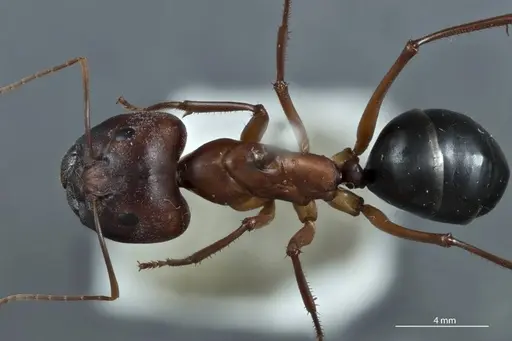
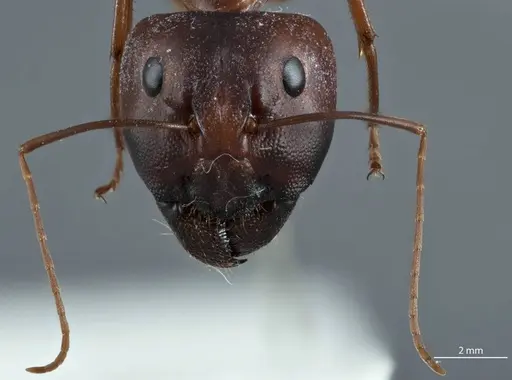
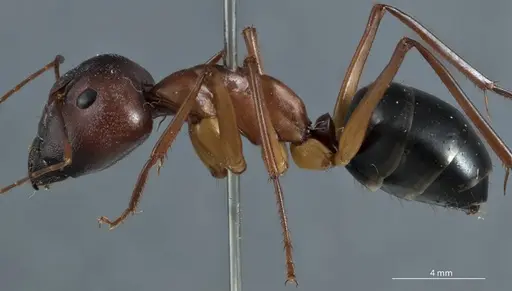
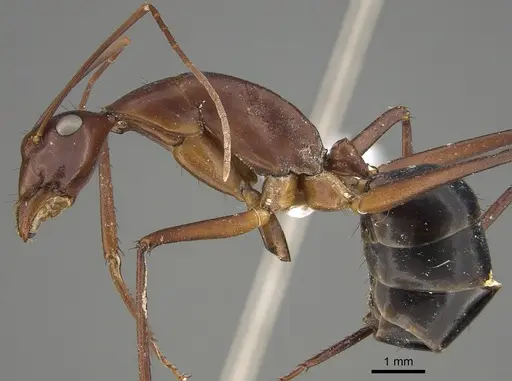
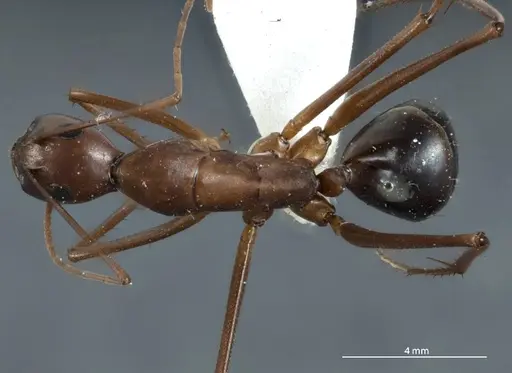
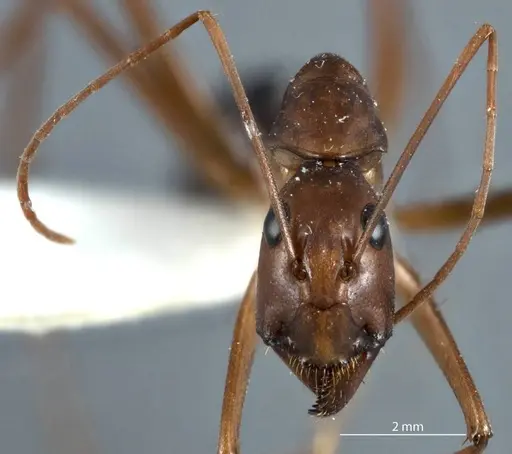
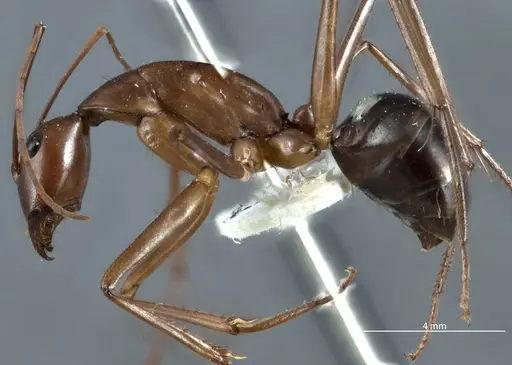
Camponotus rufus is a large Australian carpenter ant native to Western Australia and surrounding regions. Major workers reach an impressive 15-17mm, while minor workers are around 12mm, and queens can grow to 18mm [1]. The species has a distinctive coloration: a rufous (reddish-brown) body with a black gaster (abdomen), a darker red head compared to the thorax, and legs that trend more yellow [1]. This ant is part of the Camponotus subnitidus complex, a group of closely related species found in southwestern Australia [2].
What makes C. rufus interesting is its restricted habitat preference. In Western Australia, this species is confined to the more mesic (damp) south- and mid-west regions, typically in areas with higher moisture [2]. Unlike some widespread carpenter ants, these ants have specific climate needs that reflect their natural range in Australia's southwestern corner.
Quick Summary
- Difficulty: Medium
- Origin & Habitat: Western Australia and surrounding Australian states. In WA, restricted to the more mesic south- and mid-west regions [2]. This is a damp forest/woodland species that naturally inhabits areas with higher moisture.
- Colony Type: Likely monogyne (single queen colony) based on typical Camponotus patterns. Queens are dealated (wingless) when founding, indicating claustral founding behavior typical of the genus.
- Colony: Monogyne
- Founding: Claustral
- Size & Growth:
- Queen: 18mm [1]
- Worker: Major workers 15-17mm, minor workers 12mm [1]
- Colony: Likely several thousand workers based on typical Camponotus colony development
- Growth: Moderate, Camponotus species typically grow more slowly than smaller ants, taking months to establish
- Development: Estimated 6-10 weeks at optimal temperature based on typical Camponotus development patterns (Development time is temperature-dependent. Larger Camponotus species generally take longer than smaller ants.)
- Antkeeping:
- Temperature: Keep around 24-28°C for optimal brood development. Room temperature (20-24°C) is acceptable, but warmer conditions accelerate growth. Provide a gentle temperature gradient so ants can self-regulate.
- Humidity: Moderate to high, this species naturally inhabits mesic (damp) environments in southwestern Australia. Keep nest substrate moderately moist but not waterlogged. Provide a water tube for drinking water.
- Diapause: Likely required. Australian temperate ants typically need a winter rest period. Reduce temperature to 15-18°C for 2-3 months during winter.
- Nesting: Y-tong (AAC) nests work well for these large ants. Natural setups with wood or cork bark are also appropriate since they're carpenter ants that may excavate. Provide chambers scaled to their large size.
- Behavior: These are large, relatively docile carpenter ants. Like most Camponotus, they have major workers (soldiers) with impressive mandibles but are not particularly aggressive. They can spray formic acid as a defense but pose no real danger to keepers. Workers are moderately active foragers. Escape prevention is important, while not tiny, they are strong and can squeeze through small gaps if determined. Close-fitting lids and standard barriers are sufficient.
- Common Issues: slow initial growth can frustrate beginners, claustral founding queens take time to produce first workers, humidity control is important, too dry and brood dies, too wet and mold becomes a problem, large size means they need appropriately sized prey items and spacious setups, hibernation failure is common, skipping winter rest often leads to colony decline, wild-caught colonies may harbor parasites that can devastate captive colonies
Housing and Nest Setup
Camponotus rufus is a large ant that needs appropriately sized housing. Y-tong (acrylic) nests work excellently for these ants, providing the dark, enclosed spaces they prefer. The chambers should be spacious enough for the majors to move around comfortably. A test tube setup works well for founding colonies, use a large test tube (20mm+ diameter) with a water reservoir at one end, secured with a cotton plug. For established colonies, you can transition to a formicarium with multiple chambers connected by tubing. Provide an outworld (foraging area) where you can offer food. Since they're carpenter ants, they may chew through soft materials like cotton, so use barrier methods like Fluon on test tube rims to prevent escapes. [1]
Feeding and Diet
Like other Camponotus species, C. rufus is omnivorous. They accept protein sources like insects (mealworms, crickets, roaches) and will scavenge dead insects. Sugar sources are important for energy, offer honey water, sugar water, or honey. In the wild, they likely forage for honeydew from aphids and scale insects, so sweet liquids are readily accepted. Feed protein 2-3 times per week for growing colonies, and keep a constant sugar source available. Remove uneaten food after 24-48 hours to prevent mold. Queens in founding stage do not need food, they survive entirely on stored fat reserves until their first workers emerge.
Temperature and Seasonal Care
Maintain temperatures between 24-28°C for active colonies. These ants come from temperate Australia and do best with warmth that mimics their natural spring-summer conditions. A heating cable or heat mat on one side of the nest creates a temperature gradient that lets ants choose their preferred zone. During Australian winter (roughly June-August in the southern hemisphere), reduce temperatures to 15-18°C for a diapause period. This winter rest is important for colony health and may trigger reproductive behavior the following season. Do not feed during diapause, the colony will be largely inactive and food will just mold. [2]
Behavior and Colony Dynamics
Camponotus rufus exhibits the typical caste system of carpenter ants: minor workers handle most day-to-day tasks like foraging and brood care, while major workers (soldiers) defend the colony and process larger food items. Majors have large, powerful mandibles that can give a noticeable bite if the ant feels threatened. However, these ants are generally docile and will only bite if provoked. They communicate using chemical trails and may form foraging columns to food sources. The colony will grow slowly at first, a founding queen may take 4-8 weeks to produce her first nanitic workers, and several months to reach 20-30 workers. After this slow start, growth accelerates as the colony expands its workforce.
Frequently Asked Questions
How long does it take for Camponotus rufus to get their first workers?
Expect 6-10 weeks from egg to first worker at optimal temperature (around 26°C). This is typical for larger Camponotus species, they grow slower than smaller ants. The queen will be alone in her founding chamber, surviving on stored fat, until her first nanitic workers emerge.
What do Camponotus rufus ants eat?
They are omnivorous. Offer protein sources like insects (mealworms, crickets, small roaches) 2-3 times per week, and keep a constant sugar source available (honey water, sugar water, or honey). Remove uneaten food after 24-48 hours.
What temperature do Camponotus rufus need?
Keep them at 24-28°C for optimal growth. A temperature gradient is ideal, let them choose between warmer and cooler areas of the nest. Room temperature (20-24°C) is acceptable but will slow growth.
Do Camponotus rufus need hibernation?
Yes, a winter diapause is likely required. Reduce temperatures to 15-18°C for 2-3 months during winter. This rest period supports long-term colony health and may trigger reproductive behavior.
How big do Camponotus rufus colonies get?
At maturity, colonies likely reach several thousand workers. The large queen (18mm) and major workers (15-17mm) indicate a substantial colony size potential typical of Camponotus species.
Can I keep multiple Camponotus rufus queens together?
This species is likely monogyne (single queen). Combining unrelated queens is not recommended as they will likely fight. Only keep one queen per colony.
Are Camponotus rufus good for beginners?
They are medium difficulty. The main challenges are their slower growth rate compared to smaller ants and their specific humidity needs. They are rewarding once established but require patience during the founding phase.
When should I move my colony to a formicarium?
Move from a test tube setup to a formicarium once the colony reaches 30-50 workers and the test tube is becoming crowded. Make sure the new setup has appropriately sized chambers for these large ants.
Why is my Camponotus rufus colony declining?
Common causes include: too dry conditions (keep substrate moist), improper temperature (too cold slows growth, too hot risks death), mold from overwatering or uneaten food, or skipping the winter diapause. Check these parameters first.
References

This caresheet is licensed under CC BY-SA 4.0 .
Literature
Loading...Loading products...