

Camponotus posteropilus
- Scientific Name
- Camponotus posteropilus
- Tribe
- Camponotini
- Subfamily
- Formicinae
- Author
- Shattuck, 2005
- Distribution
- Found in 1 countries
Camponotus posteropilus Overview
Camponotus posteropilus is an ant species of the genus Camponotus. It is primarily documented in 1 countries , including Papua New Guinea. Detailed taxonomic data and occurrence records can be further explored via authoritative databases such as AntWeb or the Global Biodiversity Information Facility (GBIF).
Camponotus posteropilus
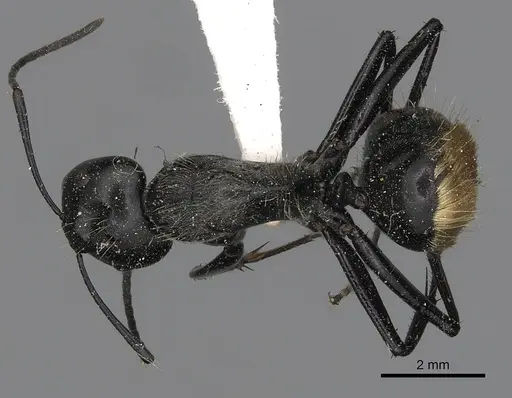
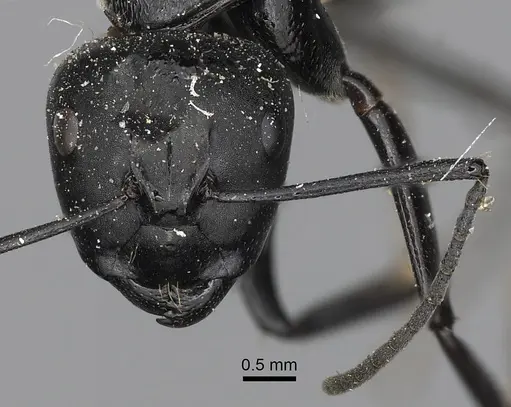
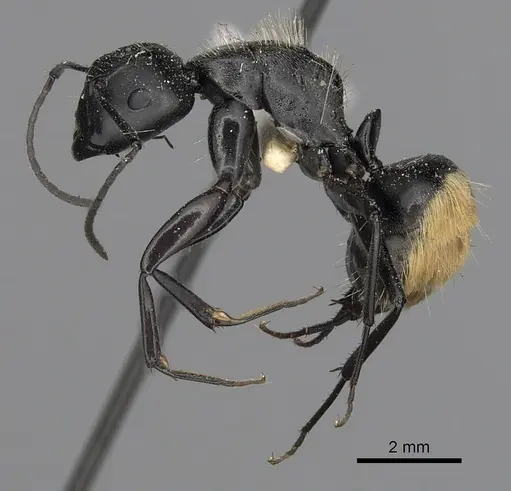
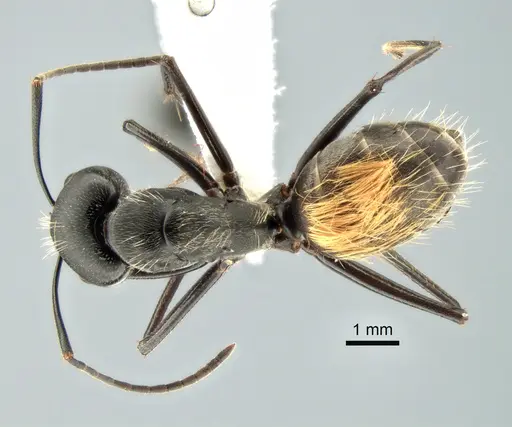
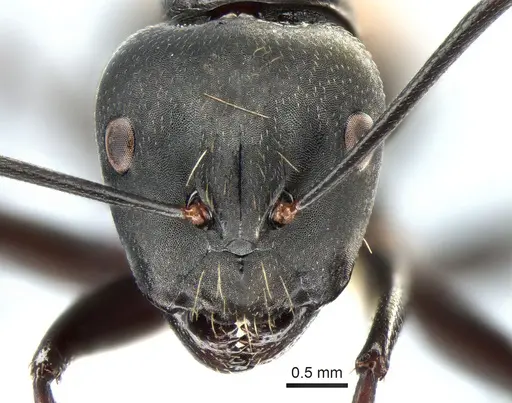
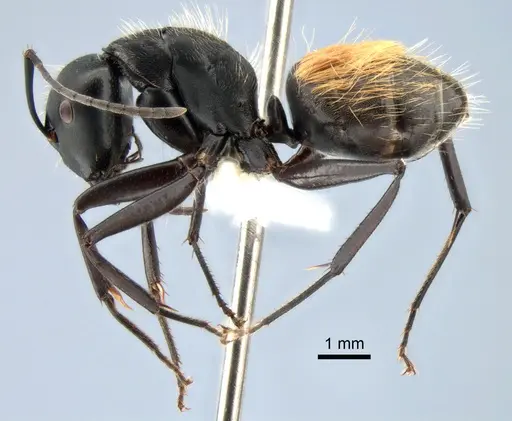
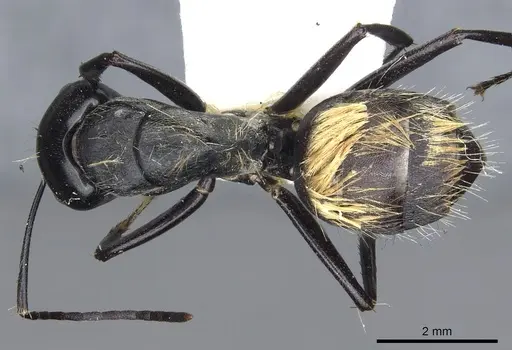
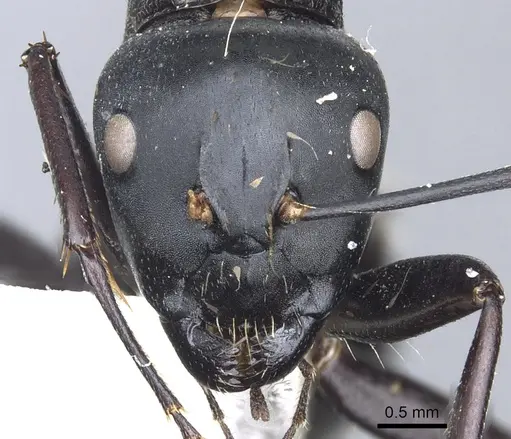
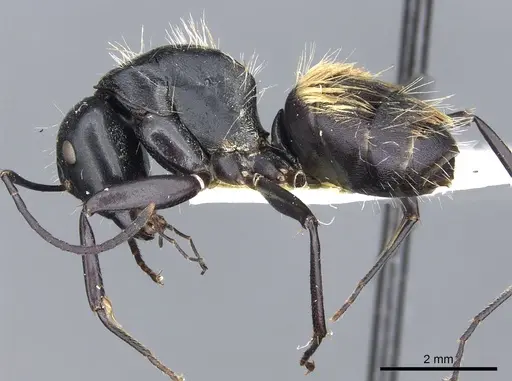
Camponotus posteropilus is a small carpenter ant native to Papua New Guinea. Workers are mostly black with dark red-black legs and gaster, measuring 1.85-2.18mm in head width [1]. This species belongs to the Camponotus aureopilus species group and is distinguished by its fine reticulo-punctate head surface with a matte appearance and the distinctive enlarged pale yellow hairs covering the entire dorsal surface of the gaster [1][2]. The species was formally described by Shattuck in 2005 from specimens collected in the Wau District of Papua New Guinea [1].
This ant nests naturally in tree crevices and rotting logs within rainforest environments, specifically documented from beech tree crevices at higher elevations (around 5,300 feet) and from rotten logs in lowland rainforest [2][1]. The tropical rainforest habitat suggests they prefer warm, humid conditions with access to decaying wood for nesting.
Quick Summary
- Difficulty: Medium
- Origin & Habitat: Papua New Guinea, found in tropical rainforest environments, specifically in beech tree crevices and rotting logs [2][1]
- Colony Type: Colony structure is unconfirmed for this species. Based on typical Camponotus patterns, likely single-queen (monogyne) colonies with polymorphic workers.
- Size & Growth:
- Queen: Not documented, estimated 8-10mm based on typical Camponotus queen size
- Worker: Minor workers: 1.85-2.18mm head width,2.04-2.25mm head length [1]
- Colony: Unknown, no colony size data available
- Growth: Moderate, based on typical Camponotus development patterns
- Development: Estimated 6-8 weeks at optimal temperature based on related Camponotus species (Development time is estimated from genus-level data since no species-specific study exists. Warmer temperatures within the safe range will speed development.)
- Antkeeping:
- Temperature: Keep at 24-28°C, they come from tropical Papua New Guinea so warmth is important. A heating cable on one side of the nest creates a suitable gradient
- Humidity: Keep moderately humid (60-80%). Their natural habitat in rotting logs and tree crevices suggests they prefer damp but not waterlogged conditions. Provide a water tube and allow the nest to dry slightly between rehydration
- Diapause: Unlikely, being a tropical species from Papua New Guinea, they probably do not require a true diapause. However, a slight reduction in temperature during the cooler months (down to around 20°C) may be beneficial
- Nesting: Y-tong (acrylic) nests or plaster nests work well. They naturally nest in rotting wood and tree crevices, so a nest with some wood or bark material mimics their natural environment. Avoid completely dry setups
- Behavior: This is a relatively calm carpenter ant species. Like most Camponotus, they are not aggressive toward keepers but will defend their nest if threatened. Workers are small (around 2mm) so escape prevention should be good, they cannot squeeze through gaps as easily as larger ants. They are primarily nocturnal foragers in the wild but will accept food at any time in captivity. They are not known to be particularly escape-prone despite their small size, but standard precautions (fluon barriers) should still be used.
- Common Issues: humidity control is important, too dry and brood may fail to develop, too wet and mold becomes a problem, colonies grow slowly in the first months which can frustrate beginners, patience is key, wild-caught colonies may carry parasites that can decimate the colony in captivity, test tube setups work for founding but may need to upgrade to a formicarium as the colony grows beyond 50 workers, tropical species are sensitive to temperature drops, keep away from cold drafts or air conditioning vents
Nest Preferences
In the wild, Camponotus posteropilus nests in tree crevices and rotting logs within tropical rainforest [2]. This means they prefer dark, humid spaces with some wood material. For captivity, Y-tong (acrylic) nests work well, as do plaster nests that can hold moisture. Avoid completely dry setups, these ants need some humidity to thrive. A naturalistic setup with rotting wood pieces can also work if you provide proper escape prevention. The chambers should not be overly large, keep them snug to make the ants feel secure. Because workers are only around 2mm, ensure any tubing connections are tight-fitting.
Feeding and Diet
Like other Camponotus species, these ants are omnivorous. They will readily accept sugar sources (honey water, sugar water) as their primary energy source. For protein, offer small insects like fruit flies, small mealworms, or cricket pieces. Feed protein 2-3 times per week, and keep a constant sugar water supply. Because workers are small, prey items should be appropriately sized, tiny fruit flies and springtails are ideal. Remove any uneaten prey after 24 hours to prevent mold. They are not known to be particularly picky eaters but may take time to accept new food types.
Temperature and Care
Being from tropical Papua New Guinea, this species needs warm conditions. Keep the nest area at 24-28°C for optimal brood development. A heating cable placed on one side of the nest creates a temperature gradient so ants can self-regulate. Avoid temperatures below 20°C for extended periods, this species is not cold-tolerant. Room temperature (around 22-24°C) is acceptable if your home is naturally warm. Monitor colony behavior: if workers cluster near the heat source, increase temperature slightly, if they avoid it and seem sluggish, the area may be too hot. Unlike temperate species, they do not require true hibernation but may slow down slightly in cooler months.
Behavior and Temperament
Camponotus posteropilus is a relatively calm species that is manageable for antkeepers. Workers are small (around 2mm) but this actually makes them easier to contain, they cannot squeeze through the tiny gaps that plague keepers of very small ants. They are not aggressive and will not sting humans. Like all carpenter ants, they may spray formic acid as a defense when threatened, but this is mild. Colonies are primarily nocturnal in the wild but will adjust their activity patterns to your feeding schedule in captivity. Workers are polymorphic with major and minor castes, though the size difference is less dramatic than in some larger carpenter ants.
Colony Growth and Development
As with all Camponotus species, founding colonies start slowly. The queen will lay eggs after sealing herself in (claustral founding), and the first nanitic workers will emerge after 6-8 weeks under optimal conditions. These first workers are smaller than normal workers. Growth is moderate, expect the colony to reach 20-30 workers in the first few months, then accelerate as the colony establishes. A healthy mature colony may eventually reach several hundred workers. Patience is essential, especially in the first six months. Do not overfeed during the founding stage as this can lead to mold problems.
Frequently Asked Questions
How long does it take for Camponotus posteropilus to produce first workers?
Expect first workers (nanitics) after 6-8 weeks at optimal temperature (24-28°C). This is typical for Camponotus species. The queen will seal herself in and raise the first brood alone without foraging.
What do Camponotus posteropilus ants eat?
They are omnivores like other carpenter ants. Offer sugar water or honey constantly for energy, and protein (small insects like fruit flies, mealworms) 2-3 times per week. Remove uneaten prey after 24 hours.
What temperature is best for Camponotonic posteropilus?
Keep them at 24-28°C. Being from tropical Papua New Guinea, they need warmth. A heating cable on one side of the nest creates a gradient. Avoid temperatures below 20°C.
Are Camponotus posteropilus good for beginners?
They are moderate difficulty, easier than some tropical species but requiring more attention to temperature and humidity than temperate ants. Their small size actually helps with containment. Patience is needed as colonies grow slowly at first.
What size nest do Camponotus posteropilus need?
Start with a test tube setup for the founding queen. Once the colony reaches 30-50 workers, upgrade to a Y-tong or plaster nest. They naturally nest in rotting wood, so including some wood material in the setup is beneficial.
Do Camponotus posteropilus need hibernation?
No, being a tropical species from Papua New Guinea, they do not require true hibernation. You may reduce temperatures slightly in winter (to around 20°C) but this is not necessary.
How big do Camponotus posteropilus colonies get?
Colony size is not documented in scientific literature, but based on typical Camponotus patterns, expect several hundred workers at maturity. Growth is moderate and takes patience.
Can I keep multiple Camponotus posteropilus queens together?
This has not been documented for this species. Based on typical Camponotus behavior, single-queen colonies are most common. It is not recommended to combine unrelated foundress queens as they may fight.
Why is my Camponotus posteropilus colony dying?
Common causes include: temperature too cold (below 20°C), humidity too dry or too wet, mold from overfeeding, or parasites from wild-caught colonies. Ensure proper temperature (24-28°C), moderate humidity, and clean feeding practices. If the colony was wild-caught, parasites are a common issue.
References

This caresheet is licensed under CC BY-SA 4.0 .
Literature
Loading...Loading products...