

Camponotus matsilo
- Scientific Name
- Camponotus matsilo
- Subgenus
- Mayria
- Tribe
- Camponotini
- Subfamily
- Formicinae
- Author
- Rakotonirina <i>et al.</i>, 2016
- Distribution
- Found in 1 countries
Camponotus matsilo Overview
Camponotus matsilo is an ant species of the genus Camponotus. It is primarily documented in 1 countries , including Madagascar. Detailed taxonomic data and occurrence records can be further explored via authoritative databases such as AntWeb or the Global Biodiversity Information Facility (GBIF).
Camponotus matsilo
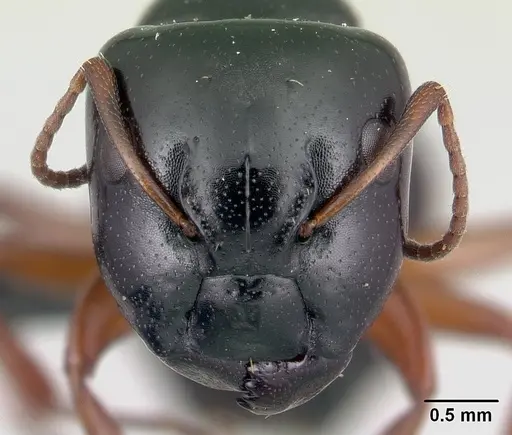
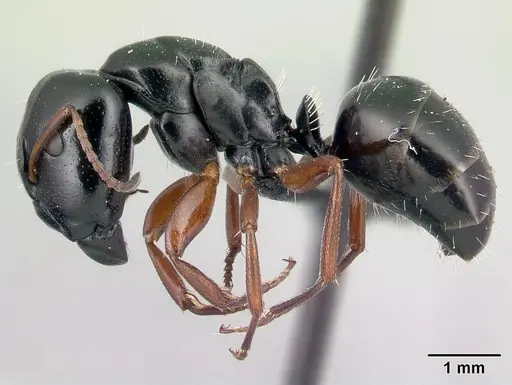
Camponotus matsilo is a medium-sized ant species endemic to southern Madagascar. Workers are mostly black with a dark brown abdomen (gaster), and the species can be identified by its propodeal dorsum being distinctly longer than its declivity in side view [1]. Minor workers measure around 4-7mm while majors develop significantly larger heads. This species belongs to the Camponotus edmondi species group within the subgenus Mayria [1].
These ants inhabit the dry forests of southern Madagascar, where colonies nest in dead twigs above ground and workers forage on low vegetation [1]. The species occurs across a range of habitats from dry forest through transitional spiny forest to spiny bush and thicket at Cap Sainte Marie [1].
Quick Summary
- Difficulty: Medium
- Origin & Habitat: Southern Madagascar, dry forest habitats of PN Zombitse and PN Andohahela, transitional spiny forest of Vohidava, and spiny bush and thicket of Cap Sainte Marie [1]. Forages on low vegetation, colonies found in dead twigs above ground.
- Colony Type: Likely monogyne (single queen) based on typical Camponotus patterns. Colony structure in the wild has not been specifically documented.
- Colony: Monogyne
- Founding: Claustral
- Size & Growth:
- Queen: Estimated 12-16mm based on typical Camponotus queen size range
- Worker: Minor workers estimated 4-7mm, majors significantly larger with more robust heads
- Colony: Estimated several hundred to a few thousand workers based on similar Camponotus species
- Growth: Moderate, typical Camponotus growth rate
- Development: Estimated 6-10 weeks at optimal temperature based on genus-level Camponotus data (Development time inferred from related species in the genus, specific timing for this species has not been documented)
- Antkeeping:
- Temperature: Keep around 24-28°C, these are tropical ants from southern Madagascar. A gentle gradient allowing warmer and cooler areas is recommended.
- Humidity: Moderate humidity around 50-70%. Their natural habitat ranges from dry forest to spiny bush, so they tolerate drier conditions better than many tropical ants. Provide a water tube but allow portions of the nest to dry between rehydration.
- Diapause: Not required. As a tropical species from Madagascar, they do not experience true hibernation. Activity may slow slightly during cooler months but a formal diapause period is not necessary.
- Nesting: Natural nesting is in dead twigs above ground. In captivity, Y-tong (AAC) nests or plaster nests with narrow chambers work well. Provide nesting chambers scaled to colony size. Avoid overly humid conditions that could cause mold in dry-adapted species.
- Behavior: Workers are active foragers on low vegetation in the wild, so expect active foraging behavior in the outworld. They are not particularly aggressive but will defend their colony. Major workers have significantly larger heads and may be involved in defense and food processing. Escape prevention should be moderate, they are not tiny ants but can climb smooth surfaces. Standard barrier methods like fluon on test tube rims work well.
- Common Issues: colonies may struggle if kept too humid, these dry forest ants prefer some dry areas in the nest, tropical species may slow or stop activity if temperatures drop below 22°C, wild-caught colonies may have parasites or diseases that cause colony failure, slow initial growth during founding phase can lead to overfeeding or excessive disturbance by impatient keepers, major workers with large heads may have difficulty in narrow test tube setups, provide appropriately sized housing as colony grows
Natural History and Distribution
Camponotus matsilo is endemic to southern Madagascar, where it occurs across a range of dry to semi-arid habitats. The species has been documented in the dry forests of Zombitse and Andohahela national parks, the transitional spiny forest of Vohidava, and the spiny bush and thicket habitats at Cap Sainte Marie in the extreme south [1]. This distribution covers a gradient from relatively moist dry forest to the more arid spiny bush vegetation typical of southern Madagascar.
In their natural habitat, colonies nest in dead twigs found above ground, rather than in soil or under stones [1]. Workers forage on low vegetation, climbing plants and shrubs to search for food. This foraging behavior suggests they are active hunters and may target small insects or tend aphids for honeydew. The species is part of the Camponotus edmondi species group within the subgenus Mayria, a group of Malagasy endemics [1].
Housing and Nest Setup
Since wild colonies nest in dead twigs above ground, your setup should mimic this preference. Y-tong (AAC) nests or plaster nests work well in captivity. The chambers should be appropriately sized for the colony, not too large initially, as ants do better in snugger spaces while founding. As the colony grows, you can provide larger chambers.
These ants prefer drier conditions than many tropical species. Keep humidity in the moderate range of 50-70%, with some drier areas available. A water tube for drinking is essential, but avoid creating constantly wet or condensing conditions. Good ventilation helps prevent mold while maintaining appropriate humidity.
For the outworld, a simple setup with a foraging area works well. Since they forage on low vegetation in the wild, you might consider adding some fake plants or twigs for them to explore. Standard test tube setups work for founding colonies, but be prepared to move them to a larger formicarium as the colony grows. [1]
Feeding and Diet
Like other Camponotus species, these ants are omnivorous. They will accept sugar sources (honey, sugar water) and protein foods. In the wild, their foraging on low vegetation suggests they may target small insects and likely tend aphids for honeydew.
Feed them a balanced diet: offer sugar water or honey regularly (every few days), and provide protein sources like small crickets, mealworms, or other insects weekly. Since they forage on vegetation, they may also accept sweet fruits. Remove uneaten food after 24-48 hours to prevent mold.
During the founding phase, the queen will not eat, she relies on stored fat reserves. Once workers arrive, they will begin foraging and accepting food. Major workers with their larger heads are particularly good at processing tougher food items. [1]
Temperature and Seasonal Care
As a tropical species from southern Madagascar, keep your colony warm. Aim for temperatures around 24-28°C during the active season. They can tolerate slightly warmer conditions but should be protected from temperatures below 20°C for extended periods.
A heating cable or mat on one side of the nest can create a temperature gradient, allowing ants to choose their preferred warmth. Place the heating on top of the nest, not underneath, to avoid drying out the nest too quickly.
Unlike temperate species, C. matsilo does not require a true diapause or hibernation period. However, activity may naturally slow during cooler months in your home. You do not need to artificially cool them for winter, just maintain normal room temperatures in the mid-20s°C range. [1]
Colony Development and Growth
Camponotus matsilo follows the typical Camponotus claustral founding pattern. The queen seals herself into a chamber and raises the first workers (nanitics) entirely on her stored body reserves. This founding phase can take 6-10 weeks under optimal conditions, though exact timing has not been documented for this species.
Initial colonies grow slowly, the first batch of workers (nanitics) are typically smaller than mature workers. As the colony expands, larger majors will develop. The development of major workers with their distinctive large heads is a characteristic feature of Camponotus species.
Be patient during the founding phase. Disturbing the queen too often can cause her to abandon or eat her brood. Once workers emerge, growth typically accelerates, but Camponotus colonies generally develop more slowly than many other ant genera. [1]
Frequently Asked Questions
How long does it take for Camponotus matsilo to produce first workers?
The egg-to-worker timeline is estimated at 6-10 weeks based on typical Camponotus development. This occurs at optimal temperatures around 24-28°C. Exact timing for this species has not been documented, so expect some variation.
Do Camponotus matsilo ants need hibernation?
No, they do not require hibernation. As a tropical species from Madagascar, they are active year-round at warm temperatures. A formal diapause period is not necessary.
What do Camponotus matsilo ants eat?
They are omnivorous like other Camponotus species. Offer sugar water or honey regularly, and protein sources like small insects (crickets, mealworms) weekly. They may also accept sweet fruits.
Are Camponotus matsilo good for beginners?
They are rated as medium difficulty. They are more forgiving of drier conditions than many tropical ants, but require warm temperatures. The main challenges are providing appropriate warmth and being patient through the slow founding phase.
How big do Camponotus matsilo colonies get?
Colony size is estimated at several hundred to a few thousand workers based on similar Camponotus species. Exact maximum size has not been documented for this species.
Can I keep multiple Camponotus matsilo queens together?
This species is likely monogyne (single queen) based on typical Camponotus patterns. Combining unrelated queens is not recommended as they would likely fight. If you obtain a wild colony, it likely has a single founding queen.
When should I move my colony to a formicarium?
Move to a larger nest when the test tube becomes crowded or the colony reaches around 30-50 workers. Signs include workers clustering at the cotton, frequent foragers in the outworld, or the water tube running low frequently.
Why is my colony growing slowly?
Slow growth during founding is normal, the queen raises first workers on her reserves alone. Ensure temperatures are warm (24-28°C), avoid disturbing the nest too often, and do not overfeed. Once workers emerge, growth typically accelerates.
References

This caresheet is licensed under CC BY-SA 4.0 .
CASENT0121843
View on AntWeb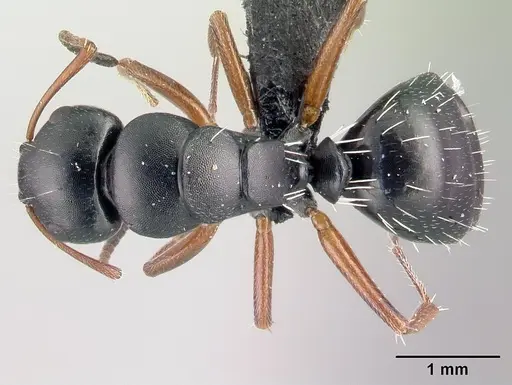
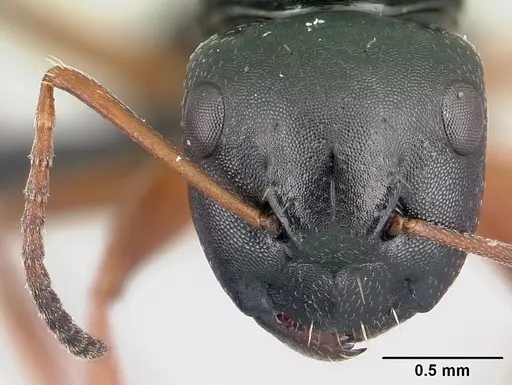
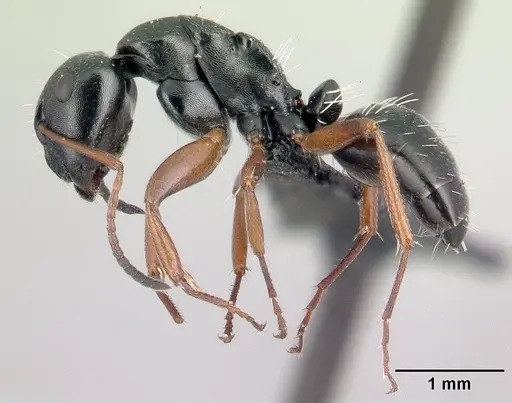
CASENT0178919
View on AntWeb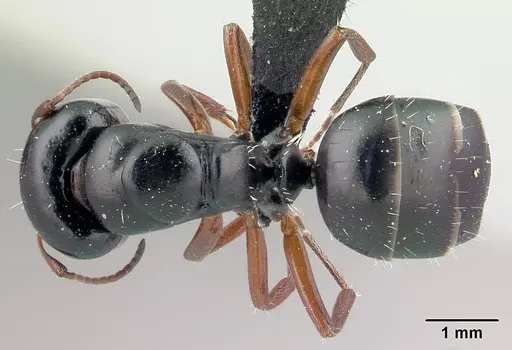
Literature
Loading...Loading products...