

Camponotus innocens
- Scientific Name
- Camponotus innocens
- Subgenus
- Myrmaphaenus
- Tribe
- Camponotini
- Subfamily
- Formicinae
- Author
- Forel, 1909
- Distribution
- Found in 1 countries
Camponotus innocens Overview
Camponotus innocens is an ant species of the genus Camponotus. It is primarily documented in 1 countries , including Paraguay. Detailed taxonomic data and occurrence records can be further explored via authoritative databases such as AntWeb or the Global Biodiversity Information Facility (GBIF).
Camponotus innocens
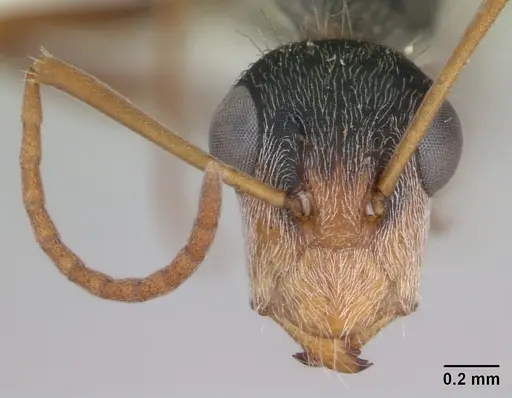
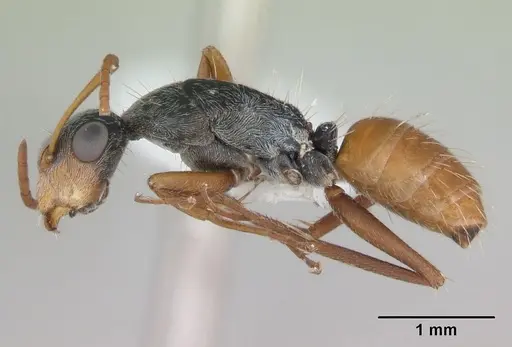
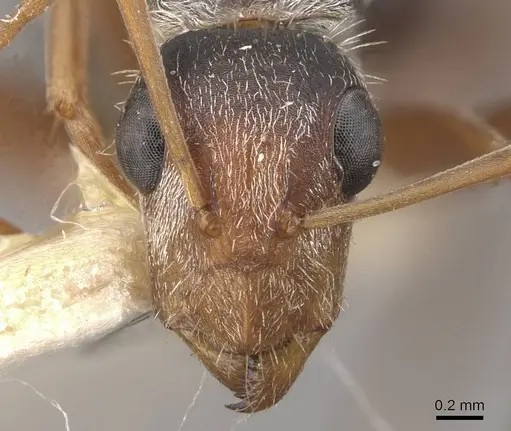
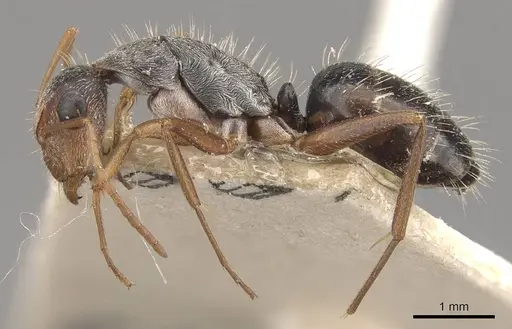
Camponotus innocens is a Neotropical carpenter ant species native to Paraguay and northern Argentina. Workers are polymorphic, with major workers developing larger heads for colony defense and minor workers handling most foraging tasks. The species was previously classified as a variety of Camponotus trapeziceps but was elevated to full species status based on its more slender head, more elongate mesosoma, and thicker longer pubescence [1]. Like other Camponotus species, they are moderate-sized ants with the characteristic heart-shaped post-petiole (the narrow waist segment connecting thorax and abdomen) typical of the subfamily Formicinae. These ants nest in natural cavities, typically in rotting wood or under bark, and maintain moderate-sized colonies.
Quick Summary
- Difficulty: Medium
- Origin & Habitat: Neotropical species found in Paraguay and northern Argentina, specifically recorded in the Amambay and Cordillera regions [1]. In the wild, they likely inhabit forest edge habitats and tropical savanna environments where they nest in rotting wood or soil cavities.
- Colony Type: Colony structure is unconfirmed for this specific species. Most Camponotus species are monogyne (single queen colonies), though some can be polygynous. The typical Camponotus colony has one founding queen that establishes the nest alone.
- Founding: Claustral
- Size & Growth:
- Queen: Estimated 12-16mm based on typical Camponotus queen size range, not directly measured for this species
- Worker: Minor workers: 6-8mm, Major workers: 10-14mm, typical for Camponotus genus [2]
- Colony: Estimated up to several thousand workers based on typical Camponotus colony development [2]
- Growth: Moderate, Camponotus species typically grow more slowly than smaller ants, taking several months to establish first workers
- Development: Estimated 6-10 weeks at optimal temperature based on typical Camponotus development [2] (Development time is temperature-dependent, warmer temperatures within safe range accelerate development. First workers (nanitics) are typically smaller than mature workers.)
- Antkeeping:
- Temperature: Keep nest area at 24-28°C. As a Neotropical species, they prefer warm conditions. A heating cable on one side of the nest creates a temperature gradient allowing ants to self-regulate. Room temperature of 24-26°C is suitable without additional heating.
- Humidity: Moderate humidity around 50-70%. Keep nest substrate slightly moist but not waterlogged. Provide a water tube as a humidity source and allow condensation to form periodically. Avoid both drying out and excessive dampness.
- Diapause: Not required in the same way as temperate species. Neotropical ants may slow down during cooler months but do not need true hibernation. If room temperature drops significantly in winter, reduce feeding frequency and expect reduced activity.
- Nesting: Y-tong (acrylic) nests work well for this species. The chambers should be appropriately sized, not too large for small colonies, expandable as the colony grows. Camponotus prefer nests with narrow passages and dark chambers. Naturalistic setups with rotting wood or cork bark are also suitable.
- Behavior: Camponotus innocens is generally calm and not overly aggressive compared to some carpenter ant species. Workers are primarily nocturnal or crepuscular, foraging for honeydew, aphid secretions, and small insects. They are moderate escape artists, not the smallest ants, but capable of finding small gaps. Use standard escape prevention (fluon on rim edges, tight-fitting lids). Major workers can deliver a mild sting if threatened, though Camponotus stings are typically not dangerous to humans.
- Common Issues: slow colony growth can frustrate beginners who expect rapid development, colonies may stall if temperature drops below optimal range for extended periods, major workers are expensive for the colony to produce, so growth is inherently slower than smaller ant species, wild-caught colonies may harbor parasites that cause problems in captivity, test tube setups can flood if water reservoirs are overfilled, use appropriate tube size for colony size
Nest Preferences and Housing
Camponotus innocens does well in Y-tong (acrylic) nests, which provide the dark, enclosed chambers these ants prefer. The chambers should be appropriately scaled to colony size, too large a nest can stress small colonies. For founding queens, a standard test tube setup with a cotton water reservoir works well. As the colony grows (50+ workers), consider transitioning to a formicarium with multiple connected chambers. Camponotus are not aggressive nest destroyers, so acrylic, plaster, and naturalistic setups all work. Ensure the nest has some damp substrate or a water tube to maintain humidity. Avoid direct sunlight on the nest, as this can cause temperature fluctuations and drying. [2]
Feeding and Diet
Like other Camponotus species, C. innocens is omnivorous with a preference for sugar sources. Offer sugar water (1:3 ratio with water) or honey as a constant energy source. For protein, provide small insects like fruit flies, small crickets, or mealworms. Camponotus workers can tackle prey items larger than themselves thanks to their cooperative behavior. Feed protein 2-3 times per week for growing colonies, less for established ones. Remove uneaten prey after 24-48 hours to prevent mold. Some colonies accept protein jelly or cat food as alternatives. Fresh fruit can also be offered occasionally. [2]
Temperature and Seasonal Care
As a Neotropical species from Paraguay and Argentina, Camponotus innocens prefers warm conditions. Keep the nest area at 24-28°C for optimal brood development. Temperatures below 20°C can slow colony growth significantly, and prolonged cold may cause colony decline. A heating cable placed on one side of the nest creates a gradient that allows ants to regulate their temperature. Unlike temperate species, they do not require a true hibernation diapause. However, if your room temperature drops significantly in winter (below 18°C), reduce feeding frequency and expect reduced activity, this is a natural seasonal slowdown, not full hibernation.
Colony Development and Growth
Camponotus colonies grow more slowly than many smaller ant species. A newly mated queen will lay her first eggs within 1-2 weeks of sealing into a founding chamber. These eggs develop through larva and pupa stages to become workers (nanitics) in approximately 6-10 weeks at optimal temperature. The first workers are typically smaller than mature workers. After the nanitics emerge, the queen stops foraging entirely and focuses on egg production. Colony growth accelerates as more workers are produced, but major workers (soldiers) are energetically expensive and take longer to develop. A healthy colony may reach several hundred workers within 1-2 years under good conditions. Patience is key with Camponotus, they are long-lived ants that can thrive for many years once established. [2]
Behavior and Temperament
Camponotus innocens is generally a calm species that is a good choice for antkeepers wanting larger ants without extreme aggression. Workers are primarily active at night or during dim lighting conditions, though they will forage during the day if food is available. Major workers serve as colony defenders and can deliver a mild sting if the nest is threatened. Unlike some aggressive species, they are not particularly territorial and typically won't swarm aggressively at the slightest disturbance. They communicate through chemical trails and can recruit multiple workers to large food discoveries. The escape risk is moderate, they are large enough that standard barriers work well, but always use fluon on rim edges as a precaution.
Frequently Asked Questions
How long does it take for Camponotus innocens to produce first workers?
Expect first workers (nanitics) in approximately 6-10 weeks after the queen lays eggs, assuming optimal temperature around 24-28°C. This timeline varies based on temperature, warmer conditions speed development while cooler temperatures slow it significantly.
What do Camponotus innocens ants eat?
They are omnivorous with a strong preference for sugar. Offer sugar water or honey constantly, plus protein sources like small insects (fruit flies, pinhead crickets, mealworms) 2-3 times per week. They will also accept fruit and occasionally protein jelly.
Can I keep multiple Camponotus innocens queens together?
This has not been studied for this specific species. Most Camponotus are monogyne (single queen), and combining unrelated queens typically leads to fighting. It is not recommended to attempt multi-queen setups unless you have specific evidence this species tolerates it.
What temperature do Camponotus innocens need?
Keep them warm at 24-28°C. As a Neotropical species, they prefer temperatures in this range for optimal brood development. A heating cable on part of the nest creates a beneficial gradient.
Is Camponotus innocens a good beginner ant?
They are rated as medium difficulty. They are more forgiving than some exotic species but require more patience than smaller ants due to slower growth. They are a good choice if you want larger ants and can commit to multi-year colony development.
When should I move Camponotus innocens to a formicarium?
You can keep them in a test tube setup until the colony reaches 30-50 workers. Once the test tube becomes crowded or the water reservoir is depleted, transition to a small formicarium or Y-tong nest. Camponotus prefer tight, dark chambers rather than large open spaces.
Do Camponotus innocens need hibernation?
No, they do not require true hibernation. As a Neotropical species from Paraguay and Argentina, they are not adapted to freezing temperatures. However, they may slow down during cooler winter months if your room temperature drops significantly.
How big do Camponotus innocens colonies get?
Mature colonies can reach several thousand workers over several years. They are long-lived ants, a healthy colony can thrive for 10+ years with proper care.
Why is my Camponotus innocens colony not growing?
Common causes include: temperatures below optimal range (below 24°C), insufficient protein feeding, too large a nest for a small colony, or stress from frequent disturbances. Check temperature first, ensure consistent protein feeding, and minimize nest inspections during founding.
References

This caresheet is licensed under CC BY-SA 4.0 .
CASENT0173427
View on AntWeb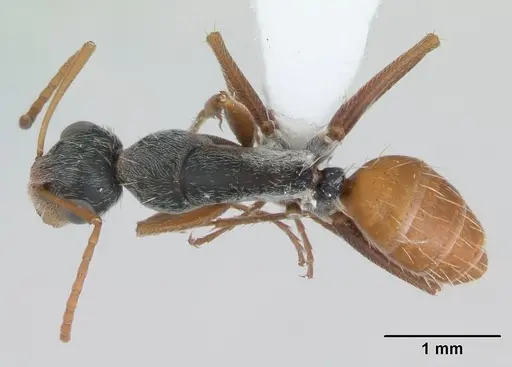
CASENT0910649
View on AntWeb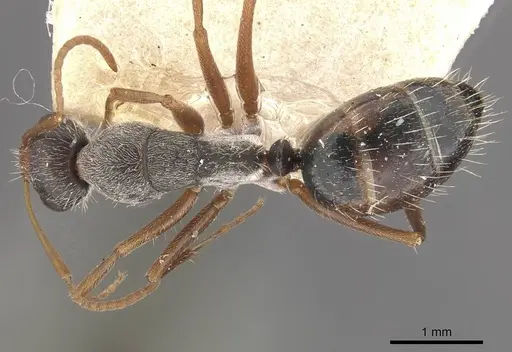
Literature
Loading...Loading products...