

Camponotus donnellani
- Scientific Name
- Camponotus donnellani
- Tribe
- Camponotini
- Subfamily
- Formicinae
- Author
- Shattuck & McArthur, 2002
- Distribution
- Found in 1 countries
Camponotus donnellani Overview
Camponotus donnellani is an ant species of the genus Camponotus. It is primarily documented in 1 countries , including Australia. Detailed taxonomic data and occurrence records can be further explored via authoritative databases such as AntWeb or the Global Biodiversity Information Facility (GBIF).
Camponotus donnellani
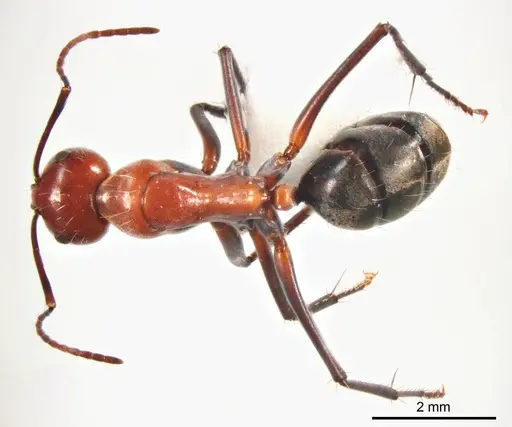
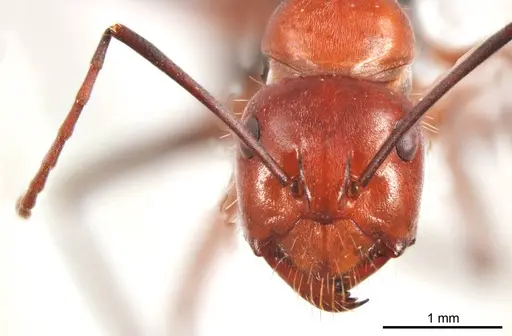
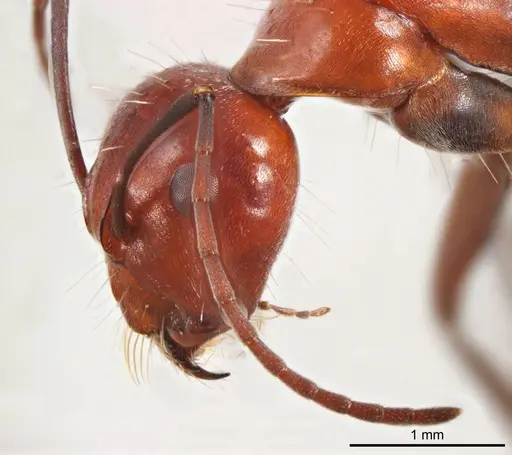
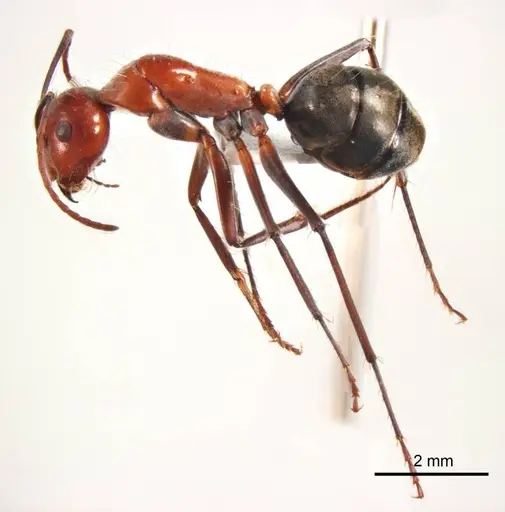
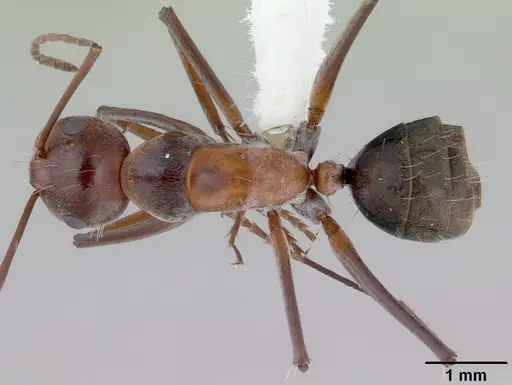
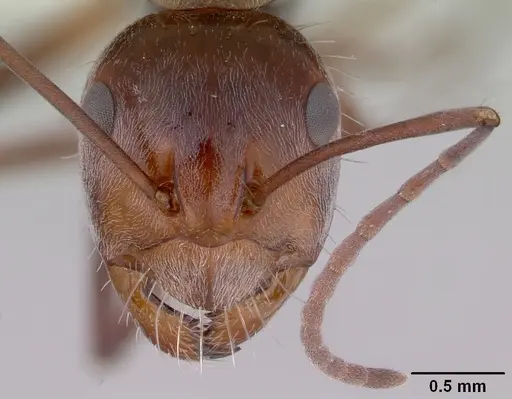
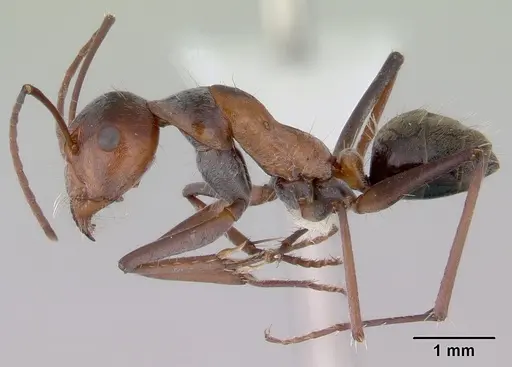
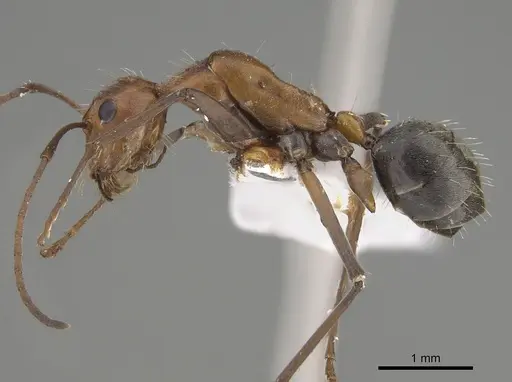
Camponotus donnellani is a small carpenter ant species native to arid regions of central Australia. Minor workers measure approximately 1.58mm in head length, with a head, mesosoma and petiole that are red in color, often with dark red-black infuscation on the upper surfaces. The gaster is dark red-black, while the legs are red-black basally and red distally. This species has been collected from sand hills in the Great Victorian Desert where it associates with Triodia (spinifex) vegetation. It belongs to the Formicinae subfamily and is similar in appearance to Camponotus arenatus but differs in its smaller minor workers and flatter mesosomal dorsum. The species was named after Dr Steve Donnellan, who collected the type specimens.
Quick Summary
- Difficulty: Unknown, this is a rarely collected species with minimal biological data available
- Origin & Habitat: Endemic to arid central Australia, specifically Western Australia, north-western South Australia, and south-western Northern Territory. Found in sand hill habitats associated with Triodia spp. (spinifex) in the Great Victorian Desert [1][2].
- Colony Type: Colony structure is unconfirmed. No data exists on whether this species forms single-queen (monogyne) or multi-queen (polygyne) colonies.
- Size & Growth:
- Queen: Undescribed, no queen specimens have been documented [1]
- Worker: Minor workers approximately 1.58mm head length,2.58mm mesosoma length [1]
- Colony: Unknown, no colony size data exists for this species
- Growth: Unknown, no development data available
- Development: Unconfirmed, no direct observations. Based on typical Camponotus patterns, expect 6-10 weeks at optimal temperature (Development timeline has not been directly studied for this species. Camponotus species typically produce nanitic (first) workers that are smaller than normal workers.)
- Antkeeping:
- Temperature: Inferred from arid Australian habitat: keep warm, roughly 22-28°C with a gentle gradient. Adjust based on colony activity.
- Humidity: Inferred from desert/sand hill habitat: prefer dry to moderately humid conditions. Avoid excessive moisture, think arid to semi-arid, not tropical humidity.
- Diapause: Likely, most Australian Camponotus species undergo a winter rest period. Specific requirements unconfirmed.
- Nesting: Inferred from habitat: likely nests in soil or under stones in sandy substrates. A naturalistic setup with sandy substrate or a Y-tong/plaster nest with dry to moderately humid conditions would likely work well.
- Behavior: Behavior is unstudied. Based on genus patterns, these are likely moderate foragers that scavenge for carbohydrates and protein. Escape risk is moderate given their small size, use standard Camponotus escape prevention. No documented sting reports, though Camponotus species can bite and may use formic acid in defense.
- Common Issues: limited availability, this species is rarely collected and not commonly available in the antkeeping hobby, no established care guidelines, all recommendations are inferences from genus patterns and habitat, slow growth expected, Camponotus species are generally slower to establish than tropical species, desert species may be sensitive to overwatering, keep conditions drier than typical tropical ant setups, hibernation requirements unclear, may need a cool period but duration and temperature are unknown
Species Identification and Appearance
Camponotus donnellani is a small ant species with distinctive coloring. Minor workers have a red head, mesosoma and petiole, often with darker red-black coloration on the upper surfaces of the head, pronotum and sometimes mesonotum. The gaster is dark red-black, while the legs are red-black at the base and red toward the tips. Key identification features include: propodeum with at most 4 elongate erect hairs near the angle between dorsal and posterior faces, gently convex pronotum and mesonotum with an indistinct metanotal groove, and tibiae and scapes lacking erect setae. The species is similar to Camponotus arenatus but has smaller minor workers and a flatter mesosomal dorsum. It may also be confused with smaller, paler workers of Camponotus ceriseipes, but differs in having fewer erect hairs on the propodeal dorsum. [1]
Distribution and Habitat
This species has a limited distribution in arid central Australia. It has been recorded from Western Australia, north-western South Australia, and south-western Northern Territory. The type specimens were collected from Kings Creek Station in the Northern Territory. The species is associated with sand hill habitats in the Great Victorian Desert, where it is found in association with Triodia spp. (commonly known as spinifex or porcupine grass). This suggests it prefers sandy substrates in arid to semi-arid environments. The Barrow Island records represent a slight western extension of the known range, though only single specimens were collected in each survey. [1][2]
Nest Preferences and Housing
Based on the species' association with sand hills and Triodia in its natural habitat, it likely nests in sandy soil substrates or under stones in arid areas. For captive care, a naturalistic setup with a sandy substrate would be most appropriate. A Y-tong (acrylic) nest or plaster nest with dry to moderately humid conditions would likely suit this species well. Avoid overly humid conditions, this is a desert species that would not tolerate the damp conditions preferred by many tropical ants. Provide a temperature gradient allowing the ants to choose their preferred warmth level. [1]
Feeding and Diet
As a Camponotus species, C. donnellani likely has a typical carpenter ant diet. In the wild, these ants probably scavenge for carbohydrate sources like honeydew from aphids and scale insects, as well as protein from small insects and arthropods. In captivity, offer sugar water or honey as a constant carbohydrate source, and provide protein sources like small crickets, mealworms, or other appropriate-sized prey. Given the species' small size, prey items should be appropriately scaled. The arid habitat suggests they may be more opportunistic feeders rather than aggressive hunters.
Temperature and Seasonal Care
Given the species' origin in the arid interior of Australia, it should be kept warm but not hot. A temperature range of roughly 22-28°C with a gentle gradient is appropriate. The ants should be able to move between warmer and cooler areas of the nest to regulate their own temperature. Most Australian Camponotus species undergo a winter rest period (diapause), so expect to reduce temperatures during the winter months. The exact duration and temperature requirements are unknown for this specific species, but a cool period of 2-3 months at around 10-15°C would be consistent with related species.
Challenges and Considerations
Camponotus donnellani presents significant challenges for antkeepers. This is one of the least-studied Australian ant species, with virtually no biological data available beyond museum specimens. There are no established care guidelines, and all recommendations must be inferred from genus patterns and habitat data. The species is rarely collected and is not available in the antkeeping hobby. If you do obtain specimens, expect a learning curve as you discover what conditions this species prefers. Document your observations carefully, as any captive records would contribute valuable biological data to what is currently a knowledge gap. [1]
Frequently Asked Questions
How do I keep Camponotus donnellani ants?
This species is not commonly kept and has no established care guidelines. Based on its arid Australian habitat, use a naturalistic setup with sandy substrate and keep conditions dry to moderately humid. Maintain temperatures around 22-28°C with a gradient. This is an expert-level species due to the lack of available biological data.
What do Camponotus donnellani eat?
Like other Camponotus species, they likely accept sugar sources (honey, sugar water) and protein (small insects). No specific feeding observations exist for this species, but offer appropriately-sized prey items and a constant carbohydrate source.
How big do Camponotus donnellani colonies get?
Colony size is unknown, no colony size data exists for this species. Based on related Camponotus species, colonies likely reach several hundred to a few thousand workers over several years.
How long does it take for Camponotus donnellani to produce first workers?
The egg-to-worker timeline is unconfirmed for this species. Based on typical Camponorus patterns, expect approximately 6-10 weeks at optimal temperature, but this is an estimate only.
Is Camponotus donnellani good for beginners?
No, this species is not recommended for beginners. It is rarely available, and there are no established care guidelines. All husbandry recommendations are inferences from genus patterns and habitat data.
Where does Camponotus donnellani live?
This species is endemic to arid central Australia, found in Western Australia, north-western South Australia, and south-western Northern Territory. It lives in sand hill habitats associated with Triodia (spinifex) in the Great Victorian Desert.
Does Camponotus donnellani need hibernation?
Likely yes, most Australian Camponotus species undergo a winter rest period. Specific diapause requirements are unconfirmed, but expect to provide a cool period of 2-3 months during winter.
Can I keep multiple queens together?
Colony structure (monogyne vs polygyne) is unconfirmed for this species. No data exists on whether multiple queens can be kept together or how they establish colonies.
What is the queen size of Camponotus donnellani?
Queen size is undescribed, no queen specimens have been documented in scientific literature. The species was described from minor worker specimens only.
References

This caresheet is licensed under CC BY-SA 4.0 .
Literature
Loading...Loading products...