

Camponotus chrislaini
- Scientific Name
- Camponotus chrislaini
- Subgenus
- Mayria
- Tribe
- Camponotini
- Subfamily
- Formicinae
- Author
- Rasoamanana & Fisher, 2022
- Distribution
- Found in 1 countries
Camponotus chrislaini Overview
Camponotus chrislaini is an ant species of the genus Camponotus. It is primarily documented in 1 countries , including Madagascar. Detailed taxonomic data and occurrence records can be further explored via authoritative databases such as AntWeb or the Global Biodiversity Information Facility (GBIF).
Camponotus chrislaini
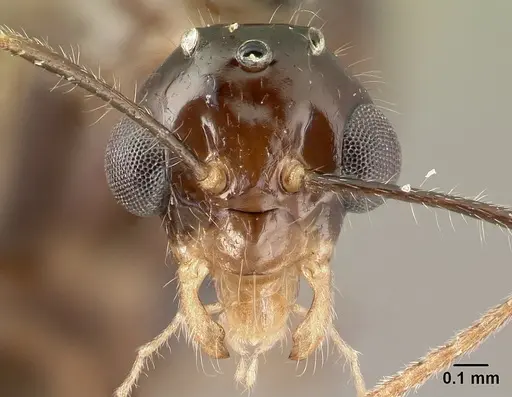
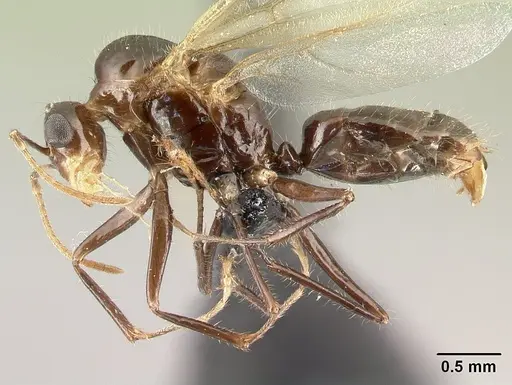
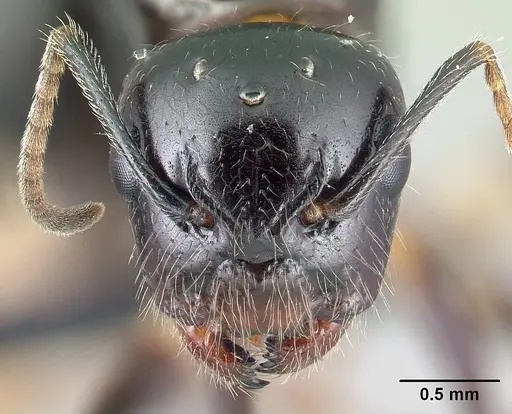
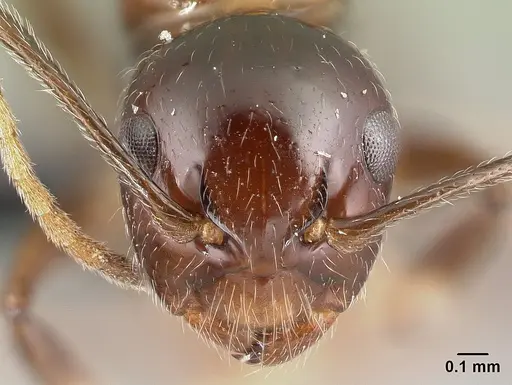
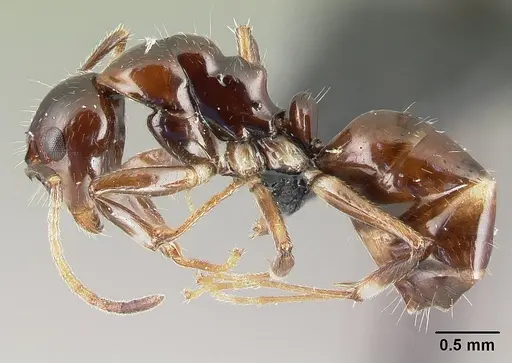
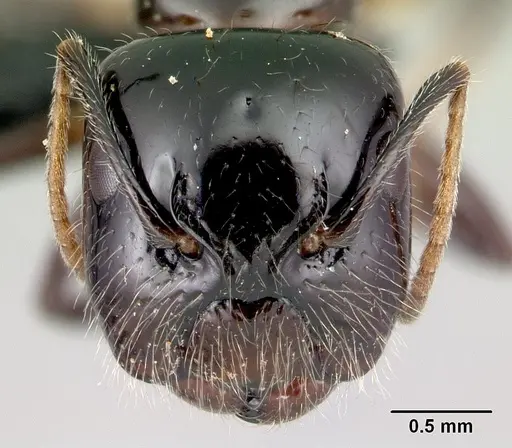
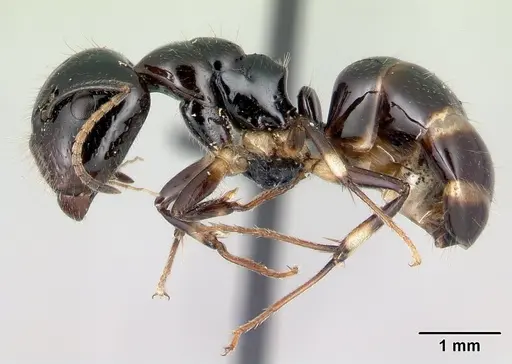
Camponotus chrislaini is a medium-sized ant species native to northern Madagascar, recently described in 2022. Workers come in two sizes: minor workers at about 1mm and major workers reaching 1.6-1.7mm. The species is easily recognized by its smooth, shiny body surface and distinctive head shape, minor workers have a rounded, almost globe-like head, while majors develop a more square-shaped head. Their mandibles have five teeth, which is unique among described Mayria species [1]. They belong to the Camponotus efitra species group and nest in rotting wood, tree hollows, and leaf litter in tropical forests [1].
This species shows remarkable habitat flexibility, thriving in both dry forests and wet montane rainforests across northern Madagascar below 1000m elevation [1]. Their smooth sculpture and wavy back profile set them apart from related species. For antkeepers, they represent an interesting opportunity to keep a recently described species with documented care requirements.
Quick Summary
- Difficulty: Medium
- Origin & Habitat: Northern Madagascar, found in tropical dry forest, dry forest, disturbed dry forest, montane forest, and rainforest below 1000m elevation [1]. They nest in rotten logs, sifted litter, inside trees, and on branches above ground [2].
- Colony Type: Single-queen colonies (monogyne) based on typical Camponotus patterns. Queens likely claustral, they seal themselves in to raise their first workers alone, living off stored body fat.
- Colony: Monogyne
- Founding: Claustral
- Size & Growth:
- Queen: Not directly measured, estimated 12-15mm based on related Camponotus species
- Worker: Minor workers: 0.87-1.02mm, Major workers: 1.57-1.74mm [1]
- Colony: Unknown, likely several hundred workers based on typical Camponotus colony growth
- Growth: Moderate, expect 6-10 weeks from egg to first workers based on genus patterns
- Development: 6-10 weeks estimated based on typical Camponotus development at 24-26°C (Development time is inferred from related species, direct measurements not available for this recently described species)
- Antkeeping:
- Temperature: Keep at 22-26°C. Madagascar species from moderate elevations can handle a range from 20°C up to 28°C. Use a heating cable on one side of the nest to create a gentle gradient.
- Humidity: Maintain moderate to high humidity, aim for 60-80%. Their natural habitat includes rainforest and montane forest areas. Keep the nest substrate moist but not waterlogged, with some drier areas available.
- Diapause: A mild temperature reduction in winter is recommended. Reduce to 15-18°C for 2-3 months during the cooler season. This simulates their natural cycle in Madagascar's seasonal climate.
- Nesting: Y-tong (AAC) nests work well, or plaster nests with chambers scaled to their medium size. They naturally nest in rotting wood and tree hollows, so provide appropriate nesting material. Test tubes are suitable for founding colonies.
- Behavior: Generally calm and non-aggressive compared to some Camponotus species. Workers are medium-sized and not particularly fast-moving. They forage for honeydew and small insects. Major workers can defend the colony with their mandibles but rarely show aggressive behavior toward keepers. Escape risk is moderate, their medium size means standard escape prevention measures are sufficient. They are primarily nocturnal foragers but can be active during the day.
- Common Issues: colonies may grow slowly initially, patience is needed during the founding phase, humidity control is important, too dry and brood will fail, too wet and mold becomes a problem, wild-caught colonies may carry parasites that can devastate captive colonies, major workers have strong mandibles and can deliver a painful bite if handled roughly, temperature fluctuations can stress colonies, avoid placing nests near windows or air vents
Nest Preferences and Housing
Camponotus chrislaini naturally nests in rotting wood, tree hollows, and above-ground locations like branches and leaf litter. For captivity, Y-tong (AAC) nests are an excellent choice as they mimic the wooden cavities these ants naturally use. Plaster nests also work well and allow you to control humidity more precisely. Test tubes are suitable for founding colonies, use a standard test tube setup with a water reservoir connected via cotton. The nest should have chambers sized appropriately for their medium body size. Avoid very large, open spaces in the nest as these ants prefer snug, enclosed chambers. Provide a dark area for the nest as they naturally nest in concealed locations. [1][2]
Feeding and Diet
Like other Camponotus species, C. chrislaini is omnivorous with a preference for sugar sources. Offer sugar water, honey, or diluted maple syrup as a constant energy source. For protein, provide small insects like fruit flies, pinhead crickets, or mealworms. They are not aggressive predators but will accept pre-killed insects. In the wild, they likely tend aphids or collect honeydew from scale insects, you can simulate this by offering sugar water. Feed protein 2-3 times per week, and keep sugar water available at all times. Remove uneaten food after 48 hours to prevent mold. Minor workers are quite small, so ensure prey items are appropriately sized. [2]
Temperature and Seasonal Care
Maintain temperatures between 22-26°C for optimal colony development. These ants come from Madagascar's diverse forests at elevations below 1000m, so they can tolerate a range of conditions. A heating cable placed on one end of the nest creates a temperature gradient that allows ants to self-regulate. During winter, reduce temperatures to 15-18°C for 2-3 months to provide a rest period. This mimics the cooler dry season in their native habitat. Do not allow temperatures to drop below 15°C or rise above 30°C. Room temperature within the 20-26°C range is often acceptable without additional heating. [1]
Humidity Requirements
These ants prefer moderate to high humidity, reflecting their presence in both dry forests and rainforest habitats. Aim for 60-80% relative humidity in the nest area. Keep the substrate or nest material consistently moist but never waterlogged. You can achieve this by misting the outworld occasionally or using a water reservoir in test tube setups. The key is consistency, sudden swings in humidity can stress the colony. If you see condensation constantly pooling in the nest, it's too wet. If the nest material feels completely dry, it's too dry. Some drier areas in the setup are beneficial so ants can choose their preferred microclimate. [1][2]
Colony Founding
Like most Camponotus species, C. chrislaini is claustral, the queen seals herself in a chamber and raises her first workers without leaving to forage. She relies entirely on stored fat reserves to survive and feed the developing larvae. Expect 6-10 weeks from egg to first worker (nanitics) at optimal temperature. The first workers will be smaller than mature workers but will quickly grow as the colony expands. Do not disturb the founding chamber during this period, queens are sensitive to vibrations and may abandon or eat their brood if stressed. Once the first workers emerge, you can begin offering minimal food, but the colony will continue relying on stored reserves for some time. [2]
Behavior and Temperament
Camponotus chrislaini is generally a calm species that adapts well to captivity. Workers are not particularly aggressive and are unlikely to bite unless directly handled or threatened. The major workers have well-developed mandibles and can deliver a noticeable bite if provoked, but they typically retreat rather than attack. They are primarily nocturnal foragers but will show activity during the day as well. Workers communicate using chemical signals and will recruit nestmates to food sources. Escape prevention is important but not as critical as with tiny species, standard barriers and tight-fitting lids are sufficient. These ants are not known for any unusual behaviors beyond typical Camponotus patterns. [2]
Frequently Asked Questions
How long does it take for Camponotus chrislaini to raise first workers?
Expect 6-10 weeks from egg to first worker at optimal temperature (22-26°C). This is typical for Camponotus species. The exact timing depends on temperature and whether the queen was mated before capture.
What do Camponotus chrislaini eat?
They are omnivorous. Offer sugar water, honey, or maple syrup constantly for energy. For protein, provide small insects like fruit flies, pinhead crickets, or mealworms 2-3 times per week. Remove uneaten food after 48 hours.
What temperature is best for Camponotus chrislaini?
Keep them at 22-26°C. A slight gradient with a heating cable on one end is ideal. In winter, reduce to 15-18°C for a 2-3 month rest period.
Are Camponotus chrislaini good for beginners?
They are rated as medium difficulty. They are more forgiving than some species but require attention to humidity and temperature. They are a good choice after keeping a few easier species like Lasius.
How big do Camponotus chrislaini colonies get?
Colony size is not documented but based on typical Camponotus growth patterns, expect several hundred workers over several years. Major workers develop as the colony matures.
Do Camponotus chrislaini need hibernation?
Yes, a mild diapause is recommended. Reduce temperatures to 15-18°C for 2-3 months during winter. This mimics their natural seasonal cycle in Madagascar.
Can I keep multiple Camponotus chrislaini queens together?
No, this species is monogyne (single-queen). Unlike some ants, they do not form multi-queen colonies. Only keep one queen per colony.
What type of nest is best for Camponotus chrislaini?
Y-tong (AAC) nests or plaster nests work well. They naturally nest in rotting wood and tree hollows. Test tubes are suitable for founding colonies.
How often should I feed Camponotus chrislaini?
Offer sugar water constantly, it should always be available. Feed protein (insects) 2-3 times per week. Adjust based on colony size, larger colonies can handle more food.
Why is my Camponotus chrislaini colony dying?
Common causes include: incorrect humidity (too dry or too wet), temperature stress, parasites from wild-caught colonies, or mold from uneaten food. Check all parameters and remove dead ants promptly.
Is Camponotus chrislaini invasive anywhere?
No, this species is endemic to northern Madagascar and has not been documented as invasive elsewhere. Never release ant colonies into non-native areas.
References

This caresheet is licensed under CC BY-SA 4.0 .
CASENT0498997
View on AntWeb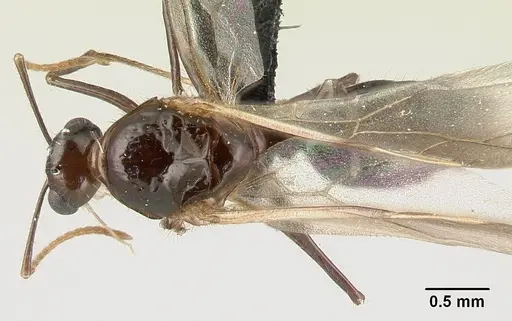
CASENT0498998
View on AntWeb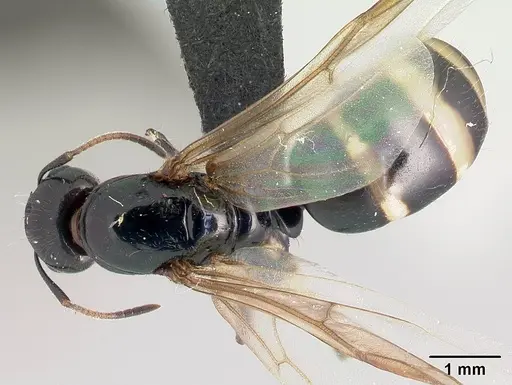
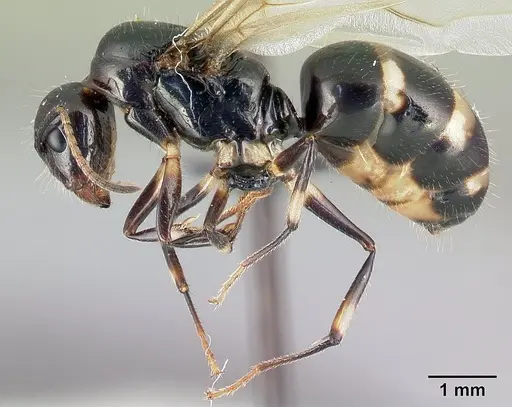
CASENT0498999
View on AntWeb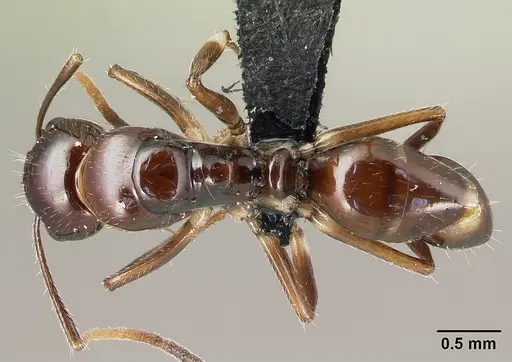
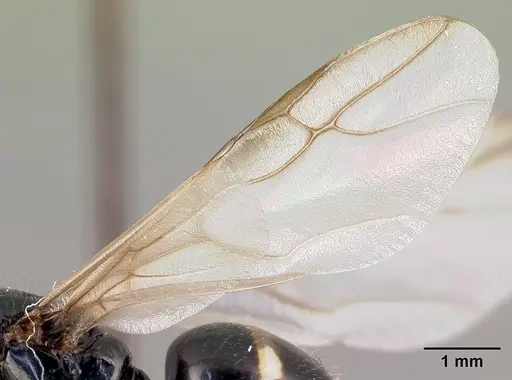
CASENT0499002
View on AntWeb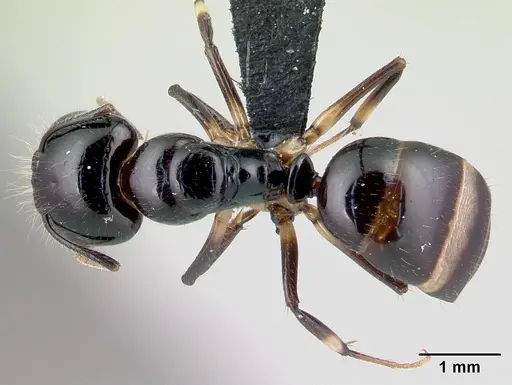
Literature
Loading...Loading products...