Calyptomyrmex foreli - "Armored Ant / Leaf-litter Ant"
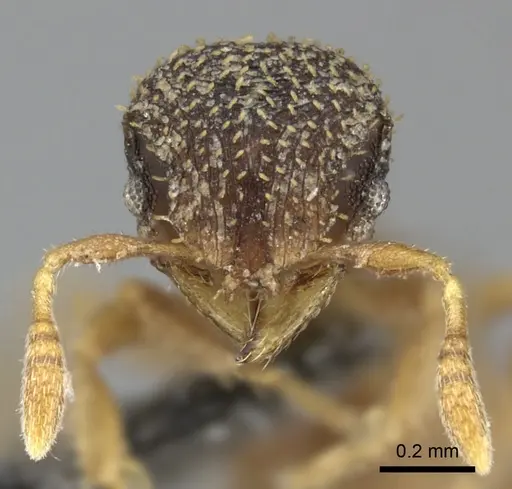
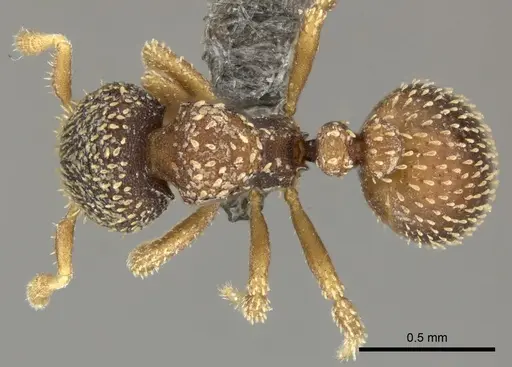
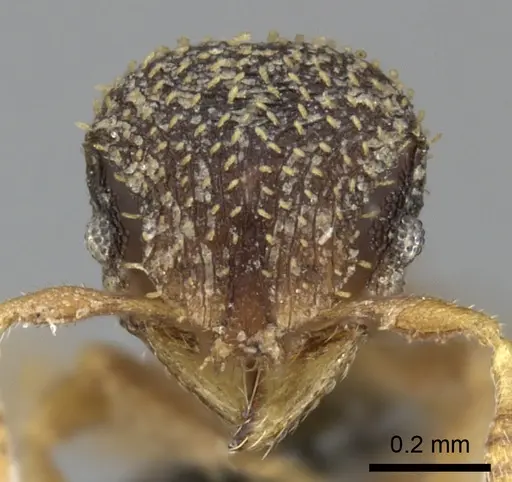
Calyptomyrmex foreli is a fascinating ant species known for its unique appearance and cryptic behavior. Workers are small, typically ranging from 2.3 to 3.0 mm in length, and are characterized by their rough, sculpted bodies and spatulate (paddle-shaped) hairs. These specialized hairs often hold a layer of soil, providing excellent camouflage as they forage in leaf litter or subterranean environments. The head of the worker is distinctly longer than it is wide, with convex eyes and prominent antennal scrobes that can completely house their antennae when at rest. This species is part of the Myrmicinae subfamily and is mainly found in rainforests, where it forages alone or in small groups.
- Difficulty: Hard
- Origin & Habitat: Africa (Eritrea, Ethiopia, Gabon, South Africa, Kenya) in Rainforests, leaf litter, rotten wood, directly in soil.
- Colony Type: Monogyne (single queen), claustral (queen seals herself in) founding.
- Size & Growth:
- Queen: 6.0-8.5mm
- Worker: 1.9-3.0mm
- Colony: Small (hundreds). Slow growth.
- Antkeeping:
- Temperature: Maintain a stable temperature between 24-28°C for optimal development. Higher temperatures can accelerate brood growth, but consistency is key..
- Humidity: High humidity is crucial, ideally ranging from 70-90% within the nest. The foraging area can be slightly drier, around 50-70%, to prevent mold but still provide sufficient moisture..
- Diapause: Not required. Not specified at Not specified.
- Nesting: As they are hypogaeic (underground nesting) and found in rotten wood or soil in their natural habitat, a naturalistic setup is preferred. Plaster or naturalistic soil nests with good moisture retention are ideal. Avoid large open spaces..
- Behavior: Low (towards handler) aggressiveness.
- Common Issues: Specialized diet leading to feeding difficulties, Maintaining consistent high humidity, Lack of information on long-term captive care, Colony stalling due to stress or improper conditions, Mold in nest due to high humidity.
Keeping Calyptomyrmex foreli in a captive setup can be quite challenging due to their specialized needs and cryptic nature. These ants are rarely encountered, even in the wild, which means there's limited information on their exact care requirements. Their unique camouflage, where workers cover themselves in soil, suggests they thrive in environments where they can easily blend in. Providing a naturalistic formicarium with plenty of substrate options will be vital for their well-being and to observe their fascinating behavior.
Their diet in the wild consists primarily of arthropod eggs, as observed in related Calyptomyrmex rectopilosus species. This highly specialized diet means that keepers will need to source or cultivate appropriate prey items, which can be a significant hurdle. Offering a variety of small arthropod eggs, such as those from crickets or other feeder insects, will be crucial. General insect parts or sugars might not be sufficient for a thriving colony.
Colony founding for Calyptomyrmex foreli is claustral, meaning the queen will seal herself off and raise her first generation of nanitics without foraging. This behavior implies that initial setups should provide a secure and undisturbed environment, such as a test tube setup with a water reservoir. Once the first workers emerge, transitioning them to a small, specialized nest that caters to their subterranean and leaf-litter dwelling preferences is important.
Given their small colony size, estimated around 112 individuals, and slow growth rate, patience is paramount when keeping Calyptomyrmex foreli. Overly large nests or outworlds can easily stress these tiny ants and make them feel insecure. Starting with a compact setup and gradually expanding as the colony grows will be beneficial. Monitoring humidity and temperature precisely without disturbing the colony too much will be a delicate balance for aspiring keepers.
One of the most distinctive features of Calyptomyrmex workers is their unique morphology, including deep antennal scrobes and a bilobed clypeus, which aid in their cryptic lifestyle. Observing these features and their foraging behaviors can be incredibly rewarding, but it requires a keen eye and a patient approach. Because they forage alone or in small numbers, it might be challenging to observe their full activity cycle, making them truly a species for advanced ant enthusiasts seeking a unique challenge.
Frequently Asked Questions
What makes Calyptomyrmex foreli a difficult ant species to keep?
Calyptomyrmex foreli is considered a hard species to keep for several reasons, primarily due to their specialized diet (arthropod eggs), specific humidity and temperature needs, small colony sizes, and cryptic nature, making observation and providing optimal conditions a significant challenge for even experienced antkeepers.
Where does Calyptomyrmex foreli naturally live?
These fascinating ants are native to various parts of Africa, including Eritrea, Ethiopia, Gabon, South Africa, and Kenya. They prefer moist environments such as rainforests, typically nesting in rotten wood or directly within the soil and foraging in leaf litter.
What do Calyptomyrmex foreli eat?
Their diet is highly specialized; they are predators primarily feeding on arthropod eggs. This means that providing a varied diet of tiny insect eggs, rather than just common feeder insects, is crucial for their long-term health in a formicarium.
How large do Calyptomyrmex foreli colonies get?
Calyptomyrmex foreli colonies are relatively small, with an average colony size estimated to be around 112 individuals. This 'small colony' classification means they won't overrun large formicaria and thrive in more compact setups.
Do Calyptomyrmex foreli sting?
There is no information to suggest that Calyptomyrmex foreli possess a sting that would be medically significant to humans, or are prone to stinging handlers. They are generally not considered aggressive towards antkeepers.
What type of nest is best for Calyptomyrmex foreli?
Given their natural preference for nesting in rotten wood and soil, a naturalistic nest setup is highly recommended. Plaster nests or setups mimicking their hypogaeic (underground) environment with high humidity and appropriate substrate are ideal.
How do Calyptomyrmex foreli queens start a colony?
Calyptomyrmex foreli queens are claustral, meaning they seal themselves off in a chamber after their nuptial flight and raise their first generation of workers (nanitics) using their stored energy reserves, without needing to forage for food initially.
Do Calyptomyrmex foreli workers have different sizes?
While there isn't information on distinct 'major' or 'minor' castes beyond the basic worker, the workers themselves range in size from approximately 1.9 mm to 3.0 mm. This size variation within the worker caste is common among many ant species.
Is diapause (hibernation) required for Calyptomyrmex foreli?
Based on their tropical African origins, Calyptomyrmex foreli are not typically described as needing a diapause period. Maintaining stable, warm temperatures year-round is generally preferred for this species.
Why are Calyptomyrmex foreli often covered in soil?
Workers of the Calyptomyrmex genus are known for covering themselves with a layer of soil, which is facilitated by their enlarged and spatulate hairs. This behavior serves as an excellent form of camouflage, helping them blend into their leaf litter and subterranean foraging environments.