

Azteca oecocordia
- Scientific Name
- Azteca oecocordia
- Tribe
- Leptomyrmecini
- Subfamily
- Dolichoderinae
- Author
- Longino, 2007
- Distribution
- Found in 2 countries
Azteca oecocordia Overview
Azteca oecocordia is an ant species of the genus Azteca. It is primarily documented in 2 countries , including Brazil, Costa Rica. Detailed taxonomic data and occurrence records can be further explored via authoritative databases such as AntWeb or the Global Biodiversity Information Facility (GBIF).
Azteca oecocordia
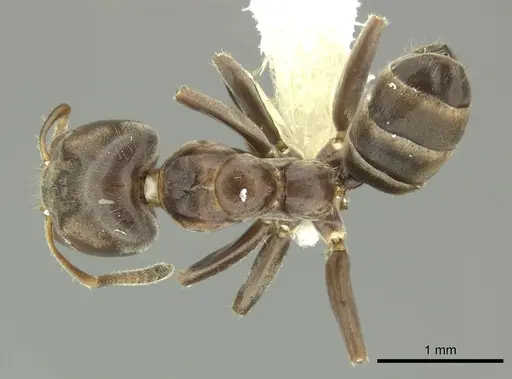
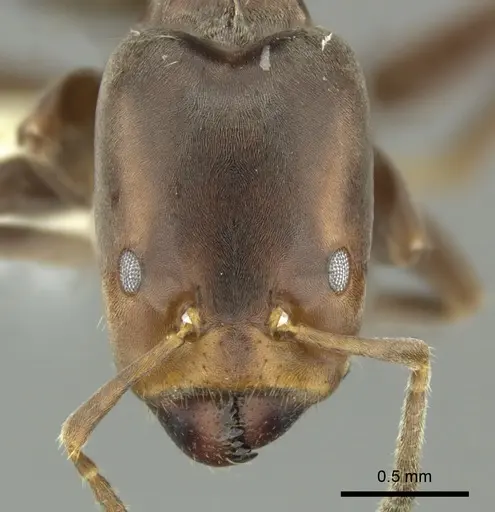
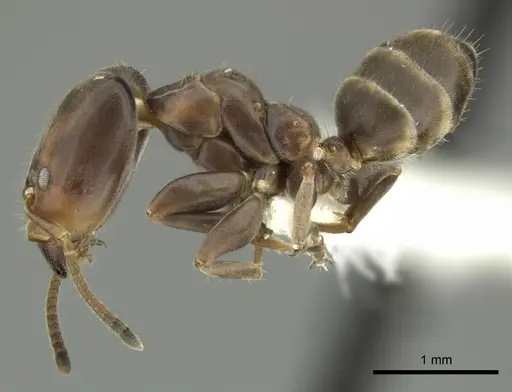
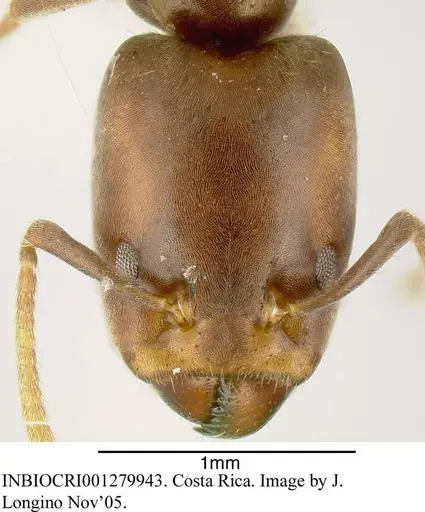
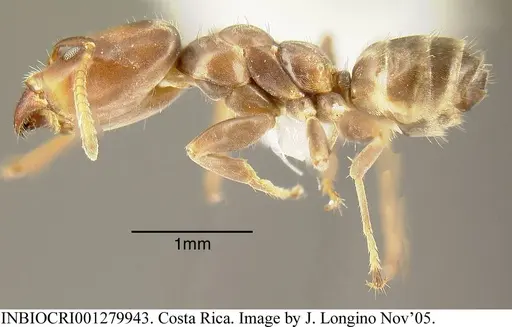
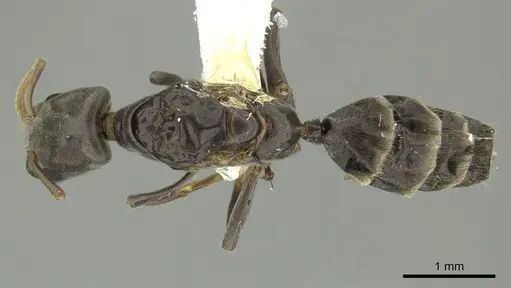
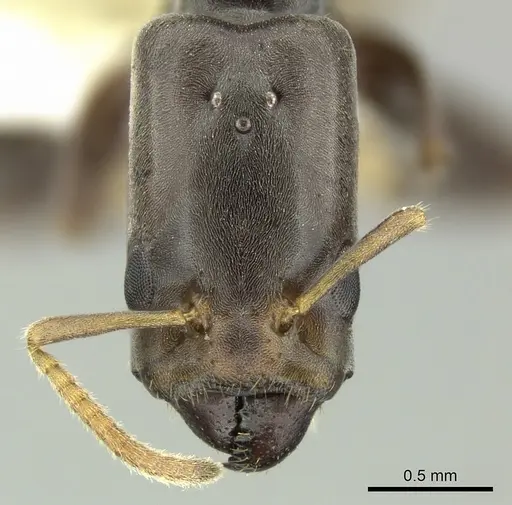
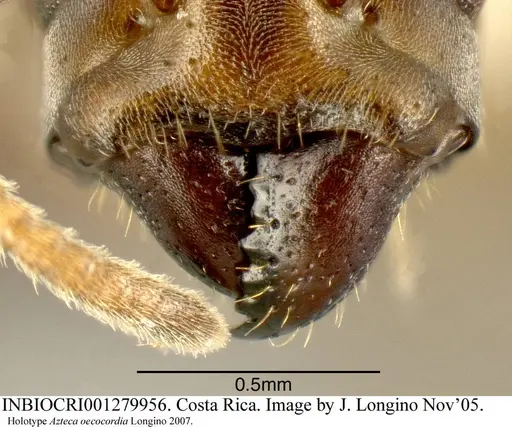
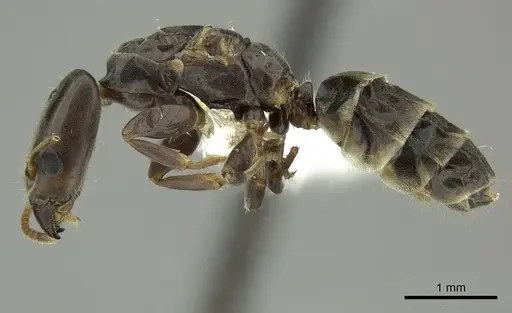
Azteca oecocordia is a small, brown arboreal ant species only known from the Monteverde region of Costa Rica. Workers measure 1.15-1.53mm in head length, and queens are slightly larger at 1.53-1.62mm [1]. This species is a Cordia tree specialist, every known collection comes from the hollow nodes of Cordia alliodora trees, earning its name 'oecocordia' (meaning 'house in Cordia') [1][2]. The ants build small carton partitions inside the tree nodes and maintain relationships with coccoid scale insects that live on the interior walls [1]. This is a recently described species (2007), and its biology in the wild remains poorly studied.
Quick Summary
- Difficulty: Expert
- Origin & Habitat: Monteverde region of Costa Rica, Central America. This species lives exclusively inside hollow nodes of Cordia alliodora trees at elevations of 400-500m [1][2]. The Monteverde cloud forest region provides high humidity year-round.
- Colony Type: Unknown colony structure. Founding queens have been found inside Cordia tree nodes, and mature colonies can dominate most nodes of a single tree [1]. The colony structure (single queen vs multiple queens) has not been documented.
- Size & Growth:
- Queen: 1.53-1.62mm head length [1]
- Worker: 1.15-1.53mm head length [1]
- Colony: Unknown. Related species A. pittieri suggests moderate colony sizes, but no specific data exists for this species.
- Growth: Unknown, no captive breeding data exists
- Development: Unknown. Based on related Azteca species, expect 6-10 weeks at tropical temperatures, but this is a rough estimate. (No captive development data exists for this species. All available colonies are wild-caught.)
- Antkeeping:
- Temperature: Keep at 22-26°C. As a tropical cloud forest species from moderate elevation (400-500m), they likely prefer warm, stable conditions without temperature extremes [1].
- Humidity: High humidity is essential. The Monteverde cloud forest is consistently humid. Keep nest substrate moist but not waterlogged, with good ventilation to prevent mold.
- Diapause: Unknown. As a tropical species, they likely do not require hibernation, but seasonal activity changes may occur.
- Nesting: This is an arboreal species that naturally nests inside hollow tree branches. In captivity, they need a nest that mimics these conditions, a vertical or diagonal setup with narrow chambers that can hold moisture. A Y-tong (AAC) nest or plaster formicarium with narrow tunnels works well. They will need access to their scale insect symbionts for proper nutrition.
- Behavior: These ants are aggressive when their scale insect partners are threatened [3]. They are arboreal and likely forager actively through the nest structure. Escape prevention is important, they are small but not extremely tiny, standard ant keeping barriers should work. They build carton partitions in nature, showing they can manipulate their environment.
- Common Issues: No captive breeding data exists, all colonies are wild-caught, making established colonies very rare in the hobby, They require scale insects (coccoid Hemiptera) as a food source, this specialized diet is difficult to maintain in captivity, Extremely restricted natural range makes it unlikely you will find this species outside its native region, The specific Cordia tree host relationship means their natural nesting requirements are highly specialized, Wild-caught colonies may harbor parasites or face adaptation issues to captive conditions
Natural History and Distribution
Azteca oecocordia is one of the most recently described Azteca species, only formally described in 2007 by John T. Longino [1]. It is known only from a tiny area in the Monteverde region of Costa Rica, making it one of the most restricted ant species in existence. Every specimen ever collected has come from the hollow nodes of Cordia alliodora trees, a relationship so specific that the species name literally means 'house in Cordia' [1][2].
In the wild, founding queens colonize empty nodes within the Cordia tree. As colonies mature, they typically dominate most or all nodes of a single tree [1]. Interestingly, they can coexist on the same tree with another arboreal ant species, Cephalotes setulifer, suggesting some level of niche separation [1]. The ants build small carton partitions inside the nodes and maintain colonies of coccoid scale insects (Hemiptera) on the interior walls, which provide a steady source of honeydew [1][3].
A 2012 study discovered A. oecocordia in Brazil, in hollow branches of Anadenanthera falcata trees, this represents a significant range extension and suggests the species may be more widespread than originally thought, or that similar-looking populations exist in Brazil [3]. However, the Costa Rican populations remain the only confirmed specimens.
Housing and Nesting
This species presents significant challenges for antkeeping due to its specialized natural history. In captivity, you should provide a nest that mimics its arboreal lifestyle, a vertical or diagonal setup with narrow, moist chambers. A Y-tong (AAC) nest or plaster formicarium works well, as these materials hold moisture while allowing some humidity control [1].
The key challenge is replicating their food source. In the wild, A. oecocordia maintains trophobiotic relationships with coccoid scale insects (Hemiptera), farming them for honeydew inside the tree nodes [1][3]. These scale insects are essential to their diet. You will need to culture appropriate scale insects or mealybugs and provide them access to the ants. Without this symbiont relationship, the colony will likely fail.
Keep the nest humid but ensure good ventilation to prevent mold. The Monteverde cloud forest is consistently humid, so aim for 70-85% humidity within the nest area. A water reservoir or moisture gradient allows the ants to self-regulate their humidity preferences.
Feeding and Diet
Azteca oecocordia has a highly specialized diet centered on honeydew from scale insects. In the wild, they farm coccoid Hemiptera inside the tree nodes and feed on the honeydew these insects produce [1][3]. This is not a species that will thrive on standard ant feeds.
Your primary challenge will be establishing and maintaining a culture of appropriate scale insects (coccoids). These tiny insects must be introduced into the colony's enclosure and allowed to establish on plant material or a suitable substrate. The ants will tend them much like a farmer tends livestock.
Beyond honeydew, they likely supplement with small insects (like related Azteca species do), so you can offer small live prey like fruit flies or tiny crickets occasionally. However, the scale insect relationship is primary, without it, the colony will not have its essential food source.
Temperature and Seasonal Care
As a species from the Monteverde cloud forest at 400-500m elevation, A. oecocordia likely prefers warm, stable conditions in the low-to-mid 20s Celsius range. Keep the nest at 22-26°C, avoiding temperature extremes or sudden fluctuations [1].
Since this is a tropical species from a region without cold winters, they likely do not require a diapause (hibernation) period. However, seasonal changes in rainfall patterns in Monteverde might affect activity levels. Monitor your colony for any seasonal changes in behavior.
Avoid cooling the colony below 18°C for extended periods. If you live in a temperate climate, use a heating cable on one side of the nest to maintain warmth, placing it on top of the nest to avoid evaporating moisture.
Frequently Asked Questions
Is Azteca oecocordia available for purchase?
This species is extremely rare in the antkeeping hobby. It was only described in 2007 and has an extremely restricted natural range limited to the Monteverde region of Costa Rica. You are unlikely to find captive-bred colonies for sale. Any available colonies would likely be wild-caught, which presents significant ethical and practical challenges.
How do I feed Azteca oecocordia in captivity?
This is the critical challenge with this species. Azteca oecocordia farms scale insects (coccoid Hemiptera) for honeydew in the wild. You will need to culture appropriate scale insects and introduce them to your colony setup. Without this symbiont relationship, the colony cannot survive long-term. Standard ant feeds alone will not sustain them.
What kind of nest does Azteca oecocordia need?
Use a vertical or diagonal nest setup that mimics their natural arboreal nesting in tree nodes. A Y-tong (AAC) nest or plaster formicarium with narrow, moist chambers works well. The nest must hold humidity well while providing good ventilation to prevent mold.
Are Azteca oecocordia ants aggressive?
Related Azteca species are known to be aggressive when defending their scale insect partners. While specific behavior data is limited for this species, they have been observed being very aggressive when the coccoids they tend are manipulated [3]. Handle with caution.
How big do Azteca oecocordia colonies get?
Colony size data is not available for this species. In the wild, mature colonies can dominate most nodes of a single Cordia tree [1]. Related Azteca species typically form moderate-sized colonies, but you should not expect the massive supercolonies some Azteca species can produce.
Do Azteca oecocordia need hibernation?
As a tropical species from the Monteverde cloud forest, they likely do not require hibernation. Maintain warm temperatures year-round (22-26°C). They may show seasonal activity changes based on wet/dry season patterns in their native habitat, but no specific data exists.
Can I keep multiple Azteca oecocordia queens together?
The colony structure of this species has not been documented. Combining unrelated queens has not been studied and is not recommended. In the wild, founding queens are found alone inside Cordia nodes, suggesting single-queen colony founding, but the mature colony structure is unknown.
Is Azteca oecocordia suitable for beginners?
No. This species is rated Expert difficulty due to its extremely specialized dietary requirements (requiring live scale insects), rarity in the hobby, and lack of captive breeding data. It is not suitable for beginners. Only experienced antkeepers with access to scale insect cultures should attempt to keep this species.
References

This caresheet is licensed under CC BY-SA 4.0 .
Literature
Loading...Loading products...