

Axinidris luhya
- Scientific Name
- Axinidris luhya
- Tribe
- Tapinomini
- Subfamily
- Dolichoderinae
- Author
- Snelling, 2007
- Distribution
- Found in 1 countries
Axinidris luhya Overview
Axinidris luhya is an ant species of the genus Axinidris. It is primarily documented in 1 countries , including Kenya. Detailed taxonomic data and occurrence records can be further explored via authoritative databases such as AntWeb or the Global Biodiversity Information Facility (GBIF).
Axinidris luhya
Axinidris luhya is a small, dark arboreal ant native to the Kakamega Forest of Kenya. Workers measure roughly 3-4mm in total length with a blackish body, dark brown legs, and distinctive reddish mandibles [1]. Look for the small yellowish spot on the head between the eye and antenna socket, this helps distinguish them from similar species [1]. They were described from specimens collected on tree trunks and vegetation in 2002,and belong to the subfamily Dolichoderinae, a group known for fast movement and chemical defenses rather than stings.
What makes this species truly unusual is how little we know about its social structure. Scientists have only ever collected workers, no queens or males have been described [1]. This means basic questions about colony founding, maximum colony size, and even what a queen looks like remain complete mysteries. They appear to be the eastern sister species to Axinidris occidentalis from Liberia, suggesting they may share similar tree-dwelling habits in West African forests [1].
Quick Summary
- Difficulty: Expert
- Origin & Habitat: Kenya, specifically the Kakamega Forest region, collected from tree trunks and vegetation in forest habitats [1][2].
- Colony Type: Unknown, only the worker caste has been scientifically described [1].
- Size & Growth:
- Queen: Unknown, queens have never been described [1].
- Worker: Approximately 3-4mm total length (Weber's length 1.13-1.26mm) [1].
- Colony: Unknown.
- Growth: Unknown.
- Development: Unknown. No developmental data exists for this species. (Based on typical tropical Dolichoderinae patterns, development might take 4-8 weeks at warm temperatures, but this is purely speculative.)
- Antkeeping:
- Temperature: Likely requires warm, stable temperatures typical of tropical forest understory. Start around 24-26°C and adjust based on colony activity. Exact requirements are unconfirmed.
- Humidity: High humidity inferred from rainforest habitat. Keep nest substrate consistently moist but not waterlogged, similar to the humid microhabitats of tree trunks and vegetation where they were collected [1].
- Diapause: Likely not required (tropical species), but unconfirmed.
- Nesting: Arboreal species collected from tree trunks and vegetation [1]. A vertical setup with cork bark, rotting wood, or arboreal conditions would mimic natural habitat, though captive nesting preferences are unstudied.
- Behavior: Likely fast-moving and arboreal given their tree-dwelling collection sites [1]. As Dolichoderinae, they probably rely on chemical defenses rather than stings. Their small size means escape prevention must be excellent.
- Common Issues: extreme rarity in the antkeeping trade makes acquisition nearly impossible., unknown founding requirements, no one knows how queens establish colonies., unidentified queen caste means you cannot verify if you have a reproductive colony., tiny worker size requires excellent escape prevention with fine mesh barriers., lack of dietary data means feeding is purely experimental.
Natural History and Collection Data
Everything we know about Axinidris luhya comes from collections made in March 2002 at Isecheno in Kenya's Kakamega District. The type series was collected from the trunk of Solanum mauritiana trees, while additional specimens came from fogging Teclea nobilis vegetation and the Colobus Trail [1]. This tells us they live in the forest canopy and on vegetation rather than in the soil. The Kakamega Forest is a mid-altitude tropical rainforest, suggesting these ants prefer humid, shaded conditions with stable temperatures. The species was named after the Luhya people who live in this region [1].
Identification and Appearance
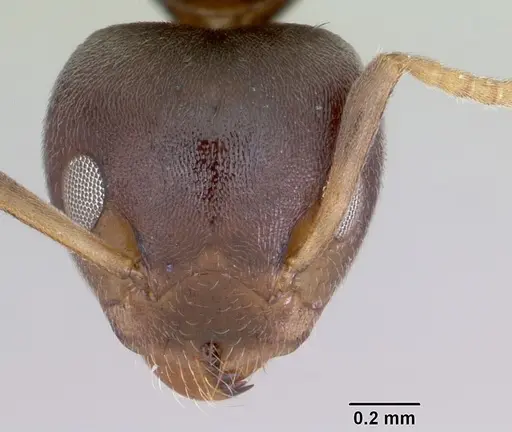
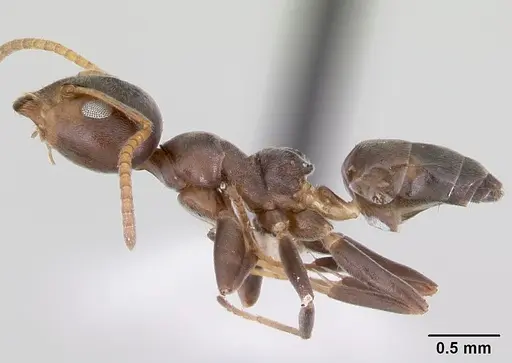
Workers are small but distinctive. They measure about 3-4mm in length with a blackish head and body, dark brown antennae and legs, and reddish-brown tarsi [1]. The most noticeable feature is the yellowish spot on the head between the eye and antennal socket, plus reddish mandibles that contrast with the dark head [1]. The propodeum has thick spines directed backward and outward, and the distance between the spine tips is wider than the propodeum itself [1]. They have erect hairs on the pronotum (the upper part of the thorax) but lack them on the antenna shafts [1]. You might confuse them with Axinidris ghanensis, but that species has propodeal spines closer together and fewer hairs on the pronotum [1].
Captive Care Reality Check
You will almost certainly never encounter Axinidris luhya in the antkeeping hobby. They have never been commercially available, and their extreme rarity in scientific collections suggests they are uncommon even in their native range. More importantly, since queens have never been described, you cannot identify a founding queen even if you found one. Without knowing whether they are claustral (sealed founding) or semi-claustral (foraging founding), what they eat, or how large colonies grow, attempting to keep them would be pure experimentation. If you somehow acquire specimens, treat them as a research project rather than a display colony, and document everything to help future keepers. [1]
Arboreal Setup Considerations
Given their collection from tree trunks and vegetation, Axinidris luhya likely needs vertical space and materials to climb. In captivity, this would translate to a tall enclosure with cork bark, rotting wood, or live plants to simulate arboreal conditions. The nest should probably be humid but well-ventilated to prevent mold in the warm, moist conditions they likely prefer. However, this is entirely theoretical, no one has successfully kept this species in captivity to confirm these needs. [1]
Frequently Asked Questions
How big are Axinidris luhya workers?
Workers are small, measuring roughly 3-4mm in total length. The Weber's length (mesosoma) is 1.13-1.26mm, head length is 1.00-1.09mm, and head width is 0.99-1.04mm [1].
Where do Axinidris luhya live in the wild?
They are known only from the Kakamega Forest region of Kenya, specifically collected at Isecheno in the Kakamega District. They were found on tree trunks and vegetation, indicating an arboreal lifestyle in tropical forest habitats [1][2].
Can I keep Axinidris luhya as a beginner?
No. This species is unsuitable for beginners due to extreme rarity, lack of availability in the trade, and complete absence of data on colony founding, queen identification, and basic care requirements. Only highly experienced keepers with access to research resources should attempt keeping such poorly known species.
What do Axinidris luhya eat?
Their natural diet is unknown. As members of the subfamily Dolichoderinae, they likely accept sugar sources like honeydew or sugar water, and possibly small insects, but this is speculative. No feeding studies have been conducted on this species.
Do Axinidris luhya have a queen caste?
Queens have never been scientifically described for this species [1]. While the species almost certainly has queens (as all ant colonies do), we do not know what they look like, how large they are, or how they behave. This makes founding a captive colony impossible to verify.
What is the best nest type for Axinidris luhya?
Unknown. Based on their arboreal collection sites, a vertical setup with cork bark or rotting wood might be appropriate, but no captive nesting studies exist. They were collected from tree trunks and vegetation [1].
Do Axinidris luhya need heating?
Likely yes, given their tropical Kenyan origin. Start with temperatures around 24-26°C, but exact requirements are unconfirmed. Avoid temperatures below 20°C.
Do Axinidris luhya need hibernation?
Probably not. As a tropical species from Kenya, they likely remain active year-round. However, this is inferred from their geographic origin rather than direct observation [1].
Are Axinidris luhya dangerous?
They are too small to cause harm through biting, and as Dolichoderinae they lack stingers. They may possess chemical defenses typical of their subfamily, but these are not dangerous to humans.
Can I buy Axinidris luhya?
No. This species is not available in the antkeeping trade. They are known only from scientific collections made in 2002 in Kenya, and have never been bred or sold in captivity.
References

This caresheet is licensed under CC BY-SA 4.0 .
CASENT0172612
View on AntWeb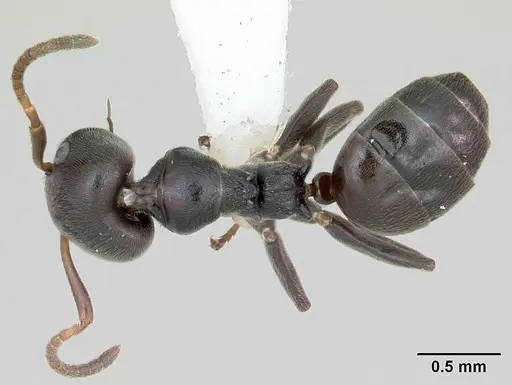
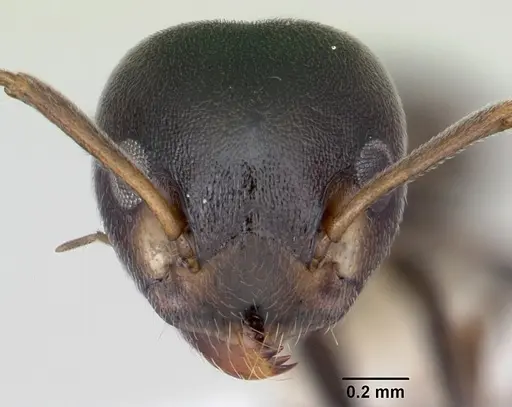
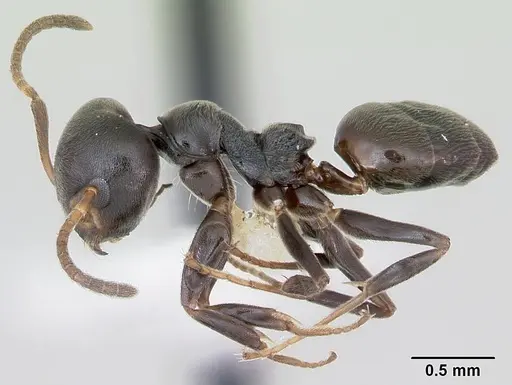
CASENT0172615
View on AntWeb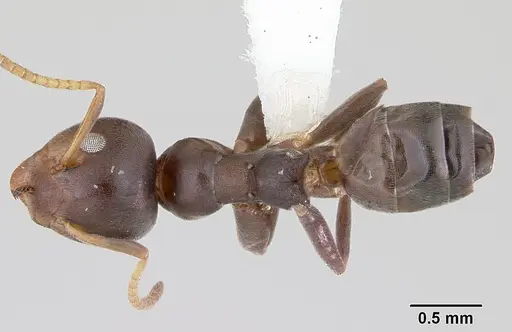
Literature
Loading...Loading products...